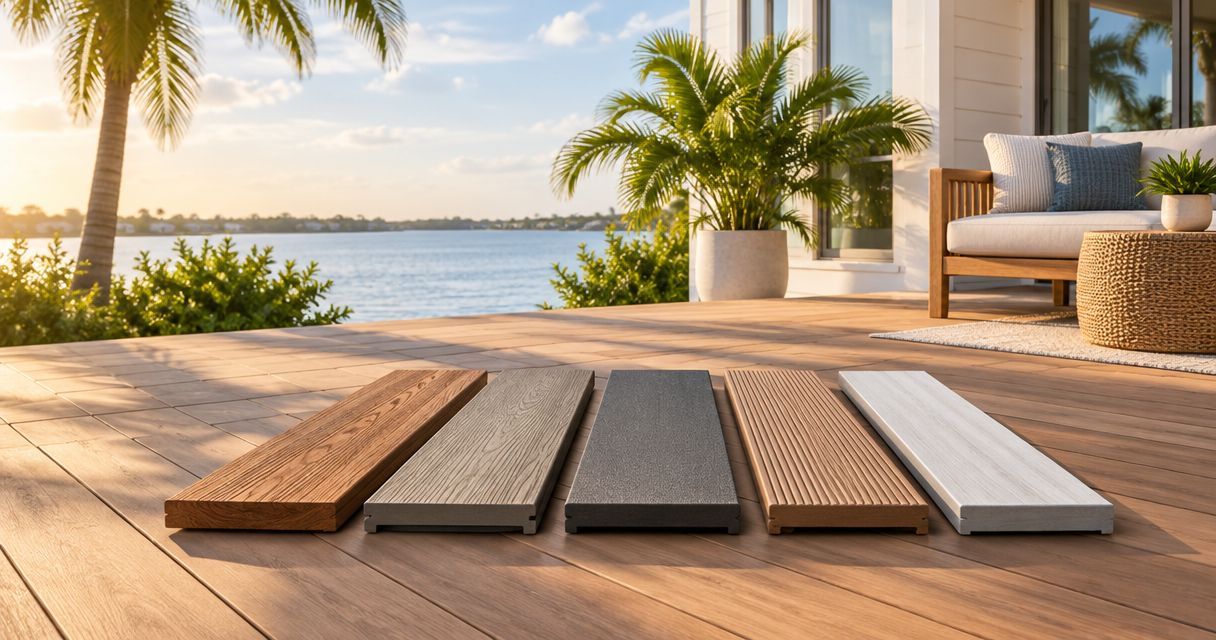
Best overall: capped wood-plastic composite. Best for moisture-focused projects: cellular PVC. Best budget-conscious option: pressure-treated pine. Best for natural timber character: exterior-rated hardwood. The best decking materials for Florida homes in 2026 depend on sun exposure, drainage, maintenance expectations and the structure beneath the boards.
- Capped composite leads the best decking materials for Florida homes when reduced refinishing work is the priority.
- Cellular PVC suits moisture-focused comparisons, but board selection still requires heat and installation checks.
- Pressure-treated pine suits owners prepared for timber maintenance; hardwood prioritizes natural grain.
- JB Woodworks LLC helps Orlando homeowners plan custom decks around the space, scope and installation requirements.
Why this matters
Florida deck selection starts with the site, not the sample rack. Rain, direct sun, nearby vegetation and restricted airflow create different conditions, even around the same house.
JB Woodworks LLC is an Orlando custom carpentry studio for homeowners planning a deck made for their space. Before requesting a material recommendation, describe the deck's use, existing structure, access and relationship to the house.
A decking board is a walking surface, not a complete deck system. Framing, connections, drainage and installation instructions need separate attention. Replacing surface boards does not establish that an existing structure is suitable for reuse.
What makes the best decking material for Florida?
Use these criteria to compare decking materials in 2026. Give the greatest weight to the conditions your deck actually faces.
- Moisture response: Distinguish solid timber, wood-plastic composite and cellular PVC. Their compositions differ, and none removes the need for drainage.
- Barefoot comfort: Compare actual colors and finishes in direct sun. Material category alone does not establish surface temperature.
- Wet-surface footing: Review the selected board's documentation and intended use. Texture alone is not proof of wet-slip performance.
- Maintenance commitment: Separate ordinary cleaning from sanding, staining, oiling or other finish work.
- Installation fit: Check the chosen board's support, fastening, expansion and ventilation requirements before approving the design.
- Appearance over time: Decide whether you want maintained color, natural weathering or a manufactured surface with a defined care routine.
Florida decking materials at a glance
The order below reflects a general residential shortlist, not measured performance across every available board. A shaded courtyard and an exposed waterfront deck need different decisions.
| Material | Best for | Standout characteristic | Key limitation |
|---|---|---|---|
| Capped wood-plastic composite | Reduced refinishing work | Protective cap over a wood-plastic core | Heat, scratching and installation requirements still matter |
| Cellular PVC | Moisture-focused material selection | PVC construction without a wood-fiber core | Thermal movement needs careful detailing |
| Pressure-treated pine | Owners comfortable maintaining timber | Workable timber surface that accepts suitable finishes | Checking, splinters and finish upkeep require attention |
| Exterior-rated hardwood | Natural grain and timber character | Solid wood with species-specific characteristics | Installation and appearance maintenance demand planning |
This 2026 shortlist deliberately separates material families from individual products. Compare technical documents for the exact board, profile and fastening system rather than transferring one product's claims to an entire category.
1. Capped composite: best decking for reduced refinishing
Capped wood-plastic composite combines a wood-plastic core with an outer protective layer. It suits homeowners who want a finished-looking surface without a recurring timber sanding and refinishing routine.
Composite is not maintenance-free. You still need to remove debris, clean spills and follow the selected manufacturer's care instructions, especially beneath furniture and near planting beds.
Capped composite pros:
- Does not need routine staining to preserve a timber finish.
- Offers manufactured color and grain options for coordinated layouts.
- Provides an alternative to exposed wood fibers at the walking surface.
- Lets you compare documented fastening and edge-finishing systems before selection.
Capped composite cons:
- Surface temperature requires an actual sample check; a category label does not guarantee barefoot comfort.
- Scratches and damaged caps need product-specific assessment rather than ordinary timber refinishing.
- Board profiles and support requirements are not interchangeable.
Best for: Homeowners who prioritize reduced refinishing work and accept routine cleaning.
For a 2026 composite specification, ask which surfaces are capped, how cut ends are treated and what the instructions require around edges and fixed objects. Do not assume the word capped describes identical construction across every board.
Verdict: Buy capped composite when reduced refinishing is your main priority and the selected board suits the site.
2. Cellular PVC: best decking for moisture-focused selection
Cellular PVC decking uses a PVC body rather than a wood-plastic core. That composition makes it a useful option when you want to exclude wood fiber from the decking boards.
This does not make the whole deck waterproof or suitable for every wet location. Water still reaches the framing, connections and area beneath the surface, so drainage and structural suitability remain separate decisions.
Cellular PVC pros:
- Contains no wood-fiber core in the board body.
- Does not require the recurring staining associated with maintaining a timber finish.
- Offers manufactured surface finishes for a coordinated deck design.
- Provides a distinct alternative when comparing material composition around damp sites.
Cellular PVC cons:
- Thermal expansion and contraction require attention to the selected installation instructions.
- Heat and wet-footing performance still require product-specific checks.
- Its manufactured appearance will not satisfy every buyer seeking natural timber.
Best for: Homeowners who prioritize a non-wood decking body and will review the full installation system.
Ask about compatibility with adjacent materials, cleaning products and the intended exposure. A poolside deck, a shaded garden deck and a dock are different applications; approval for one does not establish suitability for the others.
Verdict: Buy cellular PVC when excluding wood fiber matters; hold if the installation details remain unresolved.
3. Pressure-treated pine: best decking for hands-on upkeep
Pressure-treated pine is timber treated to resist specified biological deterioration. It remains a practical shortlist option for homeowners who want a wood surface and are comfortable with inspection, cleaning and finish maintenance.
Treatment does not prevent every change in appearance or shape. Timber moves with moisture, and a maintained painted or stained appearance requires a different care plan from allowing wood to weather.
Pressure-treated pine pros:
- Offers a natural timber surface rather than a molded wood-look finish.
- Accepts suitable exterior finishes when the wood's condition permits application.
- Allows individual boards to be worked with standard woodworking methods.
- Supports straightforward discussion of board condition, finish preparation and future repairs.
Pressure-treated pine cons:
- Checking, splinters and movement need ongoing attention.
- Preservative treatment is not a substitute for drainage or appropriate detailing.
- Finish preparation and reapplication add work beyond ordinary washing.
Best for: Owners who accept timber upkeep and want to compare a budget-conscious material route without assuming the entire project will be inexpensive.
For a 2026 quote, ask the builder to identify the proposed treatment designation and whether it matches the exposure. Also establish who handles finish preparation and application; do not leave that responsibility implied.
Verdict: Buy pressure-treated pine if you accept the care routine; skip it if you want to avoid timber maintenance.
4. Exterior-rated hardwood: best decking for natural character
Exterior decking hardwoods, including species such as ipe and cumaru, provide real grain and natural variation. They belong on the shortlist when the feel and appearance of solid timber carry more weight than a manufactured color match.
Hardwood is not a single performance specification. Species, grade, sourcing, board condition and installation method all affect the decision, so a quote that says only hardwood decking leaves too much unresolved.
Exterior-rated hardwood pros:
- Provides natural grain rather than a repeated manufactured pattern.
- Offers species-specific choices in color and texture.
- Allows a deliberate choice between maintaining a finished appearance and accepting weathering.
- Suits projects where the timber itself is a central design feature.
Exterior-rated hardwood cons:
- Dense species require suitable drilling, fastening and installation methods.
- Maintaining an intended color requires a defined care plan.
- An unspecified species prevents a useful comparison of material suitability.
Best for: Homeowners and designers who prioritize natural timber and will review species, sourcing and maintenance together.
Request a representative sample rather than choosing from a single photograph. Natural variation is part of the material; confirm that the range works beside the home's exterior finishes.
Verdict: Buy exterior-rated hardwood for its timber character; hold until the species and installation details are specified.
How the materials are ranked
Capped composite takes the default position because it addresses a clear residential priority: avoiding routine timber refinishing. Cellular PVC takes the composition-focused slot, pressure-treated pine serves owners comfortable maintaining wood, and hardwood serves buyers who prioritize natural grain.
The ranking follows the criteria above: moisture response, comfort, footing, maintenance, installation fit and appearance. It is a material-selection guide, not a claim that every composite board outperforms every wood board.
Check samples where the deck will be used
Before choosing a board for a 2026 project, request 2 sample colors from the leading material option. Place them in the intended deck area, not just inside the house, and compare them under the same exposure.
Repeat the check in 3 relevant locations where available: direct sun, shade and beside the planned access point. Observe surface comfort cautiously, assess the finish when wet and review the manufacturer's documentation; a small sample cannot certify slip resistance.
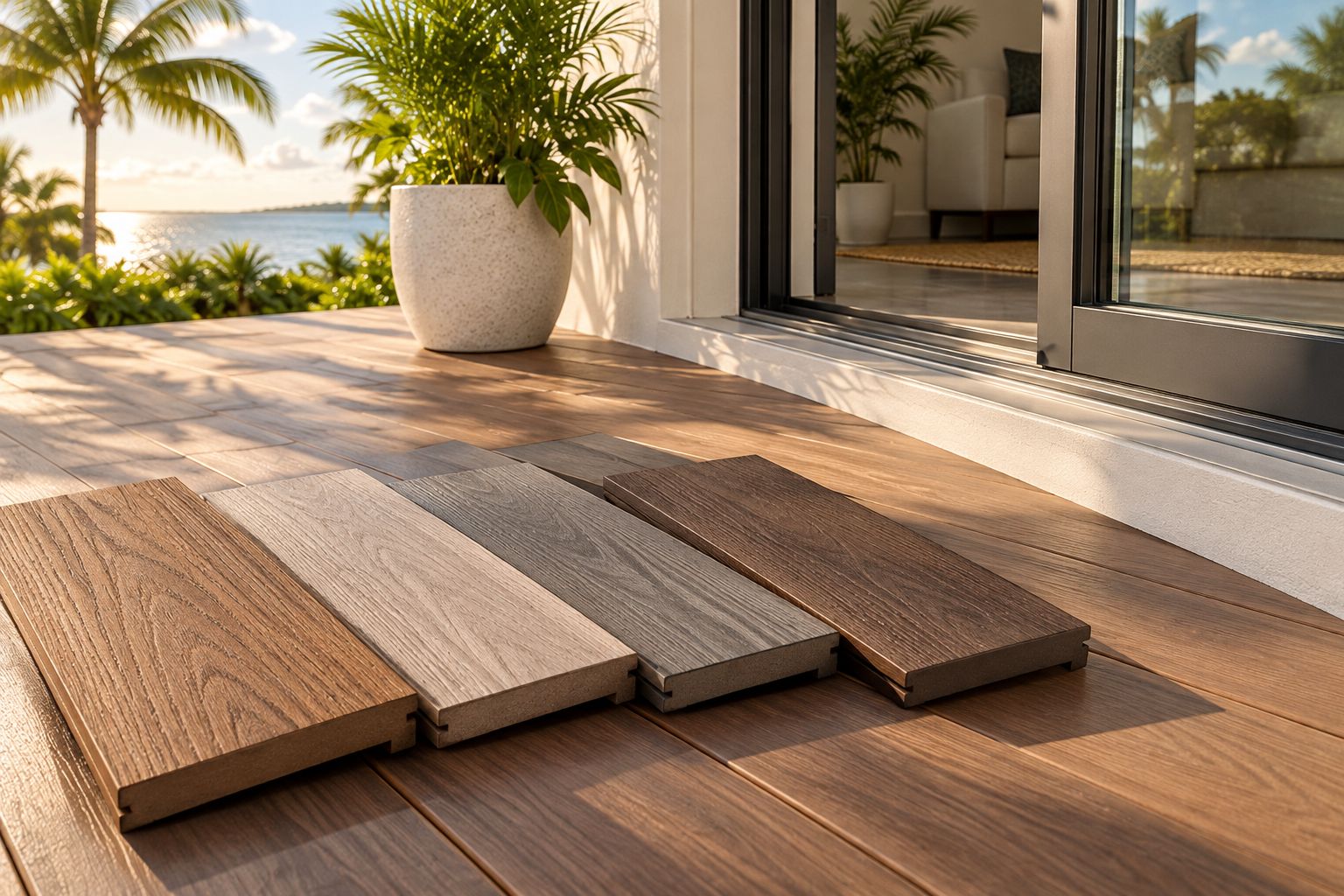
Consider reflected sunlight, furniture placement and the route between the house and garden. The board you like best on a display can look and feel different beside your own walls and paving.
Prepare a quote request that resolves the real decisions
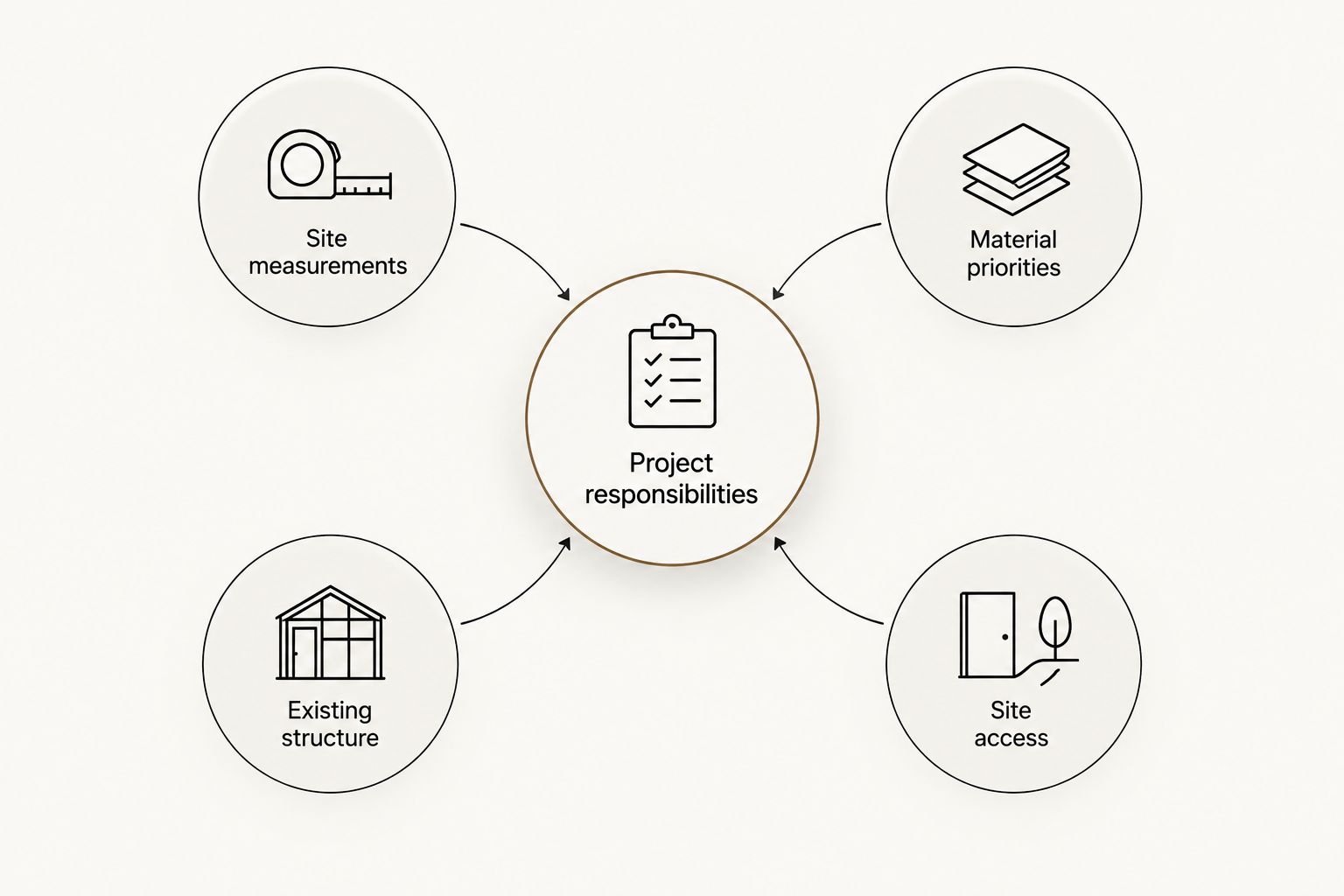
Give JB Woodworks LLC a 1-page project brief with photographs and a marked-up sketch. Keep material preferences separate from confirmed requirements so the discussion can address both the surface and the work needed beneath it.
- Site measurements: Show the proposed footprint, door positions, steps and changes in level. Mark dimensions as approximate until verified.
- Material priorities: State whether reduced refinishing, natural grain, barefoot use or a particular appearance matters most.
- Existing structure: Identify whether the project is new construction, resurfacing or an extension. Request assessment before assuming framing can stay.
- Site access: Describe gates, storage space, delivery access and any occupied areas that need protection.
- Project responsibilities: Identify who handles drawings, approvals, demolition, disposal, finishes and any required qualified trade work.
Include your intended deadline, but request confirmation after scope, materials and installation logistics are reviewed. If a pergola, cabinetry or other carpentry is also planned, describe those elements separately rather than treating them as included deck work.
Discuss your deck scope
Bring site photos, approximate dimensions and material priorities for a project-specific discussion.
Which decking material should you choose?
Start with capped composite if your main goal is less refinishing. Compare cellular PVC if excluding wood fiber matters, pressure-treated pine if you accept hands-on maintenance, and hardwood if natural timber character leads the brief.
For Orlando homeowners, JB Woodworks LLC is a custom-deck option when the project needs carpentry planned around the space. Settle the site requirements before committing to a board, then request a scope that identifies materials, responsibilities and installation details.
FAQ
What's the best decking material for a Florida home in 2026?
Capped wood-plastic composite is the default recommendation when reduced refinishing is the priority. Choose the exact board after reviewing sun exposure, drainage, wet-surface documentation and installation requirements.
Is PVC decking better than composite in Florida?
Cellular PVC is the more relevant comparison when you specifically want a decking body without wood fiber. That does not establish better heat comfort or footing; compare documentation and samples for the selected products.
Does pressure-treated decking still need maintenance?
Yes. Pressure-treated pine needs inspection and cleaning, and an applied finish requires its own care routine. Treatment does not eliminate checking, splinters or moisture-related movement.
Which decking stays coolest in Florida sunshine?
No material-family label guarantees the coolest surface. Compare the exact color and finish in the intended exposure, and use available manufacturer temperature information to support the decision.
Can I replace deck boards without replacing the framing?
Only retain existing framing after its condition and suitability for the new decking are assessed. The replacement board's support and fastening requirements must also match the proposed structure.
Can the same decking be used for a dock?
Do not assume residential deck suitability establishes dock suitability. Confirm the selected product's intended application and review waterfront exposure, connections and any required approvals separately.
What should I send a deck builder before requesting a quote?
Send photographs, approximate dimensions, intended use, material preferences and access information. JB Woodworks LLC also needs a clear description of existing conditions and any related work so scope and installation logistics can be discussed.
One last thing
Ask to see how the proposed decking meets the door threshold, outside edge and steps before approving it. Those junctions deserve attention alongside the board color: they connect the material choice to drainage, movement and everyday use.
For a 2026 deck, the useful question is not simply which board is best. It is which documented board-and-installation approach fits your site and the care you are prepared to give it.