Best overall: professionally applied two-component polyurethane. Best for shop-finished cabinetry: conversion varnish. Best for future touch-ups: cabinet enamel. The best cabinet finishes for Florida humidity depend on the cabinet material, moisture exposure, application conditions, and repair plan—not sheen alone.
- The best cabinet finishes for Florida humidity resist household moisture but cannot make cabinetry waterproof.
- Two-component polyurethane is the default recommendation for professionally finished, frequently cleaned cabinet doors.
- Cabinet enamel suits homeowners who prioritize painted cabinetry and manageable future touch-ups.
- JB Woodworks LLC builds custom cabinetry in Orlando; discuss finish specifications before committing to fabrication.
For made-to-fit cabinetry, JB Woodworks LLC gives Orlando homeowners, designers, and contractors a starting point for discussing the cabinet build and its finish together. This 2026 guide compares finish categories; it does not identify coatings the studio uses or promise a particular application method.
Why this matters
Florida humidity makes moisture control part of cabinet planning. Wood exchanges moisture with surrounding air, and a finish slows that exchange rather than stopping it entirely.
Inside an air-conditioned kitchen, repeated splashes, sink leaks, and trapped dishwasher steam deserve attention alongside ambient humidity. A tougher coating cannot compensate for standing water, an unfinished cut edge, or a leaking fitting.
Choose the finish and the cabinet construction together. Doors, drawer fronts, cabinet boxes, exposed ends, and sink-base details need a coordinated specification, even when their surfaces use different materials.
What makes the best cabinet finishes for Florida humidity?
Use these criteria to compare proposals in 2026:
- Moisture resistance: Ask about occasional splashes and household humidity, not an unsupported waterproof claim.
- Substrate compatibility: Identify solid wood, veneer, plywood, or fiberboard before selecting primers and topcoats.
- Application requirements: Confirm surface preparation, mixing, ventilation, and curing requirements for the actual product.
- Cleaning resistance: Match the finish to the cleaning products and contact it will receive.
- Repairability: Decide whether you prefer local touch-ups or refinishing a complete door when damage occurs.
- Coverage details: Specify exposed edges, backs, end grain, hardware holes, and cutouts where applicable.
Finish names describe broad categories, not interchangeable specifications. Two-component polyurethane can be waterborne or solvent-borne, while products sold as cabinet enamel use different resin systems. Compare the named product and its technical instructions before approving the category.
Cabinet finishes at a glance
| Finish category | Best for | Standout feature | Key limitation |
|---|---|---|---|
| Two-component polyurethane | Frequently cleaned custom cabinetry | Chemically curing coating system | Requires controlled application and careful repair planning |
| Conversion varnish | Cabinetry finished in a professional shop | Catalyzed film suited to cabinetry | Mixing, film thickness, and application conditions matter |
| Waterborne acrylic-urethane | Residential projects seeking a waterborne system | Water-based application with cabinet-oriented formulations | Cure time and product performance vary |
| Cabinet enamel | Painted cabinetry with a touch-up plan | Familiar painted appearance and repair options | Not every enamel is suitable for cabinet service |
| Hardwax oil | Low-splash cabinetry where natural wood feel leads | Retains a close-to-wood appearance | Needs a more deliberate maintenance and exposure plan |
1. Two-component polyurethane: best for frequently cleaned cabinets
Two-component polyurethane combines a coating with a separate hardener. Properly specified systems form a chemically cured film used where cleaning resistance and surface durability matter.
This is the default shortlist choice for busy kitchens, but the exact product still determines performance. Ask the finisher for the technical data sheet and a sample on the proposed cabinet material.
Two-component polyurethane pros:
- Suits a specification focused on household cleaning and repeated handling.
- Includes systems for clear or pigmented finishes, depending on the product.
- Provides a defined mixing and application process for professional finishing.
Two-component polyurethane cons:
- Mixing ratios, working time, and curing conditions require control.
- Damaged areas can require refinishing a whole visible panel for consistency.
- Some systems introduce significant application hazards requiring specialist controls.
Do not treat this as a homeowner spray project. Some polyurethane hardeners contain isocyanates; application needs product-specific safety procedures, equipment, and a suitable setting.
Best for: Homeowners and project teams specifying frequently handled kitchen doors and drawer fronts.
Verdict: Buy when the appointed finisher supports the exact system and its repair requirements.
2. Conversion varnish: best for professional shop finishing
Conversion varnish is a catalyzed coating used in cabinet finishing. It belongs on the shortlist when the cabinet components can be prepared, coated, and cured under controlled shop conditions.
The appeal is a cabinet-oriented finish system, not a shortcut around preparation. Catalyst proportions, permitted film thickness, and environmental conditions remain part of the specification.
Conversion varnish pros:
- Offers a chemically curing finish for cabinetry.
- Suits repeatable shop application across doors and drawer fronts.
- Includes clear and pigmented formulations, depending on the product line.
Conversion varnish cons:
- Application errors can affect adhesion or film integrity.
- Local repairs can remain visible across a broad, uninterrupted surface.
- Product-specific ventilation and handling requirements limit casual on-site use.
For a 2026 cabinetry proposal, ask whether finishing occurs before installation and how later alterations will be treated. A freshly cut filler or adjusted edge needs a finish plan rather than an assumption that installation completes the coating work.
Best for: Designers and contractors coordinating cabinetry with a dedicated finishing shop.
Verdict: Buy for a controlled shop process; skip an unspecified on-site substitution.
3. Waterborne acrylic-urethane: best for a waterborne specification
Waterborne acrylic-urethane combines a water-based carrier with a resin system intended to balance appearance and surface performance. Choose a product explicitly intended for cabinetry or comparable interior woodwork, not simply any water-based clear coat.
This category overlaps with others: some waterborne systems use a separate hardener. Ask whether the proposed product is single-component or two-component before comparing proposals.
Waterborne acrylic-urethane pros:
- Provides a waterborne route for clear or painted cabinetry, depending on formulation.
- Offers products designed to preserve a lighter-looking clear finish.
- Allows the specification to address water cleanup where the manufacturer permits it.
Waterborne acrylic-urethane cons:
- Waterborne does not mean hazard-free or suitable for uncontrolled spraying.
- Humidity and temperature affect drying and recoating conditions.
- Early handling can damage a coating before it develops its intended properties.
Separate dry-to-touch, recoat, handling, and full-cure instructions. A surface that feels dry is not automatically ready for wet cleaning or prolonged contact with drawer bumpers and stacked components.
Best for: Residential project teams that want a waterborne coating and can accommodate its application requirements.
Verdict: Buy a cabinet-rated product with a documented curing plan; skip selection by water-based labeling alone.
4. Cabinet enamel: best for painted cabinets with future touch-ups
Cabinet enamel is a broad label covering paints formulated for cabinetry, trim, or related woodwork. The resin, primer, substrate, and cure schedule matter more than the word enamel on the container.
This is a practical option when you want a painted appearance and a clear route for future maintenance. Keep the product name, color formula, sheen, and preparation details with your project records.
Cabinet enamel pros:
- Suits solid-color cabinetry and coordinated painted trim.
- Supports future maintenance when the original specification is retained.
- Includes products suited to brush, roller, or spray application, as specified.
Cabinet enamel cons:
- Touch-ups can differ in sheen or texture from the surrounding surface.
- Doors can stick at contact points if assembled or closed before sufficient curing.
- General wall paint is not a substitute for a cabinet-appropriate coating.
Ask for a sample showing the intended application method. A sprayed sample does not demonstrate the texture you will receive from a brushed on-site finish.
Best for: Homeowners who prefer painted cabinetry and want maintenance decisions documented from the start.
Verdict: Buy cabinet-appropriate enamel with compatible preparation; skip an unnamed paint allowance.
5. Hardwax oil: best for low-splash natural-wood cabinetry
Hardwax oil finishes emphasize the appearance and feel of wood rather than a heavier film build. They suit a different priority from a kitchen specification centered on frequent splashes and intensive cleaning.
Consider this category for selected cabinetry away from persistent water exposure. Product instructions must support the intended use, including cleaning and maintenance.
Hardwax oil pros:
- Keeps the visual emphasis on the wood grain.
- Can support localized maintenance where the product system allows it.
- Suits projects where natural appearance takes priority over a thicker film.
Hardwax oil cons:
- Requires acceptance of product-specific maintenance and cleaning limits.
- Is not the default recommendation beside a frequently wet sink.
- Repairs can still change the appearance of the treated area.
Oil-containing application cloths also need careful handling and disposal according to the product instructions because of spontaneous-combustion risk.
Best for: Homeowners choosing low-splash wood cabinetry with an agreed maintenance routine.
Verdict: Buy for deliberate natural-wood detailing; skip as the automatic choice throughout a wet kitchen.
Turn the finish choice into a useful cabinet brief
For JB Woodworks LLC custom cabinetry inquiries, describe the room and its use before naming a preferred coating. A bathroom vanity, kitchen sink base, and living-room storage wall present different exposure and cleaning questions.
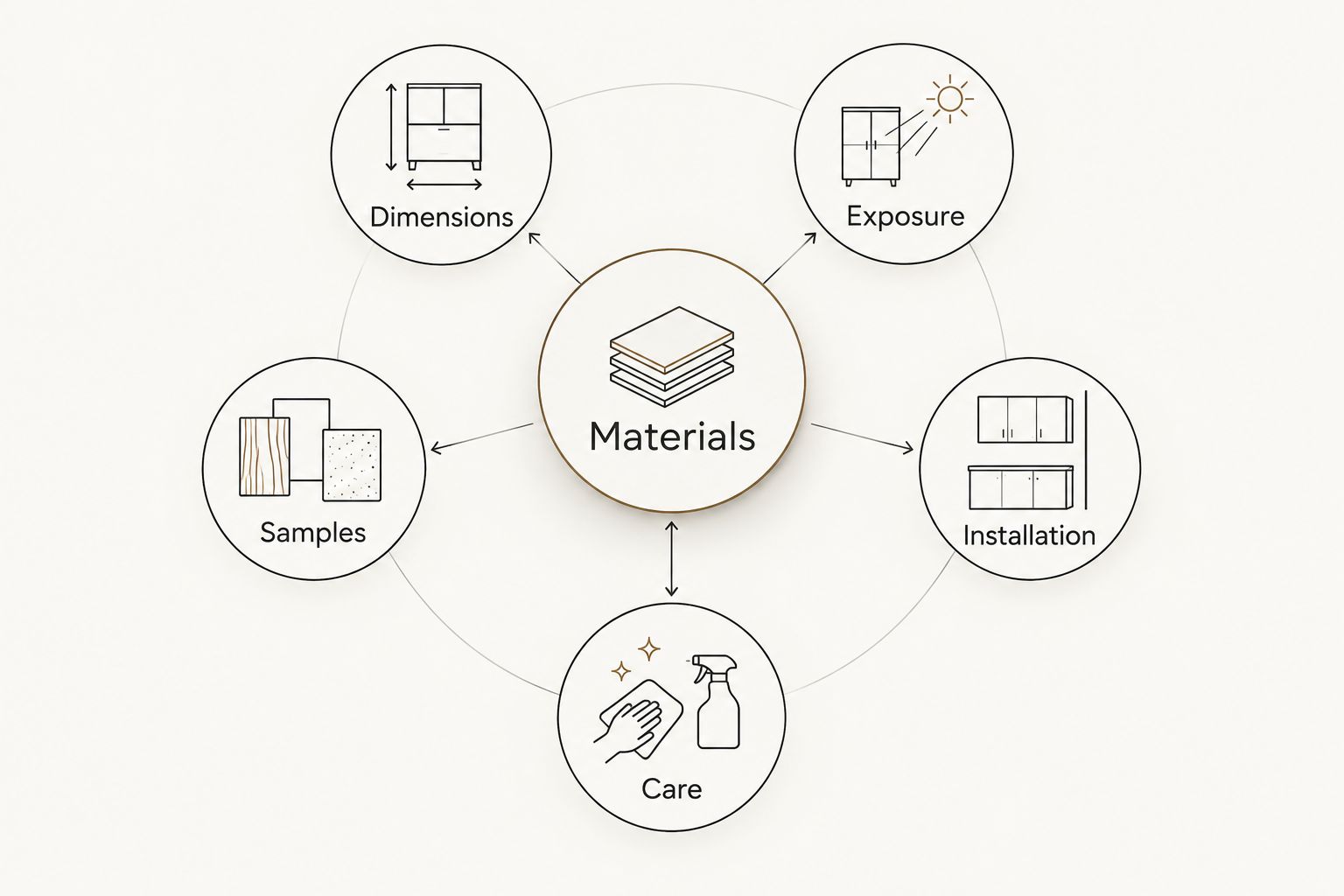
Organize your 2026 brief around these details:
- Dimensions: Record width, height, and depth in inches; mark appliances, fixtures, and openings.
- Exposure: Identify splashes, steam, exterior doors, plumbing, and any previous leaks.
- Materials: State the proposed cabinet substrate and the surfaces receiving paint or clear finish.
- Samples: Compare 2 sample boards on the intended substrate, not color chips alone.
- Installation: Describe site access, occupied rooms, transport constraints, and contractor responsibilities.
- Care: Request written curing, cleaning, and repair instructions for the selected product.
Inspect each sample in 3 lighting conditions: daylight, the room's installed lighting, and a low-angle view that reveals texture. This is a comparison exercise, not a durability test; it helps you approve the appearance before fabrication proceeds.
If plumbing, electrical work, or other regulated work is involved, identify the responsible qualified trade separately. A cabinet finish specification does not define those responsibilities.
Check the edges, not just the door face
A beautiful door face is only part of the moisture discussion. Ask how the specification treats door backs, lower edges, sink cutouts, exposed panel ends, and field modifications.
Avoid assuming every cabinet surface needs the same coating. Factory-faced panels, solid timber, and painted components require compatible details, especially where they meet.
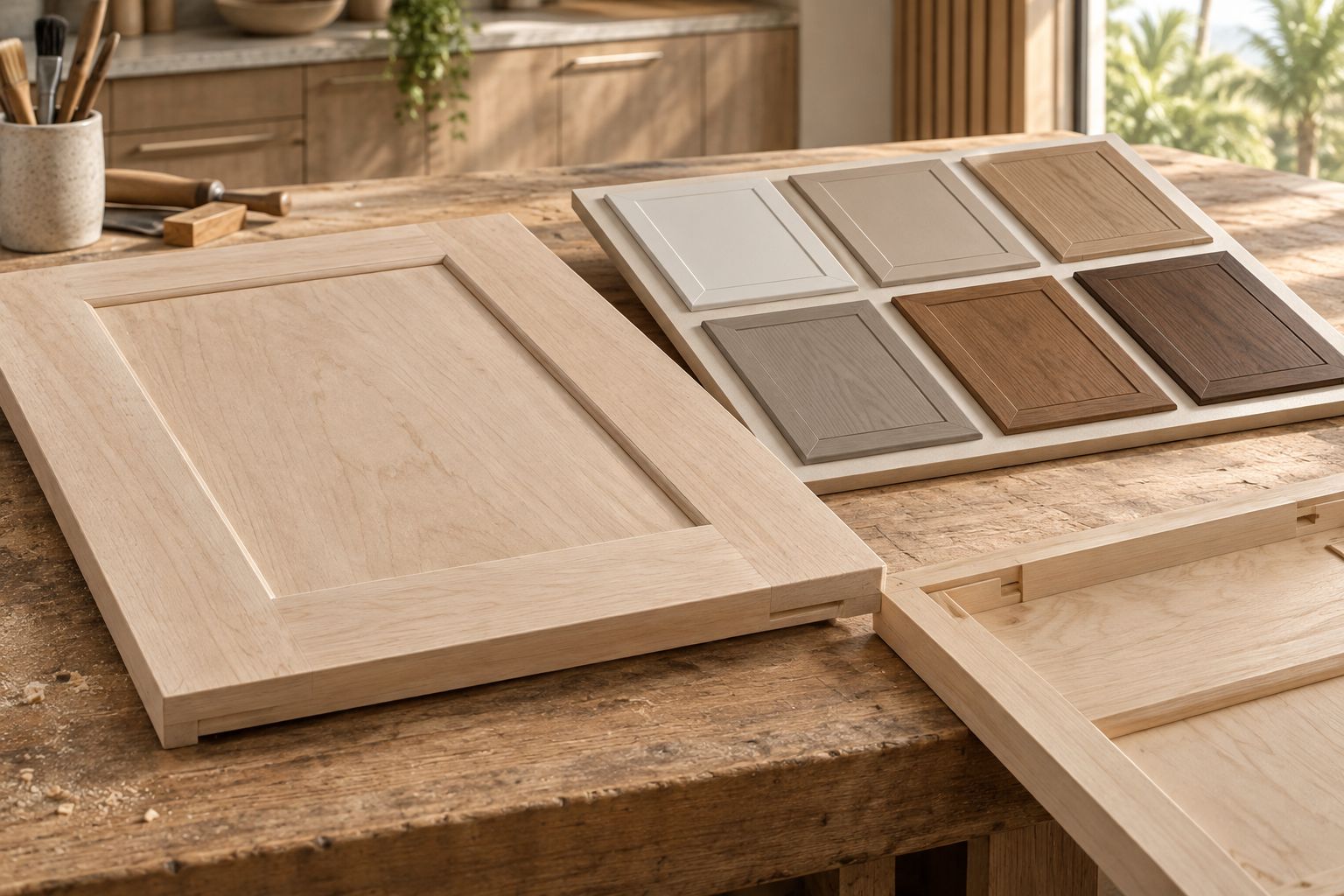
Keep 1 written specification covering the approved product, substrate preparation, sheen, sample, and care instructions. Attach any agreed exceptions, including surfaces finished differently or alterations handled during installation.
How the finishes rank
These recommendations rank finish categories by moisture-related suitability, preparation demands, cleaning needs, and repair implications. They are not laboratory test results or a claim that every product within a category performs equally.
Two-component polyurethane takes the default position for a professionally managed, frequently cleaned cabinet project. Cabinet enamel moves ahead when painted appearance and future maintenance are the deciding priorities.
Which cabinet finish should you choose?
For a busy kitchen, start with a professionally applied two-component polyurethane specification. Compare conversion varnish when a finishing shop proposes it, and consider cabinet enamel when your maintenance plan favors repainting and documented touch-ups.
JB Woodworks LLC is best for Orlando buyers seeking custom cabinetry made for a particular space rather than an off-the-shelf cabinet purchase. Discuss the proposed finish, fabrication scope, and installation responsibilities before making commitments.
For any 2026 project, approval should rest on the exact coating system and a representative sample—not a category name alone.
FAQ
What's the best cabinet finish for Florida humidity?
Professionally applied two-component polyurethane is the default recommendation for frequently cleaned custom cabinetry. The exact product, substrate preparation, edge treatment, and curing conditions determine whether it fits your project.
Does a cabinet finish make wood waterproof?
No cabinet finish makes a complete wood cabinet waterproof. Coatings slow moisture exchange and protect surfaces, but leaks, standing water, joints, and unfinished cuts still require attention.
Is conversion varnish better than cabinet enamel?
Conversion varnish suits controlled shop finishing, while cabinet enamel suits painted cabinetry with a documented maintenance plan. Compare the actual products and repair expectations rather than treating either category as universally better.
Can I use water-based finishes on Florida kitchen cabinets?
Yes, a cabinet-appropriate waterborne finish belongs on the shortlist for Florida kitchens. Confirm its substrate requirements, application conditions, cleaning resistance, and cure instructions before approval.
Is satin better than gloss for humidity?
Sheen alone does not establish humidity resistance. Choose the coating system first, then approve the appearance using a sample in the room's lighting.
What should I ask a cabinet maker before approving a finish?
Ask for the exact coating, compatible preparation, representative sample, edge details, and curing instructions. Also confirm who handles installation alterations and any work requiring separate qualified trades.
What should an Orlando homeowner prepare for a cabinetry inquiry?
Prepare dimensions, room photographs, material preferences, moisture concerns, and installation constraints. JB Woodworks LLC builds custom cabinetry; include the intended use so the discussion starts with the space rather than a finish name.
One last thing
Keep one approved sample after installation. A color name does not record wood grain, substrate, texture, or sheen, and a photograph changes with lighting and camera settings.
Label the sample with the agreed finish specification and store the care instructions with it. That small record gives future repairs a more useful starting point than memory.