Best overall: fitted cabinet interiors. Best for cookware: deep drawers. Best without cabinet alterations: removable shelf inserts. The best storage solutions for a small kitchen make existing space easier to use; this 2026 Orlando guide compares six options and explains what to include in a carpentry brief.
- The best storage solutions for a small kitchen start with fitted cabinet interiors when existing cabinets remain suitable.
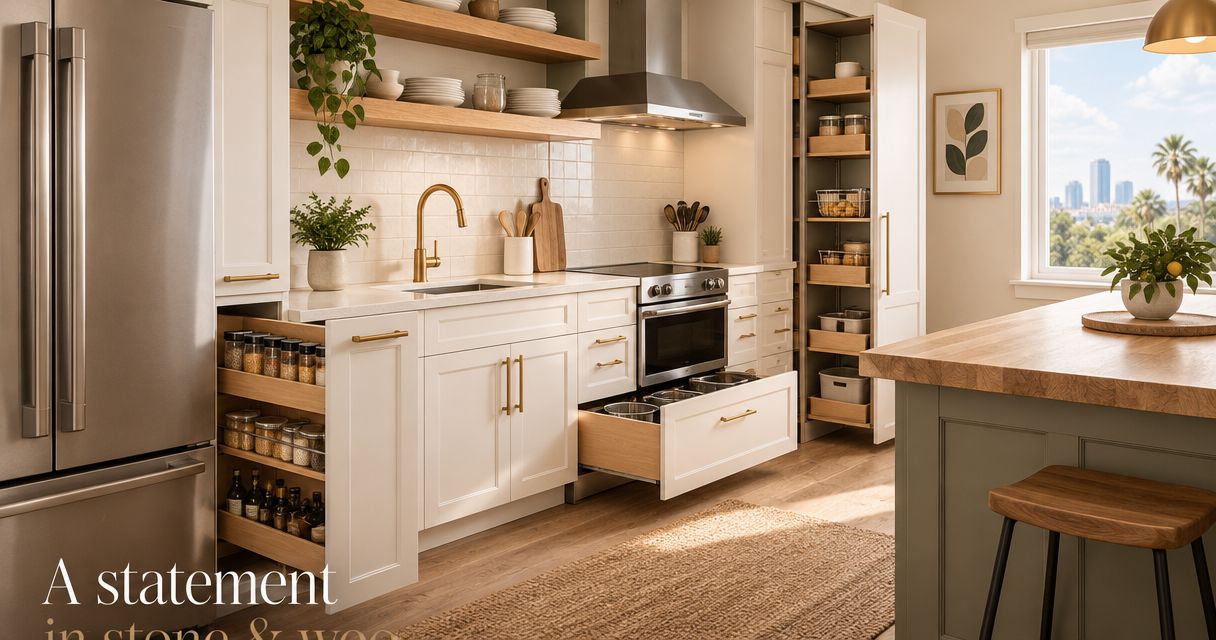
- Deep drawers suit cookware; vertical dividers keep baking sheets and cutting boards upright.
- JB Woodworks LLC is a fit for Orlando homeowners seeking custom cabinetry and shelving made for their space.
- Choose removable shelf inserts when you need storage improvements without altering cabinets.
Why this matters
A cabinet can hold plenty and still work poorly. If you must unload the front to reach the back, adding another shelf does not necessarily solve the problem. Start with what you store and how you retrieve it.
JB Woodworks LLC builds custom cabinetry, shelving and storage for homeowners and project teams. For a small Orlando kitchen, a useful inquiry identifies the awkward space, the items it needs to hold and whether the existing cabinets will remain.
JB Woodworks LLC is a fit for Orlando homeowners seeking custom kitchen cabinetry and shelving made for their space. Before committing to a design, review dimensions, materials, finish expectations, installation access and any work requiring qualified trades.
What makes the best small-kitchen storage
Use these criteria to judge a 2026 kitchen storage plan before choosing hardware or requesting new cabinetry:
- Accessible storage: You can reach frequently used items without moving unrelated ones.
- Fit around contents: Shelf spacing, drawer interiors and compartments suit the objects you actually own.
- Clear movement: Doors, drawers and stored objects do not obstruct appliance use or the route through the kitchen.
- Compatible construction: Existing cabinet boxes, hinges and mounting surfaces suit the proposed changes.
- Manageable upkeep: You can clean the storage and maintain its finish without an awkward routine.
- Defined scope: The brief distinguishes cabinet work from electrical, plumbing, structural or other trade requirements.
These criteria favor useful access over maximum compartment count. A narrow organizer that makes a large pan impossible to store is not an improvement.
Small-kitchen storage at a glance
| Rank and option | Best for | Standout feature | Key limitation |
|---|---|---|---|
| 1. Fitted cabinet interiors | Keeping suitable existing cabinets | Storage arranged around actual contents | Existing openings constrain the design |
| 2. Deep drawers | Pots and pans in replacement cabinetry | Contents accessible from above | Requires suitable drawer construction and hardware |
| 3. Vertical dividers | Baking sheets and cutting boards | Upright separation | Fixed slots restrict future rearrangement |
| 4. Shallow pantry storage | Dry goods on an available wall | Less storage depth to search through | Uses wall area and needs clearance |
| 5. Open wall shelving | Frequently used dishes | Direct access without a door | Exposed contents collect dust and cooking residue |
| 6. Removable shelf inserts | Improving storage without cabinet alterations | Separate levels inside an existing shelf bay | Fixed dimensions do not suit every cabinet |
1. Fitted cabinet interiors: best for retaining existing cabinets
Fitted cabinet interiors reorganize storage inside cabinet boxes you intend to keep. The design starts with the opening, hinges and contents rather than an organizer selected in isolation. Depending on the agreed scope, the layout can use shelves, compartments or suitable internal hardware.
Fitted cabinet interiors pros:
- Keep storage within the existing kitchen footprint.
- Arrange compartments around specific kitchen items.
- Focus changes on cabinets that cause daily frustration.
Fitted cabinet interiors cons:
- Cabinet openings and internal obstructions limit the layout.
- Worn or unsuitable cabinet boxes need assessment before modification.
- Internal hardware takes up space of its own.
Best for: Homeowners whose cabinets remain suitable but whose interiors do not match their storage needs.
For a 2026 cabinetry inquiry, photograph the cabinet open and closed. Include hinge positions, any pipes and the objects that currently fail to fit. Ask which parts remain, which change and how the proposed interior affects usable space.
Verdict: Buy fitted cabinet interiors when suitable existing cabinets are worth keeping.
2. Deep drawers: best for cookware in replacement cabinetry
Deep drawers bring pots, pans and other bulky cookware out toward you. Compared with a cupboard full of stacked items, a well-planned drawer lets you inspect contents from above. The drawer depth and internal arrangement still need to match your cookware.
Deep drawers pros:
- Reduce reaching into the back of a base cabinet.
- Group cookware near its main point of use.
- Allow separate arrangements for pans and lids.
Deep drawers cons:
- Drawer sides and hardware reduce internal storage dimensions.
- Heavy contents require appropriate hardware and construction.
- Open drawers need clear space in front of the cabinet.
Best for: Homeowners replacing base cabinetry or making a substantial cabinet alteration.
Write down the largest pan's full dimensions, including its handle. Check whether it fits flat, whether lids need a separate compartment and whether the drawer opens without conflicting with nearby handles or appliances.
Do not specify deep drawers simply because they look orderly in a photograph. Their value comes from retrieving your cookware without repeated lifting and restacking.
Verdict: Buy deep drawers when cookware access is the main problem and cabinet changes suit the project.
3. Vertical dividers: best for baking sheets and cutting boards
Vertical dividers store flat kitchen items on edge. Instead of lifting a stack to retrieve a tray, you slide the selected item from its compartment. The surrounding cabinet must accommodate the tallest and deepest objects.
Vertical dividers pros:
- Separate baking sheets, boards and serving trays.
- Make individual items easier to identify.
- Give narrow cabinet sections a defined purpose.
Vertical dividers cons:
- Fixed spacing limits the thickness of stored items.
- Tall compartments do not automatically provide useful storage above them.
- Poor placement can make large trays awkward to remove.
Best for: Kitchens where flat items repeatedly fall over or disappear beneath heavier pieces.
Measure handles, rims and projecting edges, not just the flat face of each item. Group similar shapes before deciding compartment widths. Leave the design flexible where your collection changes frequently.
A divider beside the preparation area serves a different purpose from one across the room. Choose the location by the task, then check that the door opening allows the item to turn out comfortably.
Verdict: Buy vertical dividers for a defined collection of trays and boards; skip fixed slots without measuring the contents.
4. Shallow pantry storage: best for dry goods on an available wall
Shallow pantry storage spreads packets, jars and containers across less depth. It reduces the layers you need to search through, but it uses wall area that might serve another purpose. Door movement and the kitchen route remain part of the design.
Shallow pantry storage pros:
- Keep labels and contents easier to inspect.
- Separate food storage from cookware.
- Match shelf spacing to commonly used containers.
Shallow pantry storage cons:
- Oversized containers need another location.
- Added cabinetry takes space from the room.
- Doors can conflict with nearby openings or circulation.
Best for: Kitchens with an available wall section and dry goods scattered across several cupboards.
Before adding pantry storage, mark the proposed footprint and check ordinary kitchen tasks around it. Include refrigerator access, appliance doors and the route used while carrying groceries.
For an Orlando project, do not treat every apparently empty wall as ready for cabinetry. Confirm mounting conditions and identify outlets or other services that affect the work. Any changes outside the carpentry scope need separate responsibility.
Verdict: Buy shallow pantry storage when the wall is useful and the kitchen remains comfortable to move through.
5. Open wall shelving: best for frequently used dishes
Open wall shelving puts selected dishes within direct reach. It works best as a deliberate home for a limited collection, not as overflow for everything that fails to fit elsewhere. Shelf depth, mounting and position determine whether it helps.
Open wall shelving pros:
- Provide access without opening a cabinet door.
- Keep everyday dishes near their point of use.
- Allow shelf spacing around the chosen contents.
Open wall shelving cons:
- Expose dishes and shelves to dust and cooking residue.
- Require suitable support for the intended load.
- Leave stored items visible rather than concealed.
Best for: Households willing to keep a small, frequently used collection on display.
Place open shelving where you can reach it without leaning across a cooking surface. Specify what it will hold before discussing dimensions and fixings. Keep rarely used objects elsewhere so the shelf remains practical rather than becoming another crowded surface.
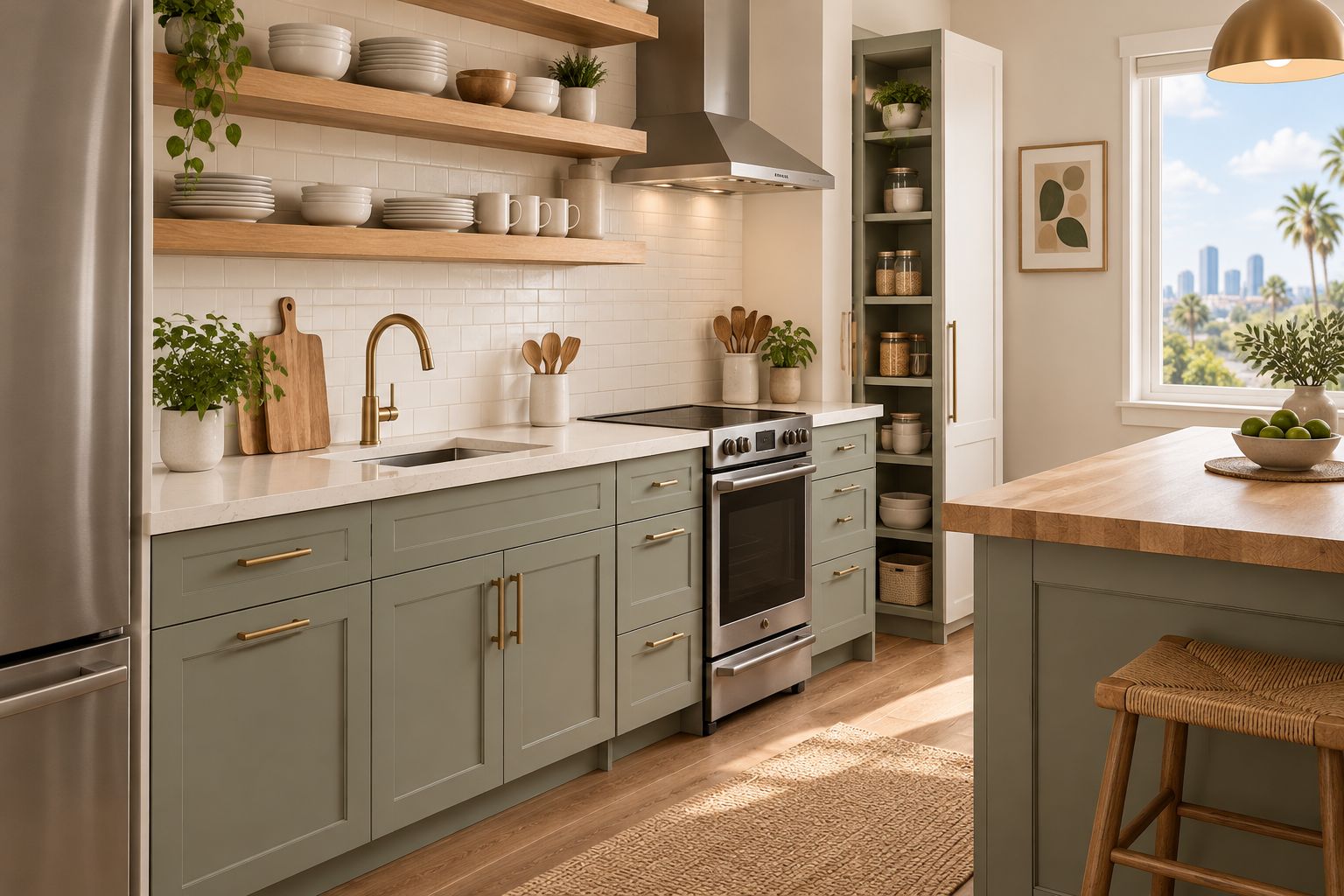
Verdict: Buy open wall shelving for frequently used dishes; skip it if concealed storage and low upkeep matter more.
6. Removable shelf inserts: best without cabinet alterations
Removable shelf inserts create an extra level within an existing shelf bay. They are a straightforward option for separating shorter objects where the cabinet has unused height. They do not correct a difficult opening or bring rear contents forward.
Removable shelf inserts pros:
- Require no cabinet reconstruction.
- Let you try a different arrangement before commissioning work.
- Separate small stacks of dishes or containers.
Removable shelf inserts cons:
- Standard dimensions leave some spaces poorly used.
- Supports occupy part of the shelf below.
- Tall items can lose their existing storage position.
Best for: Renters, homeowners avoiding alterations and households testing a new arrangement.
Check internal width, depth and clearance above the insert before selecting one. Follow the insert manufacturer's load guidance, and confirm that the cabinet shelf beneath it is suitable.
Start with 1 cabinet rather than reorganizing the whole kitchen at once. Use it through your normal cooking routine before deciding whether the arrangement deserves repeating.
Verdict: Buy removable shelf inserts when unused shelf height—not difficult access—is the problem.
How these options are ranked
This ranking prioritizes accessible storage, fit around contents, clear movement, compatible construction, upkeep and a defined installation scope. Fitted interiors take the default position because they address the layout inside suitable existing cabinets; the other options win for narrower needs.
This is a design-led buying guide, not a claim of comparative product testing. For your 2026 project, choose the option that resolves the specific obstruction rather than following the ranking mechanically.
Prepare a useful kitchen storage brief
A clear brief helps homeowners, designers, contractors and carpenters discuss the same work. Organize your request under these headings:
- Contents: List the items to store, including awkward handles and lids.
- Measurements: Supply 3 measurements for each opening: width, height and depth. Treat these as preliminary until site dimensions are confirmed.
- Materials: Describe existing cabinetry and the finish you want retained or matched.
- Site access: Explain entry routes, stairs, occupied rooms and restrictions affecting installation.
- Responsibilities: Identify who handles removal, making good and any qualified trade work.
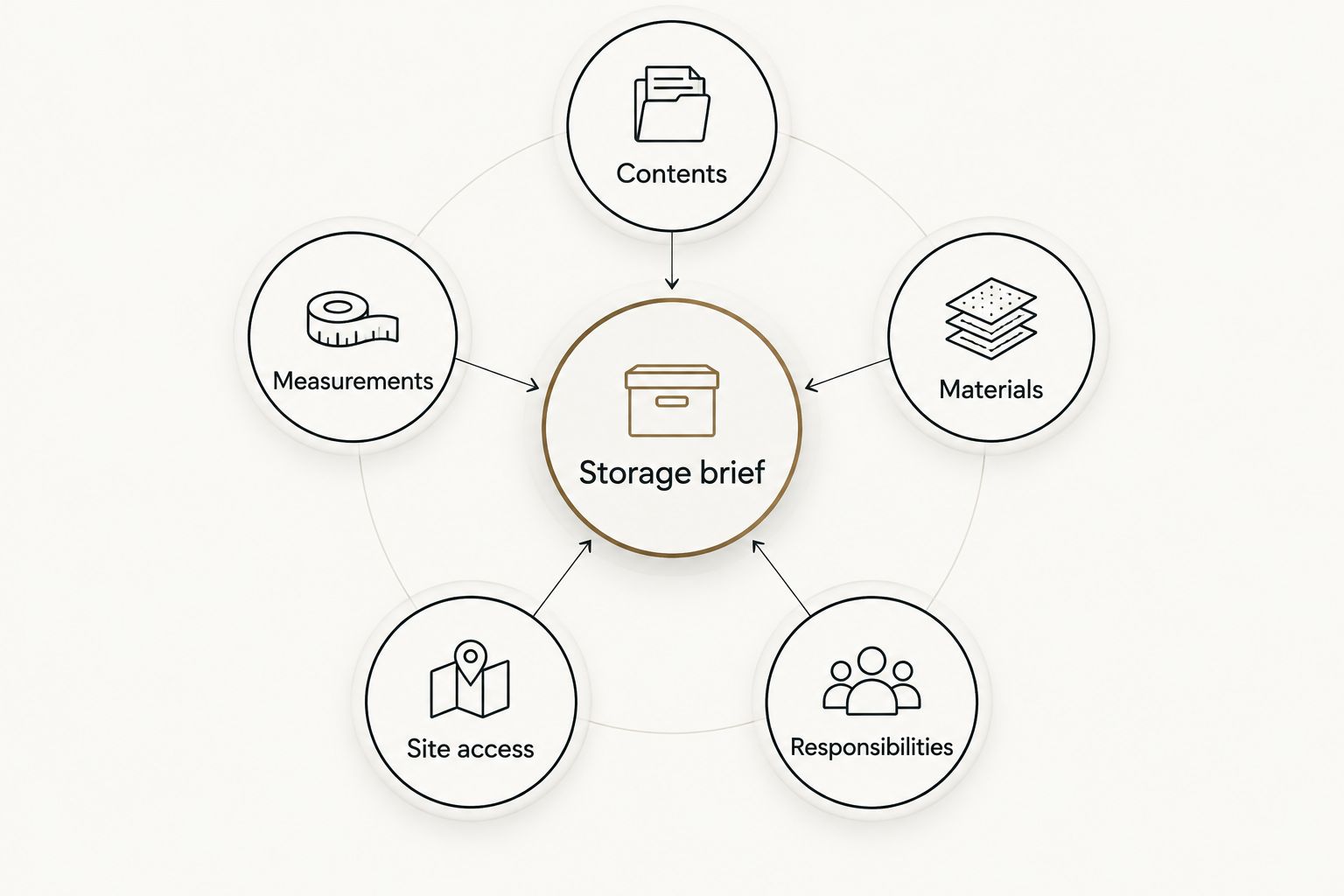
Include a simple marked-up sketch and wide photographs alongside close-ups. State your preferred deadline as a requirement to review, not an assumed installation commitment. For a 2026 inquiry, flag any other renovation work that affects access or sequencing.
Discuss your kitchen storage project
Bring dimensions, photographs and a list of what your kitchen needs to store.
Which kitchen storage should you choose?
Choose fitted cabinet interiors first when the existing cabinet boxes remain suitable. Choose deep drawers during cabinet replacement, vertical dividers for flat items and shallow pantry storage where a wall can accommodate it without disrupting movement.
Use open shelving selectively. Choose removable shelf inserts when you want a reversible change rather than carpentry. A considered kitchen does not need every option in this guide.
FAQ
What's the best storage solution for a small kitchen?
Fitted cabinet interiors are the best starting point when existing cabinets remain suitable but their layout wastes usable space. Match the arrangement to your contents and check the cabinet opening before choosing components.
Are deep drawers better than kitchen cupboards?
Deep drawers are better for accessing pots and pans from above. Cupboards remain useful for other contents, so choose by the items being stored rather than replacing every cupboard with drawers.
Can I improve kitchen storage without replacing cabinets?
Yes. Removable shelf inserts, suitable dividers and changes to internal shelving can improve storage without replacing whole cabinets. Confirm the condition and dimensions of existing cabinetry before making alterations.
Is open shelving practical in a small kitchen?
Open shelving is practical for a limited collection of frequently used dishes. It exposes contents to dust and cooking residue, so it is less suitable when concealed storage and minimal cleaning are priorities.
What should I send a carpenter for a kitchen storage quote?
Send photographs, preliminary dimensions, a contents list and a description of what currently makes storage difficult. Include finish expectations, site access, your preferred deadline and the responsibilities of other project teams.
Does JB Woodworks LLC build custom kitchen storage in Orlando?
JB Woodworks LLC builds custom cabinetry, shelving and storage for Orlando homeowners and project teams. Discuss the proposed kitchen work, materials, measurements and installation logistics before commitments.
Should I choose kitchen organizers before measuring?
No. Measure the cabinet interior, opening and stored objects before choosing organizers. Hinges, pipes and hardware can reduce the space available even when the cabinet looks large enough.
One last thing
Measure the object you dislike putting away most. Its handle, lid or awkward shape often reveals the real storage problem more clearly than a photograph of an empty cabinet. Solve that problem before adding compartments everywhere else.
Related guides
- Questions Orlando homeowners should ask before hiring a deck builder — useful for a separate outdoor carpentry project when comparing scope and contractor responsibilities.