Best overall: adjustable shelving. Best for display: floating shelves. Best for mixed household storage: open shelves above closed cabinetry. The best shelving styles for built-ins in Orlando in 2026 depend on what you store, how often it changes, and how much you want visible.
- Adjustable shelving leads the best shelving styles for built-ins when books, baskets, and storage needs change.
- Floating shelves suit selective displays; concealed support and wall conditions need planning before fabrication.
- Open shelves above closed cabinetry separate display pieces from everyday household clutter.
- JB Woodworks LLC builds custom shelving and storage; prepare dimensions, contents, finish preferences, and installation details before requesting scope.
Why this matters
A built-in changes more than an empty wall. Shelf depth affects circulation, cabinet doors need clearance, and the objects you keep determine the useful spacing between shelves. Start with those decisions, not a reference photograph.
JB Woodworks LLC is a fit for Orlando homeowners seeking custom built-in shelving and storage made for a particular space. Review the scope of its custom carpentry and woodworking before preparing your inquiry. For a 2026 project, separate the appearance you want from the storage requirements the finished work must meet.
What makes the best shelving styles for built-ins
Judge a shelving proposal against these criteria before choosing its profile or finish:
- Storage fit: Shelf depth and clear openings should suit your actual books, baskets, equipment, or display pieces.
- Support strategy: Shelf material, span, loading, and attachment need to be considered together. Appearance alone does not establish capacity.
- Adjustability: Movable shelves accommodate changing contents; fixed shelves create a more deliberate arrangement.
- Visual balance: Open shelves expose their contents. Closed cabinetry gives everyday items a separate place.
- Installation fit: Existing trim, outlets, wall conditions, access, and adjacent doors affect the design.
- Finish care: Ask how the proposed finish should be cleaned and what maintenance the selected materials require.
For your 2026 shortlist, treat these as decision criteria rather than a scorecard. A display wall and a working bookcase do different jobs.
Built-in shelving styles at a glance
| Shelving style | Best for | Standout feature | Key limitation |
|---|---|---|---|
| Adjustable shelving | Changing book and basket storage | Shelf positions can change | Adjustment holes remain part of the interior |
| Fixed painted shelving | An architectural wall composition | Consistent, intentional openings | Spacing cannot change without alteration |
| Floating shelves | A small, edited display | No visible vertical dividers | Concealed support needs early planning |
| Open shelves above closed cabinetry | Shared living-room storage | Display and concealed storage together | Doors and drawers need operating space |
| Glass shelving | Displaying decorative collections | Transparent shelf surfaces | Fingerprints and shelf edges remain visible |
| Desk-integrated shelving | A dedicated home workspace | Storage arranged around a work surface | Equipment and seating constrain the layout |
1. Adjustable shelving: best built-in style for changing storage
Adjustable shelving uses movable shelf supports so you can change the clear openings within a cabinet or bookcase. It is the strongest default when your collection includes books of different heights, baskets, or objects that move between rooms.
Choose the cabinet proportions first, then discuss the adjustment system. Shelf thickness, unsupported span, intended contents, and attachment details still need review; adjustability does not establish how much weight a shelf can hold.
Adjustable shelving pros:
- Accommodates changing object heights.
- Lets you revise the arrangement without rebuilding fixed openings.
- Works within painted or wood-finished cabinetry.
Adjustable shelving cons:
- Shelf-pin holes remain visible unless the design conceals them.
- Moving a shelf also means clearing its contents and repositioning supports.
Best for: Households whose book, basket, or hobby storage changes over time.
Ask the fabricator to show where the adjustment holes will appear and how the shelf supports will be accessed. That detail matters most when the shelving sits at eye level.
Verdict: Buy adjustable shelving when useful storage matters more than uninterrupted interior surfaces.
2. Fixed painted shelving: best built-in style for architectural balance
Fixed painted shelving gives each opening a settled position. It suits a wall where the relationship between shelves, vertical divisions, trim, and surrounding cabinetry matters more than future rearrangement.
For an Orlando home, choose the composition around the actual wall rather than copying another room's proportions. A nearby doorway, ceiling transition, or existing baseboard can change where the shelving should begin and end.
Fixed painted shelving pros:
- Creates a consistent arrangement of openings.
- Avoids exposed adjustment holes.
- Allows shelf positions to align with adjacent architectural details.
Fixed painted shelving cons:
- Larger objects will not fit if their assigned openings are too short.
- Changing the arrangement requires alteration rather than a simple adjustment.
Best for: A settled collection and a deliberately composed feature wall.
Bring the tallest and deepest intended objects into the design discussion. Specify which shelf faces, edges, and interior surfaces receive the selected finish, along with how site touch-ups will be handled.
Verdict: Buy fixed painted shelving when you can define the contents before approving the layout.
3. Floating shelves: best built-in style for an edited display
Floating shelves keep visible vertical divisions out of the composition. They work best when you want a few shelves to frame artwork, ceramics, or other selected objects rather than fill an entire wall with storage.
The clean appearance depends on details you do not see. Discuss the wall construction, concealed supports, shelf construction, intended contents, and any work needed before the shelves arrive.
Floating shelves pros:
- Leave the wall visible between objects.
- Avoid a full-height cabinet enclosure.
- Allow individual shelves to relate to nearby artwork or furniture.
Floating shelves cons:
- Concealed support limits cannot be judged from appearance.
- Cables, crowded objects, and uneven styling remain exposed.
Best for: Homeowners who want a restrained display rather than a primary bookcase.
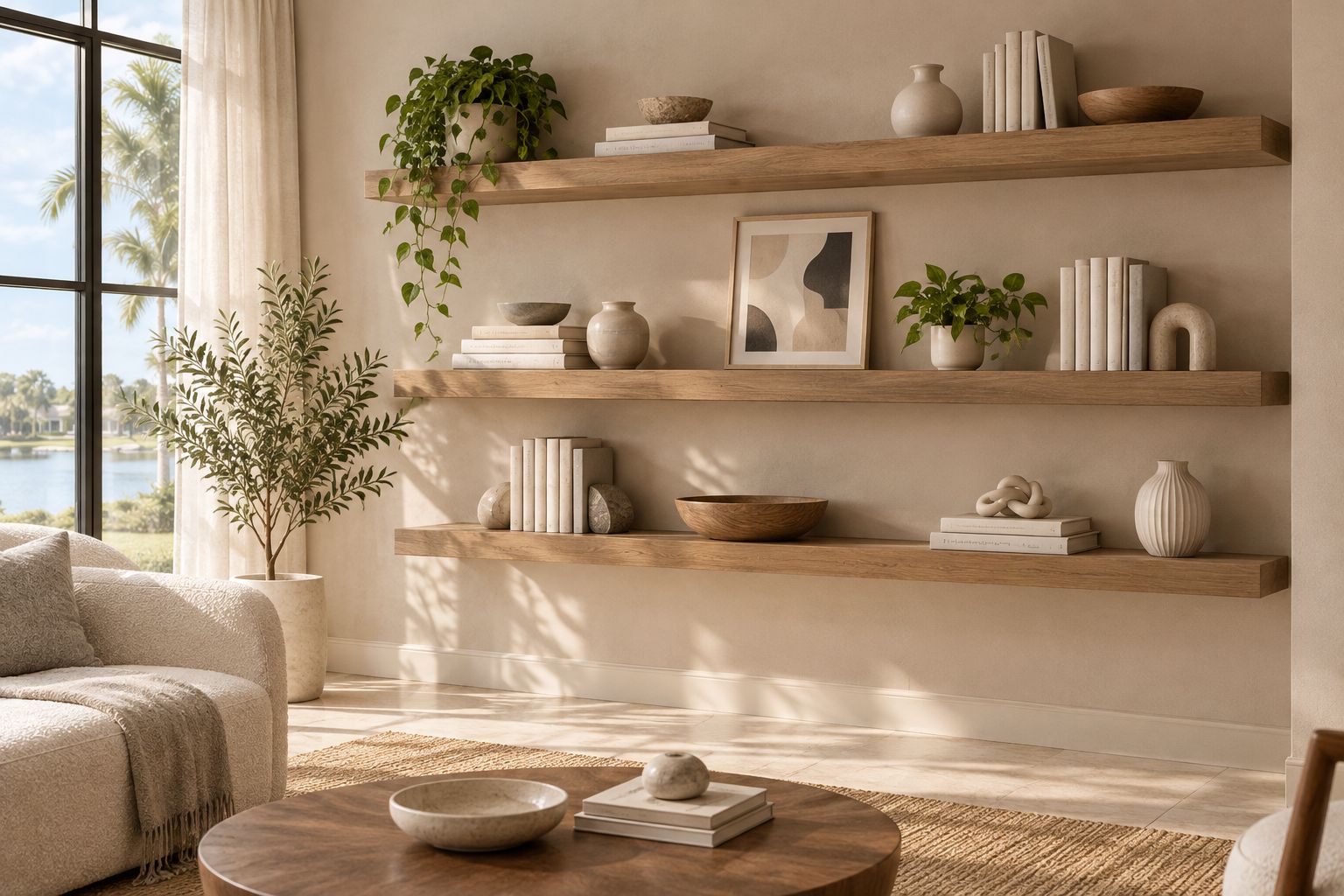
Do not approve a floating shelf from its front elevation alone. Ask how its depth, thickness, support, and wall connection work together for the objects you intend to place on it.
Verdict: Buy floating shelves for selective display; skip them as a default for dense, changing storage.
4. Open shelves above closed cabinetry: best for shared living rooms
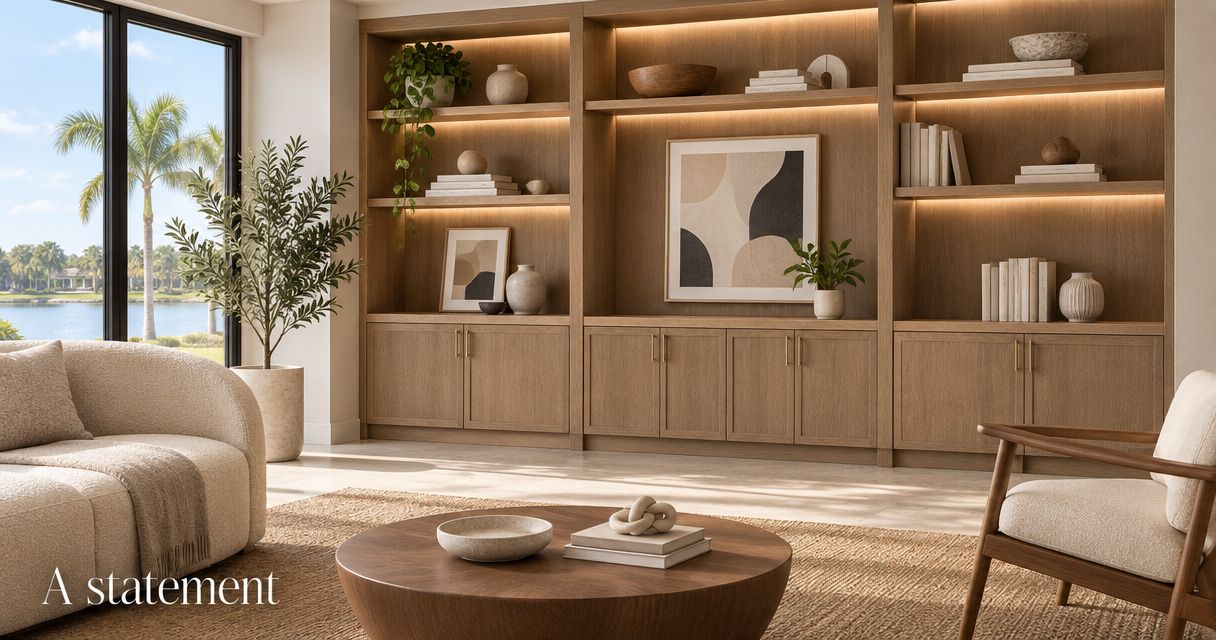
This arrangement gives display pieces an open upper section and everyday belongings a concealed lower section. It is a useful choice when one wall must hold books, games, equipment, and objects you want to see.
List the concealed contents as carefully as the display items. A lower cabinet is only useful when its openings, internal layout, and access suit what goes inside.
Open-over-closed shelving pros:
- Separates display from less orderly storage.
- Provides different storage types within one composition.
- Lets the upper shelves remain less crowded.
Open-over-closed shelving cons:
- Doors and drawers require clear operating space.
- Hardware, internal fittings, and cabinet divisions add decisions to the scope.
Best for: Family living rooms with both visible and concealed storage needs.
If equipment belongs inside the cabinetry, identify its ventilation, power, cable, and access requirements before fabrication. Confirm who handles any electrical changes; custom cabinetry does not remove the need for appropriately qualified trades.
Verdict: Buy open shelves above closed cabinetry when the wall needs to serve daily life as well as display.
5. Glass shelving: best built-in style for decorative collections
Glass shelving keeps the shelf surface visually transparent. It suits an enclosed or framed display where the objects should draw more attention than the horizontal shelves beneath them.
Specify the intended objects before selecting the glass or supports. The fabricator and glass supplier need to resolve suitable material, edges, dimensions, support, and intended loading rather than treating glass as interchangeable with a wood shelf.
Glass shelving pros:
- Leaves more of the surrounding display visible.
- Avoids a visually solid shelf surface.
- Suits a deliberately arranged collection.
Glass shelving cons:
- Fingerprints, dust, and edges remain noticeable.
- Replacement requires matching the specified dimensions and details.
Best for: Decorative collections that stay relatively consistent.
Discuss access for cleaning and how shelves will be removed, if removal is part of the design. If you want lighting, include fixtures, wiring access, and trade responsibilities in the brief.
Verdict: Buy glass shelving for a dedicated display, not as the automatic choice for general household storage.
6. Desk-integrated shelving: best built-in style for a home workspace
Desk-integrated shelving arranges storage around a working surface. The useful design starts with your chair, monitor, equipment, and everyday reach, then places shelving around those requirements.
Avoid approving the wall elevation without checking the seated experience. A shelf that looks balanced on paper can still interfere with a screen, task light, or comfortable access.
Desk-integrated shelving pros:
- Keeps work materials near the desk.
- Coordinates storage and work-surface placement.
- Creates defined places for equipment and supplies.
Desk-integrated shelving cons:
- Equipment changes can make fixed openings less useful.
- Shelf depth and placement can interfere with the workspace.
Best for: A dedicated home office with clearly identified equipment and storage needs.
Provide equipment dimensions and explain which devices need frequent access. Include cable routes and outlets in the review rather than leaving them for installation day.
Verdict: Buy desk-integrated shelving when the workstation requirements are clear before the cabinetry is drawn.
How the styles rank
Adjustable shelving ranks first because it answers changing storage needs without fixing every opening permanently. The remaining styles each serve a different priority: architectural composition, selective display, concealed storage, collection display, or desk use.
This 2026 guide ranks design approaches, not manufacturers or tested products. Choose the style whose limitation you can accept, then resolve materials, supports, finish, and installation with the fabricator.
Prepare a useful built-in shelving brief
For a 2026 inquiry to JB Woodworks LLC, organize the information below. Homeowners, designers, and contractors can use the same brief to keep decisions clear.
- Site measurements: Measure the wall width at 3 heights and record ceiling height, trim, outlets, and nearby openings. Treat these as preliminary dimensions for discussion, not fabrication approval.
- Storage contents: List the actual items and their dimensions. Tape out 1 full-size shelf opening to check whether your proposed arrangement feels useful.
- Materials and finish: Identify painted or visible-wood preferences and bring reference images that explain the detail you like.
- Site access: Take 2 photographs: a straight-on wall view and an approach view showing access. Describe stairs, parking, occupied rooms, and delivery restrictions.
- Responsibilities: Identify who approves drawings, prepares the site, handles qualified trade work, coordinates installation, and completes touch-ups.
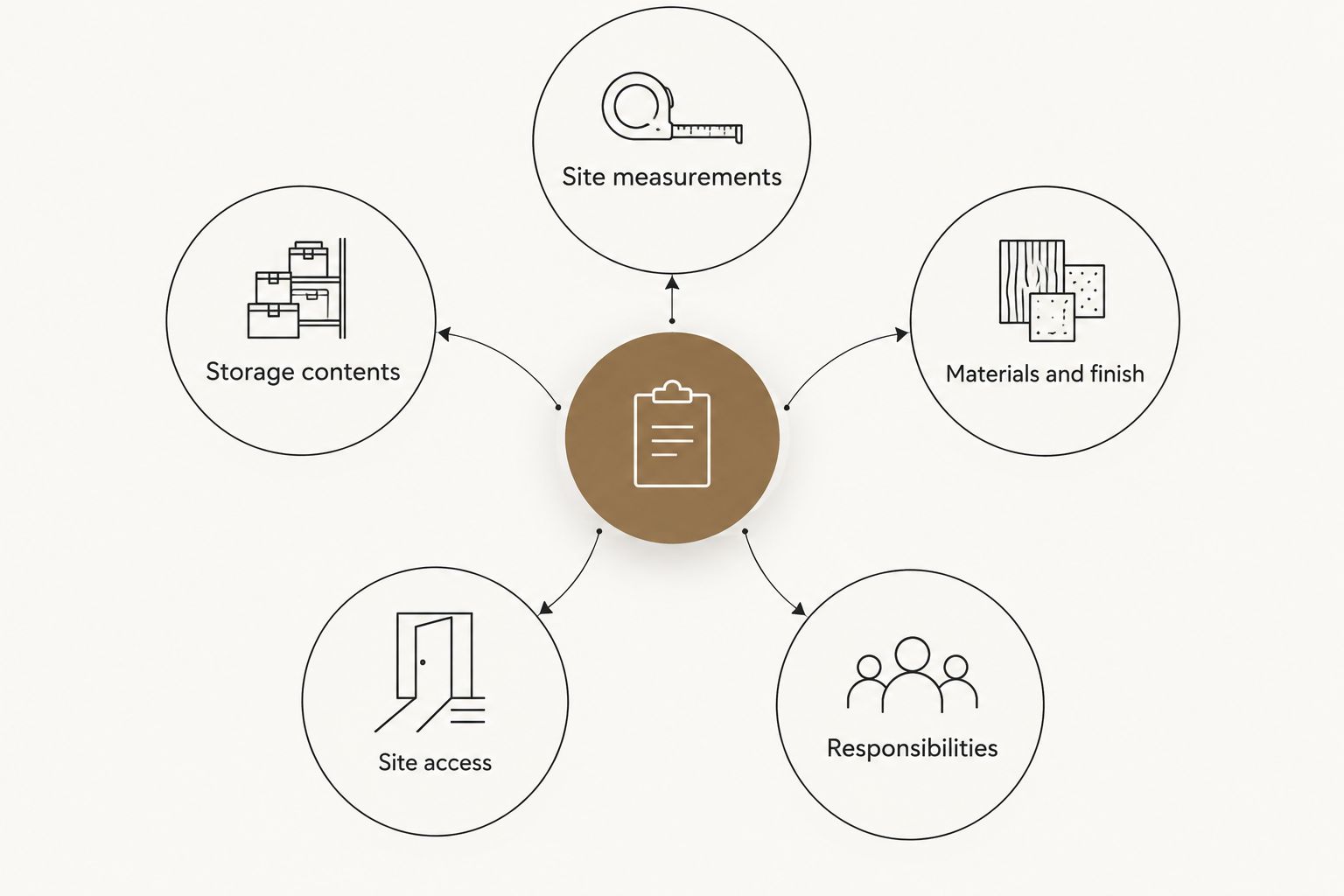
Ask which dimensions require site verification and when drawings become approved for fabrication. For work beyond Orlando and nearby Central Florida communities, review travel, transport, scope, and installation logistics before commitments.
Which shelving style should you choose?
Choose adjustable shelving if you are undecided. Choose fixed shelving only after checking the contents, floating shelves for selective display, and open-over-closed cabinetry when everyday items need somewhere out of sight.
For custom built-in shelving, JB Woodworks LLC gives Orlando homeowners a service option to discuss against this brief. Request a defined scope covering the layout, materials, finish, site conditions, and installation responsibilities—not just an estimate based on a photograph.
FAQ
What's the best shelving style for built-ins in 2026?
Adjustable shelving is the best default when your books, baskets, and storage needs change. Fixed shelves suit a settled arrangement, while open shelves above closed cabinetry suit mixed visible and concealed storage.
Are floating shelves better than built-in bookcases?
Floating shelves are better for a small, edited display; a bookcase is better suited to organized storage across multiple openings. Choose according to the contents and review the support requirements before fabrication.
Should built-in shelves be adjustable or fixed?
Choose adjustable shelves for changing contents and fixed shelves for a deliberate, settled composition. Fixed openings need to accommodate your intended objects before you approve the layout.
What should I send when requesting custom shelving in Orlando?
Send preliminary dimensions, wall and access photographs, a contents list, finish preferences, and reference images. Identify deadlines, site restrictions, and who will approve drawings and coordinate related work.
Can built-in shelving include a desk or closed cabinets?
Built-in shelving can combine a desk, closed cabinetry, and open storage. Define equipment dimensions, door clearance, seating, and cable requirements before the design is finalized.
How do I choose shelf depth for a built-in?
Choose shelf depth around the objects you intend to store and the room clearance you need to preserve. Measure the contents and check the proposed depth in the room before approving drawings.
Who handles outlets and wiring around built-in shelves?
The project scope should identify the appropriately qualified trade responsible for electrical changes. Confirm fixture locations, access, and coordination before fabrication rather than assuming those tasks are included.
One last thing
Before approving your 2026 built-in layout, put your least attractive everyday items on the storage list. Chargers, paperwork, and game boxes need a place too; designing only around display objects leaves the practical work unfinished.