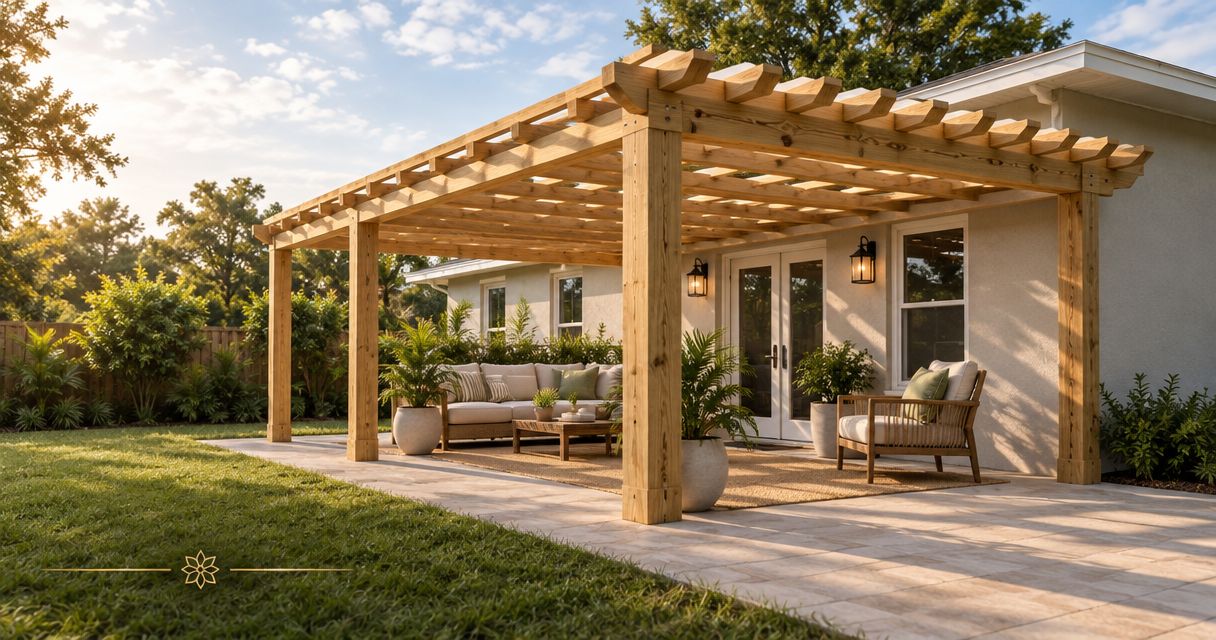
Best overall for a painted or stained Orlando pergola: pressure-treated pine. Best for a lightweight, visible-wood design: western red cedar. Best for a regional wood character: cypress. Best for dense hardwood detailing: ipe. The best timber for an Orlando pergola depends on exposure, appearance, maintenance, and the structure—not the species name alone.
- Pressure-treated pine is the best timber for an Orlando pergola when treatment suitability and finish planning lead the brief.
- Western red cedar suits exposed-wood pergolas; specify the species and distinguish durable heartwood from sapwood.
- Cypress suits a regional wood aesthetic, but grade and heartwood content need attention.
- JB Woodworks LLC builds timber pergolas for Orlando homeowners; prepare dimensions, materials, site access, and installation questions.
Why this matters
An Orlando pergola faces rain, sun, and moisture around joints and connections. Choosing a durable species does not correct a detail that holds water, an unsuitable fastener, or an attachment that has not been properly resolved.
JB Woodworks LLC is a fit for Orlando homeowners seeking a custom timber pergola built around a defined space and project brief. Its custom carpentry work includes timber pergolas alongside decks, cabinetry, furniture, and commercial fabrication.
For a 2026 project, settle the intended use before selecting timber. An open shade structure, a vine-covered garden feature, and a pergola intended to support added equipment present different questions. Tell the project team about those intentions before drawings or material commitments.
What makes the best timber for an Orlando pergola?
Use these criteria to compare actual material proposals, not just wood names:
- Exposure suitability: Match treatment, natural durability, and detailing to rain exposure and any ground-contact conditions.
- Material identity: Ask for the species, grade, treatment where applicable, and whether natural-durability claims concern heartwood.
- Structural suitability: Select member sizes and connections for the design. Species alone does not establish a safe span.
- Finish expectations: Decide whether you want paint, a maintained wood finish, or natural weathering.
- Fabrication demands: Consider weight, cutting, drilling, handling, and access for assembly.
- Maintenance access: Make sure exposed faces, joints, and connections remain reachable for inspection and upkeep.
For your 2026 comparison, ask each bidder to address the same criteria. A proposal that names only “cedar” or “treated lumber” leaves important material decisions unresolved.
Timber options at a glance
| Timber | Best for | Standout characteristic | Key limitation |
|---|---|---|---|
| Pressure-treated pine | Painted or stained custom pergolas | Preservative treatment matched to exposure | Moisture condition affects finishing and movement |
| Western red cedar | Visible grain with lighter handling | Relatively lightweight wood with naturally durable heartwood | Softer surfaces dent; sapwood differs from heartwood |
| Cypress | A regional wood aesthetic | Distinctive grain and naturally durable heartwood | Durability varies with the material supplied |
| Ipe | Dense hardwood details | Hard, dense wood with naturally durable heartwood | Weight and machining complicate fabrication |
These are material choices, not interchangeable specifications. A change from pine to ipe needs more consideration than substituting a different board on an order.
1. Pressure-treated pine: best for painted or stained pergolas
Pressure-treated pine is the default recommendation when you want a custom pergola whose final appearance comes from its shape and finish. Preservatives protect susceptible wood against decay and insect attack when the treatment is appropriate for the intended exposure. Treatment does not make wood waterproof or eliminate maintenance.
Pressure-treated pine pros:
- Treatment can be specified for the relevant exposure conditions.
- A painted or stained design does not depend on a uniform decorative grain.
- Material selection can distinguish above-ground members from components exposed to ground contact.
Pressure-treated pine cons:
- Wet material changes dimension as it dries and can check or twist.
- Finishing too early conflicts with coating manufacturers’ moisture requirements.
- Connectors and fasteners need compatibility with the preservative treatment.
Ask the builder to identify the treatment category, lumber grade, and moisture condition. Also ask how cut ends will be handled under the treatment supplier’s instructions. Those details tell you more than a general promise that the timber is suitable outdoors.
For a 2026 installation, agree on who handles finishing and what determines readiness. A calendar date alone is not a substitute for suitable wood moisture and application conditions.
Best for: Homeowners who want a painted or stained pergola and are prepared to specify treatment and finishing properly.
Verdict: Buy pressure-treated pine for a finish-led design with documented exposure suitability.
2. Western red cedar: best for a lighter exposed-wood design
Western red cedar suits a pergola where the wood itself remains part of the design. It is relatively lightweight, and its heartwood has natural decay resistance. Specify western red cedar rather than relying on the broad label “cedar,” which covers different woods.
Western red cedar pros:
- Visible grain works with a wood-forward design.
- Lower weight than dense hardwood simplifies handling comparisons.
- Naturally durable heartwood provides an alternative to preservative-treated pine.
Western red cedar cons:
- Soft surfaces are susceptible to dents and handling marks.
- Sapwood does not share heartwood’s natural durability.
- Keeping a chosen color requires a finish and maintenance plan.
Ask to see representative material before approving the appearance. Knots, grain, and color variation belong in that discussion; a small, clear sample does not describe every board in a knotty grade.
A cedar pergola will weather outdoors. If you prefer a maintained color rather than a weathered surface, make that an explicit finish requirement. Discuss exposed end grain and areas around connections as well as the broad faces you see from the patio.
Best for: Homeowners and designers prioritizing visible wood and relatively light members over resistance to surface dents.
Verdict: Buy western red cedar when grain and handling matter, with species and grade clearly identified.
3. Cypress: best for a regional wood aesthetic
Cypress is a useful option when its grain and character fit the setting. Cypress heartwood has natural decay resistance, but the name alone does not establish the durability of every board. Heartwood content and material quality deserve particular attention.
Cypress pros:
- Its visible grain suits an exposed-timber pergola.
- Naturally durable heartwood offers another untreated-wood option.
- Material variation can contribute to a deliberately natural appearance.
Cypress cons:
- Durability varies with the wood supplied; species identity is not enough.
- Mixed color and grain require review if you expect a uniform appearance.
- Outdoor weathering still affects the surface and finish.
Do not choose cypress solely because it sounds geographically appropriate for Florida. Ask what material the proposal actually includes and how the supplier describes its grade and heartwood content.
Review a representative sample with your intended finish. A homeowner who wants consistent color needs a different selection conversation from someone who welcomes variation. Record that preference before fabrication, rather than treating it as a finishing correction afterward.
Best for: Homeowners who like cypress’s appearance and will evaluate the supplied material rather than rely on the name.
Verdict: Buy cypress for its character after reviewing grade, heartwood content, and finish expectations.
4. Ipe: best for dense hardwood detailing
Ipe is a dense tropical hardwood with naturally durable heartwood. Its hardness and weight distinguish it from cedar, but those qualities also change the work involved in cutting, drilling, moving, and joining it. It belongs in a deliberate hardwood brief, not an automatic upgrade.
Ipe pros:
- Hard surfaces resist denting better than softer woods.
- Dense wood offers a distinctly different material character.
- Naturally durable heartwood suits consideration for exterior applications.
Ipe cons:
- Heavy members make handling and installation more demanding.
- Hardness complicates machining and fastening.
- Keeping the original color requires maintenance; natural weathering changes it.
For a full pergola, ask why ipe is the right choice for the overhead members as well as the visible details. Do not assume that familiarity with ipe decking establishes the suitability of a pergola design.
Request species identification and sourcing information. Discuss transport, lifting access, connections, and finish expectations before committing to the material. The supplied timber and proposed construction must fit the project together.
Best for: Design-led projects where dense hardwood is a specific requirement and fabrication logistics have been resolved.
Verdict: Hold on ipe until the design and handling plan justify the added complexity.
How the options are ranked
This 2026 ranking prioritizes a usable residential brief: exposure suitability, appearance, structural decisions, fabrication, and maintenance. Pressure-treated pine takes the default slot for painted or stained work; cedar, cypress, and ipe each answer a different material preference.
The order is not a measured service-life comparison. No species earns a lifespan promise from its name alone. Treatment, heartwood content, workmanship, drainage, exposure, and upkeep all affect the finished structure.
Prepare a useful pergola quote request
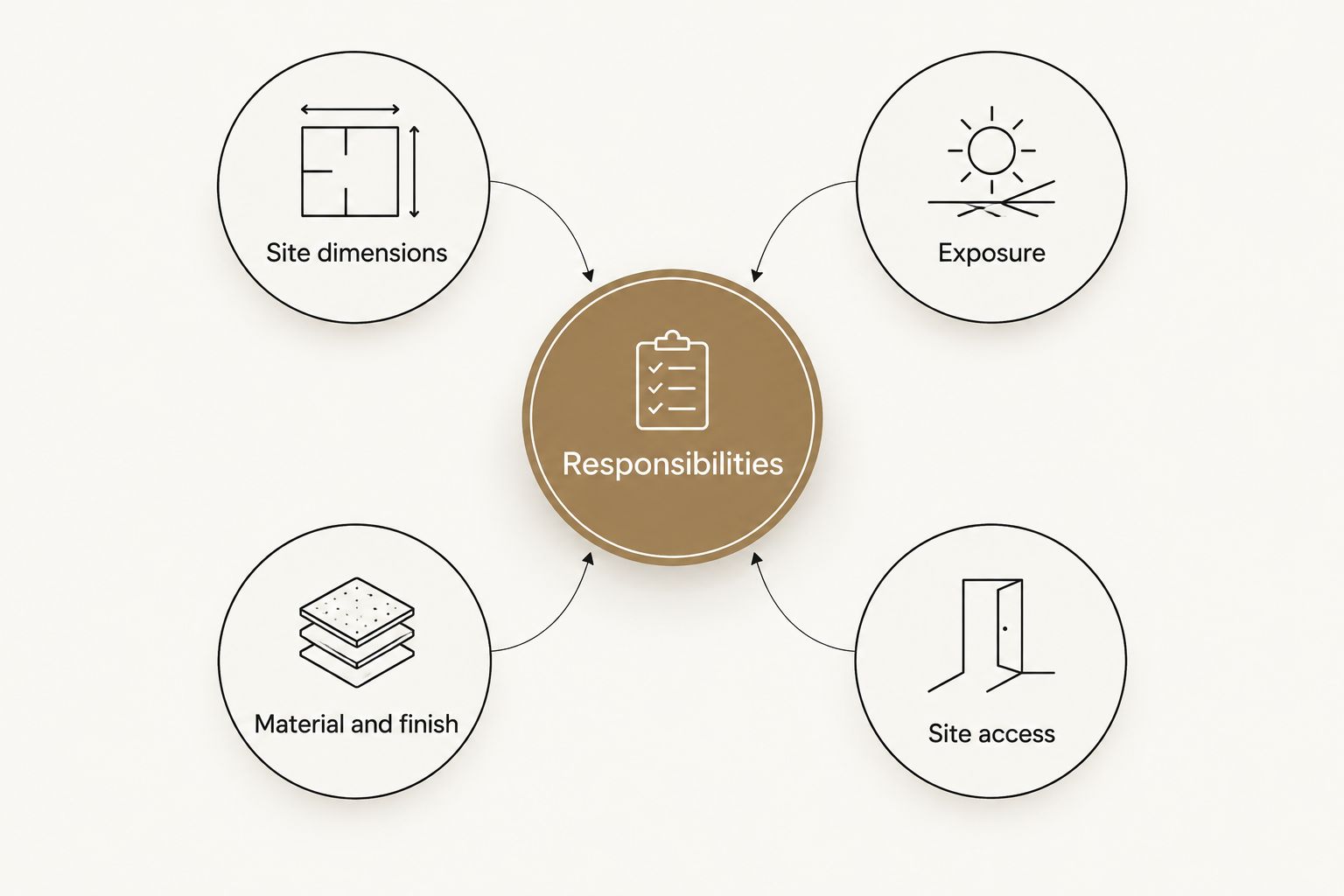
A clear brief helps you compare proposals without asking builders to guess what you mean. For JB Woodworks LLC or another prospective builder, organize your request under these headings.
Site dimensions
Provide 3 measurements in inches or feet: intended length, width, and desired clear height. Mark them as preliminary measurements, not approved construction dimensions, and show nearby doors, windows, and roof edges.
Exposure
Explain whether the pergola will stand independently or sit beside the house. Identify irrigation, nearby planting, paving, and places where water collects. Describe any intended vines, shade fabric, lighting, fans, or future covering so the relevant requirements can be reviewed.
Material and finish
Name your preferred timber and acceptable alternatives. Include 2 finish references, such as physical samples or photographs, and explain whether the priority is color consistency, visible grain, or natural weathering.
Site access
Include 4 site photographs showing the proposed location, the approach from the street, the narrowest access point, and nearby structures. Flag gates, stairs, landscaping, or occupied work areas that affect delivery and assembly.
Responsibilities
Identify who will confirm dimensions, prepare drawings, review permit and engineering requirements, coordinate qualified trades, and handle installation and finishing. State any deadline and its reason; scope, materials, travel, and installation logistics need review before commitments.
Which timber should you choose?
Choose pressure-treated pine as the starting point for a painted or stained pergola. Choose western red cedar for visible grain and lighter handling, cypress for its particular character, or ipe only when dense hardwood is central to the design.
For a 2026 project, make the final choice against the actual proposal. Compare species, grade, treatment where applicable, finish scope, connections, and installation responsibilities side by side. A carefully specified material is more useful than a vague promise of “premium timber.”
When discussing a timber pergola with JB Woodworks LLC, start with the space and intended use. Let the material choice follow the dimensions, exposure, appearance, and installation requirements.
FAQ
What's the best timber for an Orlando pergola?
Pressure-treated pine is the default choice for a painted or stained Orlando pergola when its treatment matches the exposure. Western red cedar and cypress suit visible-wood designs; ipe needs a deliberate hardwood specification and handling plan.
Is cedar better than pressure-treated pine for a pergola?
Western red cedar is better suited to a lighter, visible-grain design, while pressure-treated pine is the starting choice for a painted or stained design. Compare the actual grade, heartwood content or treatment, and finish requirements rather than the names alone.
Is cypress naturally rot resistant?
Cypress heartwood has natural decay resistance, but that does not describe every cypress board. Ask about heartwood content, grade, and the material being supplied, and detail the pergola so water does not collect.
Does pressure-treated pergola timber need a finish?
Pressure treatment and finishing serve different purposes: treatment addresses biological deterioration, while a finish addresses surface appearance and protection according to the coating system. Confirm whether finishing is included and follow the coating manufacturer's wood-moisture and application requirements.
Can I add a roof or fan to a timber pergola later?
Do not assume a timber pergola is suitable for a later roof or fan. Tell the project team about intended additions before design so loads, connections, permits, and qualified trade requirements can be reviewed.
What should I send with a pergola quote request?
Send preliminary dimensions, site photographs, preferred timber, finish references, access information, and intended use. Identify drawings, deadlines, installation responsibilities, and any proposed lighting, fans, or covering.
One last thing
Ask to see the proposed timber sample in both dry and wetted conditions. Water changes the apparent color of wood, so a sample viewed only indoors does not tell the whole visual story. Review it alongside the intended finish before approving the appearance.