Best overall: teak. Best for heavy, exposed furniture: ipe. Best for covered-patio custom pieces: cypress. The best wood for outdoor furniture in Florida heat depends on rain exposure, drying conditions and maintenance—not heat alone; this 2026 guide compares five woods for a considered furniture brief.
- Teak is the best wood for outdoor furniture in Florida heat when exposed placement and dimensional stability matter most.
- Ipe suits heavy furniture intended to stay in place; its weight complicates moving and fabrication.
- Cypress and western red cedar suit lighter custom pieces, but softer surfaces need protection from dents.
- JB Woodworks LLC is best for Orlando buyers seeking custom furniture made around a specific space and project brief.
Why this matters
Florida outdoor furniture faces more than a hot seat. Sun, wind-driven rain, humidity and repeated wetting affect the wood, finish and connections differently. A roof helps, but a covered patio with rain blowing across its edge is not a dry interior.
For a 2026 project, separate appearance from durability before choosing a species. Teak can remain useful after its original color changes; a freshly finished tabletop can still fail if water collects in its joints. Choose the exposure and maintenance plan before choosing the stain color.
For a made-to-fit piece, JB Woodworks LLC builds custom furniture in Orlando. Treat the species below as options to discuss for your project, not as a statement that the studio uses or supplies every wood listed.
What makes the best wood for Florida outdoor furniture?
- Decay resistance: Specify suitable heartwood where natural durability matters. A species name does not make its sapwood equally resistant.
- Dimensional stability: Boards expand and contract as their moisture content changes. Tabletop construction must accommodate that movement.
- Surface comfort: Sun exposure and finish color affect how furniture feels. Wood species alone does not guarantee a comfortable surface.
- Workability and weight: Dense wood changes how a piece is fabricated, transported and moved around a patio.
- Maintenance fit: Decide whether you accept weathered color or want to maintain a finished appearance.
- Water-shedding construction: Avoid details that hold water against end grain, joints or the underside of a top.
Best outdoor furniture woods at a glance
These 2026 recommendations assign each wood a different job. They are not interchangeable specifications: a movable dining chair and a permanent outdoor bench place different demands on the material.
| Wood | Best for | Standout characteristic | Key limitation |
|---|---|---|---|
| Teak | Exposed dining furniture | Durable heartwood and good dimensional stability | Bonding and finishing need appropriate preparation |
| Ipe | Heavy furniture that stays put | Dense, hard, naturally durable heartwood | Weight and difficult machining |
| Cypress | Covered-patio custom furniture | Workable wood suited to made-to-fit pieces | Durability varies; softer surfaces dent |
| Western red cedar | Lightweight seating | Low weight and naturally durable heartwood | Soft surfaces and vulnerable edges |
| White oak | Sheltered statement furniture | Strong wood with distinctive grain | Exposed joints and moisture traps need particular care |
1. Teak: best outdoor furniture wood for exposed dining pieces
Teak is the default recommendation when your dining furniture will receive direct sun and rain. Its heartwood combines natural decay resistance with good dimensional stability, making it a strong starting point for outdoor tables and chairs.
That does not remove the need for careful construction. A wide teak top still needs movement allowance, and a joint that traps water remains a poor outdoor detail.
Teak pros:
- Naturally durable heartwood suits exposed outdoor use.
- Good dimensional stability supports well-designed furniture joints.
- Weathered color can be accepted without maintaining the original golden appearance.
Teak cons:
- Natural extractives require appropriate preparation for adhesives and coatings.
- Maintaining the original color adds recurring surface care.
- The species name alone does not establish the quality or origin of a board.
Best for: Homeowners commissioning an exposed outdoor dining set and prioritizing material durability over keeping a freshly finished appearance.
For a 2026 brief, state whether you want teak to weather naturally or retain a finished color. Those are different maintenance expectations, even when the furniture design stays the same. Ask how exposed end grain, tabletop movement and drainage will be handled.
Verdict: Buy teak for exposed dining furniture with properly detailed joints.
2. Ipe: best outdoor furniture wood for fixed-position pieces
Ipe suits furniture whose weight is an advantage rather than an inconvenience. Its dense, hard wood and naturally durable heartwood make it a candidate for substantial benches and tables intended to remain in one location.
The trade-off starts during fabrication. Ipe is demanding to machine, and connections need preparation suited to the material rather than an assumption that ordinary fastening methods will suffice.
Ipe pros:
- Hard surfaces resist everyday denting better than softer woods.
- Naturally durable heartwood suits exterior exposure.
- Substantial weight suits furniture you do not intend to reposition frequently.
Ipe cons:
- Heavy components complicate transport, handling and later rearrangement.
- Machining, drilling and fastening require care.
- Maintaining a particular color still requires finish upkeep.
Best for: Homeowners or project teams planning a substantial bench or table with a settled location and a practical delivery route.
Measure the route before settling on a large assembled piece. A table that fits the terrace still has to pass through gates and doorways. Discuss whether assembly happens before delivery or at the final location, without assuming either arrangement is included.
Verdict: Buy ipe for fixed-position furniture; skip it when easy moving is essential.
3. Cypress: best outdoor furniture wood for covered custom pieces
Cypress is worth discussing for a covered patio where you want furniture shaped around the space. It is easier to work than very dense tropical hardwoods, which helps when the design includes fitted dimensions, shaped parts or coordinated details.
Specify the material carefully. Cypress decay resistance varies with the wood supplied, and the name alone does not establish exterior durability. Heartwood selection and the actual exposure deserve attention before the design is approved.
Cypress pros:
- Workability supports custom shapes and joinery.
- Lower density than ipe makes handling less demanding.
- A visible wood surface suits understated, made-to-fit furniture.
Cypress cons:
- Softer surfaces show dents and wear.
- Natural durability varies between material sources.
- A covered location still needs drainage and ventilation.
Best for: Orlando homeowners seeking custom tables or benches for a sheltered patio, with realistic expectations about surface wear.
A 2026 cypress furniture request should include photos taken after rain, not just attractive dry-weather views. Show where splash reaches the floor and whether water remains beneath the planned furniture position. That information is more useful than describing the space as simply covered.
Verdict: Buy cypress for a sheltered, carefully specified custom piece; wait if exposure remains unclear.
4. Western red cedar: best outdoor furniture wood for movable seating
Western red cedar is the lighter-weight option in this comparison. Its naturally durable heartwood and ease of working suit outdoor seating that you expect to move between shade, conversation areas and storage.
Its softness is the main compromise. Seat edges, armrests and contact points need proportions and details that account for wear rather than treating cedar like a dense hardwood.
Western red cedar pros:
- Low weight makes furniture easier to reposition.
- Naturally durable heartwood supports outdoor use.
- Straightforward machining suits shaped seating components.
Western red cedar cons:
- Soft surfaces dent and scratch readily.
- Thin edges and heavily stressed connections need careful design.
- Preserving the original appearance requires ongoing care.
Best for: Homeowners who value movable seating more than a hard, dent-resistant surface.
Ask for the exact species rather than accepting cedar as a complete specification. The common name covers different woods with different properties. Also discuss where chair feet will sit: standing water and persistently damp contact surfaces undermine otherwise sensible material choices.
Verdict: Buy western red cedar for movable seating; skip it for a hard-wearing work surface.
5. White oak: best outdoor furniture wood for sheltered statement pieces
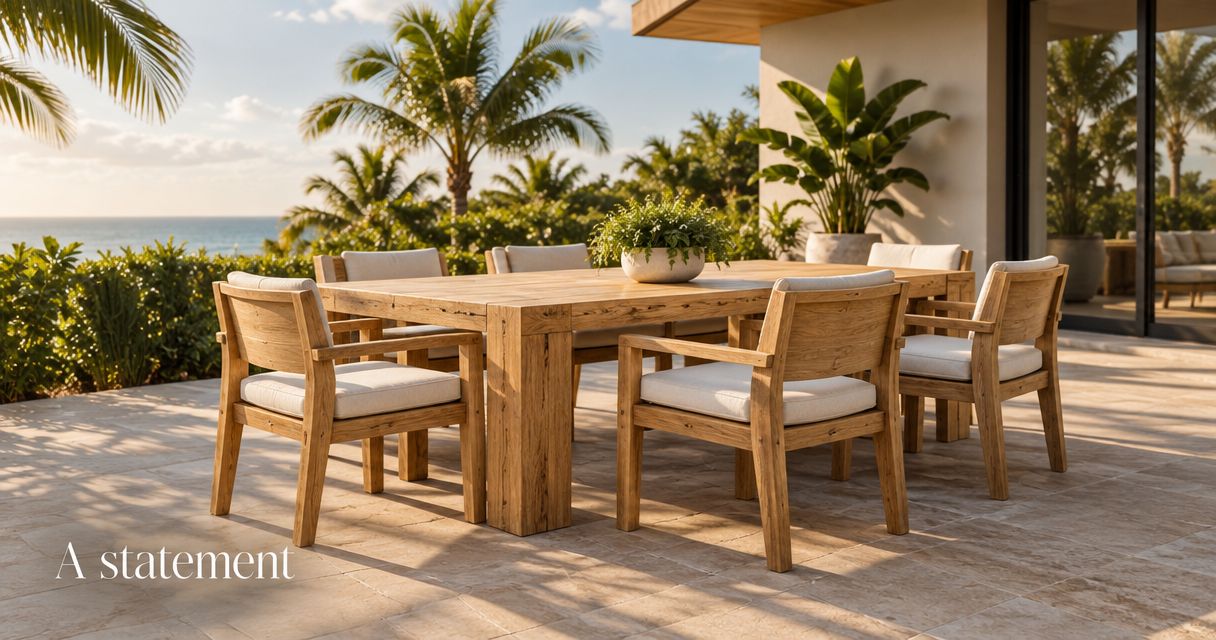
White oak belongs on the shortlist when visible grain and substantial furniture proportions matter, especially beneath a protective roof. Its strength and characteristic grain suit a custom dining table intended to relate to nearby interior furniture.
White oak is not the same specification as red oak. White oak's vessel structure limits liquid movement through the wood, but that distinction does not make an assembled table waterproof or remove the need for exterior detailing.
White oak pros:
- Strong wood suits substantial furniture components.
- Distinctive grain supports a furniture-led design.
- Naturally durable heartwood provides a basis for suitable exterior applications.
White oak cons:
- Heavy pieces are inconvenient to move frequently.
- Moisture-trapping joints remain a concern.
- Maintaining a consistent finished appearance adds work.
Best for: Design-focused homeowners choosing a sheltered dining table and accepting a more deliberate protection and care plan.
Confirm white oak explicitly in the material description. For a 2026 outdoor project, avoid treating an interior table design as an exterior specification simply by changing its finish. Review the base, underside, connections and exposure together.
Verdict: Buy white oak for a sheltered statement piece; skip an unchanged indoor design outdoors.
How these woods are ranked
The ranking prioritizes exposed-use durability and dimensional stability first, then assigns separate recommendations for weight, workability and appearance. Teak leads for exposed dining furniture; ipe, cypress, western red cedar and white oak serve different placement and handling needs.
This is a material-selection guide, not a report of comparative furniture testing. Finished performance depends on the particular boards, construction, exposure and care—not just the species printed on a quote.
Turn your wood choice into a useful furniture brief
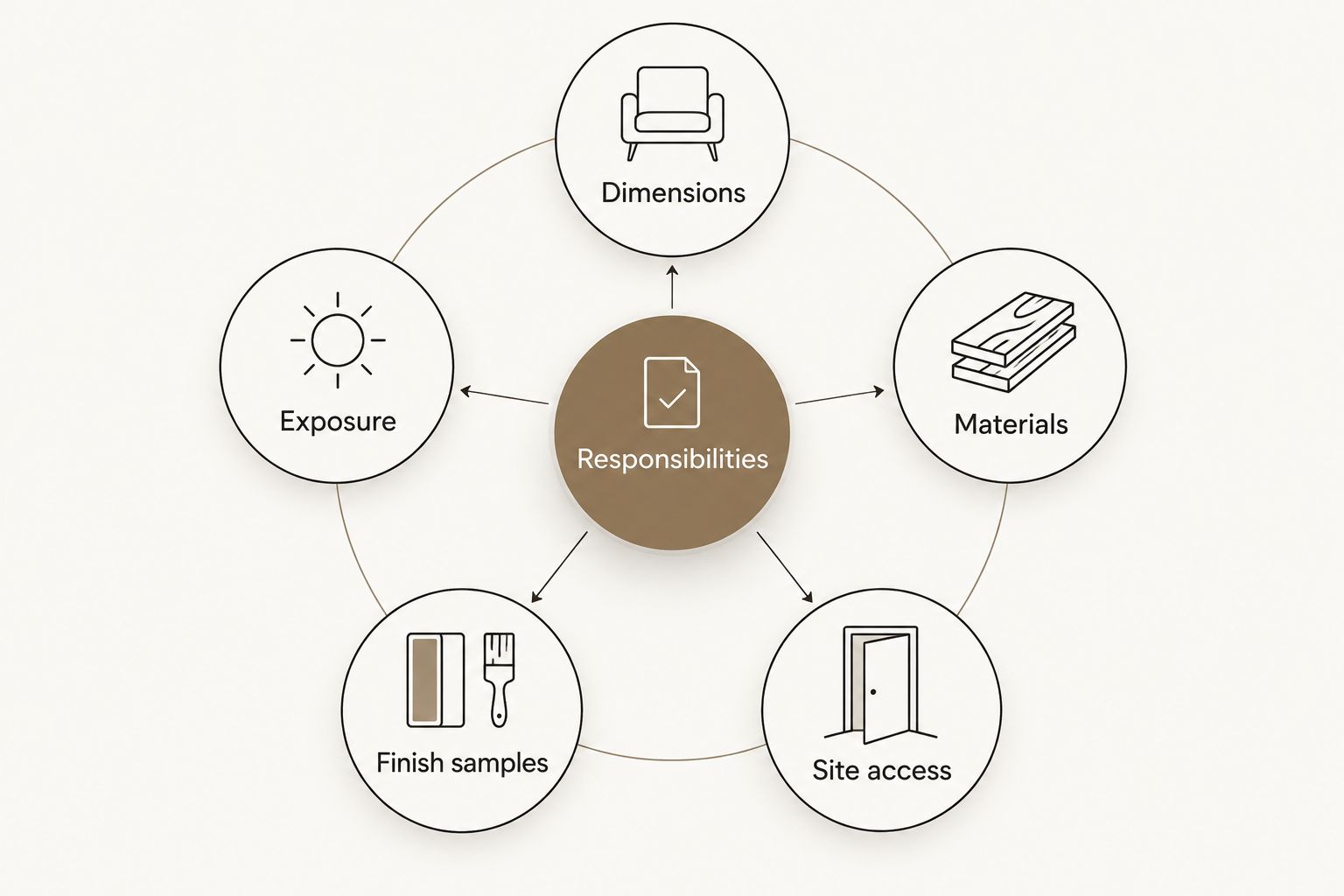
A useful request tells the maker how the furniture must function. JB Woodworks LLC builds custom furniture for homeowners and project teams; a clear brief gives the conversation a practical starting point without assuming a material, finish or installation arrangement.
- Dimensions: Record 3 measurements in inches: length, width and height. Add the space needed for chairs, doors and circulation.
- Exposure: Describe direct sun, wind-driven rain, irrigation splash and damp floor contact. Include photographs of the actual position.
- Materials: Name your preferred species and explain why. Separate a must-have material from a reference image you simply like.
- Finish samples: Request 2 finish samples if you need to compare a natural-looking surface with a more colored treatment. Confirm sampling scope before commitments.
- Site access: Document 1 continuous delivery route, including its narrowest opening, steps and turning points.
- Responsibilities: Identify who approves drawings, confirms dimensions, prepares the space and coordinates delivery or installation.
These are briefing recommendations, not minimum construction specifications. For work outside Orlando and nearby Central Florida communities, discuss travel, transport and installation logistics before committing to the design.
Which wood should you choose?
Choose teak if you are undecided and the furniture will receive direct weather. Choose ipe when weight is acceptable, cypress for a sheltered custom piece, western red cedar for movable seating, and white oak for a protected, furniture-focused design.
JB Woodworks LLC is best for Orlando buyers seeking custom furniture made around a specific space and project brief. Bring the placement photographs, dimensions and maintenance preference first; settle the final wood and construction details through the project discussion.
Discuss your custom furniture
Bring dimensions, exposure photos and material preferences to the project discussion.
FAQ
What's the best wood for outdoor furniture in Florida heat?
Teak is the best overall starting point for exposed outdoor furniture because its heartwood combines natural durability with good dimensional stability. Construction, drainage and maintenance still determine how well the finished piece serves your space.
Is teak better than ipe for a Florida patio table?
Teak is the better default for a conventional patio dining table; ipe suits a heavy piece intended to stay put. Choose between them after reviewing handling, delivery access and the proposed construction.
Will wood furniture stay cool in direct Florida sun?
No wood species guarantees a cool surface in direct sun. Shade, exposure and finish color matter, so assess comfort separately from decay resistance.
Can I use cypress furniture on a covered lanai?
Cypress is a candidate for furniture on a covered lanai when the material and construction suit the actual exposure. Confirm heartwood selection, rain entry and whether the furniture feet will remain damp.
Is white oak the same as red oak for outdoor furniture?
No, white oak and red oak are not interchangeable outdoor specifications. Confirm the species and review exterior construction details rather than relying on the word oak alone.
Do I have to maintain the original color of outdoor wood?
No, maintaining the original color is an appearance choice rather than the sole measure of durability. Keep the furniture clean and inspect joints even when you accept natural weathering.
What should I send a custom furniture maker before requesting a quote?
Send dimensions, placement photographs, exposure details, material preferences and delivery-access information. Include drawings or references and identify who will approve the design and coordinate installation.
One last thing
The underside deserves as much attention as the tabletop. Hidden ledges, enclosed connections and feet sitting in water can defeat a sensible wood choice. Ask to review how the proposed piece sheds water and dries before approving its appearance.