Best overall: white oak. Best for dark natural grain: black walnut. Best for painted casework: yellow-poplar. This 2026 guide compares the best wood species for pool table casework by appearance, surface hardness, movement, and the details you need to settle before fabrication.
- White oak is the best wood species for pool table casework when visible grain and surface hardness matter.
- Black walnut suits dark natural finishes; hard maple suits pale, fine-grained casework.
- Yellow-poplar suits painted casework, but exposed edges need protection from dents.
- JB Woodworks LLC builds custom pool-table casework; your brief should separate decorative work from playing-system responsibilities.
Why this matters
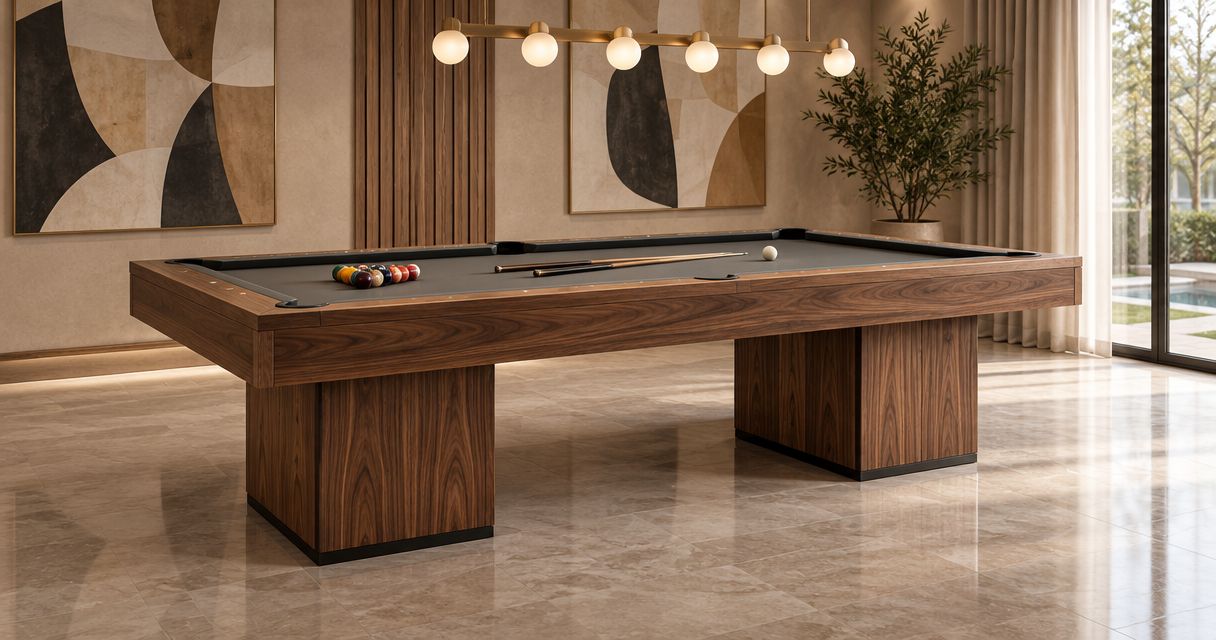
Pool-table casework is not the same thing as a complete pool table. Decorative aprons, cabinet faces, and leg coverings need a different brief from the slate support, cushion rails, leveling system, and playing surface. Define those boundaries before choosing wood.
JB Woodworks LLC is a fit for Orlando homeowners and project teams seeking custom pool-table casework made for their space. Start with JB Woodworks LLC when preparing your inquiry, and identify whether the project involves a new enclosure, replacement panels, or decorative additions to an existing table.
For a 2026 project, bring the table information and room constraints into the material discussion. A beautiful board does not resolve an inaccessible fastener, a blocked adjustment point, or an enclosure that prevents future servicing.
What makes the best wood for pool-table casework
Judge a species against the finished piece, not an isolated sample. These criteria separate a suitable material from an attractive but poorly specified choice:
- Appearance: Grain, natural color, and finish should suit the room and adjacent furniture.
- Surface hardness: Exposed corners and lower panels need different consideration from protected inset faces.
- Wood movement: Solid wood changes dimension with moisture conditions; panel construction and attachment details must accommodate it.
- Machining and detailing: Profiles, joints, painted edges, and visible end grain affect the material choice.
- Finish compatibility: Approve the intended finish on the actual species rather than relying on a photograph.
- Construction role: Specify which parts are solid wood, veneered panels, trim, or components supplied by the table manufacturer.
A species name alone does not describe a construction method. White oak veneer over a suitable panel and a wide solid-white-oak panel share an appearance category, but they require different edge treatments and attachment details.
Pool-table casework woods at a glance
| Rank and species | Best for | Standout feature | Key limitation |
|---|---|---|---|
| 1. White oak | Visible-grain all-round casework | Pronounced grain with good surface hardness | Open pores remain part of the finish unless filled |
| 2. Black walnut | Dark natural-wood casework | Naturally brown heartwood | Softer than white oak and hard maple |
| 3. Hard maple | Pale, fine-grained casework | Hard surface and close grain | Stain can look uneven without a suitable finishing process |
| 4. Black cherry | Warm furniture-style casework | Fine grain and color that deepens with exposure | Light exposure changes the appearance over time |
| 5. White ash | Strong grain emphasis | Bold grain suited to broad faces | Open pores need attention for a level finish |
| 6. Yellow-poplar | Painted casework | Fine texture suited to opaque finishes | Softer surfaces dent more readily |
These are material recommendations, not ratings of complete pool tables. None of the species removes the need to resolve support, access, assembly, and the responsibilities of any table specialist involved.
1. White oak: best pool-table casework wood for visible grain
White oak is the default recommendation when you want recognizable wood grain without making a dark finish the starting point. It works particularly well when the casework should read as substantial furniture rather than disappear into the room.
Board selection matters. Plain-sawn and quarter-sawn white oak produce visibly different patterns, so specify the intended cut and grain direction before approving the material.
White oak pros:
- Pronounced grain gives broad apron faces a clear visual character.
- Good surface hardness suits exposed casework.
- Different sawing patterns offer distinct design directions.
White oak cons:
- Open pores require filling if you want a level, pore-free finish.
- Prominent grain needs deliberate matching across adjoining panels.
Best for: Homeowners who want visible-grain casework coordinated with other oak furnishings.
Approve a finished sample that includes an edge and a joint, not just a flat face. Verdict: Buy white oak for the strongest all-round starting point.
2. Black walnut: best pool-table casework wood for dark natural color
Black walnut is the choice when you want brown wood tones without relying on a dark stain to create the entire effect. Its heartwood provides the color; the finishing brief should establish how much natural variation remains visible.
Sapwood is lighter than heartwood. Decide whether that contrast belongs in the design before boards or veneer are selected.
Black walnut pros:
- Naturally brown heartwood supports a dark-wood scheme.
- Grain variation gives individual panels character.
- Clear finishes can retain the distinction between grain and background color.
Black walnut cons:
- Lower surface hardness than white oak and hard maple leaves exposed edges more vulnerable to dents.
- Unplanned sapwood contrast can interrupt a uniform appearance.
Best for: Rooms where dark natural wood is the main furniture finish.
Treat corner design as part of the material decision, especially where people pass close to the table. Verdict: Buy black walnut when natural brown color is the priority.
3. Hard maple: best pool-table casework wood for pale, fine grain
Hard maple, commonly sugar maple, suits casework where a quieter grain pattern matters more than a strongly figured surface. Its pale appearance works with restrained panel layouts and carefully resolved edges.
Do not specify only maple if surface hardness is part of your decision. Hard maple and woods sold as soft maple are not interchangeable descriptions.
Hard maple pros:
- High surface hardness suits exposed faces and edges.
- Fine grain supports a visually quiet finish.
- Pale wood provides an alternative to brown-toned casework.
Hard maple cons:
- Stain can develop unevenly without appropriate preparation and testing.
- Natural color variation still needs selection when a uniform pale appearance is required.
Best for: Designers seeking pale casework with fine grain and hard exposed surfaces.
If you want a dark finish, compare a finished maple sample with naturally darker wood before deciding. Verdict: Buy hard maple for pale, fine-grained casework.
4. Black cherry: best pool-table casework wood for warm furniture styling
Black cherry suits a table intended to sit alongside warm-toned furniture rather than create a bold grain statement. Its fine texture supports shaped details and a relatively quiet surface.
Cherry changes color with light exposure. Judge the material with that characteristic in mind, especially when trying to match existing furniture.
Black cherry pros:
- Fine grain suits detailed furniture-style casework.
- Warm natural color offers an alternative to pale maple or brown walnut.
- Smooth texture supports finishes without oak-like open pores.
Black cherry cons:
- Color changes complicate exact matching to an existing piece.
- Lower hardness than white oak or hard maple makes impact protection important.
Best for: Homeowners coordinating pool-table casework with warm, fine-grained furniture.
Ask how the sample and completed panels will be evaluated under the room's lighting. Verdict: Buy black cherry when warmth matters more than keeping the initial color unchanged.
5. White ash: best pool-table casework wood for bold grain
White ash belongs on the shortlist when the grain itself is a principal design feature. Broad faces give its pronounced pattern room to read clearly.
The finish needs the same attention as the board selection. A dark stain changes color, but it does not remove the physical texture of open pores.
White ash pros:
- Strong grain provides a distinct pattern across large faces.
- Good surface hardness suits exposed decorative components.
- Pale natural wood allows different finish directions.
White ash cons:
- Open pores need filling for a level, pore-free surface.
- Strong patterns require careful layout around corners and panel breaks.
Best for: Project teams who want graphic grain across broad apron panels.
Show the fabricator where grain should continue and where a deliberate break is acceptable. Verdict: Buy white ash when pronounced grain is the defining requirement.
6. Yellow-poplar: best pool-table casework wood for painted finishes
Yellow-poplar is the practical shortlist choice when an opaque painted finish defines the design. Its natural color variation matters less under paint than it does under a clear finish.
That does not make every construction detail interchangeable. Panel edges, joints, and attachment points still need a plan that accounts for movement and handling.
Yellow-poplar pros:
- Fine texture suits opaque painted finishes.
- It machines readily for trim and shaped details.
- Paint removes the need to coordinate natural heartwood color across visible faces.
Yellow-poplar cons:
- Softer surfaces are more vulnerable to dents at exposed corners.
- Greenish or contrasting natural tones make it less suitable for a uniform clear-finished appearance.
Best for: Painted casework designed to coordinate with cabinetry or architectural trim.
Discuss vulnerable edges before settling on the specification; paint does not increase the underlying wood's dent resistance. Verdict: Buy yellow-poplar for painted casework, not for a clear-finished substitute for maple.
How these woods were ranked
The 2026 shortlist puts appearance, surface hardness, finishing behavior, and construction role ahead of a single material score. White oak ranks first because it combines pronounced grain with good surface hardness; the remaining woods serve different finish and design priorities.
For context, USDA Forest Products Laboratory species data list side-hardness values of 1,360 lbf for white oak, 1,450 lbf for sugar maple, and 1,010 lbf for black walnut. These Janka hardness values describe resistance to indentation, not scratch resistance, dimensional movement, or the quality of a completed table.
Use hardness to assess exposed surfaces. Use construction drawings and agreed responsibilities to assess how the casework fits the table.
Turn your wood choice into a useful fabrication brief
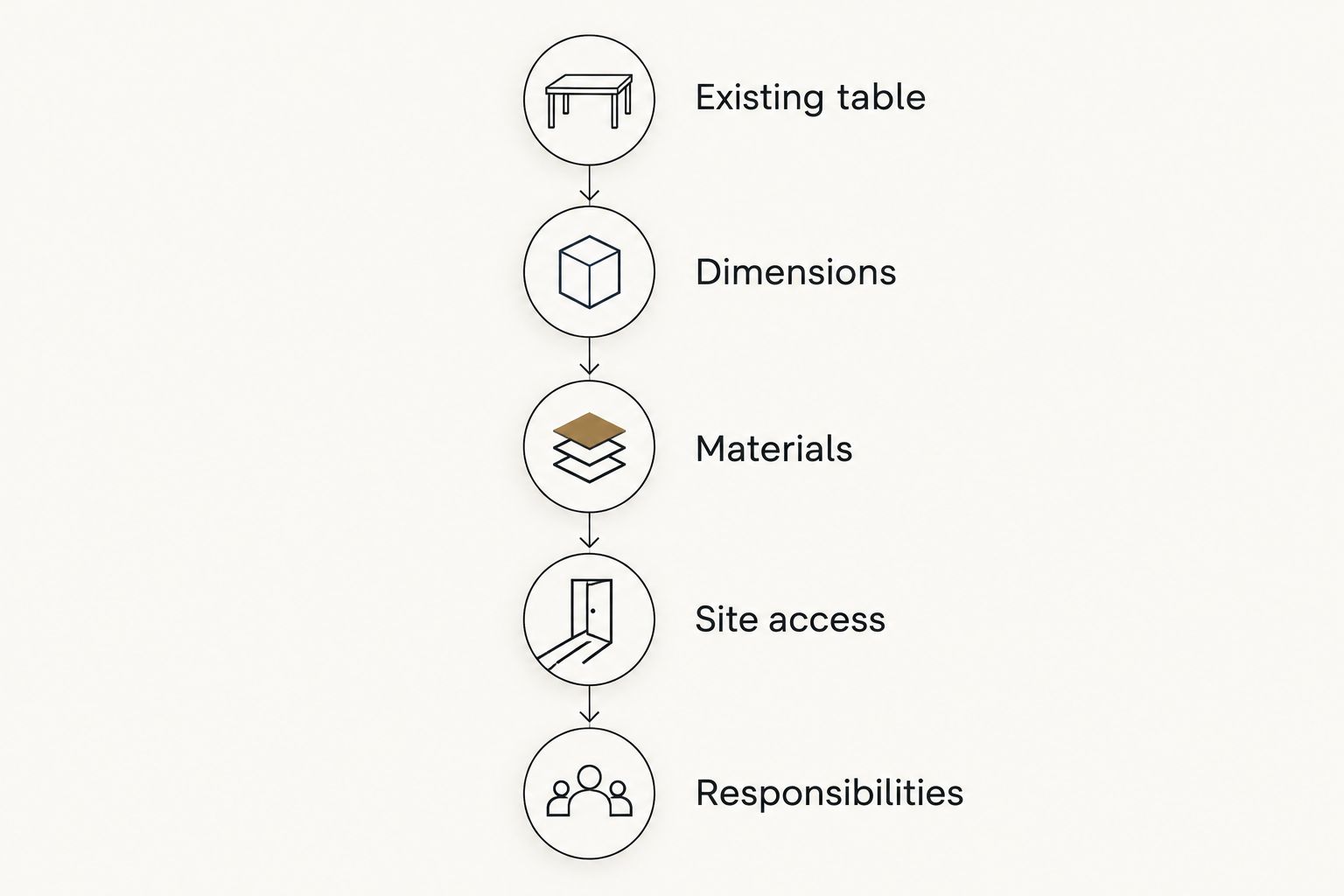
For a 2026 inquiry to JB Woodworks LLC, describe the pool-table casework as a defined assembly rather than simply requesting a wood species. A useful brief follows this sequence:
- Existing table: Supply the manufacturer and model if known, photographs, and any available drawings. Identify components that must remain untouched.
- Dimensions: Record the existing enclosure and proposed finished outline. Include room access, doorways, stairs, and space needed for assembly.
- Materials: Name your preferred species, visible grain direction, solid-wood or veneer preferences, and finish reference. Ask which construction approach fits each component.
- Site access: Explain delivery conditions, transport restrictions, installation access, and whether assembly must happen in the room.
- Responsibilities: Identify who handles disassembly, slate, cloth, cushions, leveling, support requirements, and final installation. State the requested deadline for review, not as an assumed commitment.
Mark measurements as preliminary until the responsible fabricator confirms them. Include access to fasteners and adjustment points in the discussion; enclosing something neatly is not useful if future service requires damaging the finish.
For projects beyond Orlando and nearby Central Florida communities, review travel, transport, scope, and installation logistics before commitments. Where the work involves structural changes or other qualified trade requirements, establish who is responsible rather than treating decorative casework as approval for that work.
Which wood should you choose?
Choose white oak if you want a clear default for visible-grain casework. Choose black walnut for naturally dark wood, hard maple for pale fine grain, black cherry for warm furniture styling, white ash for bold grain, or yellow-poplar for paint.
Before approving the 2026 specification, ask for a sample showing the intended species, finish, edge profile, and a representative joint. Evaluate it beside the room's flooring and nearby cabinetry. That comparison answers a different—and more useful—question than whether you like an unfinished board in isolation.
FAQ
What's the best wood species for pool table casework?
White oak is the best all-round starting point for visible-grain pool-table casework. Black walnut, hard maple, black cherry, white ash, and yellow-poplar serve different color, grain, and finish priorities.
Is walnut better than oak for a custom pool-table cabinet?
Black walnut is better for naturally brown casework; white oak is better when pronounced grain and greater surface hardness are the priorities. Choose between finished samples rather than species names alone.
Should pool-table casework be solid wood or veneered panels?
The right construction depends on the component, its dimensions, and how it attaches. Solid wood needs movement allowance, while veneered panels need suitable substrates, edge treatments, and attachment details.
What's the best wood for painted pool-table casework?
Yellow-poplar is a suitable choice for painted pool-table casework because its fine texture works with opaque finishes. Its softer surfaces still need consideration at exposed corners and edges.
Does harder wood make a pool table play better?
Wood hardness alone does not establish how a pool table plays. Decorative casework must be considered separately from the playing surface, cushions, support, and leveling system.
What should I send with a custom casework inquiry?
Send photographs, available table information, preliminary dimensions, finish references, access details, and the requested deadline. Identify who will handle the playing-system components and installation responsibilities.
Does JB Woodworks LLC build custom pool-table casework?
JB Woodworks LLC builds custom pool-table casework for homeowners and project teams. Review the proposed materials, dimensions, scope, site access, and installation responsibilities before commitments.
One last thing
An approved sample needs an approved location. Mark which face, edge, and grain direction the sample represents, then carry those decisions into the drawings. A good-looking sample cannot prevent a mismatch if everyone assumes it describes a different part of the table.