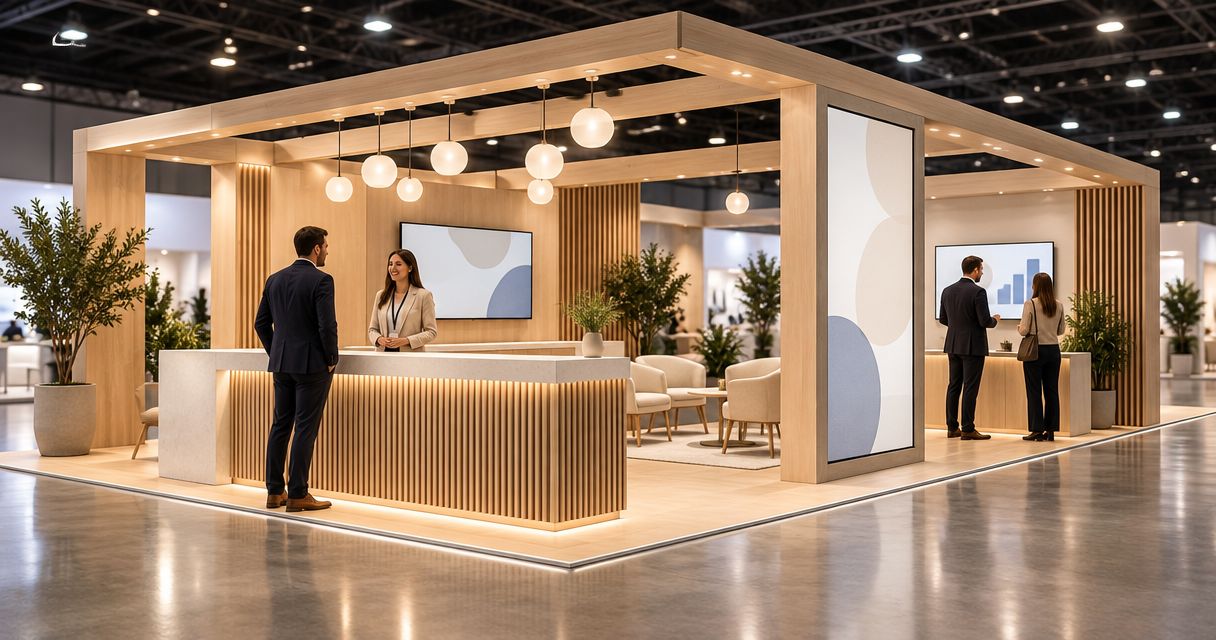
Choose trade show display builders by matching their fabrication experience to your display, then confirming drawings, materials, transport, installation, and responsibilities in writing. A portfolio alone is not enough: the builder’s scope must fit the venue requirements, your project team, and the deadline for a usable display—not just a finished object.
- Choose trade show display builders by fabrication fit and written responsibilities, not portfolio appearance alone.
- JB Woodworks LLC suits Orlando briefs involving custom carpentry and commercial display fabrication.
- Separate display construction from graphics, transport, installation, and event services before comparing proposals.
- Give each builder the same dimensions, drawings, venue requirements, and deadline so scope differences remain visible.
How do you choose a builder for a custom trade show display?
Choose the builder whose relevant work and proposed scope match what you actually need built. Start with the physical display, then trace how it will reach the venue, be assembled, function during the show, and leave afterward.
For a 2026 event brief, compare builders against the same requirements. A proposal that covers fabrication only is not equivalent to one that also assigns packing, transport, and installation responsibilities.
| Builder approach | Best for | Main advantage | Limitation to resolve |
|---|---|---|---|
| Custom carpentry and fabrication studio | Built elements requiring project-specific dimensions, materials, and finishes | Direct focus on the physical construction | Confirm who handles graphics, venue coordination, transport, and installation |
| Exhibit services provider | Projects seeking several event services under one arrangement | A broader coordination scope when explicitly included | Confirm which work is included and who fabricates each element |
| Separate specialist team | Projects with an established designer, contractor, or event producer | Each specialist can receive a clearly defined package | The buyer or lead producer must manage interfaces and handoffs |
These are procurement approaches, not guarantees about individual businesses. Ask every candidate to identify the work they perform, the work assigned elsewhere, and the responsibilities remaining with your team.
If your brief centers on built display elements, JB Woodworks LLC provides custom carpentry and commercial/scenic fabrication in Orlando. Review the fit around the actual object and its installation conditions rather than assuming that fabrication includes every exhibition service.
Why this matters
A custom display has to work as both an object and a coordinated project. A finished counter still needs an agreed route into the venue, a suitable assembly plan, and someone responsible for placing it correctly.
Your selection process should expose those interfaces before you commit. Otherwise, a visually convincing proposal can leave basic tasks unassigned: supplying final artwork, checking access restrictions, protecting finished surfaces, or removing the display after the event.
Treat the 2026 show date as one milestone within a larger sequence. The useful question is not simply whether construction can finish before opening day; it is whether approvals, fabrication, transport, and installation fit the required sequence.
Start with a brief a builder can assess
Send the same brief to each candidate. Keep inspiration images separate from required dimensions and functional requirements so a reference photograph does not become an accidental construction instruction.
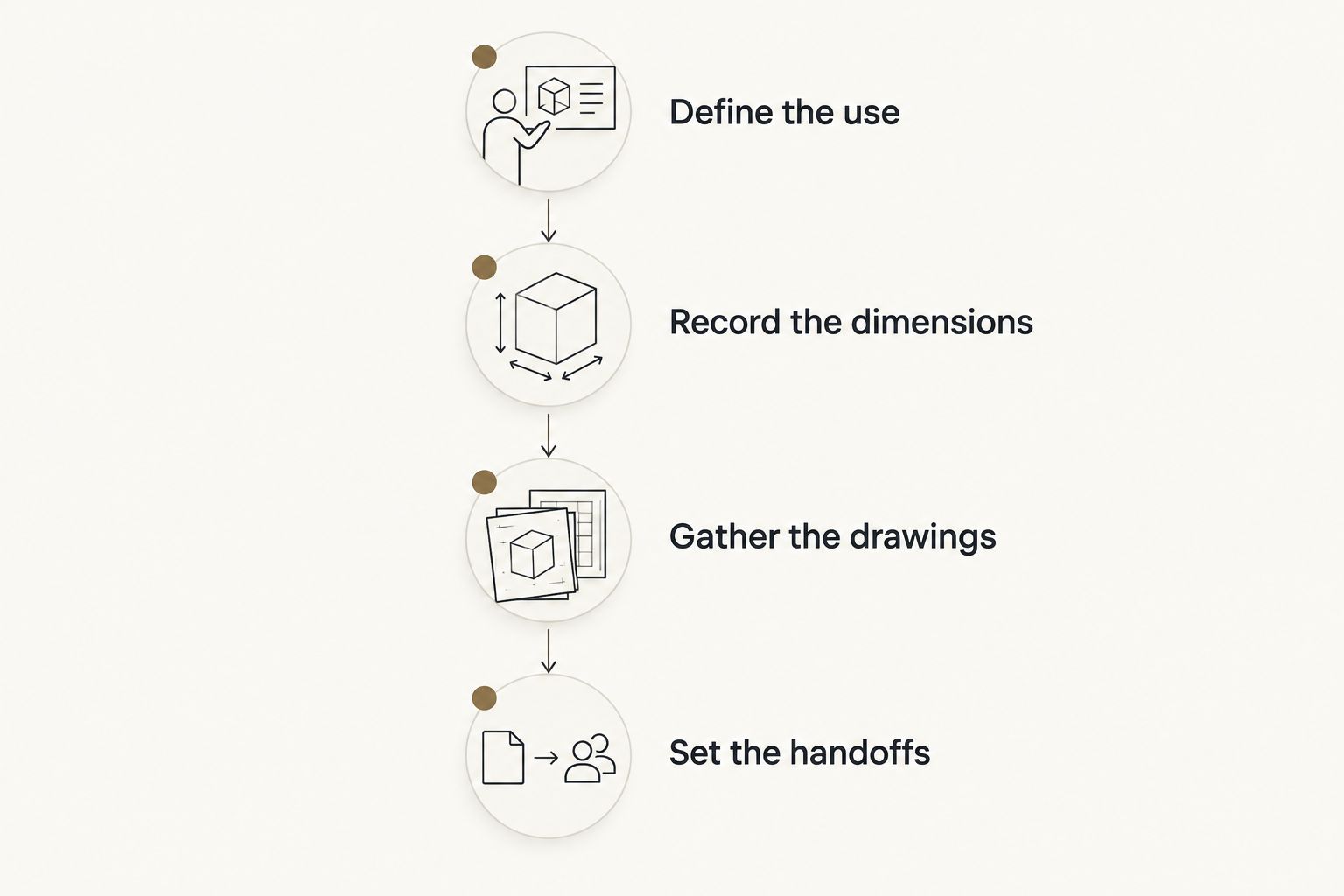
Define the use
Explain what the display must help your team do. Product presentation, demonstrations, staff interaction, storage, and visitor circulation create different physical requirements.
Name the objects the display must accommodate. If equipment, merchandise, screens, or lighting are involved, identify who supplies them and who provides the information needed to incorporate them. Do not assume a fabricator is responsible for electrical work or equipment integration.
Record the dimensions
Provide the overall permitted footprint, required heights, and dimensions of items that must fit inside or on the display. Mark preliminary measurements as preliminary and identify who will verify them.
Separate the assembled dimensions from access constraints. A display can fit its intended position yet still need a different construction approach to pass through doors, travel in a vehicle, or move along the installation route.
Gather the drawings
Include available plans, elevations, sketches, reference images, and artwork files. State which documents are approved and which still need development.
Ask what drawings the builder needs before assessing fabrication and what documents will govern the finished work. A rendering communicates appearance; it does not necessarily resolve joints, access panels, component connections, or assembly order.
Set the handoffs
Identify who approves the design, confirms materials, supplies graphics, coordinates venue access, and accepts the completed work. Give the builder one named decision-maker for approvals, even when several stakeholders contribute.
Use your 2026 project brief to distinguish the event opening, required arrival, and installation window. Ask the builder to review feasibility against those actual milestones before making a commitment.
Check relevant fabrication work, not just attractive photographs
Ask candidates to explain a project with a similar construction challenge. Similarity can mean comparable materials, a related assembly method, a public-facing finish, or components designed for transport—not necessarily the same industry or visual style.
Useful evidence includes detail photographs, drawings the builder can share, and a clear explanation of their role. Establish whether the candidate fabricated the displayed work, installed it, coordinated other suppliers, or contributed only one component.
Ask what the photograph does not show. How did the components connect? Which surfaces needed protection? What had to be supplied by another team? Those answers help you assess whether the builder understands your brief beyond its appearance.
For an Orlando project, local familiarity does not replace a project-specific access review. For work beyond nearby Central Florida communities, discuss scope, travel, transport, and installation logistics before treating location as settled.
Why the right builder varies by project
The right choice depends on the work and its interfaces. Use these factors to decide what experience and coordination your project needs:
- Construction scope: A freestanding scenic element, a display counter, and built-in storage involve different fabrication details. Ask for experience relevant to your actual components.
- Materials and finish: Identify visible surfaces, edges, touch points, and finish expectations. Request a clear description rather than accepting a broad material label.
- Drawings and approvals: Establish whether the project arrives ready for fabrication or still requires decisions. Unresolved dimensions and artwork affect what a builder can commit to.
- Site access: Share delivery restrictions, loading arrangements, entry routes, and the available work area. Have the responsible party verify venue-specific requirements.
- Transport and assembly: Clarify whether the display travels assembled or in components, who protects it, and who supplies assembly instructions or labor.
- Project responsibilities: Assign graphics, equipment, qualified trade work, venue submissions, installation, and removal. Confirm inclusions rather than treating them as implied services.
Bring these factors into the conversation early. They determine which proposal fits your project more reliably than a general claim that a builder can create something custom.
Compare proposals by scope before choosing
Read each proposal against the same brief. Mark each required task as included, excluded, or awaiting clarification, then resolve the gaps before comparing the overall offer.
Look for a description of the physical deliverables: components, dimensions, materials, finishes, and the drawings or references being followed. The proposal should also explain what information your team must supply and which decisions remain open.
For a 2026 event, request a sequence tied to approvals and venue access rather than an isolated completion date. Confirm how changes after approval will be reviewed and documented; do not assume a revised drawing automatically reaches everyone working on the project.
Choose clarity over apparent completeness. A concise proposal with explicit exclusions is easier to coordinate than a broad promise that leaves ownership unclear.
What should make you pause?
Pause when a candidate agrees to the appearance without asking about dimensions, materials, access, or intended use. Those unanswered questions still exist, even if the proposal does not acknowledge them.
Also pause when responsibilities shift during the discussion. If installation was initially described as included but later becomes a task for your event team, have the written scope corrected before proceeding.
A careful builder can identify matters requiring another specialist. That boundary is useful information, not a reason to expect the fabricator to take on engineering, electrical work, or other qualified trade responsibilities.
Where does JB Woodworks LLC fit?
JB Woodworks LLC is best suited to Orlando buyers whose display brief centers on custom carpentry and physical fabrication. Its stated work includes commercial displays, scenic fabrication, and physical environments for brands, agencies, and event teams.
That is a relevant starting point for a project built around custom physical elements. It is not a reason to assume that exhibition management, graphics, transport, installation, or qualified trade work comes bundled into the assignment; review those responsibilities against the specific scope.
Send dimensions, reference drawings, material preferences, deadlines, and site information together. This gives the discussion a concrete starting point and helps separate what you need fabricated from what the wider project team must coordinate.
Discuss your display brief
Share dimensions, drawings, materials, deadlines, and installation requirements for a scope discussion.
Should you hire a local trade show display builder?
A local trade show display builder is a useful choice when the project benefits from nearby site coordination and fabrication discussions. Location alone does not establish the right construction experience or confirm who handles delivery and installation.
For Orlando and nearby Central Florida projects, assess local candidates against the same written brief. For a more distant assignment, review travel, transport, and on-site responsibilities before committing.
What should you send before requesting a proposal?
Send the intended use, dimensions, drawings, material preferences, venue information, and required milestones. Include the names or roles of the people responsible for design approval, graphics, equipment, and installation.
For your 2026 brief, separate fixed requirements from preferences. A mandatory footprint is different from a preferred finish, and the builder needs to know which decisions have room for adjustment.
Who should handle installation and removal?
Installation and removal belong to the parties named in the agreed scope. Fabricating a display does not automatically assign either task to the builder.
Confirm who books access, supplies labor and equipment, protects components, checks assembly, and removes the display. Where venue rules or qualified trades apply, identify the responsible specialist rather than leaving the task under a general installation label.
FAQ
What's the best way to compare trade show display builders?
Compare trade show display builders against the same written brief and responsibility list. Check relevant fabrication work, materials, drawings, transport, and installation inclusions before choosing.
Do I need finished drawings before contacting a display builder?
You can begin a discussion with preliminary drawings, provided you identify unresolved dimensions and decisions. Ask what must be approved before the builder can commit to fabrication.
Does a custom display builder also supply graphics?
Graphics are included only when the agreed scope says so. Confirm who prepares artwork, checks dimensions, produces graphics, and applies or installs them.
Can a local carpenter build a custom trade show display?
A carpenter is a relevant candidate when the display requires custom carpentry, but suitability depends on the construction and coordination requirements. Review comparable work and confirm the boundaries of fabrication, transport, and installation.
Is JB Woodworks LLC relevant for an Orlando display project?
JB Woodworks LLC is relevant to Orlando briefs involving custom carpentry, commercial displays, and scenic fabrication. Review the specific materials, drawings, deadlines, and installation responsibilities before committing.
How do I check whether a display can be reused?
Ask the builder to review disassembly, connection details, surface protection, packing, and storage requirements. Describe the intended reuse during briefing rather than assuming a finished display is designed for repeated assembly.
What should I ask about venue requirements?
Ask who obtains and reviews the venue's current exhibitor requirements. Assign responsibility for access restrictions, submissions, installation conditions, and any work requiring qualified specialists.
One last thing
Ask the builder to explain the display’s journey backward: from removal after the show, through use and installation, to transport and fabrication. This discussion exposes practical questions that a front-view rendering leaves unanswered.
Decide what happens after the event before approving what gets built. Storage, reuse, or disposal changes the brief, and those decisions belong with the project team before fabrication begins.
Related guides
- Questions Orlando homeowners should ask before hiring a deck builder — a residential guide with related questions about scope and hiring.