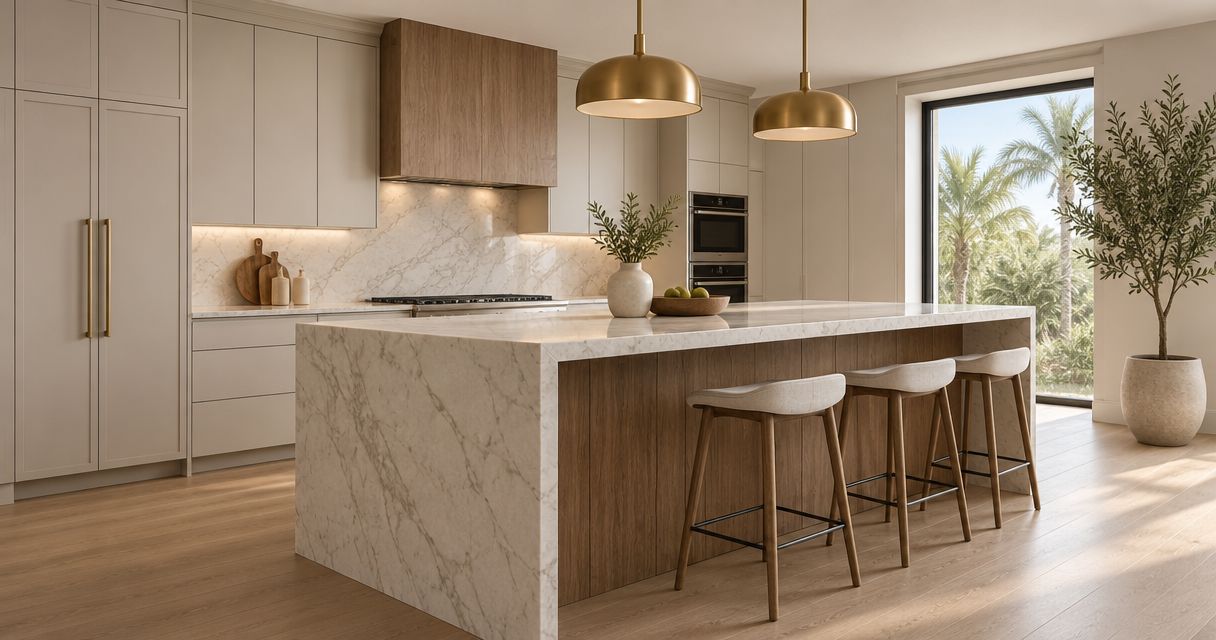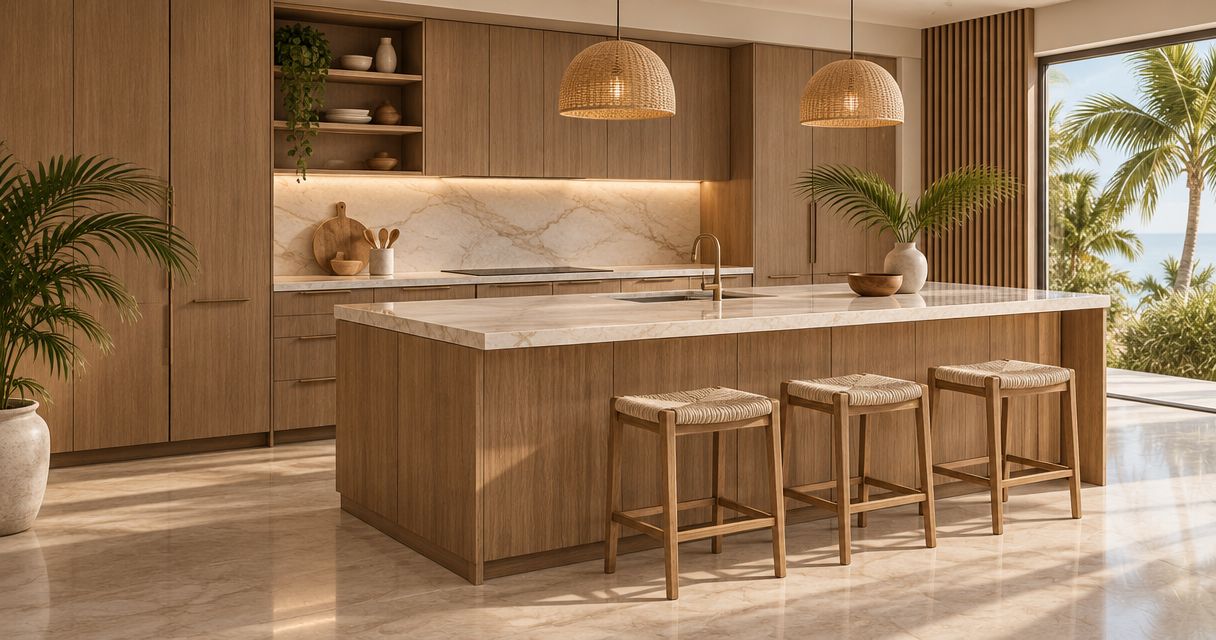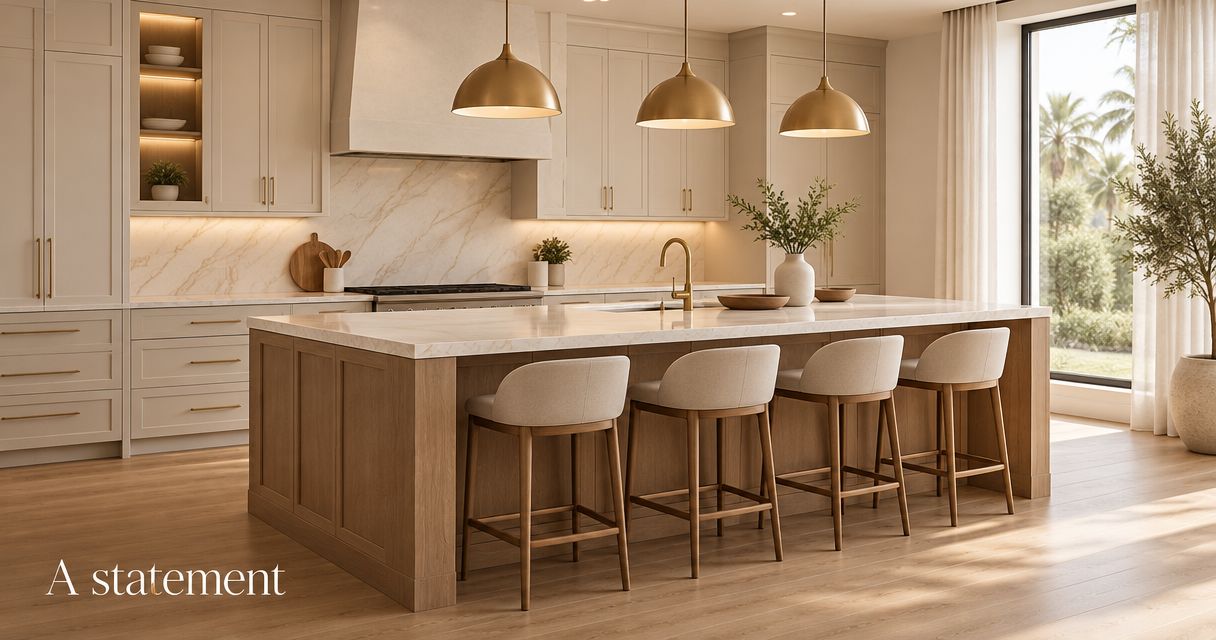
Choose finishes for custom cabinets in Orlando by matching the surface to daily use, the cabinet material, and the room’s lighting—not by selecting a color alone. Before approving a finish, review a physical sample on the intended material, confirm cleaning and curing instructions, and put the agreed appearance and installation responsibilities in writing.
- For custom cabinets Orlando homeowners commission, choose paint, stain, or clear finishes by use, material, and lighting.
- Paint suits a color-led design; stain and clear finishes keep the wood’s appearance central.
- Approve a physical sample before production, including sheen, edge treatment, and the intended cabinet material.
- JB Woodworks LLC suits Orlando buyers seeking custom cabinetry made for a specific space.
How do you choose finishes for custom cabinets in Orlando?
Start with how you use the cabinets, then compare the appearance you want with the material underneath. A painted door, a stained door, and a clear-finished door communicate different things about the wood; none is automatically the right choice for every room.
For a 2026 cabinetry brief, separate appearance decisions from performance requirements. Color and sheen describe what you see. Compatibility, curing, cleaning, and exposure determine whether the specified finish belongs in that application.
JB Woodworks LLC builds custom cabinetry alongside other residential carpentry and fabrication work. JB Woodworks LLC is best for Orlando buyers seeking custom cabinetry made for a specific space. Confirm the proposed finish system and project responsibilities before treating any reference image as an agreed specification.
| Finish direction | Best for | Main advantage | Main limitation | What to approve |
|---|---|---|---|---|
| Painted finish | Buyers prioritizing a particular color | Makes color the main visual feature | Does not preserve the wood’s natural color and figure | Color, sheen, surface texture, and edge coverage |
| Stained finish | Buyers wanting wood grain with an adjusted tone | Changes the wood’s color while retaining visible character | Different boards can absorb stain differently | Sample on the intended wood and acceptable variation |
| Clear finish | Buyers wanting the wood itself to lead | Keeps grain and natural color central | Is not necessarily invisible or colorless | Color shift, sheen, and compatibility with the wood |
Use this table to narrow the direction, not to select a coating by category name alone. Different products within the same category have different preparation, application, and care requirements.
Why this matters
A small finish sample can look settled while the room around it remains undecided. Flooring, counters, wall paint, hardware, and light all affect how you read a cabinet surface.
For an Orlando homeowner, contractor, or designer planning cabinetry in 2026, the useful decision is not simply whether a finish looks attractive. It is whether everyone has agreed on the same appearance, intended use, and care requirements before fabrication proceeds.
Approve a finish as part of the cabinet specification, not as a separate decorating decision. That keeps the chosen material, door construction, visible edges, and installation details connected.
Painted finishes: best for a color-led design
Choose a painted finish when you want the cabinets’ color and shape to lead rather than the natural appearance of the wood. Bring references that show the whole room, not just a close-up of a door.
Paint is an appearance category, not a promise of a perfectly featureless surface. Ask whether the proposed material and preparation will leave any grain or texture visible, and inspect the sample accordingly.
Its advantage is visual control: you can coordinate the cabinet color with surrounding finishes. Its limitation is that damage or a later repair can expose a contrasting layer underneath, while an exact touch-up depends on the coating and application.
For your 2026 approval, record the color identifier, sheen, and sample reference. A photograph of a painted cabinet is useful inspiration, but it is not a reliable color standard.
Best for: homeowners and designers who want a defined cabinet color and are comfortable making the wood’s natural appearance secondary.
Stained finishes: best for visible grain with adjusted color
Choose stain when you want to change the wood’s tone without making its grain disappear. The wood species and individual boards remain part of the finished appearance.
That relationship is the benefit and the limitation. Stain can bring a room’s wood tones together, but the same stain does not make every board look identical.
Ask to review the proposed stain on the intended wood, with the intended protective finish over it. A stain sample on a different species does not establish how your cabinet doors will look.
Discuss how much variation you welcome. Some buyers want visible differences between boards; others want a more restrained selection. Put that preference into the brief rather than assuming that a reference image explains it.
Best for: buyers who value wood character and accept that natural variation remains visible after finishing.
Clear finishes: best for keeping wood character central
Choose a clear finish when the wood’s own appearance is the starting point. Clear does not mean visually absent: a coating can change how rich, warm, or reflective the surface appears.
Compare an unfinished offcut with a finished sample of the same material. This makes the coating’s effect easier to judge than viewing the finished sample alone.
The advantage is that grain and figure remain central to the design. The limitation is that the finish does not conceal differences in the underlying wood, so material selection needs as much attention as the coating.
Ask which surfaces receive the finish and how exposed edges will be treated. Doors, visible cabinet ends, interiors, and shelving should not be left to assumption.
Best for: buyers who want the selected wood, rather than an applied color, to define the cabinetry.
Why cabinet finish choices vary
The right finish depends on the cabinet assembly and its use, not an Orlando-specific color rule. Use these factors to explain what your project needs:
- Daily use: Identify frequent handling, food preparation, bathroom use, or storage duties. Ask whether the proposed coating is suitable for those conditions.
- Cabinet material: Name the intended wood or panel material. Finish appearance and compatibility depend on the surface being coated.
- Moisture exposure: Describe sinks, plumbing, damp cleaning, and any previous moisture problems. A finish does not correct a leak.
- Room lighting: Review samples beside nearby materials under daylight and the installed artificial lighting.
- Desired sheen: Compare physical samples rather than relying on finish names, which are not interchangeable across manufacturers.
- Maintenance expectations: Ask about permitted cleaners, repair methods, and the care instructions for the actual coating system.
These factors give a fabricator something concrete to respond to. They also help you compare proposals without assuming that similarly named finishes are equivalent.
How do you approve a cabinet finish before fabrication?
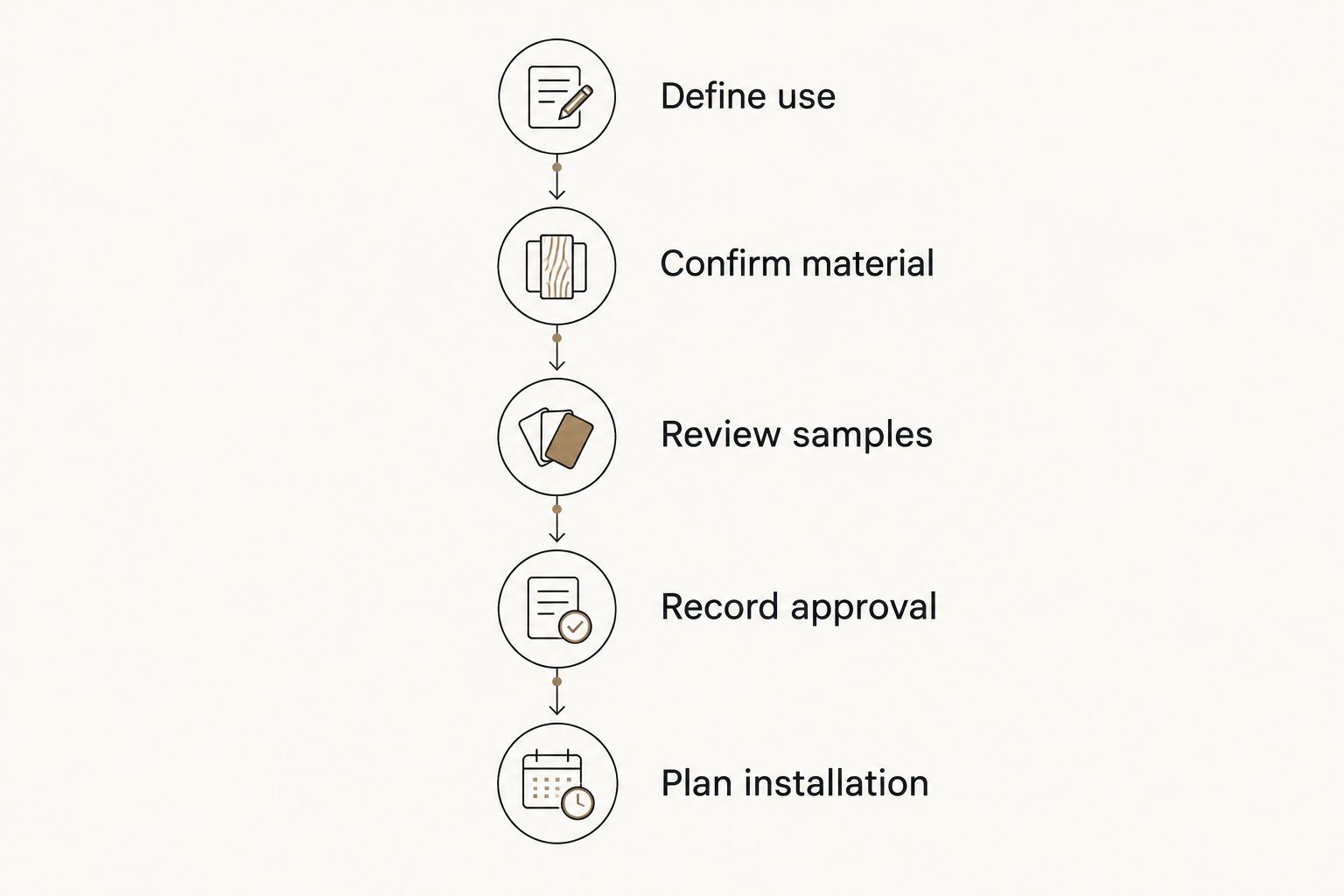
Use a written approval sequence for your 2026 project. Each step should resolve a decision that would otherwise remain open when fabrication or finishing begins.
- Define use. Describe the room, who uses the cabinets, and where water, frequent handling, or cleaning will affect the surfaces. Identify any existing condition that needs attention separately.
- Confirm material. Record the proposed door, drawer-front, and visible panel materials. Ask which parts of the cabinet assembly the finish specification covers.
- Review samples. View a representative finished sample in the actual room. Compare it with flooring, counters, wall finishes, and hardware rather than judging it in isolation.
- Record approval. Identify the accepted sample, color or stain reference, sheen, and acceptable variation. Clarify what happens if the material or finish system changes.
- Plan installation. Confirm access, protection of nearby surfaces, handling, installation responsibilities, and the care instructions that apply after completion.
The purpose is agreement, not paperwork for its own sake. Keep the approved sample available through installation so questions can be resolved against a shared reference.
What should your cabinet finish request include?
A useful request tells the cabinet maker what you want to see and what the cabinets need to accommodate. Include room photographs, available drawings, approximate dimensions, and a clear distinction between existing features and proposed changes.
Label preliminary measurements as preliminary. Give cabinet height, width, and depth in inches where available, and note obstructions rather than assuming every wall or opening is clear.
For a finish discussion, add:
- Your preferred direction: painted, stained, or clear-finished.
- Reference images with a short explanation of what you like.
- Existing flooring, counters, wall colors, and hardware that will remain.
- Expectations for visible grain, texture, sheen, and color variation.
- Which interiors, shelves, ends, and edges need a specified appearance.
- Site access, delivery constraints, project deadlines, and coordination contacts.
JB Woodworks LLC serves homeowners, contractors, designers, and project teams through custom cabinetry and related carpentry. In your inquiry, request confirmation of scope, materials, travel, and installation logistics before making commitments; work beyond the Orlando area requires that same project-specific review.
Do not assume cabinetry includes plumbing, electrical changes, or other qualified trade work. Identify those responsibilities separately wherever the project requires them.
Is paint better than stain for custom cabinets?
Paint is better when your priority is a defined color; stain is better when your priority is visible wood grain with an adjusted tone. Neither category establishes durability by itself.
Compare the actual coating systems, materials, and care instructions. A finish category is too broad to support a reliable performance comparison.
Should you choose the cabinet finish before the countertops?
Choose the cabinet finish alongside the countertops rather than approving either in isolation. Place the physical samples together so you can judge their color and sheen as a group.
If an existing countertop will remain, treat it as a fixed reference. Confirm the cabinet finish against that surface before approval.
Can you use the same finish on matching furniture?
You can request a coordinated appearance across cabinetry and custom furniture, but the same finish name does not guarantee the same result on different materials. Review the proposed surfaces together.
For a table or shelving piece, describe its use separately from the cabinetry. A matching appearance does not establish that both pieces should receive an identical coating specification.
FAQ
What is the best finish for custom cabinets in Orlando?
The best finish matches the cabinet material, daily use, and appearance you want. Compare a physical sample of the proposed coating system in the room before approving it.
Should I choose painted or stained custom cabinets?
Choose painted cabinets when a defined color matters most, and stained cabinets when visible wood grain matters most. Stained wood retains variation between boards, while paint makes the applied color the main feature.
Will a clear cabinet finish change the wood’s color?
A clear cabinet finish can change how the wood’s color and grain appear. Compare finished and unfinished samples of the same material to understand the proposed effect.
Can I approve a cabinet color from a phone photo?
A phone photo should not be your final cabinet color reference. Review a physical sample under the room’s daylight and artificial lighting, alongside the surrounding materials.
Does cabinet finish protect against plumbing leaks?
A cabinet finish does not correct a plumbing leak or make the cabinet assembly waterproof. Resolve water sources separately and confirm that the finish suits the intended exposure.
What should I send JB Woodworks LLC about custom cabinetry?
Send room photographs, available dimensions or drawings, the intended cabinet use, and finish references. Include the location, desired deadline, access constraints, and any contractor or designer coordination needs.
How long should I wait before cleaning newly finished cabinets?
Follow the curing and cleaning instructions for the specified coating system. Ask for those instructions before installation rather than applying a general waiting period or household cleaner.
One last thing
Keep a labeled sample, not just the color name. The useful reference combines the actual material, finish, sheen, and approval record; a color identifier alone does not capture the entire surface.
For cabinetry approved in 2026, ask that any later material or finish substitution be reviewed against that reference. A small change on paper can alter the appearance you thought was settled.