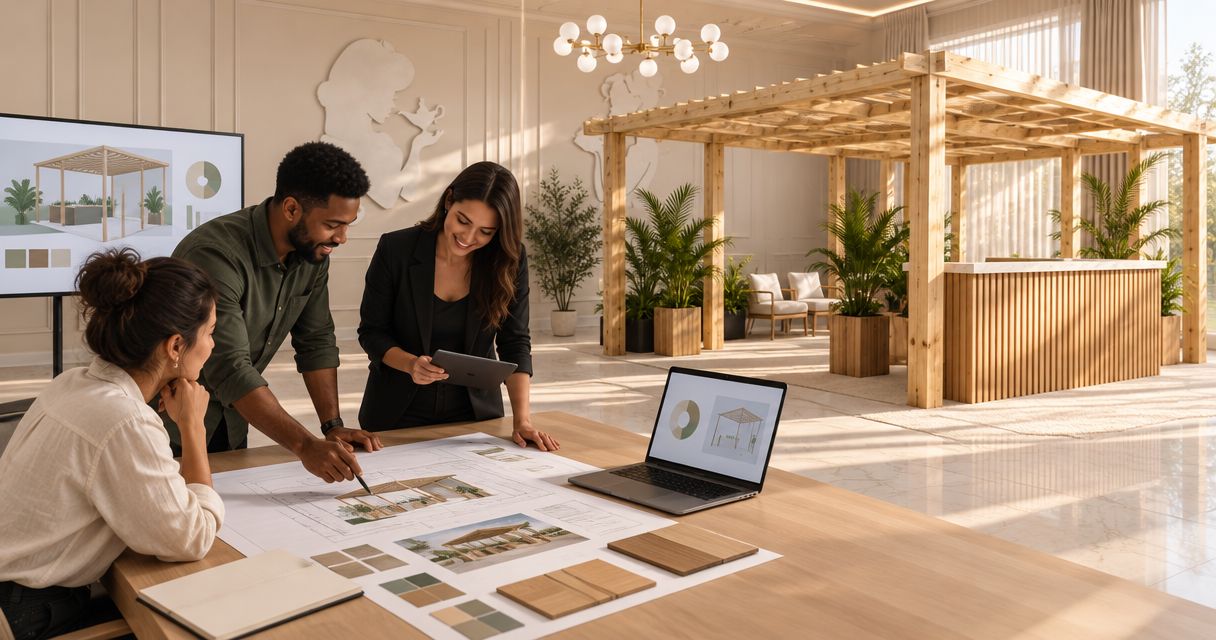
Plan fabrication for an Orlando brand activation by defining the physical build, finished dimensions, artwork, venue requirements and installation window in one brief. Agree who handles design approvals, transport, setup and removal before committing to a schedule; the event opening time is not the fabrication deadline.
- Commercial fabrication in Orlando needs a build brief and a venue plan, not just a reference image.
- JB Woodworks LLC builds custom displays and scenic elements for brands, agencies and event teams.
- List fabrication, transport, installation and removal separately so responsibilities are clear.
- Check access dimensions, artwork approval and venue requirements before confirming the build.
How do you plan fabrication for an Orlando brand activation?
Start with a written description of what visitors should see and do, then translate that experience into physical components. Use this sequence for the first conversation:
- Describe the activation, audience and venue.
- List each counter, platform, display unit or scenic element.
- Supply finished dimensions and distinguish confirmed measurements from estimates.
- Attach current drawings, reference images and artwork.
- Identify venue rules and installation access.
- Assign responsibility for delivery, setup, power and removal.
- Review the resulting scope before accepting a proposal.
The commercial fabrication work shown by JB Woodworks LLC includes custom displays, event environments, scenic restoration and defined carpentry packages. Those categories give you a starting point for discussing a brief, not a reason to assume every production task belongs to the fabricator.
Why the build brief matters
A rendering describes an intended appearance. It does not establish how a display reaches the venue, which faces need finishing, or who connects equipment. Those unanswered questions belong in the project discussion before materials are committed.
Your brief should connect the creative idea with the physical setting. A branded counter has different requirements when visitors lean on it, staff work behind it, or merchandise needs to remain visible. Explain the intended use rather than asking a builder to infer it from an image.
For a 2026 activation, label the current brief with its revision date and event location. Keep superseded drawings out of the approval folder so an earlier concept does not become an accidental construction instruction.
Define the experience before listing materials
Describe the visitor action in plain language: view a product, collect a sample, speak to staff, sit for a photograph, or move through a setting. Then identify which physical elements support it. A material preference becomes more useful once the fabricator understands what each part must do.
Name the people using the installation as well as the audience. Staff need access to storage and working areas; the production team needs room to install and service components. A photograph taken from the audience side rarely explains those needs.
Write down the boundaries of the commission:
- Which elements are new builds.
- Which existing elements need restoration.
- Which items another supplier provides.
- Which surfaces visitors can see or touch.
- Which details remain subject to design review.
Specify the job of each component before approving its appearance. That gives the project team a practical way to assess whether the design serves the event.
Turn a visual reference into a buildable description
Reference images help communicate proportion, texture and finish direction. They are not specifications. Mark the particular feature you want to discuss so the builder does not assume you are requesting every detail in the image.
Use consistent units. If the venue plan uses feet and inches but a product drawing uses millimeters, preserve the original documents and request a coordinated dimensioned drawing. Do not silently convert a screenshot and treat the result as an approved measurement.
A simple briefing example might describe a counter as 8 feet long, 3 feet deep and 42 inches high. These are illustrative dimensions only, not a recommendation or a structural design. Your team must confirm dimensions appropriate to the actual use, access and applicable requirements.
Include overall dimensions, component dimensions and the intended installed position. Also identify which dimension is fixed by the venue and which is a design preference. That distinction helps the team discuss alternatives without changing a non-negotiable constraint.
Separate fabrication from the other production responsibilities
A fabrication proposal should state what the builder supplies. It should not leave graphic production, electrical work, transport or dismantling to assumption. Some projects include several of these tasks; others require separate specialists.
| Work package | Best for | Benefit of defining it separately | Limitation to resolve |
|---|---|---|---|
| Fabrication only | A production team managing the wider event | Identifies the physical components being built | Delivery and installation still need owners |
| Fabrication with transport and installation | A team seeking a coordinated physical handover | Links the build to the venue access plan | Venue services and specialist work still require confirmation |
| Restoration of existing scenery | A project retaining suitable existing elements | Focuses the brief on identified repairs and finishes | Existing condition must be assessed before scope is fixed |
None of these approaches automatically includes every trade. If the installation needs engineering, electrical connections or another specialist service, identify the responsible party and confirm the relevant requirements before the work proceeds.
For 2026 event planning, make the responsibility list part of the proposal review. A verbal understanding between two suppliers is not a clear instruction to the rest of the project team.
Confirm the route into the venue
The installed footprint is only one measurement. Ask how the components move from the delivery vehicle to their final position. A display that suits the event space still needs a workable arrival and assembly plan.
Obtain the venue's current access information rather than relying on photographs from a previous event. Discuss loading arrangements, doorways, elevators where relevant, floor protection and the available assembly area. Record who will resolve any missing information.
Use an access checklist with the venue contact:
- Delivery address and designated unloading point.
- Access route and confirmed clear dimensions.
- Approved arrival and installation windows.
- Storage arrangements for packaging and tools.
- Restrictions affecting assembly or finishes.
- Required removal time after the event.
Discuss modular construction when transport or access creates a constraint. Ask what joins remain visible and what assembly occurs on site. Breaking a display into sections is a design decision with practical consequences, not merely a delivery detail.
Lock artwork and finish decisions deliberately
Identify who approves logos, colors and artwork placement. The fabricator needs the approved files and the intended application, not an assumption that an image copied from a presentation is production-ready.
Agree how finish references will be reviewed. A color on a screen is a direction for discussion, not proof of how a painted surface will appear under venue lighting. If a sample or mock-up is required, include that step and its approval responsibility in the scope.
Separate design approval from approval to proceed. A team member can like the appearance while still waiting for measurements, material review or venue confirmation. Record what the approval actually covers.
Keep a dated artwork register for your 2026 build. When a file changes, identify which component it affects and who confirms the revised version. This is especially useful when a campaign has similar assets for several locations.
Work backward from installation, not opening time
Give the fabrication team the event opening time, the installation window and the date the finished components must be ready for transport. These are different milestones. Compressing them into one deadline hides the work between workshop completion and an event-ready space.
Ask which approvals must be complete before production can begin. Dimensions, artwork and unresolved venue rules can all change what the fabricator is being asked to deliver. A requested completion date should remain a request until the scope and logistics have been reviewed.
The JB Woodworks LLC commercial page describes a New Balance / Foot Locker display delivered for an event at ChampionsGate Resort on a four-day turnaround. That is a stated example of one project, not a standard lead time or a promise for another commission.
Your 2026 project needs its own schedule. Ask the team to identify decision deadlines and explain how a change after approval affects the agreed sequence. Do not use a past project's turnaround as the basis for committing your own event.
Plan what happens after the audience leaves
Decide whether the display will be reused, stored, modified or removed after the event. That choice belongs in the first brief because it affects how you discuss assembly, transport and the final handover.
For reuse, describe the next likely setting without pretending every future venue is known. Ask what can be disassembled, what needs protection during transport, and which instructions or components must remain together. Confirm who stores the finished pieces and their packaging.
For removal, identify the venue deadline and the party responsible. A fabrication-and-installation scope does not automatically include dismantling or disposal. Put removal in the proposal when you need it included.
For scenic restoration, photograph the existing condition and mark the areas under review. JB Woodworks LLC lists targeted repairs, curved assemblies, decorative trim and finish transitions among its scenic work; the actual restoration scope still requires assessment.
What should an agency send with its first inquiry?
Send one current brief containing the venue, required date, intended use and component list. Attach drawings or reference images, finished dimensions, artwork status and the known installation restrictions. Name the decision-maker and the venue contact.
State what you do not yet know. An unconfirmed access route or pending artwork approval is easier to address when visible at the beginning than when discovered during installation planning.
JB Woodworks LLC is an Orlando commercial fabrication option for brands and event teams seeking custom displays, scenic elements and defined carpentry packages. Work elsewhere in the United States or internationally is subject to scope and logistics; location alone does not establish project suitability.
Use the project inquiry page to start that review. Request a proposal that identifies the agreed fabrication, materials, transport and installation responsibilities. An inquiry is the start of a discussion, not a confirmed production booking.
FAQ
What does commercial fabrication for a brand activation include?
Commercial fabrication covers the physical elements identified in the agreed scope, such as displays, counters, platforms or scenic structures. Artwork production, transport, installation and removal must be confirmed separately rather than assumed.
Can JB Woodworks LLC build commercial displays outside Orlando?
JB Woodworks LLC states that U.S. and international commercial projects are considered subject to scope and logistics. Share the venue, dimensions, delivery requirements and schedule so the project can be reviewed.
What drawings do I need before contacting a fabricator?
Provide current drawings or reference images with intended dimensions and use. Identify preliminary details clearly so the fabricator knows which measurements and decisions still need confirmation.
Is a four-day turnaround standard for an event display?
No standard turnaround follows from one project example. The JB Woodworks LLC commercial page describes a four-day display project, but a new commission requires its own scope, approvals and logistics review.
Who handles power for an event installation?
The agreed responsibility list should identify who handles power and any required specialist work. Confirm venue requirements and qualified-trade responsibilities before installation rather than treating electrical work as part of general fabrication.
How should I prepare a fabrication brief for a 2026 event?
Date the brief and include the location, current drawings, finished dimensions, artwork status and installation window. Assign owners for approvals, transport, setup and removal, and keep revised documents together.
One last thing
Write the removal time beside the installation time. The display's final responsibility does not end when the event opens. That small addition forces the team to decide who owns the last stage of the work before the first component is built.