Choose decking for an Orlando home by comparing how each material handles your site's sun, moisture, cleaning needs and installation requirements—not by color alone. In 2026, ask each builder to specify the actual decking product, its installation instructions and the supporting work included before you approve a material.
- For deck builders orlando searches, compare material specifications and installation scope before appearance.
- Pressure-treated wood suits homeowners who accept refinishing; wood-plastic composite still needs cleaning and product-specific installation.
- PVC decking avoids a wood-based board core, but heat, expansion and supporting construction still need attention.
- JB Woodworks LLC serves Orlando homeowners seeking custom deck carpentry; discuss materials and installation logistics before commitments.
Why this matters
A deck surface is only part of the project. Your choice also affects fasteners, board spacing, edge details, access beneath the deck and the maintenance you take on after installation.
JB Woodworks LLC is a fit for Orlando homeowners seeking custom deck carpentry. Its broader custom carpentry work also includes cabinetry, general carpentry, pergolas and fabrication; for a deck inquiry, keep the brief focused on the site, intended use and installation scope.
The useful comparison is not simply wood versus composite. It is a complete proposed assembly versus another complete proposed assembly, with exclusions stated clearly.
How should you choose decking materials for an Orlando home?
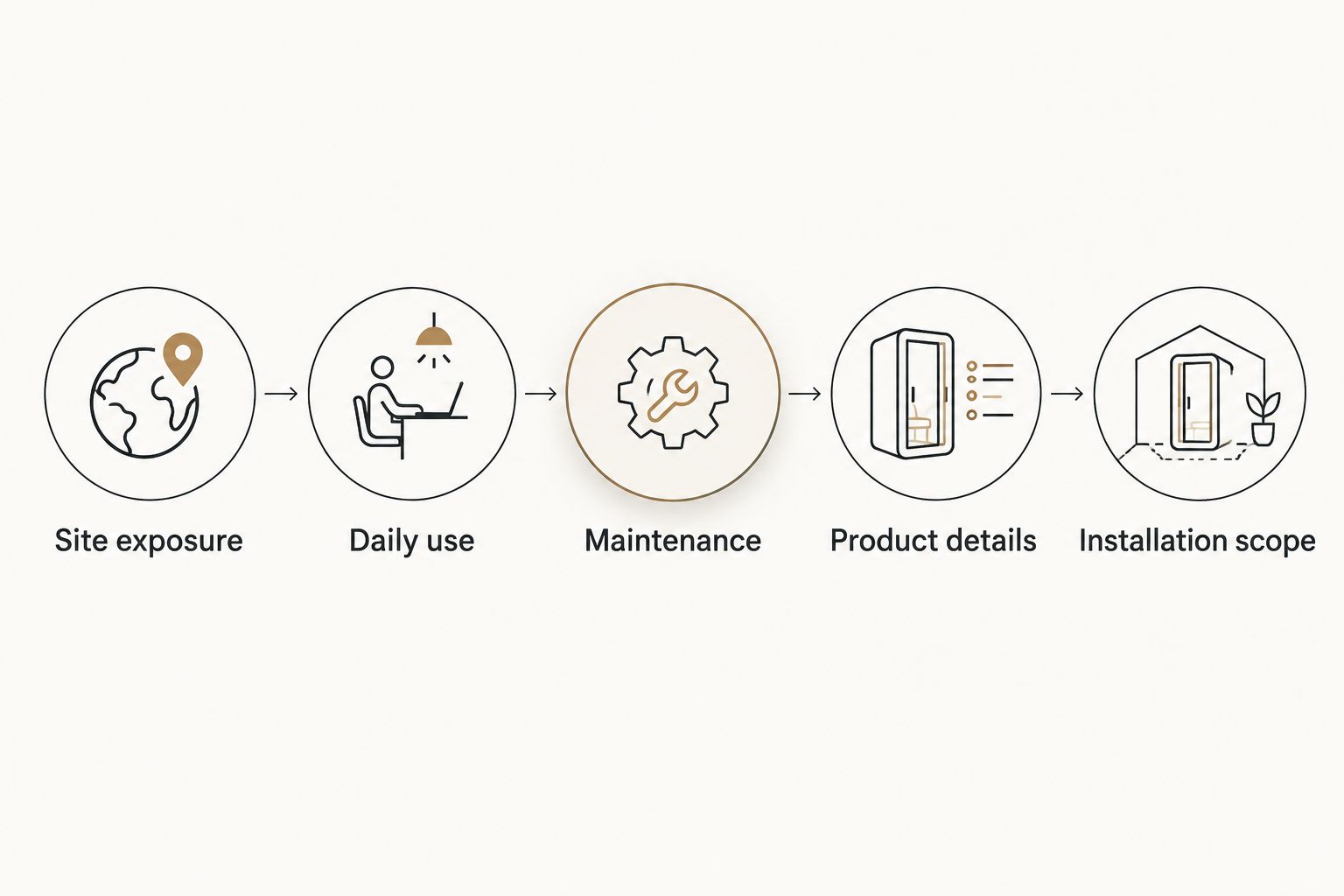
Start with the conditions at your home, then compare named products against those conditions. Use this sequence for a 2026 quote request so the material recommendation follows your needs rather than a preferred finish sample.
- Site exposure: Photograph the deck area in sunlight and shade. Identify roof runoff, nearby irrigation, vegetation and places where water collects.
- Daily use: Explain whether you need a dining area, barefoot access, space for pets or a connection between indoor and outdoor rooms.
- Maintenance: State whether you accept periodic sanding and refinishing or prefer a surface maintained primarily through manufacturer-approved cleaning.
- Product details: Request the manufacturer, product line, board profile, fastening method and current installation instructions.
- Installation scope: Confirm the proposed support work, demolition, access, debris removal, finishing and responsibility for any required approvals.
This sequence keeps the conversation practical. A board that suits your preferred maintenance routine still needs to work with the site and the proposed construction.
Compare the material families
Use this table to establish priorities, not to approve a purchase. The exact board and installation instructions determine whether a material fits your project.
| Material | Best for | Main advantage | Main limitation | Ask the builder |
|---|---|---|---|---|
| Pressure-treated wood | Homeowners comfortable with refinishing | Can be cut, sanded and finished as wood | Weathering, checking and finish upkeep need attention | Which lumber, treatment and finish are specified? |
| Wood-plastic composite | Homeowners seeking an alternative to routine wood refinishing | Combines wood fiber and plastic in manufactured boards | Cleaning remains necessary; heat and movement vary by product | Which board profile, fastening system and clearances apply? |
| PVC decking | Homeowners considering a non-wood board core | Does not contain the wood-fiber core found in wood-plastic composite | Thermal movement and installation details require attention | How will expansion, board ends and supporting construction be handled? |
Choose a specified product and installation plan, not a material label. Neither composite nor PVC describes one uniform level of performance.
Pressure-treated wood: best for homeowners who accept refinishing
Pressure-treated wood deserves consideration when you want a wood surface and accept the care that comes with it. Treatment protects against specified biological hazards; it does not make the surface immune to weathering or remove the need for appropriate detailing.
Ask which lumber species, grade and treatment designation the builder proposes. The suitability of a board depends on its intended exposure and use, not merely on whether someone calls it treated lumber.
Wood also changes as moisture conditions change. Checking, surface wear and finish deterioration belong in the maintenance discussion before you choose a stain color.
- Advantage: Wood can be sanded and refinished when its condition allows.
- Trade-off: Keeping the desired appearance involves recurring inspection and finish care.
- Decision: Choose pressure-treated wood when you accept that maintenance responsibility and the proposed lumber suits its intended use.
For a 2026 specification, request the finish product and preparation requirements in writing. A finish name without the required preparation leaves an important part of the work undefined.
Wood-plastic composite: best for avoiding routine wood refinishing
Wood-plastic composite combines wood fiber and plastic. Capped products add an outer layer, but the cap does not remove the need to follow the particular board's cleaning and installation instructions.
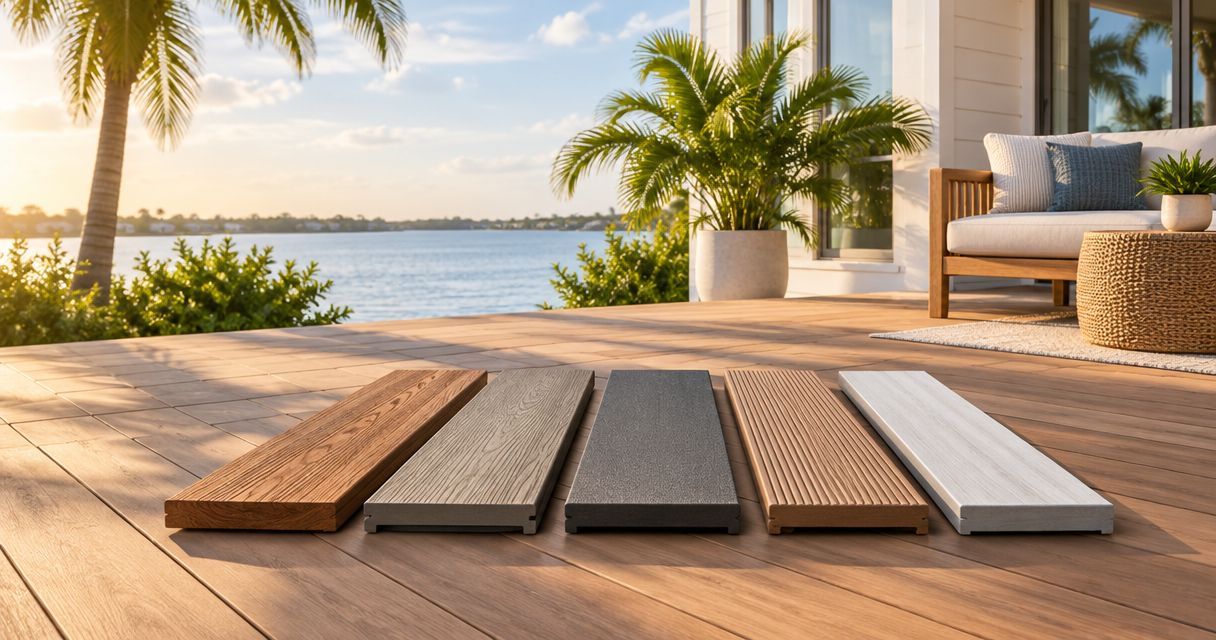
Ask to see a sample of the proposed product rather than a generic composite sample. Examine the face, edges and profile, then discuss how the builder will finish exposed ends and perimeter boards.
Composite does not eliminate site maintenance. Leaves, dirt and other debris still need removal, and cleaning products must suit the selected surface.
- Advantage: Composite offers an alternative to the sanding and refinishing associated with exposed wood surfaces.
- Trade-off: Surface damage, stains and heat response require product-specific consideration; do not assume wood-repair methods apply.
- Decision: Choose wood-plastic composite when its care instructions and detailing fit your expectations.
Request a physical sample for the actual location. Color viewed indoors does not show how the surface looks in full outdoor light.
PVC decking: best for homeowners considering a non-wood core
PVC decking uses a plastic board rather than a wood-plastic composite core. That distinction matters when comparing board construction, but it does not establish whether the whole deck suits a wet or shaded site.
The framing, connections and adjoining surfaces still need appropriate design and installation. A non-wood walking surface does not correct drainage problems or make existing supports suitable for reuse.
Thermal movement also needs attention. Ask the builder to explain the selected product's requirements for fastening, end gaps and installation conditions.
- Advantage: PVC decking avoids the wood-fiber core used in wood-plastic composite boards.
- Trade-off: Expansion details and product-specific supporting requirements remain part of the work.
- Decision: Choose PVC when the exact board, site conditions and proposed assembly make sense together.
Do not choose PVC solely because someone describes it as waterproof. The performance of the installed deck depends on more than its surface boards.
Why the right decking material varies by home
The right decking choice changes with exposure, use and the work needed around it. Give prospective builders the same information so their recommendations address the same project.
- Sun and shade: Show where direct sun reaches the surface and where shade persists. Evaluate samples outdoors rather than assuming one material family always feels cooler.
- Moisture and drainage: Identify roof discharge, irrigation and existing water collection. Ask how the proposed construction addresses those conditions.
- Maintenance preferences: Separate cleaning from refinishing. Choosing manufactured decking does not mean choosing a surface that never needs care.
- Shape and transitions: Steps, corners, borders, doors and adjoining paving affect board layout and edge details.
- Existing construction and access: An existing frame requires assessment before reuse. Narrow access, staging space and debris removal also belong in the scope.
- Responsibilities: Establish who supplies drawings, confirms approval requirements and coordinates any qualified trades needed beyond the carpentry scope.
These factors explain why two homes need different recommendations without either homeowner choosing incorrectly. Your priority is a material suited to the actual project, not a universal winner.
What should your decking quote request include?
Send a short written brief with photographs and a simple sketch. For a 2026 inquiry, label the sketch with the measurements you have taken and identify anything that still needs confirmation on site.
Include the overall footprint, nearby doors, steps, changes in ground level and any existing structure. Mark dimensions as approximate when they are approximate; the builder still needs to verify measurements before fabrication or installation commitments.
Describe how materials will reach the work area. Gates, side passages, landscaping and occupied rooms affect handling and installation planning, especially when the route is not visible in a photograph.
Ask the proposal to distinguish these items:
- Surface boards, trim and fastening system.
- New framing or proposed reuse of existing framing.
- Demolition, removal and disposal.
- Steps, guards and handrails where applicable.
- Preparation, painting or finishing included in the work.
- Drawings, approvals and coordination responsibilities.
If the project connects to a pergola, walkway or another carpentry element, describe that connection without assuming it belongs in the deck scope. For waterfront work, identify the setting explicitly rather than treating a dock as an ordinary backyard deck.
How do you compare deck builders without choosing by appearance alone?
Ask each builder to explain the material recommendation against your brief. A useful explanation connects the board, fastening method and supporting work to your site and maintenance preferences.
A photograph helps you assess appearance. It does not establish what framing, connections or preparation a different project needs.
Compare proposals for the same responsibilities. If one includes removal and finishing while another leaves those items unaddressed, resolve the difference before deciding.
For an inquiry to JB Woodworks LLC, send the same practical details: dimensions, materials under consideration, photographs, desired timing, access and the people coordinating the project. Scope and installation logistics need review before commitments.
Is composite decking better than wood for an Orlando home?
Composite decking is better for a homeowner who wants to avoid routine wood refinishing, provided the chosen product suits the site. Wood remains a reasonable choice when you prefer its surface and accept its maintenance requirements.
Do not treat the comparison as maintenance versus no maintenance. Both surfaces need care, and both depend on suitable installation.
Can you keep the existing frame when replacing deck boards?
Existing deck framing needs assessment before you commit to keeping it. Its condition, layout and connections must suit the proposed replacement surface and the applicable project requirements.
In 2026, request a clear distinction between confirmed reuse and reuse subject to inspection. Replacing visible boards alone does not establish that concealed components are suitable.
FAQ
What's the best decking material for an Orlando home?
The best decking material is the specified product that fits your site's exposure, intended use and maintenance expectations. Compare pressure-treated wood, wood-plastic composite and PVC using the same installation scope.
Will composite decking feel cooler than wood in the sun?
Do not assume composite decking will feel cooler than wood in the sun. Compare the actual products and colors under the site's exposure, and review any relevant manufacturer information.
Does PVC decking solve drainage problems?
PVC decking does not solve drainage problems beneath or around a deck. Review water collection, roof runoff, ventilation and supporting construction separately from the surface-board choice.
What should I ask deck builders in Orlando before choosing materials?
Ask deck builders in Orlando to identify the exact board, fastening method, supporting work and installation requirements. Also confirm removal, finishing, access and responsibility for required approvals.
Do I need approval before replacing deck boards?
Confirm approval requirements with the authority responsible for your property before work begins. The answer depends on the location and scope, so do not assume that describing work as a board replacement settles the question.
What information should I send with a custom deck inquiry?
Send photographs, approximate dimensions, intended use, material preferences and access details with a custom deck inquiry. Include desired timing and identify who will coordinate decisions, drawings and installation.
Can a deck and pergola be planned together?
A deck and pergola can be discussed within the same project brief, but each needs a defined scope. Identify their connection and ask who is responsible for drawings, applicable approvals and any qualified trade work.
One last thing
Ask how an individual damaged board would be replaced. The answer brings fastening, access and perimeter detailing into the material conversation before construction starts.
Keep the final board specification, installation instructions and care guidance with your 2026 project records. A color name alone is not enough information for later maintenance or repairs.