An Orlando painting and finish-work scope should identify the surfaces, preparation, repairs, coating system, protection, access, cleanup, and acceptance criteria before work begins. For house painting Orlando homeowners commission in 2026, the key distinction is what the finish covers—and which carpentry repairs, material problems, or additional trades remain outside the agreement.
- For house painting Orlando projects, specify preparation, coating systems, protection, exclusions, and acceptance before work starts.
- JB Woodworks LLC suits Orlando buyers coordinating painting and finishes with custom carpentry.
- Separate cosmetic filling from damaged-material replacement; they are different scopes.
- Approve a representative finish sample, not just a color name.
Why this matters
A proposal that says only painting and touch-ups leaves the most consequential decisions unresolved. You still need to know whether the work includes removing loose coatings, repairing damaged trim, protecting adjacent finishes, or returning after another trade completes its work.
JB Woodworks LLC provides custom carpentry, woodworking, commercial fabrication, painting, and finishes. For a homeowner or project team, the useful question is how those tasks connect: who prepares the surface, who resolves damaged material, and who accepts the finished result.
Treat the scope as a shared set of instructions, not a description of the finished color. A clear scope gives you something concrete to compare when proposals describe different amounts of work.
What should an Orlando painting and finish-work scope include?
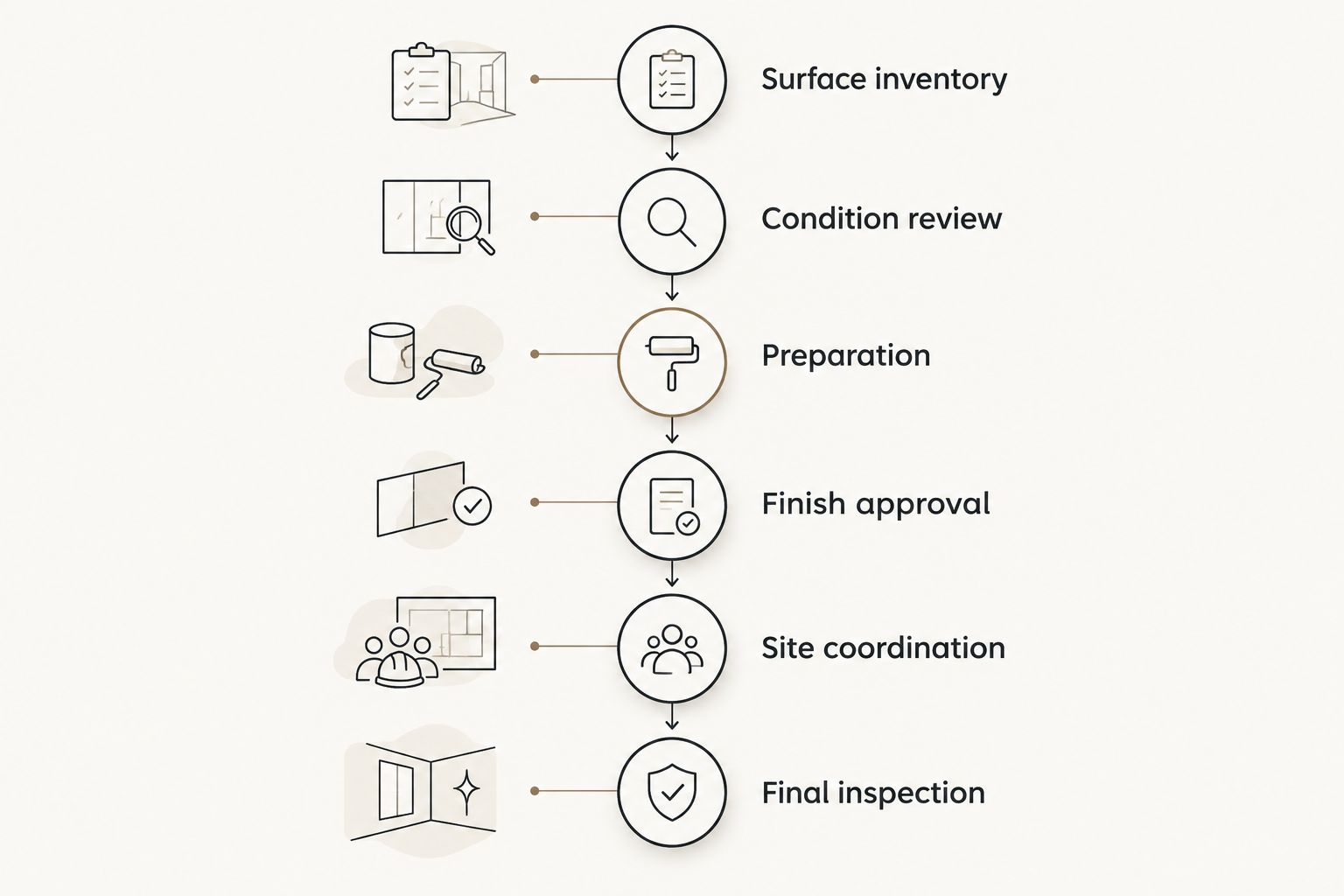
A useful 2026 scope follows the work from the existing condition through final inspection. Build your request around these steps, then ask the contractor to identify inclusions, exclusions, and decisions still requiring confirmation.
- Surface inventory. List each room, elevation, component, and face receiving work. Distinguish walls, ceilings, trim, doors, cabinetry, decking, and other woodwork rather than grouping everything under painting.
- Condition review. Record peeling coatings, staining, open joints, surface damage, and suspected moisture problems. Photographs help connect each observation to a location.
- Preparation. Describe cleaning, removal of unsound coatings, sanding, filling, masking, and priming where appropriate. Specify how preparation changes between existing finishes and bare material.
- Finish approval. Identify the proposed coating system, color, sheen, application approach, and sample approval process. Ask the contractor to explain any substrate-specific requirements.
- Site coordination. Assign access, protection, furniture movement, work-area restrictions, and coordination with other trades. Include transport and installation responsibilities for items finished away from the property.
- Final inspection. Define cleanup, waste removal, touch-ups, inspection conditions, and the process for recording unresolved items.
Keep those steps attached to the actual areas being quoted. An interior wall and an exposed timber component need different preparation decisions, even when you want a similar color.
What belongs in a written surface inventory?
Use room names, photographs, or marked drawings to make boundaries clear. For a door, for example, identify whether the scope includes the frame, edges, and both faces; for cabinetry, distinguish doors, drawer fronts, interiors, and exposed ends.
Do not assume that adjacent surfaces are included. A neatly defined boundary is more useful than a broad phrase such as complete refresh, particularly when existing finishes must remain untouched.
Interior painting: define protection and preparation
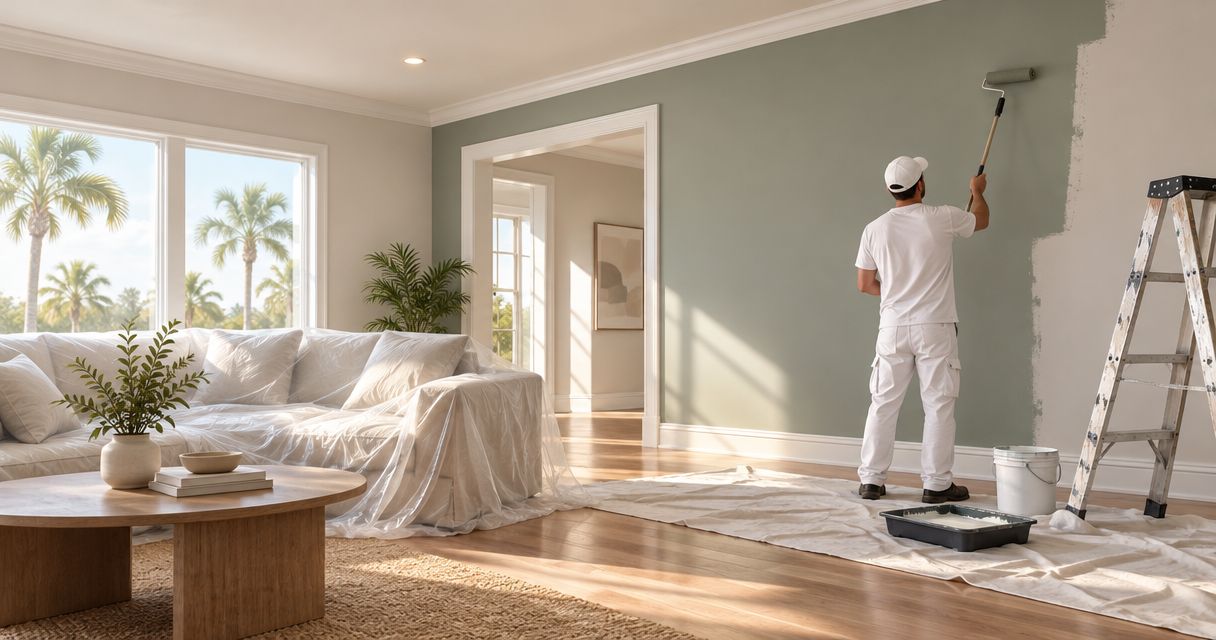
Interior painting scopes should describe both the finish and how the occupied space will be managed. Name the surfaces to remain, the items that need moving, and who handles fixtures, coverings, hardware, and contents.
List visible defects separately from the general preparation allowance. Nail holes, damaged corners, failed joints, and deteriorated trim do not all require the same repair, and repainting does not resolve the cause of every defect.
Your interior scope should also answer:
- Which floors, counters, furniture, and adjoining finishes require protection?
- Who removes and reinstalls hardware or fittings?
- Which existing patches or stains require a specific treatment?
- Where will materials and equipment be stored?
- How will work areas be separated from occupied rooms?
- Who completes touch-ups after other trades finish?
Specify the preparation result, not simply the word prep. Ask what will be cleaned, repaired, sanded, or primed and what existing irregularities will remain visible.
Exterior painting: separate coatings from material repairs
Exterior scopes need clear boundaries between coating work and repairs to the building or woodwork. Identify the surfaces involved, their condition, access constraints, and any known water-related concerns before selecting the finishing approach.
In Orlando, exterior scheduling must account for actual weather and the coating manufacturer's application requirements. A 2026 agreement should explain how unsuitable conditions affect sequencing rather than treating an outdoor completion date as unconditional.
For decks, timber pergolas, docks, waterfront platforms, and walkways, describe horizontal and vertical surfaces separately. Also distinguish exposed faces, concealed faces, joints, and areas that cannot be reached without additional access or disassembly.
Ask for a written decision point when preparation exposes damaged material. The scope should explain who assesses the condition, who authorizes additional work, and whether a qualified trade needs to resolve the underlying issue before finishing resumes.
Do not use paint to stand in for a repair decision. If material replacement or other corrective work is necessary, document it separately from the coating work.
Cabinetry and custom woodwork: approve the finished surface
Cabinetry, shelving, storage, and custom furniture need a finish brief that describes appearance and handling as well as color. State whether the work concerns newly fabricated pieces or an existing finish that must be assessed before refinishing.
For custom tables and pool-table casework, identify which components receive a finish and which components remain outside the scope. Do not assume that finishing casework includes specialist equipment work, disassembly, or reassembly.
A useful woodworking finish brief records:
- The material and any existing coating, where known.
- Whether grain should remain visible or receive an opaque finish.
- The intended color, sheen, and acceptable natural variation.
- Which faces, edges, interiors, and undersides receive treatment.
- How samples will be reviewed and approved.
- How pieces will be protected during handling and installation.
Approve a sample that represents the actual material and preparation. A color reference communicates direction; it does not show how every substrate, joint, or grain pattern will look after finishing.
How do painting and finish-work scopes differ?
These work categories share a need for clear preparation and acceptance criteria, but the details change with the surface. Use this comparison to check whether your proposal addresses the work you are commissioning.
| Work category | Best for | Scope emphasis | Limitation to resolve |
|---|---|---|---|
| Interior painting | Walls, ceilings, and room trim | Surface preparation, room protection, sheen, and boundaries | Existing defects need specific repair decisions |
| Exterior painting | Defined outdoor surfaces | Coating condition, weather requirements, access, and protection | Finishing does not correct underlying material damage |
| Cabinetry and woodwork finishes | Cabinets, shelving, storage, and furniture | Material samples, visible faces, handling, and installation | Existing coatings and material variation affect the approach |
| Commercial and scenic finishes | Displays and physical environments | Drawings, appearance, deadlines, transport, and handover | Responsibility for assembly and site work must be assigned |
The advantage of a coordinated carpentry and finishing scope is that repair and appearance decisions can be discussed together. The constraint is that different tasks still need separate boundaries, approvals, and responsibilities.
For JB Woodworks LLC painting and finish-work inquiries, explain whether finishing is the main assignment or part of a larger carpentry or fabrication project. That distinction helps define what needs review before a commitment.
Why painting and finish-work scopes vary
The right scope follows the existing conditions and intended use, not a standard package. These factors explain why apparently similar projects require different instructions:
- Surface condition: Sound existing coatings, bare material, and deteriorated finishes require different preparation decisions.
- Material: Wall surfaces, timber, cabinetry, and fabricated components need coating systems appropriate to their substrates.
- Exposure: Interior use, outdoor exposure, and waterfront locations change the conditions that must be reviewed.
- Access: Height, restricted routes, occupied rooms, and surrounding property affect protection and work sequencing.
- Appearance: Opaque finishes, visible grain, sheen, and matching existing work need different approval references.
- Project coordination: Other trades, off-site finishing, transport, installation, and handover introduce additional responsibilities.
For your 2026 project, ask each bidder to respond to the same information. If one proposal includes repairs and another excludes them, compare those boundaries before comparing the overall offer.
What should you send with a painting quote request?
Send a short project brief with photographs, a surface list, the property location, and your intended result. Include close views of defects alongside wider images showing access and adjoining surfaces.
For a fabrication or installation project, add dimensions, available drawings, material preferences, the required event or handover date, site access, transport arrangements, and the party responsible for installation. Clearly distinguish a fixed deadline from a preferred date.
Use a simple request such as:
Please identify the included surfaces, preparation, repairs, proposed finishes, protection, exclusions, and installation responsibilities. Flag any conditions that require inspection or another trade before the scope can be confirmed.
JB Woodworks LLC serves homeowners, contractors, brands, and event teams from its Orlando custom carpentry and fabrication studio. For work elsewhere in Central Florida or beyond, provide the location early so scope, travel, and installation logistics can be reviewed before commitments.
Should painting happen before or after carpentry?
Sequence painting and carpentry around the actual assembly and installation plan. Complete work that would damage a finished surface before the final finish stage, while identifying any components that need finishing before installation makes them difficult to reach.
Put the agreed sequence in writing. Assign responsibility for installation marks and later touch-ups, especially when separate contractors handle fabrication, fitting, and painting.
How should you inspect completed finish work?
Inspect against the approved scope and sample, using the viewing conditions agreed before work begins. Check included surfaces, finish boundaries, protection removal, cleanup, and any outstanding hardware or installation tasks.
Record remaining items by location and photograph rather than relying on a general request for touch-ups. Distinguish incomplete work from newly requested changes so both parties understand the next action.
FAQ
What should a house painting Orlando quote include?
A house painting Orlando quote should identify surfaces, preparation, repairs, coating systems, protection, access, cleanup, exclusions, and acceptance criteria. Ask for unresolved conditions and responsibilities to be written down before you approve the work.
Does painting include replacing damaged wood?
Painting includes damaged-wood replacement only when the written scope expressly includes it. Separate material repairs from coating preparation and define how additional damage discovered during work will be handled.
Should I choose a color before asking for a quote?
You can request a scope discussion before choosing the final color. Provide the intended appearance and ask when color, sheen, and sample approval must be settled for the proposed work.
Can cabinetry be included with general interior painting?
Cabinetry can be listed in the same project brief, but it needs its own preparation, finish, handling, and acceptance details. Do not assume a wall-painting description also defines cabinet doors, interiors, or hardware responsibilities.
What should an exterior painting agreement say about weather?
An exterior painting agreement should explain how weather and manufacturer application requirements affect preparation, coating, and scheduling. For a 2026 project, confirm how interruptions and revised work dates will be communicated.
What should I include when requesting commercial finish work?
Include dimensions, drawings, materials, appearance references, deadlines, site access, transport, installation, and handover responsibilities. Identify which decisions are approved and which still need review.
Who should handle touch-ups after installation?
The written scope should name the party responsible for touch-ups after installation. Specify whether that responsibility covers the finishing contractor's work, installation marks, or later damage by other trades.
One last thing
Ask what happens when preparation reveals a condition nobody could see during the initial review. That answer tells you whether the agreement includes a workable approval process—not just an attractive description of the finished room.
For a 2026 scope, require a pause-and-confirm step before additional repairs proceed. A useful finish-work agreement defines how changes are handled as carefully as it defines the original work.