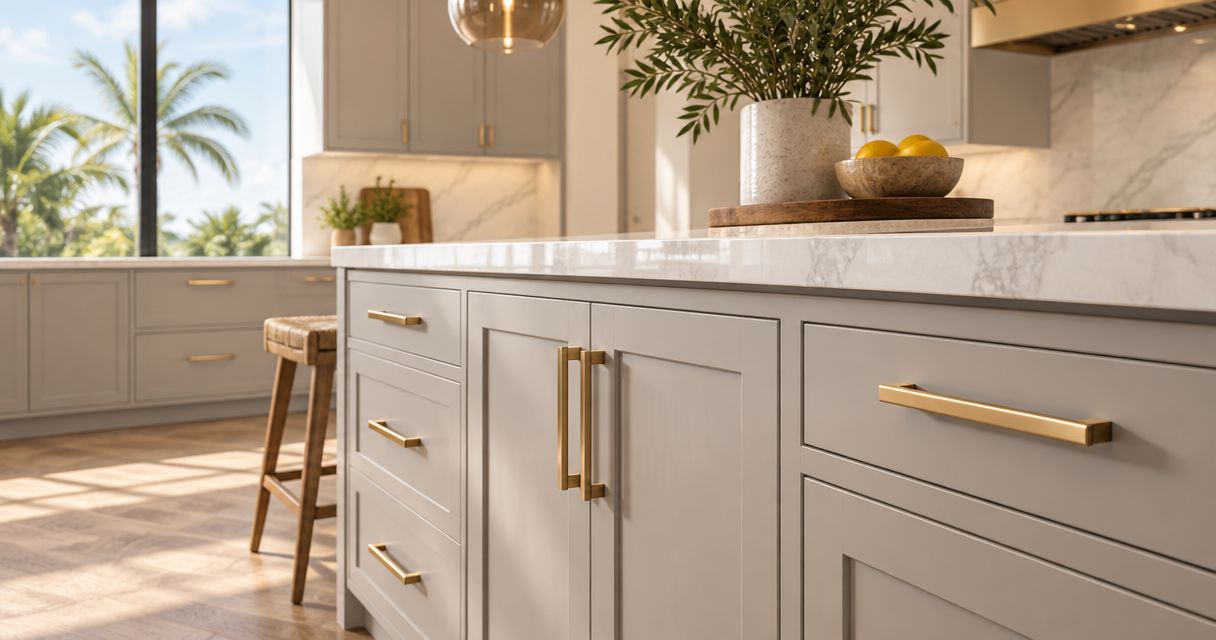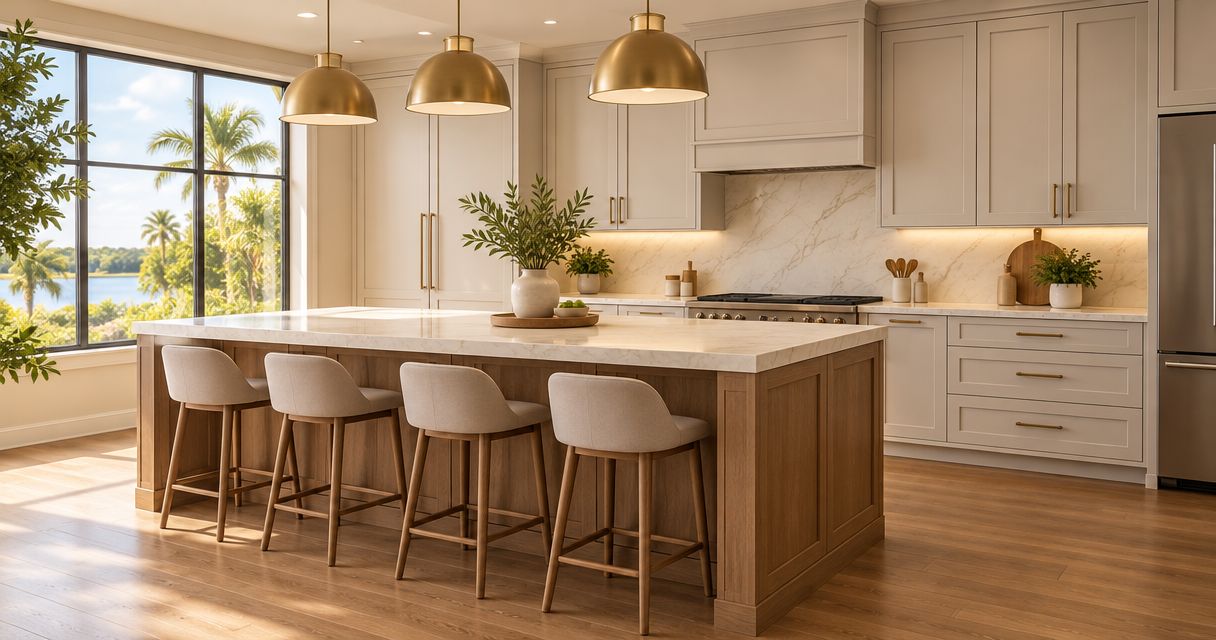
Best overall: Shaker for kitchens that mix traditional and contemporary details. Best for a clean-lined kitchen: slab. Best for cottage character: beadboard. This 2026 guide compares five kitchen cabinet door styles for Orlando homes and explains what to specify before requesting custom cabinetry.
- Best kitchen cabinet door styles Orlando homeowners should shortlist: Shaker, slab, beadboard, raised-panel, and glass-front doors.
- Shaker is the default recommendation for mixed-style kitchens; slab suits deliberately minimal rooms.
- JB Woodworks LLC builds custom cabinetry; bring dimensions, reference photos, and installation requirements to the inquiry.
- Choose door profile, construction, finish, and mounting arrangement separately before approving the cabinet scope.
Why this matters
A cabinet door style describes the visible face, not the whole cabinet. Shaker and raised-panel describe profiles; inset and overlay describe how doors sit relative to the cabinet frame. Paint, stain, wood species, and hardware introduce separate decisions.
For an Orlando kitchen, separate appearance from material and finish requirements. A recessed panel does not make a door moisture-resistant, and a flat face does not establish how its edges are protected. Ask for those details in the proposal rather than treating a style name as a construction specification.
JB Woodworks LLC is best for Orlando homeowners seeking custom cabinetry made for a particular space rather than choosing door fronts in isolation. Review the custom cabinetry and carpentry services with your room layout, existing cabinets, and installation scope in mind.
What makes the best kitchen cabinet door style?
Use these criteria for your 2026 shortlist before choosing a color:
- Room fit: Match the door's level of detail to the kitchen's trim, adjoining rooms, and overall architecture.
- Cleaning access: Look at grooves, ledges, and corners you will need to wipe, not just the broad face.
- Drawer proportions: Check how the profile translates to shallow drawers, wide drawers, and tall pantry doors.
- Material and finish: Specify the substrate, exposed edges, finish, and care requirements separately from the profile.
- Installation fit: Confirm mounting arrangement, hardware clearance, appliance relationships, and the condition of existing cabinet boxes.
The best choice satisfies the whole room. A door that looks right in a cropped photograph can feel too detailed when repeated across every drawer and upper cabinet.
Kitchen cabinet door styles at a glance
| Door style | Best for | Standout feature | Key limitation |
|---|---|---|---|
| Shaker | Kitchens combining old and new details | Flat recessed center within a simple frame | Recessed edges need cleaning |
| Slab | Minimal, contemporary kitchens | Uninterrupted flat face | Alignment and surface marks remain visible |
| Beadboard | Cottage-inspired kitchens | Repeated vertical grooves | Grooves add cleaning work and visual texture |
| Raised-panel | Traditional rooms with substantial trim | Center panel projects within a profiled frame | Layered detailing can compete with other finishes |
| Glass-front | Display-focused upper cabinets | Contents remain visible behind glazing | Requires organized contents and glass cleaning |
These are design recommendations, not a ranking of material durability. Each style needs its own construction, finish, and installation specification.
1. Shaker: best kitchen cabinet doors for mixed-style rooms
Shaker doors have a flat recessed center surrounded by a frame. The restrained profile works as a starting point when your kitchen needs to sit comfortably between traditional trim and newer appliances or fixtures.
Check the frame proportions on actual door and drawer sizes. A frame that looks balanced on a tall pantry door can leave very little visible center on a shallow drawer.
Shaker pros:
- Simple framing gives the cabinetry definition without elaborate molding.
- The profile accommodates painted or wood-finished designs.
- Matching framed fronts can establish consistency across a varied cabinet layout.
Shaker cons:
- The recessed panel perimeter creates edges that need wiping.
- Frame width needs consideration across different front sizes.
Best for: Homeowners who want a clear starting point without committing to a strongly traditional or minimal kitchen.
For a 2026 renovation, approve the profile on both a door and a drawer front. Do not choose the entire kitchen from a small corner sample that hides the overall proportions.
Verdict: Buy Shaker for a mixed-style kitchen; confirm the frame proportions before approval.
2. Slab: best kitchen cabinet doors for minimal interiors
Slab doors present a flat face without a framed recessed or raised center. They keep attention on the cabinet layout, surface material, and hardware rather than decorative profiling.
The simplicity makes installation details more visible. Uneven gaps, inconsistent handle placement, and mismatched grain direction become part of what you notice across a long run.
Slab pros:
- Flat faces avoid the recessed profile corners found on framed styles.
- The plain surface lets wood grain or a selected finish remain prominent.
- Repeated fronts create a quiet background for other kitchen materials.
Slab cons:
- Broad surfaces leave marks and finish inconsistencies exposed.
- Edge treatment and door alignment need explicit attention.
Best for: Homeowners and designers planning a deliberately contemporary kitchen with restrained detailing.
Specify how edges are finished and how adjacent grain patterns should relate, where applicable. If you want handle-free operation, discuss the opening method rather than assuming slab doors include it.
Verdict: Buy slab for a minimal room; skip it if decorative cabinet framing is central to your design.
3. Beadboard: best kitchen cabinet doors for cottage character
Beadboard-style doors introduce repeated grooves, usually running vertically through the center panel. The pattern gives cabinetry texture without relying on raised decorative molding.
Use it deliberately. A room with patterned flooring, detailed backsplash tile, and many small cabinet fronts already contains considerable visual activity.
Beadboard pros:
- Vertical grooves provide a recognizable cottage-style detail.
- The patterned center distinguishes cabinetry from plain surrounding surfaces.
- Selected beadboard fronts can introduce texture without covering every cabinet.
Beadboard cons:
- Grooves create additional cleaning surfaces.
- The repeated pattern can compete with other strong kitchen details.
Best for: Homeowners seeking cottage character in a kitchen with otherwise restrained finishes.
Ask to see how the groove pattern meets the surrounding frame and how it appears on narrow fronts. Keep the construction and finish discussion separate: beadboard appearance alone says nothing about the underlying material.
Verdict: Buy beadboard when cottage texture is intentional; skip an all-over treatment if the room already feels busy.
4. Raised-panel: best kitchen cabinet doors for traditional rooms
Raised-panel doors have a center panel that projects within a surrounding frame. Profiled transitions create shadow lines and a more layered appearance than a flat recessed panel.
This style deserves a whole-room review. Substantial crown molding, shaped trim, and traditional furniture provide different surroundings from a kitchen built around plain surfaces and narrow detailing.
Raised-panel pros:
- The projecting center adds depth and shadow.
- Profile choices give a traditional scheme a defined cabinet detail.
- The door can relate visually to other shaped woodwork in the home.
Raised-panel cons:
- Molded transitions and ledges require more detailed cleaning.
- Elaborate profiles can overwhelm small fronts or compete with decorative finishes.
Best for: Homeowners preserving a traditional interior with substantial architectural detail.
Request a profile drawing or physical sample rather than approving the phrase raised-panel alone. Different panel edges and frame shapes produce noticeably different results.
Verdict: Buy raised-panel for a clearly traditional room; skip it when the design brief calls for visual restraint.
5. Glass-front: best kitchen cabinet doors for display storage
Glass-front doors replace an opaque center panel with glazing. They make selected upper cabinets useful for displaying dishes or other objects while retaining a closed cabinet front.
Glass-front is not a complete profile specification. The surrounding frame can carry different details, so identify both the glazing and the frame treatment in your brief.
Glass-front pros:
- Visible contents become part of the kitchen's appearance.
- Selected glazed doors interrupt a continuous run of opaque cabinetry.
- Display storage remains enclosed rather than sitting on an open shelf.
Glass-front cons:
- Clear glazing exposes clutter and mismatched contents.
- Glass needs cleaning on top of the cabinet's usual care.
Best for: Homeowners with a defined display area and contents they want to see.
Confirm glass selection, retention details, shelf appearance, and any lighting responsibilities before commitments. Electrical work belongs with the appropriately qualified trade; it is not implied by a cabinet-door scope.
Verdict: Buy glass-front for selected display cabinets; skip it where concealed storage matters more.
How we ranked these cabinet door styles
The order prioritizes room fit, cleaning access, front proportions, and specification clarity. Shaker comes first as the default for mixed-style rooms, not because its name guarantees better construction or longer service.
For your 2026 project, move the option that best matches your room to the top. Slab is the stronger choice for an intentionally minimal interior; raised-panel is the stronger choice when traditional detailing is the brief.
Approve a sample before approving the kitchen
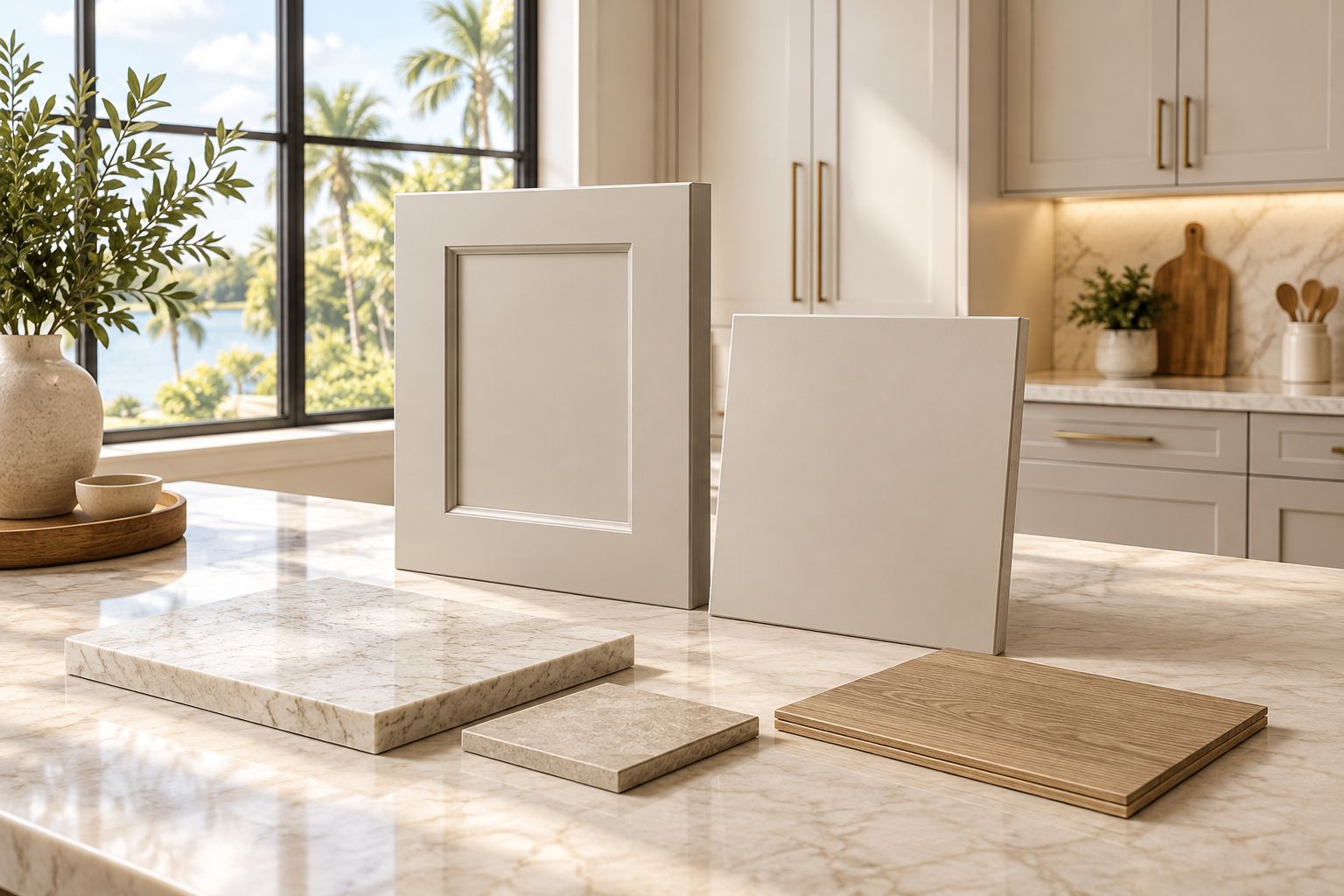
Request 1 sample door showing the proposed profile, material, and finish together. View it upright in the kitchen, beside the countertop, backsplash, and floor materials you intend to retain or install.
Check the recesses and edges as well as the broad face. Then compare the sample with drawings of the smallest drawer and largest door: the same profile does not occupy every front in the same proportions.
For an existing kitchen, ask whether the proposed work covers replacement fronts, cabinet modifications, refinishing, or entirely new cabinetry. Those are different scopes. A preferred door style does not settle which work the room needs.
Prepare a useful Orlando cabinet inquiry
JB Woodworks LLC provides custom cabinetry and general carpentry in Orlando. Give the cabinet inquiry enough detail to distinguish a visual update from a larger renovation, with materials and installation logistics reviewed before commitments.
Prepare these items for the initial conversation:
- Room measurements: Record 3 dimensions for each affected area: width, height, and depth. Treat these as briefing measurements, not fabrication approval.
- Reference images: Send 2 reference photos showing the door details you want, and explain what you like in each.
- Existing conditions: Photograph cabinet interiors, hinges, damaged areas, adjacent trim, and appliance openings.
- Work boundaries: Identify what stays, what changes, and whether painting, hardware, shelving, or storage changes belong in the scope.
- Site coordination: Describe access, parking, occupied-room restrictions, and other contractors working in the kitchen.
- Schedule needs: Share your requested 2026 completion date and any dependent work without assuming a production commitment.
Include appliance information where cabinetry meets equipment. Identify responsibility for plumbing, electrical changes, final measurements, installation, and surrounding repairs rather than leaving those handoffs unstated.
Use the contact page to introduce the room and the work you are considering. For locations beyond Orlando and nearby Central Florida communities, ask about scope, travel, and installation logistics before making plans.
Which kitchen cabinet door style should you choose?
Choose Shaker if you are undecided and your kitchen combines traditional and contemporary elements. Start with a restrained profile, then review the material, finish, and drawer proportions before approving the design.
Choose slab for a minimal room, beadboard for cottage texture, raised-panel for traditional depth, or glass-front for a defined display area. Keep one main profile across the kitchen unless there is a clear reason for a different treatment.
FAQ
What's the best kitchen cabinet door style for an Orlando home?
Shaker is the default recommendation for an Orlando kitchen that combines traditional and contemporary details. Choose slab instead for a deliberately minimal room, or raised-panel for a clearly traditional interior.
Are Shaker cabinet doors better than slab doors?
Shaker is better for a framed, mixed-style appearance; slab is better for an uninterrupted contemporary face. Neither style name establishes material quality, finish performance, or installation quality.
Which cabinet door style is easiest to wipe clean?
A plain slab face has fewer profile corners to wipe than recessed, grooved, or raised-panel designs. Hardware, finish texture, and edge details still affect cleaning access.
Does Florida humidity mean I should choose a particular door style?
Door style alone does not establish moisture performance. Ask about the proposed material, construction, edge protection, finish, and care requirements rather than relying on a profile name.
Is inset a cabinet door style like Shaker?
Inset describes how a door sits within the cabinet frame, while Shaker describes its visible profile. Specify the profile and mounting arrangement separately.
Can I change cabinet doors without replacing the cabinet boxes?
Door replacement depends on the condition, dimensions, and hardware compatibility of the existing cabinetry. Have those conditions assessed before treating new fronts as the complete scope.
What should I send when requesting custom kitchen cabinetry?
Send room measurements, existing-condition photos, reference images, appliance information, and a clear description of what stays and changes. JB Woodworks LLC can then discuss the custom cabinetry scope, materials, and installation requirements.
One last thing
Check the smallest drawer front before approving the largest door. A framed profile can look balanced on a generous sample but crowded on a shallow drawer. Ask for that detail in the drawings while changes are still decisions on paper.