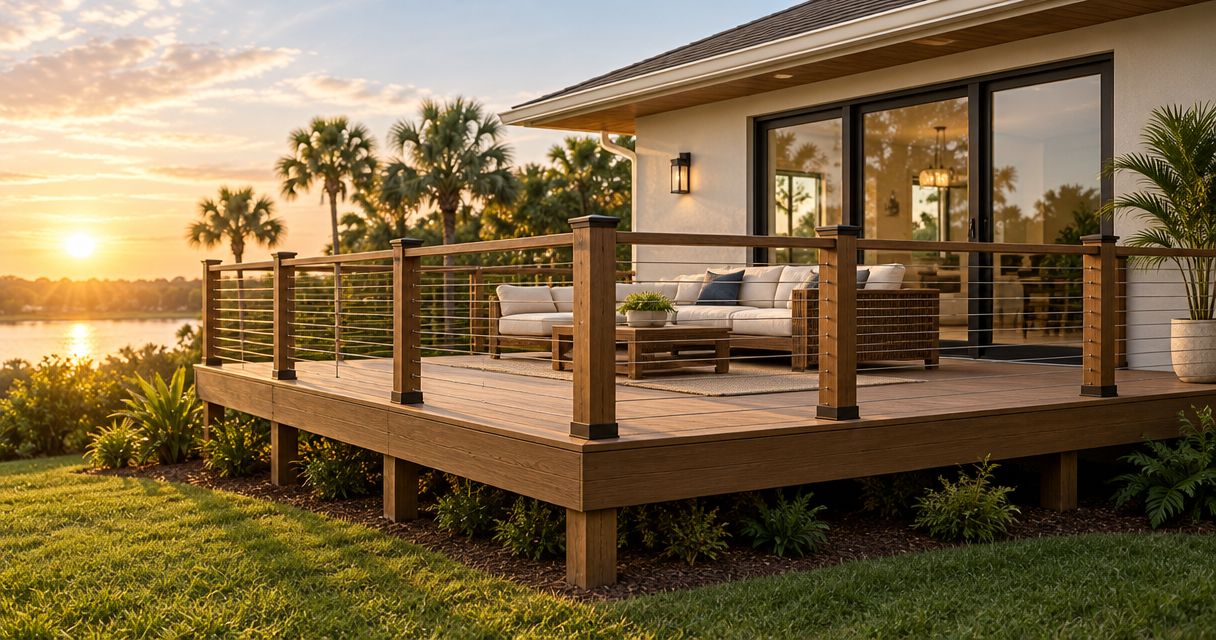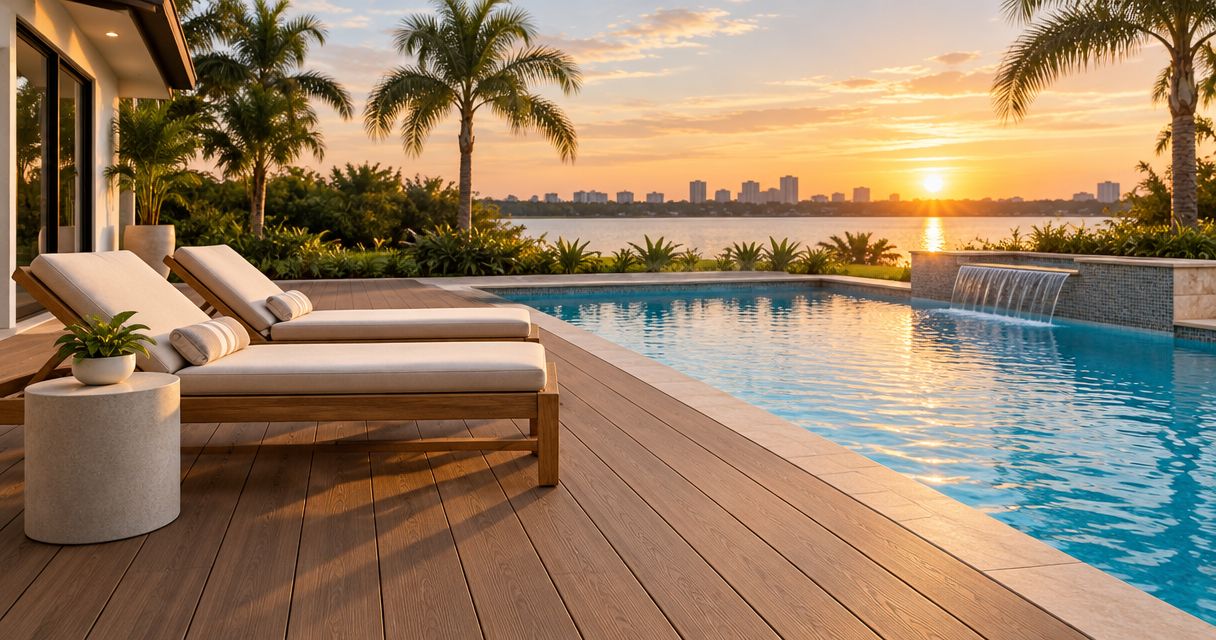
Best overall: cellular PVC for low-upkeep poolside decking; best for a wood-look finish: capped composite; best for replaceable natural-wood boards: pressure-treated pine; best for a solid-hardwood surface: tropical hardwood. JB Woodworks LLC is best for Orlando homeowners seeking custom pool-deck carpentry planned around their space.
- Best decking materials pool deck Orlando: start with cellular PVC when low upkeep is your priority.
- Capped composite suits wood-look designs; pressure-treated pine suits owners prepared for ongoing wood care.
- Compare actual samples for heat, wet traction and cleaning requirements before choosing poolside decking.
- JB Woodworks LLC provides custom deck carpentry; confirm materials, scope and installation responsibilities before committing.
Why this matters
A pool deck serves bare feet, wet traffic, furniture and access to pool equipment. Choosing by color alone leaves the important questions unanswered: how the surface feels in sunlight, how it drains and what care it needs.
This 2026 shortlist compares decking boards for framed decks, not pool coping or ground-supported paving. Start by confirming which construction approach your site needs. A board choice does not resolve framing condition, drainage or the connection between the deck and pool edge.
What makes the best decking material for a pool deck?
Use these criteria before comparing samples:
- Barefoot comfort: Compare the actual color and surface in direct sunlight. No material category guarantees a comfortable walking temperature.
- Wet traction: Request slip-resistance information relevant to the intended use. Texture alone does not establish wet performance.
- Moisture response: Check how the selected board handles water exposure, cut ends and the ventilation conditions beneath it.
- Maintenance: Separate routine washing from refinishing, sanding and individual-board replacement.
- Installation fit: Confirm board spacing, fasteners, framing compatibility, edge details and access to pool equipment.
- Repair planning: Ask how a damaged board comes out and whether surrounding boards or trim must be disturbed.
For your 2026 material selection, take 2 sample boards outside in the proposed location. Compare them under the same exposure, and request the current installation and care documents for each exact product. Handle sun-exposed samples cautiously rather than testing them with bare feet.
Orlando pool-deck materials at a glance
| Material | Best for | Standout feature | Key limitation |
|---|---|---|---|
| Cellular PVC decking | Low-upkeep poolside surfaces | Plastic board without a wood-fiber core | Sun exposure, movement and surface texture need product-specific review |
| Capped composite decking | A wood-look surface without wood refinishing | Protective cap over a composite core | Cap construction and installation requirements differ by product |
| Pressure-treated pine | A repairable natural-wood deck | Conventional wood boards that can be individually replaced | Checking, splinters and finish maintenance require attention |
| Tropical hardwood decking | A solid-hardwood architectural finish | Dense natural wood with visible grain | Species, fastening and appearance-care requirements need careful specification |
The ranking favors moisture response and upkeep first. Change the order if natural wood, repair access or a particular architectural finish matters more to you.
1. Cellular PVC: best for low-upkeep poolside decking
Cellular PVC decking uses a plastic board rather than a wood-fiber composite core. It avoids the wood-fiber decay concern, but the surrounding deck still needs suitable framing, drainage and ventilation.
Best for: Homeowners who want a poolside board surface without a wood-staining routine.
Cellular PVC pros
- No wood-fiber core to decay.
- Does not require wood stain to preserve a timber appearance.
- Offers manufactured colors and surface textures for coordinated detailing.
Cellular PVC cons
- Sun-exposed boards can become hot; material type alone does not establish barefoot comfort.
- Thermal movement requires the specified gaps, fastening and installation details.
- Surface damage and repair options depend on the selected product.
Choose the board and color together. A pale sample in shade does not establish how another finish behaves beside your pool in full sun.
For a 2026 specification, request the exact product's installation instructions and cleaning guidance. Confirm whether the manufacturer permits the intended poolside application, including exposure to the pool's treatment system.
Verdict: Buy cellular PVC for low upkeep after checking the exact surface, exposure and installation requirements.
2. Capped composite: best for a wood-look pool surround
Capped composite decking combines a composite core with a protective outer layer. It suits homeowners who want a manufactured wood-look surface without maintaining a stained timber finish.
Best for: Pool-deck designs where a wood-look finish matters more than using solid wood.
Capped composite pros
- Offers wood-look colors and grain patterns.
- Avoids the recurring staining routine associated with a finished wood deck.
- Provides matching edge and trim options where offered by the selected manufacturer.
Capped composite cons
- Cap coverage, exposed ends and core composition vary between products.
- Dark surfaces can become hot in direct sunlight.
- Concealed fastening can complicate individual-board replacement, depending on the system.
Ask to see the board's cross-section and proposed edge treatment, not just a face sample. Steps, borders and equipment-access openings expose details that a flat sample does not show.
Do not accept “composite” as the whole specification. Record the product line, color, board profile, fasteners and permitted application so everyone quotes the same assembly.
Verdict: Buy capped composite for a wood-look design after confirming poolside suitability and replacement access.
3. Pressure-treated pine: best for replaceable wood boards
Pressure-treated pine provides a natural-wood walking surface with preservative treatment appropriate to its specified use. Treatment does not eliminate weathering, movement, checking or the need to inspect the deck.
Best for: Homeowners who prefer wood and accept a hands-on care routine.
Pressure-treated pine pros
- Individual boards can be replaced using conventional carpentry methods.
- Wood grain suits a straightforward timber design.
- The surface can accept a compatible finish when its condition and moisture content allow.
Pressure-treated pine cons
- Splinters, raised grain and checking matter around bare feet.
- Finish care and inspections remain part of ownership.
- Treatment category and compatible hardware must suit the actual exposure.
Specify the intended use rather than asking for unspecified “treated lumber.” The walking boards, structural members and components near the ground do not automatically share the same exposure requirements.
Before committing, ask who will inspect rough spots and maintain the finish. Pressure-treated pine is a poor fit when your goal is to avoid ongoing wood care.
Verdict: Buy pressure-treated pine when repairability and natural wood matter more than minimizing maintenance.
4. Tropical hardwood: best for a solid-hardwood finish
Tropical hardwood decking offers natural grain and a dense wood surface. “Tropical hardwood” is a category, not a complete specification: species differ in durability, movement, workability and care requirements.
Best for: Design-led projects where solid wood is a deliberate choice and the owner accepts its care requirements.
Tropical hardwood pros
- Provides solid wood rather than an embossed wood-look surface.
- Natural grain creates variation across the deck.
- Some species have documented natural decay resistance appropriate to exterior use.
Tropical hardwood cons
- Dense boards require species-appropriate cutting, drilling and fastening methods.
- Maintaining the original color generally requires an ongoing finish routine.
- Wet traction and heat still need evaluation for the exact surface and exposure.
Name the species in the proposal. Ask for sourcing documentation and clear guidance on whether the intended appearance is maintained color or natural weathering.
Coordinate board ends, borders and removable access panels before fabrication. A hardwood surface should not make routine pool-equipment access difficult.
Verdict: Buy tropical hardwood for a considered solid-wood design, not as a maintenance-free poolside surface.
What to check at the pool edge
The transition between decking and the pool needs its own detail. Confirm where the deck stops, how the edge is finished and which parts must remain accessible.
An attractive perimeter board is not a substitute for a resolved drainage or structural detail. Keep pool-system work, electrical work and any required engineering assigned to appropriately qualified parties.
Walk the route from the house to the pool and equipment area. Note doors, steps, furniture, hose storage and gates. These affect board layout and access as much as the deck's outline does.
Where an existing frame will remain, arrange an assessment before selecting replacement boards. New decking does not correct deteriorated framing or unsuitable support spacing.
Prepare a useful pool-deck quote request
JB Woodworks LLC builds custom decks in Orlando. A useful inquiry identifies the site conditions and decisions still open, rather than asking for a material recommendation from a single inspiration photograph.
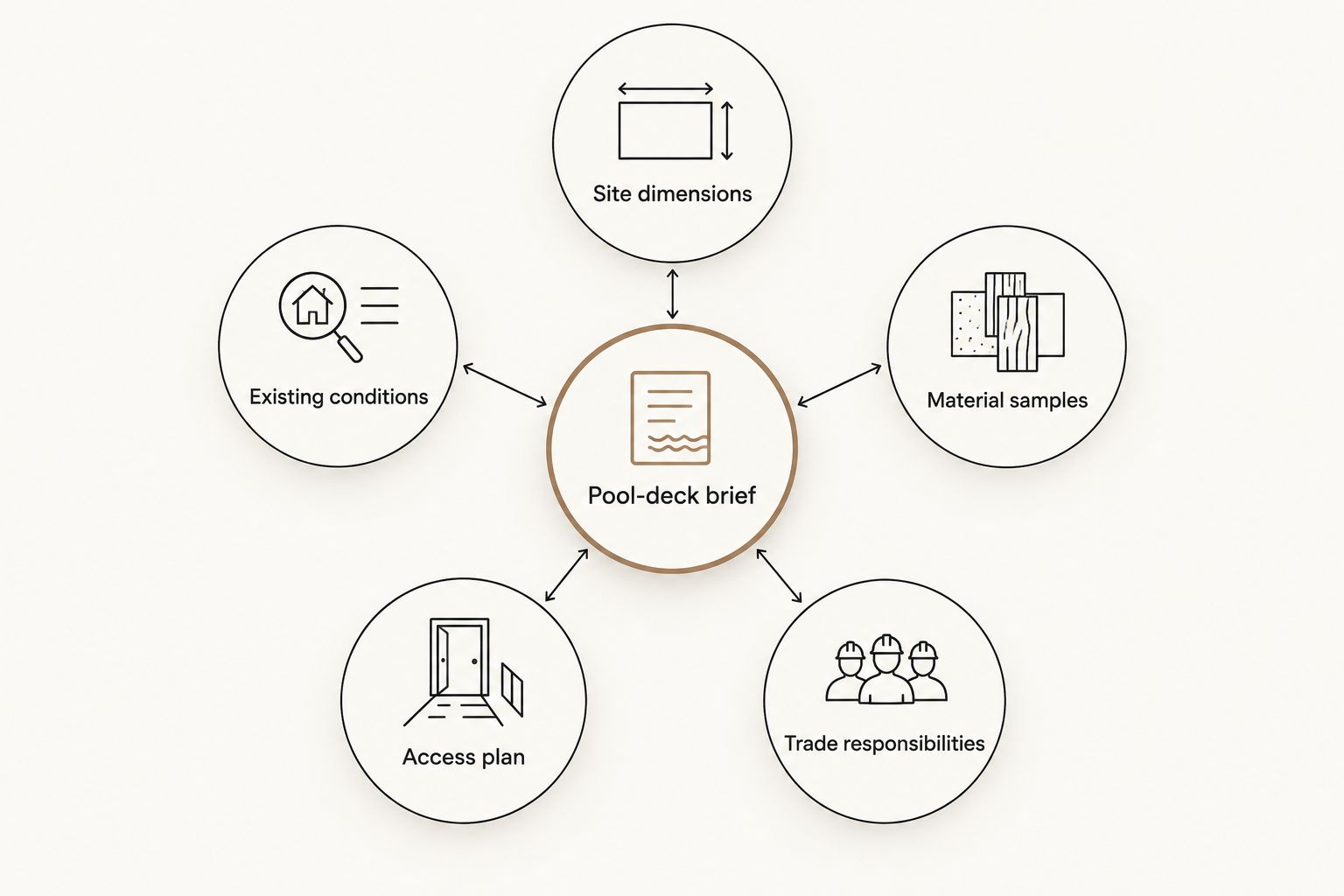
For your 2026 inquiry, organize the brief under these headings:
- Site dimensions: Provide 1 dimensioned sketch showing the deck outline, pool edge, doors and steps. Mark preliminary measurements as preliminary.
- Existing conditions: Include 3 site photos covering the overall area, the pool-edge transition and the underside or adjacent access where visible.
- Material samples: Identify preferred categories, colors and any exact products already under consideration.
- Access plan: Describe gates, delivery routes, staging space and whether the pool must remain accessible during work.
- Trade responsibilities: Identify who handles demolition, pool-related work, approvals and any qualified-trade requirements.
These are starting materials for a discussion, not substitutes for site verification. Include your desired completion date and any dependencies, but leave commitments until scope, materials and logistics have been reviewed.
Before requesting a proposal, separate confirmed decisions from preferences. That lets the carpenter identify what needs measuring, what needs a sample and what requires coordination with another trade.
You can contact JB Woodworks LLC with the project location, photographs and intended use. Ask for the proposal to distinguish decking, framing work, edge details, finishes and installation responsibilities.
How the materials are ranked
This shortlist ranks categories by their fit for a framed pool deck, not by a claimed product test. Cellular PVC leads for low upkeep; capped composite serves wood-look designs; pressure-treated pine prioritizes replaceable wood boards; tropical hardwood serves a deliberate solid-wood finish.
The final choice must pass product-level checks. Category names do not establish wet traction, heat performance or compatibility with your existing frame.
Which pool-deck material should you choose?
Start with cellular PVC if you want a low-upkeep board surface. Compare capped composite alongside it when the wood-look finish is important, and retain natural wood only if you accept the inspection and care it requires.
For a 2026 project, settle the construction approach before settling the color. Confirm the frame, pool-edge detail, drainage, access and exact board specification together; otherwise, an apparently finished material decision leaves the installation unresolved.
FAQ
What's the best decking material for an Orlando pool deck?
Cellular PVC is the starting choice for homeowners prioritizing low upkeep on a framed pool deck. Confirm the exact product's poolside suitability, wet-traction information and installation requirements before choosing it.
Is PVC better than composite around a pool?
PVC is the stronger starting point when avoiding a wood-fiber core is your priority. Capped composite remains an option for a wood-look finish, but both require product-specific checks for exposure, surface performance and installation.
Which pool-deck material stays cool in Orlando sunshine?
No material category guarantees a cool surface in direct sunshine. Compare the actual color and finish under the proposed exposure, and consider shade as part of the layout.
Is composite decking slip-proof when it gets wet?
No, composite decking is not slip-proof. Request relevant wet slip-resistance information for the exact product, and follow its cleaning guidance because residue and buildup affect the walking surface.
Can I use pressure-treated wood beside my pool?
Pressure-treated wood is an option when its treatment specification, hardware and installation suit the exposure. Plan for inspections, rough-surface attention and finish care rather than treating it as maintenance-free.
Can new decking go on my existing pool-deck frame?
Only retain the frame after its condition and compatibility with the proposed decking have been assessed. Confirm support spacing, connections, ventilation and any required repairs before covering it.
What should I send a carpenter for a pool-deck quote?
Send the location, a dimensioned sketch, site photographs, preferred materials and desired completion date. Identify access restrictions and who is responsible for pool work, approvals and qualified trades.
One last thing
Ask how a damaged board in the middle of the deck will be removed. That question brings fastening, trim, access and future maintenance into the same conversation before installation begins.
Keep a record of the exact product, color and installation documents with your project information. A category name such as “gray composite” is not enough to identify a replacement later.