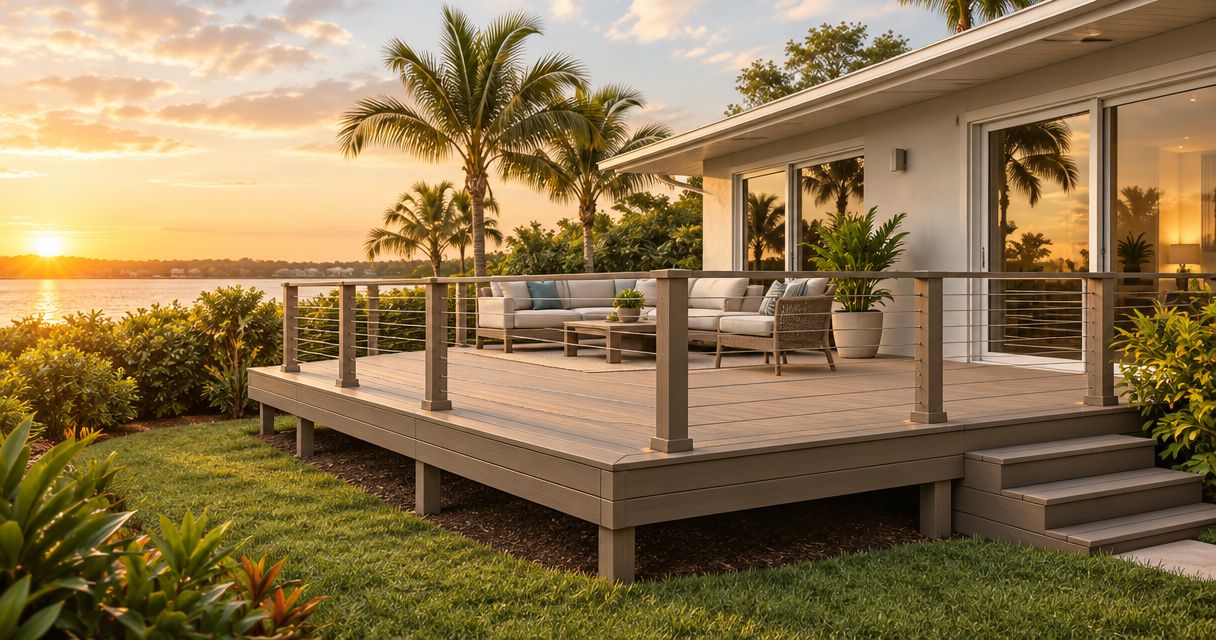
Composite decking is worth considering in Florida heat in 2026 when reduced refinishing work matters to you and the deck’s shade, color, and intended use support comfortable use. It is not a solution to hot surfaces: composite boards exposed to direct sun can become uncomfortable under bare feet. Choose the actual board and plan shade before committing, rather than treating every composite deck as equally suitable for an Orlando backyard.
- Is composite decking worth it in Florida heat? Yes for reduced refinishing, but not as a guarantee of barefoot comfort.
- Compare actual composite decking samples outdoors; color, surface, and sun exposure affect the result.
- Wood decking also heats in sunlight and brings a different maintenance commitment.
- JB Woodworks LLC builds custom decks for Orlando homeowners; discuss materials, shade, scope, and installation before commitments.
Is composite decking worth it in Florida heat in 2026?
Composite decking makes sense when you want less recurring surface refinishing and can address direct sun separately. Its maintenance advantages do not establish how comfortable a particular board will feel on your particular deck.
For an Orlando project, start with the space rather than the material label. Your custom deck discussion with JB Woodworks LLC should identify where people sit, where they walk barefoot, and which areas receive afternoon sun. Those details belong in the material decision, not in a later conversation after boards are selected.
| Material | Best for | Main advantage | Main limitation | What to confirm |
|---|---|---|---|---|
| Composite decking | Homeowners prioritizing reduced refinishing work | Avoids the recurring staining associated with many wood decking systems | Direct sunlight can make the walking surface uncomfortable; cleaning is still required | Exact board, color, care instructions, and installation requirements |
| Wood decking | Homeowners who want natural wood and accept its upkeep | Offers a natural surface that can be refinished, depending on the wood and finish | Requires a maintenance plan and is not automatically comfortable in direct sun | Wood species, finish, exposure, and care requirements |
Neither category wins every Florida deck. Compare the complete assembly and how you will use it, rather than assuming a material category settles the question.
Why this matters
A deck can meet your expectations for appearance and still disappoint during the hours you actually want to use it. Barefoot movement between a pool and a door creates a different brief from an evening dining area used with shoes.
For a 2026 deck project, separate three decisions: the surface you want to maintain, the sunlight you need to manage, and the structure needed beneath the boards. Reduced maintenance and comfortable surface temperature are different benefits. Buying one does not automatically deliver the other.
That distinction also makes proposals easier to compare. A board replacement, a new deck structure, and a shaded outdoor room are different scopes, even when each proposal uses the words composite decking.
Composite decking in full sun: prioritize shade and samples
Full sun is the situation that deserves the closest review. Dark surfaces generally absorb more solar energy than lighter ones, but color alone does not establish the temperature or comfort of a finished deck. Board formulation, surface construction, exposure, and weather also matter.
Best for: homeowners who prioritize reduced refinishing and will address sun exposure in the design. The drawback is straightforward: the deck surface can still become too hot for comfortable barefoot use.
Ask to see the exact proposed board, not merely a similar color from another collection. If a manufacturer makes a heat-related claim, read the comparison conditions and confirm that the claim applies to that specific board. A claim measured against another product does not promise a cool surface in every backyard.
Do not make prolonged skin contact with a hot sample to judge it. An outdoor comparison helps screen choices; it does not certify that the installed deck will remain comfortable or safe under every condition.
Composite decking with shade: assess the actual coverage
Shade reduces direct solar exposure where it falls. That makes shade planning relevant to composite decking, but a structure drawn above the deck does not establish continuous coverage below it.
Best for: homeowners who want reduced refinishing work in a space with useful shade during their intended use hours. The limitation is that moving sun, open slats, and uncovered edges leave parts of the deck exposed.
A timber pergola and a solid roof do not provide the same shade pattern. For a pergola, discuss orientation, spacing, and the position of seating and walkways. Treat the proposed coverage as a design question, not a blanket promise of a cooler deck.
Shade also does not remove cleaning responsibilities. Leaves, dirt, and other debris still need attention under the selected board’s care instructions, including around furniture and between boards.
Why composite decking comfort varies
These factors explain why a neighbor’s deck is not a reliable substitute for evaluating your own site:
- Sun exposure: Direct sunlight, building shadows, and tree cover change where solar heating occurs throughout the day.
- Board color: Darker colors generally absorb more solar energy, but compare actual boards rather than choosing from color names alone.
- Board construction: Composite products differ. Check the exact product’s technical information instead of applying one manufacturer’s claim to the whole category.
- Time of use: A deck intended for afternoon pool access needs a different comfort review from one used mainly for evening meals.
- Shade layout: A shaded seating area does not necessarily shade the route from the house to the yard or pool.
In 2026, use these factors to narrow the specification before choosing a final appearance. You are selecting a surface for a particular setting, not a showroom display.
How should you evaluate composite decking before ordering?
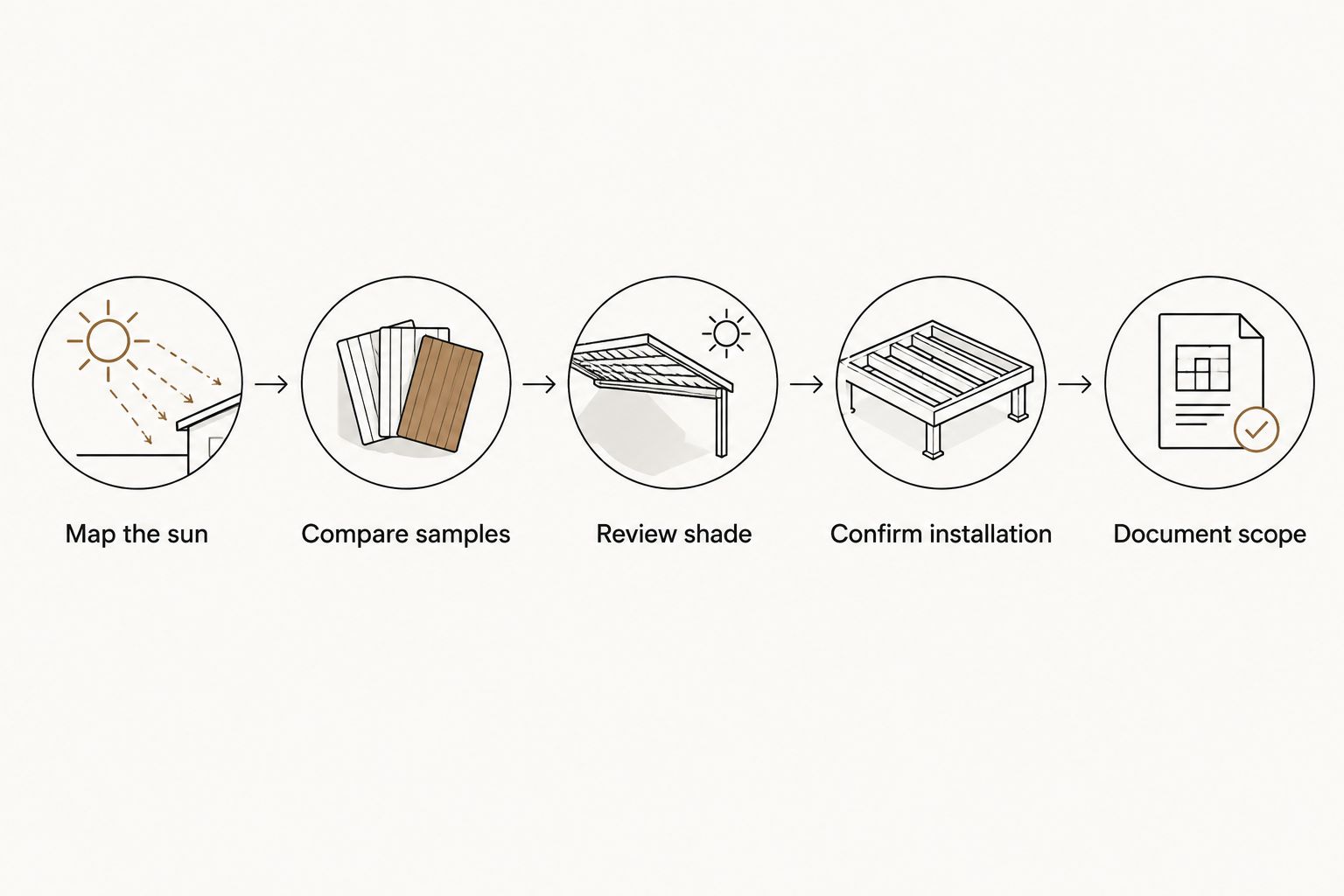
Use a simple sequence that connects material selection to the way your household uses the deck. Record the decisions so the homeowner, designer, contractor, and installer are discussing the same scope.
- Map the sun. Photograph the deck area during the hours you expect to use it. Mark exposed seating areas, door approaches, stairs, and barefoot routes.
- Compare samples. Place actual candidate boards outdoors under matching conditions. Record the product names and colors so a later substitution does not silently change your selection.
- Review shade. Identify which activity areas need coverage. Discuss whether existing shade is sufficient or a separate shade structure belongs in the project.
- Confirm installation. Check the selected board’s instructions against the proposed framing, fasteners, gaps, stairs, and ventilation details. Do not assume an existing frame suits every replacement board.
- Document scope. Put the accepted material, layout, exclusions, access arrangements, and responsibilities into the proposal before ordering.
A sample comparison supports selection, but it does not reproduce every condition of a completed deck. Keep that distinction clear when discussing comfort expectations.
What maintenance does composite decking still need?
Composite decking reduces certain wood-finishing tasks; it does not eliminate deck care. Follow the selected manufacturer’s instructions for cleaning methods, approved products, spill removal, and any restrictions on equipment.
Keep drainage paths and board gaps clear of accumulated debris. Review furniture feet, mats, planters, and other objects against the board’s care guidance rather than assuming every accessory is suitable. The surface beneath an object can receive different exposure and cleaning than the surrounding deck.
The supporting structure needs attention too. Surface boards do not establish the condition of framing, connections, stairs, or railings. If you are replacing an existing surface in 2026, separate the board-selection discussion from the assessment of what lies beneath it.
Choose composite for the maintenance tasks it removes, not for a promise that maintenance disappears. Ask the proposal to name the board so you can read its care requirements before accepting it.
Can you replace wood boards with composite on an existing deck?
Replacing wood decking with composite requires a review of the existing structure and the selected board’s installation requirements. Matching the old board layout is not enough to establish suitability.
Ask who will assess framing condition, support spacing, connections, and any changes needed at stairs or edges. Identify what is included in that assessment and how concealed conditions will be handled if they become visible during removal.
The guide to deck repair versus replacement helps frame that scope decision. Keep repair allowances, disposal, and any required qualified-trade involvement explicit rather than assuming a surface replacement covers everything.
Is wood decking better for barefoot use in Florida?
Wood decking is not automatically better for barefoot use in Florida because sun exposure, color, species, and finish all affect the surface. Composite decking is not automatically worse in every comparison either.
Compare the actual candidates under the same conditions, then weigh the maintenance responsibilities. If comfortable barefoot access is the deciding requirement, discuss shade and the route itself before selecting either material.
What should your Orlando deck quote request include?
A useful 2026 quote request explains the intended use and identifies the decisions still open. It does not need to pretend that preliminary homeowner measurements are finished construction drawings.
Include the following:
- Location and use: State the Orlando or nearby Central Florida location, who will use the deck, and whether barefoot access matters.
- Dimensions and photographs: Provide the overall footprint, door locations, stairs, surrounding grade, and photographs showing the existing condition.
- Material direction: Name any boards or colors you have considered and explain whether reduced refinishing or surface comfort drives the choice.
- Shade expectations: Show existing cover and describe any proposed pergola or other shade work as a separate, clearly defined scope.
- Access and transport: Identify gates, restricted paths, staging space, delivery constraints, and occupied areas that must remain accessible.
- Responsibilities and timing: State who supplies drawings and materials, who coordinates other trades, and any deadline that needs review before commitment.
JB Woodworks LLC’s custom deck service is best suited to Orlando homeowners seeking a deck planned around their space. Bring the use pattern and site constraints to the conversation; material selection, travel, installation logistics, and any qualified-trade requirements need review before commitments.
Discuss your deck scope
Share site photos, dimensions, sun exposure, and intended use to frame the material discussion.
FAQ
Is composite decking worth it in Florida heat in 2026?
Composite decking is worth considering in Florida heat in 2026 when reduced refinishing matters and the design addresses direct sun. It does not guarantee comfortable barefoot use; compare the actual board and plan shade around your intended activities.
Does lighter composite decking stay cool in direct sun?
Lighter composite decking is not guaranteed to stay cool in direct sun. Color affects solar absorption, but the specific board and its exposure still matter.
Is composite decking maintenance-free?
Composite decking is not maintenance-free. Follow the selected board’s cleaning instructions and keep debris from accumulating around gaps, drainage paths, and furniture.
Will a pergola keep my composite deck cool?
A pergola shades only the areas covered by its changing shade pattern. Review its orientation and spacing against your seating and walking routes rather than assuming the whole deck will be shaded.
Can I keep my existing deck frame when switching to composite?
Keeping an existing frame depends on its condition and compatibility with the selected composite board’s installation requirements. Confirm the assessment, any necessary alterations, and responsibility for concealed conditions before ordering.
What should I send JB Woodworks LLC about a custom deck?
Send JB Woodworks LLC your custom deck location, preliminary dimensions, photographs, intended use, and material preferences. Include sun exposure, access constraints, timing, and any contractor or designer coordination needed.
One last thing
Mark the barefoot route before you mark the furniture layout. The short path between a door, pool, and seating area deserves its own sunlight review, even when the main gathering space has shade. That small planning decision keeps material selection tied to how you will actually use the deck.