Best overall for visible grain: white oak. Best for pale, close-grained cabinetry: hard maple. Best for painted frames and trim: poplar. This 2026 guide compares six wood species for custom built-in cabinetry, with the finish, construction details, and quote questions that turn a material preference into a useful specification.
- Best wood species built-in cabinetry verdict: white oak for visible grain, hard maple for pale interiors, poplar for painted details.
- Walnut suits dark statement cabinetry; cherry suits warm interiors where natural color change is welcome.
- Specify cabinet boxes, doors, shelves, and trim separately; one species does not need to serve every component.
- JB Woodworks LLC builds custom cabinetry for Orlando homeowners and project teams; discuss materials and installation before committing.
Why this matters
A wood name does not define a cabinet. Solid wood, veneered plywood, door construction, shelf support, and finish all affect the result. Choose the appearance first, then specify how each cabinet component will be built.
For a 2026 renovation, bring room photographs and a marked sketch to the material discussion. JB Woodworks LLC's custom carpentry and fabrication services include cabinetry alongside other residential and commercial work; your brief should identify exactly which parts of the room need building, fitting, or finishing.
What makes the best wood for built-in cabinetry?
- Finish compatibility: Decide whether you want opaque paint, visible natural grain, or a colored transparent finish before choosing the species.
- Grain character: Compare quiet, close-grained surfaces with pronounced grain across the whole elevation, not just a small sample.
- Component suitability: Specify solid frames, veneered panels, cabinet boxes, and shelving separately.
- Movement allowance: Solid wood changes dimension with moisture; construction must accommodate that movement.
- Daily contact: Distinguish decorative panels from shelf edges, doors, and other frequently handled surfaces.
- Room coordination: Review wood beside the actual flooring, wall color, adjacent trim, and lighting.
Wood species at a glance
These recommendations concern interior built-ins. They are not specifications for decks, docks, pergolas, or exterior cabinetry.
| Wood species | Best for | Standout characteristic | Key limitation |
|---|---|---|---|
| White oak | Clear-finished architectural built-ins | Pronounced grain; quarter-sawn boards can show ray fleck | Open pores resist a glass-smooth appearance without extra preparation |
| Hard maple | Pale, close-grained cabinetry | Fine texture and a light natural appearance | Colored stains can absorb unevenly |
| Poplar | Painted face frames and trim | Fine texture suited to opaque finishes | Softer surface; natural color varies |
| Black walnut | Dark statement cabinetry | Naturally brown heartwood | Pale sapwood requires an explicit appearance decision |
| Black cherry | Warm traditional interiors | Fine grain and color that develops with exposure | Initial color is not the final appearance |
| Red oak | Matching existing red-oak woodwork | Strong grain and recognizable character | Its underlying color differs from white oak |
1. White oak: best wood for clear-finished built-ins
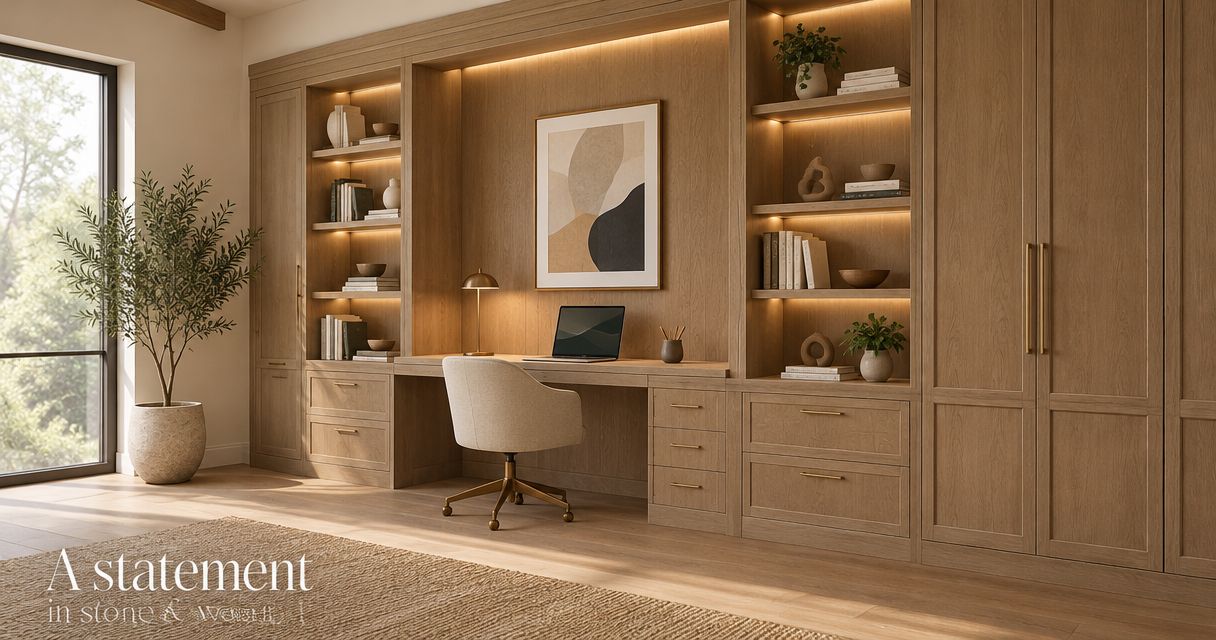
White oak is the default recommendation when the cabinetry's grain should be part of the room. It suits bookcases, living-room storage, and built-ins with broad visible panels. Plain-sawn and quarter-sawn material produce different patterns, so specify the cut rather than requesting oak alone.
White oak pros:
- Distinct grain gives large surfaces visible character.
- Quarter-sawn material offers a recognizable ray-fleck pattern.
- Solid edging and matching veneer can serve different cabinet components.
White oak cons:
- Open pores remain visible unless the finish process addresses them.
- Grain selection needs attention across adjacent doors and panels.
Best for: Homeowners who want the wood itself to remain a visible design element.
Ask to see the proposed finish on the proposed cut. A photograph of pale oak does not establish whether the effect comes from the wood, stain, lighting, or surface treatment. For your 2026 specification, record both species and cut on the approved sample.
Verdict: Buy white oak for expressive, clear-finished built-ins; skip it when concealed grain is the goal.
2. Hard maple: best wood for pale, quiet cabinetry
Hard maple has a fine texture and a less pronounced grain pattern than oak. It suits cabinetry where you want natural wood without a strongly patterned elevation. Specify hard maple explicitly rather than leaving the material described only as maple.
Hard maple pros:
- Close grain supports a quieter visual treatment.
- Its pale appearance suits light natural finishes.
- Hardness makes it useful for frequently handled solid-wood details.
Hard maple cons:
- Colored stain can appear uneven without a suitable finishing process.
- Sapwood and heartwood selection affects color consistency.
Best for: Home offices and storage walls where pale wood should sit quietly behind the room's contents.
If you want maple to resemble a darker species, compare a finished sample with the actual darker wood. A stain name alone does not establish an acceptable match. Approve the complete finish rather than a bare board.
Verdict: Buy hard maple for pale, close-grained cabinetry; hold if a dark stain is central to the design.
3. Poplar: best wood for painted frames and trim
Poplar is a practical choice for opaque-painted face frames, moldings, and other solid-wood details. Its natural color can include cream and greenish tones, which makes it a different proposition under a clear finish. It is not a blanket specification for every cabinet component.
Poplar pros:
- Fine texture suits painted architectural details.
- It machines well for shaped trim and profiles.
- Opaque paint separates the final color from the wood's natural variation.
Poplar cons:
- Its softer surface is more vulnerable to dents than hard maple.
- Natural color variation complicates a uniform clear-finished appearance.
Best for: Painted built-ins that need fitted frames and trim coordinated with surrounding millwork.
Ask which materials are proposed for door panels and cabinet boxes. A painted cabinet can combine poplar with plywood or other panel materials where appropriate; the material schedule should make that combination explicit.
Verdict: Buy poplar for painted frames and trim; skip it for a uniform natural-wood statement.
4. Black walnut: best wood for dark statement cabinetry
Black walnut brings naturally brown heartwood to a built-in without relying solely on stain to create the dark appearance. It works as a deliberate focal material for a study, display cabinet, or furniture-like storage piece. Pale sapwood creates contrast unless selection or finishing addresses it.
Black walnut pros:
- Brown heartwood supplies a naturally dark starting point.
- Grain remains visible under transparent finishes.
- Veneer allows planning of grain across broad panels.
Black walnut cons:
- Sapwood and heartwood can create conspicuous color differences.
- A small sample does not represent every panel's figure and tone.
Best for: Rooms where the cabinetry is intended to read as a distinct furniture element.
Specify whether pale sapwood is welcome, restricted, or excluded from visible faces. Also distinguish a walnut surface from solid-walnut construction; neither phrase should stand in for a component-by-component description.
Verdict: Buy black walnut for naturally dark feature cabinetry; hold until the color-selection approach is clear.
5. Black cherry: best wood for warm interiors that mature
Black cherry has a fine texture and develops a deeper color with light exposure and age. That change is part of choosing the material, not something to ignore during sample approval. It suits cabinetry where a developing warm tone belongs in the room.
Black cherry pros:
- Fine grain works with restrained door profiles.
- Natural color development gives the wood an evolving appearance.
- It suits coordinated cabinetry and traditional interior woodwork.
Black cherry cons:
- Fresh material will not look identical to older cherry.
- Unequal exposure can produce visible color differences.
Best for: Traditional studies, libraries, and warm interiors where changing color is acceptable.
Do not approve cherry solely against an older furniture piece and expect an immediate match. For a 2026 installation beside existing cherry, discuss both the initial appearance and the limits of matching wood at different stages of exposure.
Verdict: Buy black cherry if you welcome its developing color; skip it if a fixed pale tone is essential.
6. Red oak: best wood for matching existing oak interiors
Red oak belongs on the shortlist when existing trim, doors, or furniture already establishes its grain and color. It has pronounced grain, but it is not interchangeable with white oak. Finish samples must address that difference rather than hiding it behind the word oak.
Red oak pros:
- Strong grain suits visible traditional woodwork.
- It provides a direct species option when existing material is confirmed as red oak.
- Solid and veneered components can be coordinated within a material schedule.
Red oak cons:
- Its underlying color complicates some pale white-oak-inspired finishes.
- Open pores need consideration when a smooth surface is requested.
Best for: Additions to rooms with verified red-oak cabinetry or millwork.
Bring a removable existing sample when possible. A phone photograph alone is a weak basis for matching color because lighting and camera processing change its appearance.
Verdict: Buy red oak to coordinate with confirmed red-oak woodwork; skip it as an unspecified substitute for white oak.
How this ranking works
White oak leads for visible-grain architectural cabinetry, not every cabinet application. Hard maple takes the pale, close-grained slot; poplar takes painted solid-wood details. Walnut, cherry, and red oak answer more specific appearance and matching requirements.
The ranking prioritizes finish compatibility, grain, component suitability, and room coordination. It does not treat hardness as a substitute for good construction or imply that every surface should use the same material.
Turn the wood choice into a buildable brief
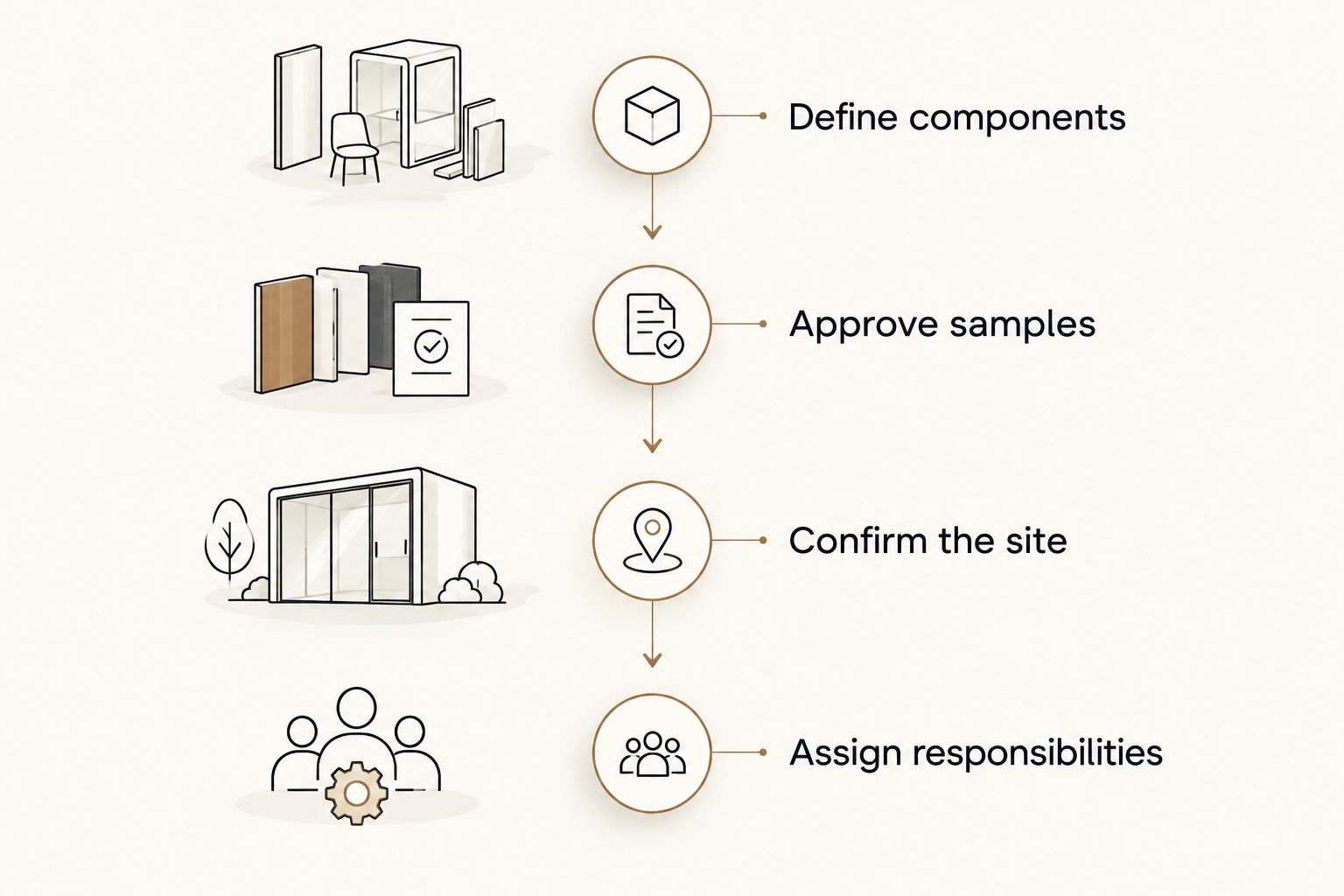
Define components
Separate cabinet boxes, doors, face frames, shelves, backs, and exposed edges. Ask for the proposed material for each. Long shelves need their span, loading, thickness, and support reviewed; a species name alone does not establish a suitable shelf.
Approve samples
Request 3 finish samples as a practical comparison set, then narrow the selection. View the preferred sample under 2 lighting conditions: daylight and the room's evening lighting. These are suggested review steps, not performance standards.
Confirm the site
Provide 1 marked drawing showing overall dimensions, openings, outlets, baseboards, and obstacles. Identify preliminary measurements as preliminary. For Orlando and Central Florida interiors, describe whether the room is normally conditioned and flag dampness before discussing finished cabinetry.
Assign responsibilities
Confirm who handles field measurements, removal, wall preparation, access, delivery, installation, and finishing touch-ups. Any electrical or plumbing changes need separately confirmed responsibility and appropriately qualified trades; cabinetry scope does not establish those services.
JB Woodworks LLC is a fit for Orlando homeowners and project teams seeking custom built-in cabinetry made for a specific space. For a 2026 inquiry, include the room location, dimensions, reference images, preferred finish, intended contents, access constraints, and requested project date; scope and installation logistics need review before commitments.
Discuss your cabinetry brief
Share dimensions, room photos, finish references, and installation constraints for a scope discussion.
Which wood species should you choose?
Choose white oak if you want visible grain and have not identified a stronger matching requirement. Choose hard maple for a pale, quieter appearance and poplar for painted frames and trim. Reserve walnut, cherry, and red oak for the distinct visual requirements described above.
Before requesting a proposal from JB Woodworks LLC, decide whether your priority is grain, paint, or matching existing woodwork. Then ask for the component schedule and finish sample that support that choice. That is more useful than asking for the best wood without defining the room.
FAQ
What's the best wood species for custom built-in cabinetry?
White oak is the default recommendation for built-ins where pronounced natural grain is wanted. Hard maple better suits pale, close-grained cabinetry, while poplar suits painted frames and trim.
Is maple better than oak for painted built-ins?
Maple's close grain makes it better suited than oak to a painted finish where visible pores are unwanted. Oak's open pores require additional preparation if a smooth appearance is the goal.
Should custom built-ins be solid wood throughout?
Custom built-ins do not need solid wood throughout. Solid frames and edges can be combined with appropriately specified veneered panels; ask for materials to be listed by component.
What's the best wood for built-in cabinets in Florida humidity?
No species removes the need to address indoor moisture and wood movement. For an Orlando interior, confirm room conditions, construction details, and finishing requirements before selecting the species.
Can new cabinetry match my existing wood furniture?
New cabinetry can be specified to coordinate with existing furniture, but an exact match should not be assumed. Compare physical finish samples beside the existing piece and account for species, grain, and age.
How much does choosing walnut change a cabinetry quote?
The effect of choosing walnut needs a project-specific quote. Compare proposals with the same dimensions, components, finish, and installation scope so the material change is clear.
What should I send with a custom cabinetry inquiry?
Send dimensions, room photographs, reference images, intended storage contents, finish preferences, and site-access details. Identify existing services and requested dates, and confirm responsibilities before work is committed.
One last thing
The finish sample needs an identity. Mark its species, cut, surface preparation, and finish specification, then keep it with the approved drawings. A loose board labeled oak leaves too much unresolved when the built-in reaches your room.