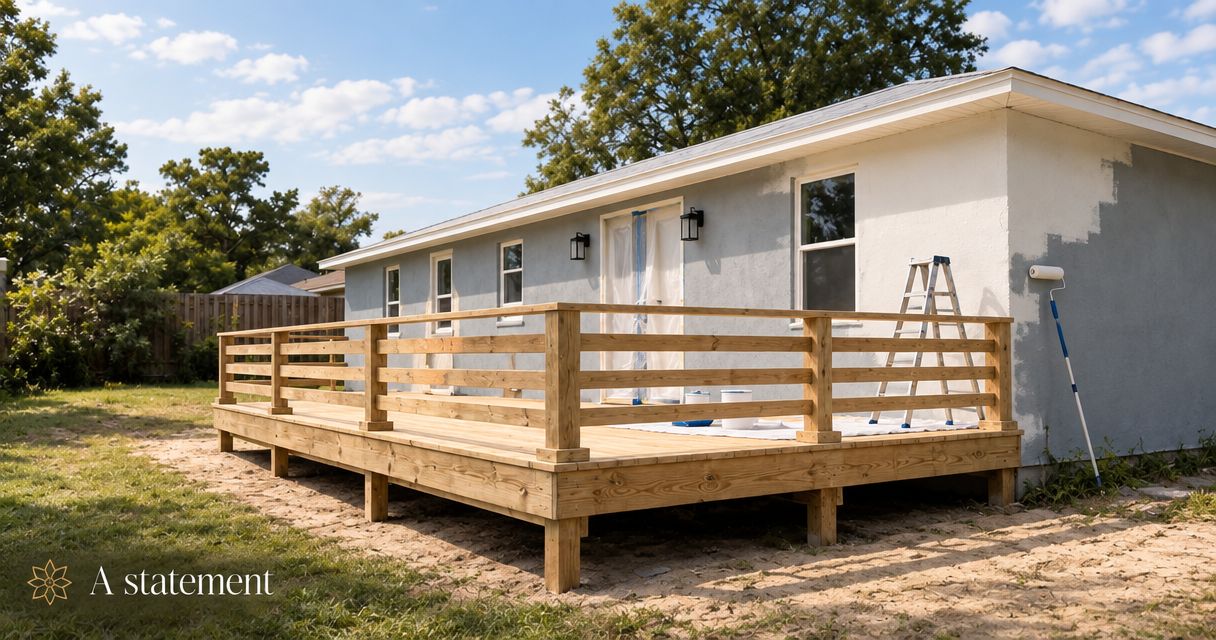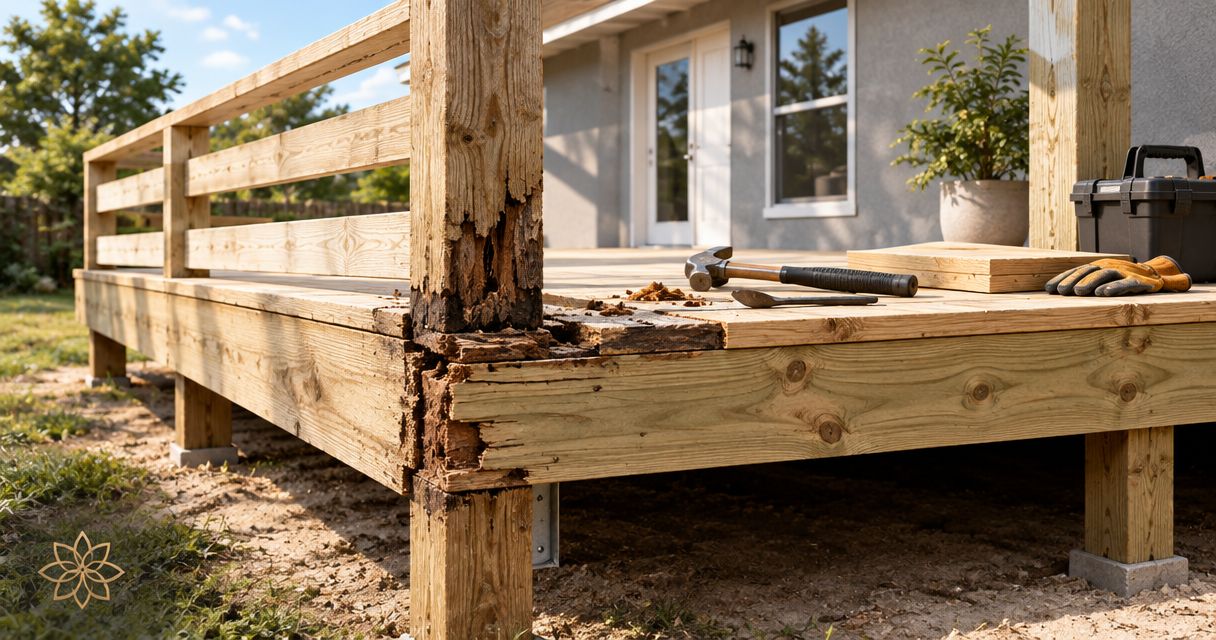
Dry rot damage can sometimes be repaired without replacing the entire piece of wood when deterioration is localized, the remaining wood is sound, and the affected area is nonstructural. Repair still requires removing unsound material and correcting the moisture source; filler alone does not restore a damaged beam, deck connection, or other load-bearing component.
- Can dry rot be repaired without replacing wood? Sometimes, when localized, nonstructural damage leaves a sound repair base.
- Epoxy repairs can preserve sound surrounding wood, but ordinary filler does not restore structural capacity.
- Correct the moisture source before closing or refinishing a wood repair.
- JB Woodworks LLC provides custom carpentry for Orlando homeowners; discuss replacement woodwork scope before commitments.
Why this matters
A small area of damaged paint can conceal deterioration behind trim, beneath a cabinet, or around an exterior connection. The visible patch does not establish how much wood remains sound. Your first decision is whether the component can stay—not which filler will hide the damage.
For a 2026 repair brief, separate investigation, moisture correction, carpentry, and finishing. The guide to defining a custom carpentry scope in Orlando helps you turn those separate responsibilities into a clearer quote request.
Can dry rot be repaired without replacing wood?
Yes, but preserving the whole component is different from preserving every bit of damaged wood. A localized repair removes deteriorated material and rebuilds the missing area against sound material. Depending on the location, that can mean a suitable epoxy repair or a fitted wood patch rather than complete replacement.
People often use dry rot loosely to describe decayed wood. Appearance alone does not identify the fungus or establish whether decay remains active. Wood-decay fungi need moisture, and drying does not reverse the strength already lost.
| Approach | Best for | Main advantage | Main limitation |
|---|---|---|---|
| Localized epoxy repair | Small, nonstructural defects with a sound surrounding base | Preserves much of the existing component and profile | Requires suitable preparation and product conditions; does not establish structural safety |
| Fitted wood patch | Localized damage where a sound joint can be formed | Replaces the damaged section while retaining adjacent wood | Joint placement, fastening, moisture exposure, and finishing need careful planning |
| Component replacement | Widespread deterioration, failed connections, or components unsuitable for patching | Removes the affected component rather than covering its defects | Can require opening adjacent finishes and coordinating other work |
These are repair categories, not interchangeable specifications. A cabinet trim patch and a deteriorated deck support require different decisions, even when the visible damage looks similar.
Localized epoxy repair: preserve a nonstructural profile
Best for: limited damage in non-load-bearing trim or decorative woodwork with a sound repair base. Epoxy systems intended for wood repair can rebuild missing material, but the product must suit the substrate, exposure, and intended finish. Follow the selected manufacturer's preparation, moisture, application, and curing requirements.
The benefit is preservation. A shaped molding or small decorative detail can sometimes remain in place while the damaged portion is repaired. The limitation is that the surrounding wood must support the repair; a hard surface over a weak interior is not a successful result.
For your 2026 scope, ask which material will remain, what must be removed, and how the repair boundary will be established. Do not accept paint readiness as the only acceptance criterion. The moisture problem and underlying condition matter more than a smooth surface.
Fitted wood patches: replace the damaged section
Best for: localized deterioration where a carpenter can join replacement wood to sound existing material. A fitted patch removes the damaged portion instead of rebuilding it entirely with filler. It can retain an otherwise serviceable board, frame, or trim assembly.
The advantage is a repair made substantially from wood. The trade-off is the joint: its position, support, exposure, and appearance must be considered before cutting. A patch also needs a compatible finish plan, especially where an existing stain leaves the wood visible.
Do not treat a fitted patch as automatic permission to retain a structural member. When the component carries loads or secures a railing, the repair detail needs appropriate assessment. Decorative joinery and structural repair are different scopes.
Component replacement: when keeping the wood is the wrong goal
Best for: extensive decay, unsound fastening areas, or components that cannot support a suitable localized repair. Replacement becomes the appropriate direction when preserving the original piece would leave an unreliable base. New finish cannot compensate for missing sound wood.
On a deck, pergola, dock, or waterfront walkway, pay particular attention to supports, connections, walking surfaces, and guard attachments. If deterioration affects an area people rely on for support, keep people away until it has been assessed. Do not load or probe a suspect structure as a homeowner test.
Replacement can also be the clearer choice for a deteriorated cabinet panel, shelving component, or damaged trim assembly. Its limitation is disruption: access can affect nearby finishes, fittings, or connected work. Include making good those areas in the scope rather than leaving them as an assumption.
Why the repair decision varies
The correct approach depends on the wood's condition and job, not the name on a repair product. Use these factors to compare proposed work:
- Component function: Decorative trim does not carry the same consequences as a stair support, deck connection, or loaded shelf.
- Damage extent: A localized defect leaves a different repair opportunity from deterioration continuing behind adjoining material.
- Remaining sound wood: A repair needs a dependable base, including sound material where joints or fasteners will sit.
- Moisture exposure: A leak, trapped water, or repeated wetting needs attention before repaired wood is enclosed or finished.
- Access and adjoining work: Reaching the damage can require removing trim, cabinet parts, decking, or other finishes.
- Finish requirements: Painted repairs and exposed-wood repairs have different appearance constraints; a patch can remain visible beneath a clear finish.
For a 2026 proposal, ask the carpenter to explain which factors support repair and which support replacement. A recommendation should describe the condition being addressed, not simply name an epoxy or coating.
How should you assess the damage before requesting work?
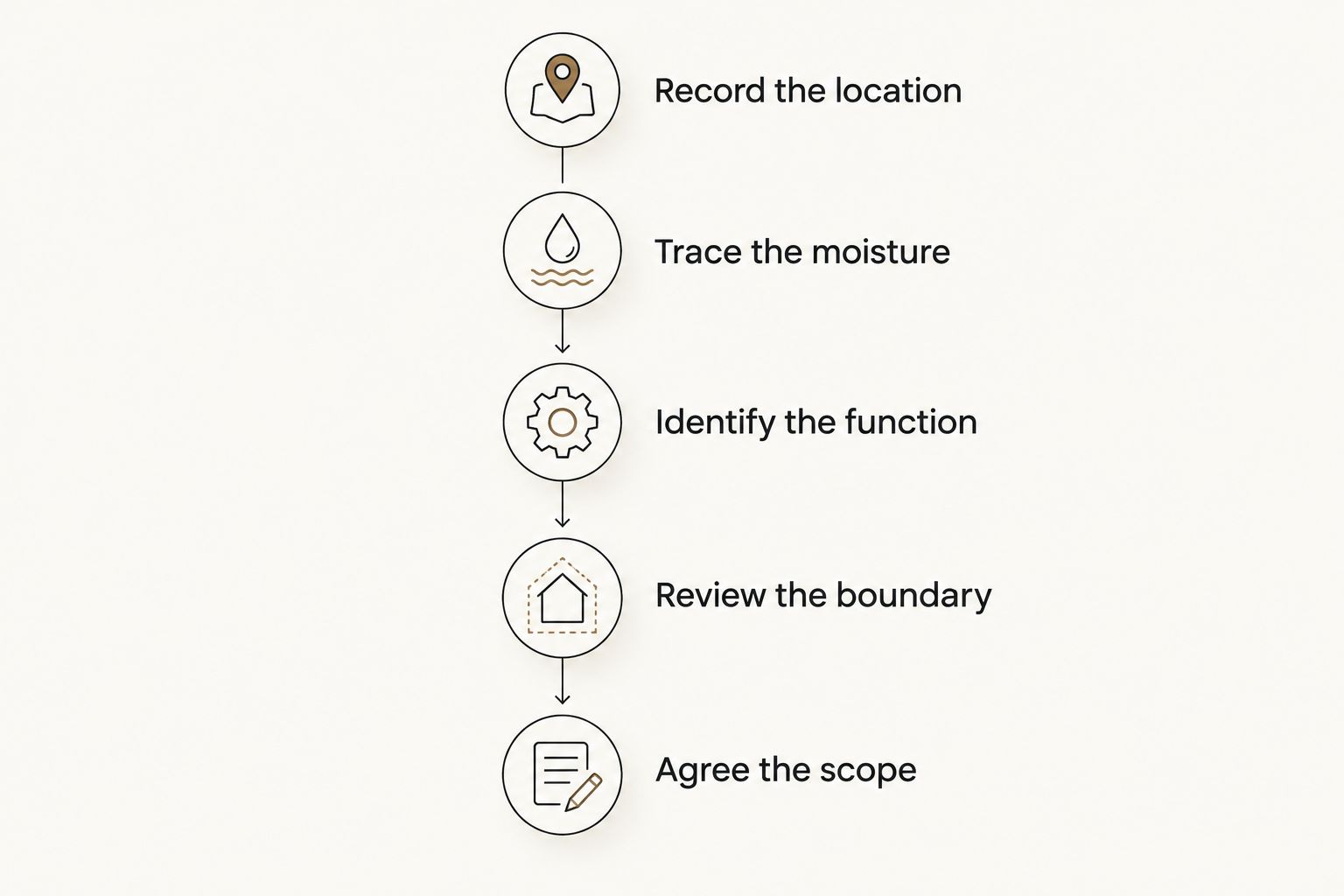
Use this sequence to prepare a useful conversation, not to certify the wood yourself. Leave opening up, probing concealed areas, and judging structural adequacy to the appropriate professional.
- Record the location. Identify the component and its surroundings. Photograph the whole assembly and a closer view without disturbing loose material or entering an unsafe area.
- Trace the moisture. Note leaks, repeated wetting, staining, or the conditions under which the area becomes damp. Do not assume the moisture source sits directly above the visible damage.
- Identify the function. Explain whether the piece is decorative, supports storage, forms a walking surface, or connects to a load-bearing assembly.
- Review the boundary. Ask how the assessment will distinguish sound wood from deterioration and whether adjacent areas need opening.
- Agree the scope. Record the proposed repair, moisture-related responsibilities, finish work, access requirements, and what happens if concealed damage is found.
Keep observations separate from conclusions. Saying that a cabinet base feels soft near a plumbing penetration is useful; declaring that it only needs filler commits to a solution before the concealed condition is understood.
What should an Orlando carpenter's repair brief include?
For a 2026 inquiry, send a concise description that makes the affected assembly and access clear. Request an assessment-led scope rather than a promise to save every existing piece. That leaves room for a sound repair decision once the condition is visible.
Include:
- Location and use: Name the room or exterior area and explain what the component does.
- Photographs and dimensions: Include overall context, close views, and approximate width, height, and depth where safe to measure.
- Moisture history: Describe known leaks, wetting patterns, previous repairs, and any corrective work already completed.
- Materials and finish: Identify painted or exposed wood and provide existing specifications if available.
- Access and logistics: Explain occupied areas, restricted routes, removal constraints, and installation access.
- Responsibilities: Identify who will address leaks, assess structural concerns, arrange qualified trades, and restore adjacent finishes.
- Schedule constraints: State coordination needs without assuming a repair duration before assessment.
JB Woodworks LLC is a custom carpentry option for Orlando homeowners planning replacement woodwork. Its verified residential work includes decks, cabinetry, and general carpentry; whether a particular deterioration project fits requires review of the scope, materials, access, and installation logistics.
Keep the initial brief specific to the affected work. A deck connection, cabinet base, timber pergola detail, and waterfront platform should not receive the same repair specification simply because each involves wood. Work outside Orlando and nearby Central Florida communities also requires discussion of travel and logistics.
Discuss your carpentry scope
Prepare photos, dimensions, moisture history, and access details before discussing the work.
Will wood hardener stop dry rot?
Wood hardener alone is not a complete dry rot repair. Consolidating a suitable repair area does not correct a leak, remove all unsound material, or establish that a component can safely carry its intended load.
Ask what the selected system does and what it does not do. Surface hardness is not proof of sound wood throughout the component.
Can you paint over repaired dry rot?
You can paint a properly prepared, compatible repair after moisture correction and the required curing steps. Paint should follow the repair assessment, not replace it. Use the repair material's finishing instructions rather than assuming every filler accepts the same primer or coating.
Does every affected board need complete replacement?
No, an affected board does not always need complete replacement. A localized, nonstructural defect can sometimes be repaired while retaining sound surrounding wood. Damage extent, component function, and the available repair base determine whether that approach is appropriate.
FAQ
Can dry rot be repaired without replacing wood?
Yes, localized nonstructural damage can sometimes be repaired while retaining sound surrounding wood. Unsound material still needs removal, and the moisture source needs correction before the repair is closed or finished.
How can I tell whether damaged wood is structural?
You cannot establish structural adequacy from appearance alone. If the component supports a deck, stair, pergola, walkway, railing, or another loaded assembly, arrange appropriate assessment before using or altering it.
Is epoxy better than replacing rotten wood?
Epoxy is not automatically better than replacement. It suits some localized nonstructural repairs, while extensive deterioration or an unsound repair base calls for a different approach.
Will drying the wood make it strong again?
Drying does not restore strength already lost to decay. Moisture correction addresses the conditions supporting deterioration, while repair or replacement addresses the damaged material.
Can I cover rotten wood with new trim?
Covering rotten wood does not repair it. Establish the damage boundary and moisture source before adding trim that would conceal the affected area.
Can a rotten cabinet base be repaired without replacing the whole cabinet?
A localized cabinet-base repair is sometimes possible when adjoining parts remain sound and the assembly can support the repair. Damage behind the visible panel or around fittings can change that scope.
What should I send JB Woodworks LLC about damaged wood?
Send the component location, photographs, approximate dimensions, moisture history, and access details when discussing a custom carpentry scope. Ask whether the project fits before assuming assessment, structural work, or moisture remediation is included.
One last thing
A dry surface is not the same as sound wood. A component can feel dry during a visit and still have lost material or strength from earlier decay. For a 2026 repair decision, ask what evidence supports retaining the wood—not just whether it is ready for paint.
Keep photographs of the opened area before finishing conceals it. Paired with the agreed scope, they provide a useful record of what was removed, retained, and repaired.