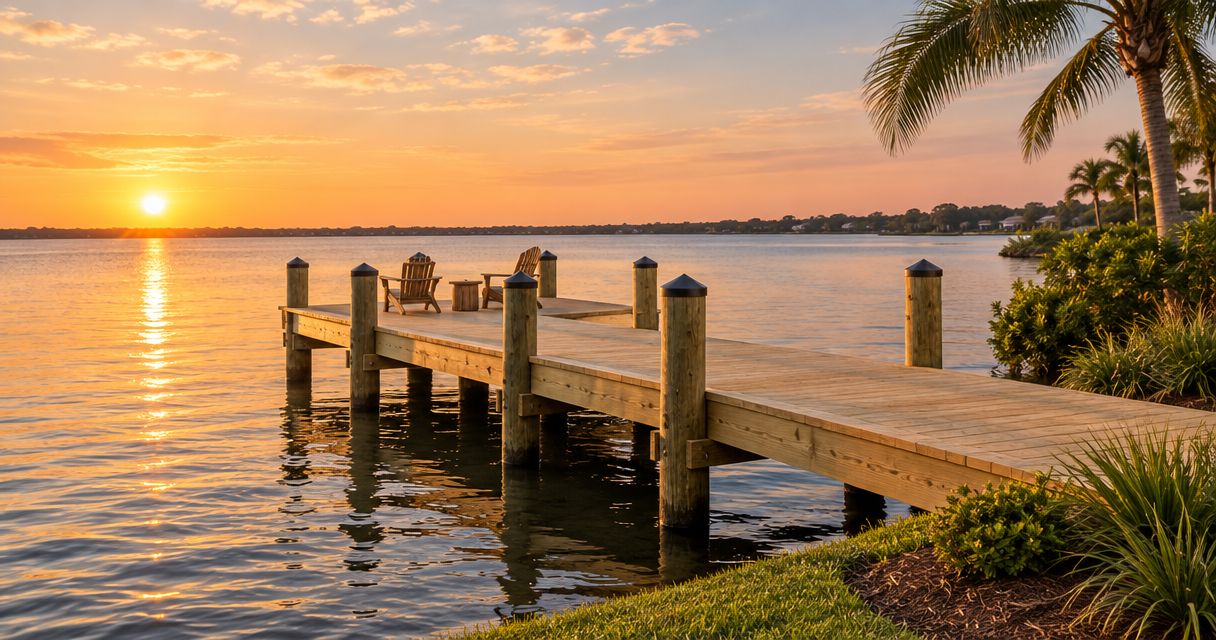
The cost to build a dock in Central Florida depends on a site-specific scope: dimensions, structural work, materials, waterfront access, and installation responsibilities. For a 2026 project, request a written proposal that separates dock construction from demolition, approvals, engineering where required, and other trade work. Compare complete scopes, not headline totals.
- For dock cost Central Florida comparisons, match dimensions, materials, access, and exclusions before comparing proposals.
- JB Woodworks LLC builds custom docks, waterfront platforms, and walkways; discuss project scope and installation logistics before commitments.
- Separate dock carpentry from demolition, approvals, engineering where required, and electrical work.
- Repair, replacement, and new construction need different scopes; choose the approach after assessing the existing structure.
How much does it cost to build a dock in Central Florida?
A useful dock estimate describes the actual waterfront project, not just its surface area. Your proposal should distinguish the walking surface from the supporting structure, shoreline connection, access arrangements, and any separate professional or trade services.
For custom dock carpentry, JB Woodworks LLC serves homeowners and project teams in Orlando and nearby Central Florida communities. Work beyond that area needs a separate discussion of scope, travel, and installation logistics.
Use this breakdown when requesting a 2026 dock proposal:
| Scope item | What to identify | What to clarify in the proposal |
|---|---|---|
| Site review and documentation | Location, photographs, measurements, existing drawings | What needs verification before construction commitments |
| Removal and disposal | Existing decking, framing, supports, or shoreline connections | What is removed, retained, protected, and disposed of |
| Supporting structure | New work and any proposed retained components | Who assesses suitability and supplies required structural information |
| Decking and carpentry | Surface material, layout, edges, steps, and railings where applicable | Material specification, fastening approach, and finish scope |
| Access and installation | Delivery route, staging space, waterfront access | Transport arrangements, equipment, and site protection responsibilities |
| Approvals and separate trades | Applicable reviews, engineering, utilities, and electrical work | Who handles each task and whether it is included or excluded |
An exclusion is not automatically a problem. An unexplained exclusion is: you need to know who owns that work before accepting the proposal.
Why this matters
A dock proposal is also a coordination plan. If one proposal includes removal and another begins with a cleared site, the totals do not describe the same job.
Ask each builder to identify the same starting condition and finished condition. This makes differences in materials, construction scope, and responsibilities visible without assuming the lowest total covers everything.
Before requesting proposals, review what to confirm before hiring a dock builder in Orlando. Keep questions about carpentry capability separate from questions about who handles approvals, structural decisions, and licensed trade work.
Repair, replacement, or a new dock: define the project first
Your existing dock does not establish the scope by itself. Replacing visible boards and rebuilding the supporting structure are different assignments, even when the finished walking surface looks similar.
The following options describe scope choices, not a diagnosis of your property. Confirm the condition and suitability of retained components before treating repair as the right approach.
| Approach | Best for | Main advantage | Main limitation |
|---|---|---|---|
| Targeted repair | Owners addressing defined defects after assessment | Keeps the work focused on identified components | Does not resolve deterioration outside the agreed repair scope |
| Dock replacement | Owners whose assessed project requires removal and rebuilding | Allows the replacement scope to be specified together | Requires clear demolition, disposal, and retained-component decisions |
| New dock construction | Owners establishing a new waterfront layout | Lets the brief begin with intended use and site conditions | Requires the proposed location, approvals, access, and construction scope to be resolved |
Targeted repair: specify the boundaries
A repair request should identify the affected area, observed problems, and components proposed for retention. Photographs help explain the concern, but they do not establish the condition of concealed or submerged components.
Ask what happens if removal exposes additional deterioration. Your agreement should describe how findings are documented and how additional work receives approval before proceeding.
Replacement: distinguish rebuilding from resurfacing
A replacement proposal should say whether it replaces decking alone, decking and framing, or a broader portion of the structure. Avoid accepting the word replacement without that explanation.
Also identify what stays. A retained shore connection or supporting component needs an explicit decision, not an assumption carried over from the existing dock.
New construction: start with intended use
Describe how you expect to use the dock: walking to the water, sitting by the lake, or connecting a waterfront platform and walkway. Identify any boat-related equipment as a separate scope item for review rather than assuming it belongs in the carpentry package.
Give the project team your preferred arrangement, but distinguish preferences from verified site constraints. A sketch communicates intent; it does not replace required drawings or approvals.
Why dock construction scope varies
For a 2026 dock request, these factors deserve separate discussion. Each changes what must be specified, coordinated, or installed; none should disappear inside a vague allowance.
- Dimensions and layout. State dock length, width, platform arrangement, and shoreline connection. Identify steps, changes in level, and railings for review rather than leaving them implied.
- Existing conditions. Explain whether the site has an existing dock and what you want retained. Separate visible concerns from conditions that still require assessment.
- Materials and finishes. Specify the proposed decking, framing, fastening system, and finish requirements. Ask how the selected materials suit the intended waterfront application and maintenance expectations.
- Site access and transport. Show the route from unloading to the waterfront, including gates, slopes, landscaping, and staging restrictions. Ask how materials and equipment will reach the work area.
- Approvals and professional responsibilities. Identify who confirms applicable requirements, prepares documents, and coordinates engineering or qualified trades where required. Do not assume the carpenter provides every service.
- Installation and handoffs. Record what must be complete before carpentry starts, who protects adjacent work, and who reviews completion. Include disposal and restoration boundaries in the discussion.
The point is not to make the brief elaborate. It is to prevent different people from pricing different interpretations of the same request.
How do you prepare a useful dock quote request?
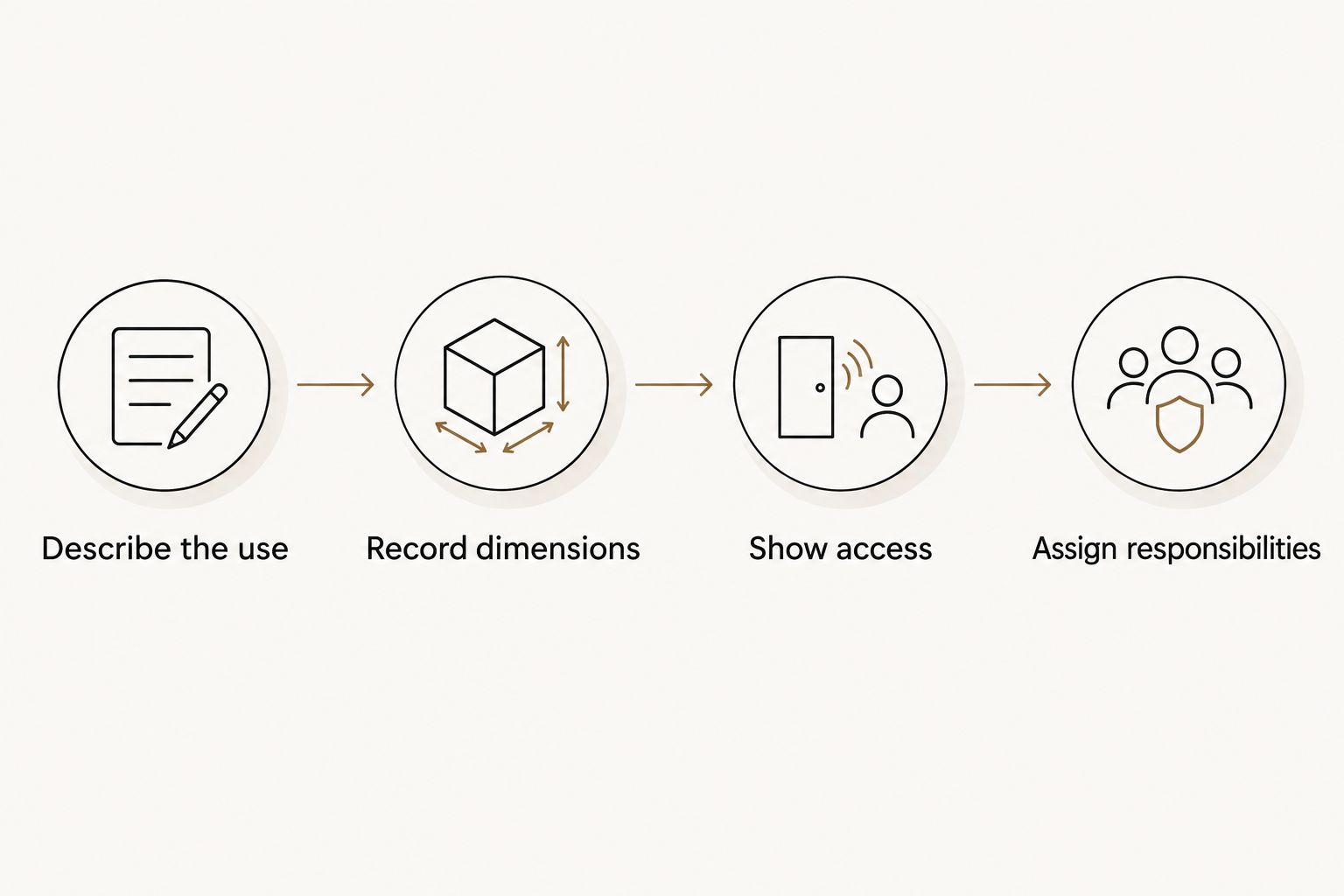
Prepare the information in a sequence that moves from intended use to site conditions, then to responsibilities. You do not need to settle every construction detail before making contact; clearly identify what is known and what needs review.
Describe the use
Explain who will use the dock and what activities the layout must accommodate. Mark priorities separately from optional additions so the builder can discuss a defined base scope.
If the project connects to another outdoor area, show that relationship. A dock, waterfront platform, and walkway should not be described as interchangeable pieces when each serves a different purpose.
Record dimensions
Provide the dimensions you have, with units, and identify whether they come from your own measurements, existing drawings, or another professional. Label approximate measurements as approximate.
Include the shoreline connection and the route to the proposed work. Do not limit the drawing to the platform while leaving the approach unexplained.
Show access
Take photographs from the property entrance through to the waterfront. Include gates, narrow passages, slopes, existing structures, and the proposed staging area.
A close-up of damaged decking is useful, but it does not explain how the installation team reaches the dock. Provide both detail photographs and wider views.
Assign responsibilities
List the owner, contractor, designer, or other project contact responsible for decisions. Identify who will confirm approval requirements, coordinate qualified trades, and authorize scope changes.
For a 2026 project brief, name your target use date and any known restrictions without treating that date as a confirmed construction commitment. Ask the builder to review sequencing and logistics before agreeing to installation arrangements.
Before sending the request, check that each attachment has a clear purpose. A labeled sketch, relevant photographs, and a short responsibilities list explain more than a long message that mixes preferences with confirmed requirements.
What should you compare in dock proposals?
Compare proposals against the same brief. Then ask each builder to explain departures, substitutions, assumptions, and exclusions in writing.
Use this review order:
- Scope boundaries: What is built, removed, retained, and left untouched?
- Material specifications: Are the proposed materials named clearly enough to compare?
- Site assumptions: What access, staging, and existing conditions does the proposal assume?
- Separate responsibilities: Who handles approvals, engineering where required, utilities, and other trades?
- Change procedure: How are unexpected conditions documented and additional work authorized?
- Completion standard: What inspection, review, cleanup, and handover tasks belong to the agreed scope?
A detailed proposal still needs reading. Check whether a listed task is included work, an allowance requiring clarification, or an owner responsibility.
JB Woodworks LLC is best suited to homeowners and project teams seeking custom dock carpentry with a defined site-specific scope. Its verified work includes docks, waterfront platforms, and walkways; engineering, permitting, and licensed trade services should not be assumed to be part of that carpentry scope.
Can you use a dock estimate from another property?
Another property's estimate is a reference for questions, not a substitute for your own scope. Its dimensions, retained structure, materials, access arrangements, and exclusions need to match before the comparison becomes useful.
For a 2026 comparison, check the proposal date as well as the work description. Ask for confirmation against your current brief instead of carrying another owner's assumptions into your project.
Does a smaller dock mean a simpler project?
A smaller dock reduces the proposed footprint, but it does not resolve access, existing-condition, approval, or coordination questions. Review those items separately from dimensions.
Do not shorten the dock simply to reach an undefined target. First identify which parts of the layout serve an essential function and which are optional.
Who handles permits, engineering, and electrical work?
Your written agreement should identify who handles each applicable approval, professional service, and trade task. Confirm the requirements with the relevant authority and appropriately qualified professionals rather than assuming one contractor covers every discipline.
Ask where those responsibilities meet the carpentry work. Drawings, approvals, electrical provisions, and site readiness need clear handoffs so the agreed dock scope is buildable as described.
FAQ
How much does it cost to build a dock in Central Florida in 2026?
Dock construction cost requires a site-specific proposal covering dimensions, materials, supporting work, access, and installation responsibilities. Compare proposals only after confirming that demolition, approvals, professional services, and separate trades are treated consistently.
Can I get a dock quote from photographs?
Photographs help communicate the project, but they do not verify concealed conditions, structural suitability, or final measurements. Send wide site views, detail photographs, available drawings, and a description of the intended use.
Is repairing a dock better than replacing it?
Repair is appropriate only when assessment supports the components you plan to retain and the defined repairs address the intended scope. Replacement needs a separate description of removal, rebuilding, and any retained elements.
Does a dock proposal include permits and engineering?
Include permits and engineering only when the proposal explicitly assigns those responsibilities and services. Confirm applicable requirements and identify the qualified parties responsible before construction commitments.
What should I send JB Woodworks LLC for a dock project?
Send JB Woodworks LLC your dock location, intended use, dimensions, photographs, available drawings, material preferences, and access information. Identify your target date and any approval or separate-trade responsibilities that still need review.
Can I choose dock materials before requesting a quote?
You can state material preferences before requesting a quote, but the proposed system needs review against the waterfront application and construction scope. Ask for clear specifications and maintenance information rather than selecting by appearance alone.
What exclusions should I check in a dock proposal?
Check demolition, disposal, supporting work, approvals, engineering where required, electrical work, site protection, and restoration. An excluded task needs a named responsible party if it is necessary to complete the project.
One last thing
Ask each builder to describe what the property looks like when their scope ends. That question exposes handoffs that a material list alone does not: removed debris, disturbed landscaping, unfinished connections, and work awaiting another trade.
For your 2026 dock brief, write that finished condition alongside the dimensions. It gives everyone a shared point of reference before commitments.