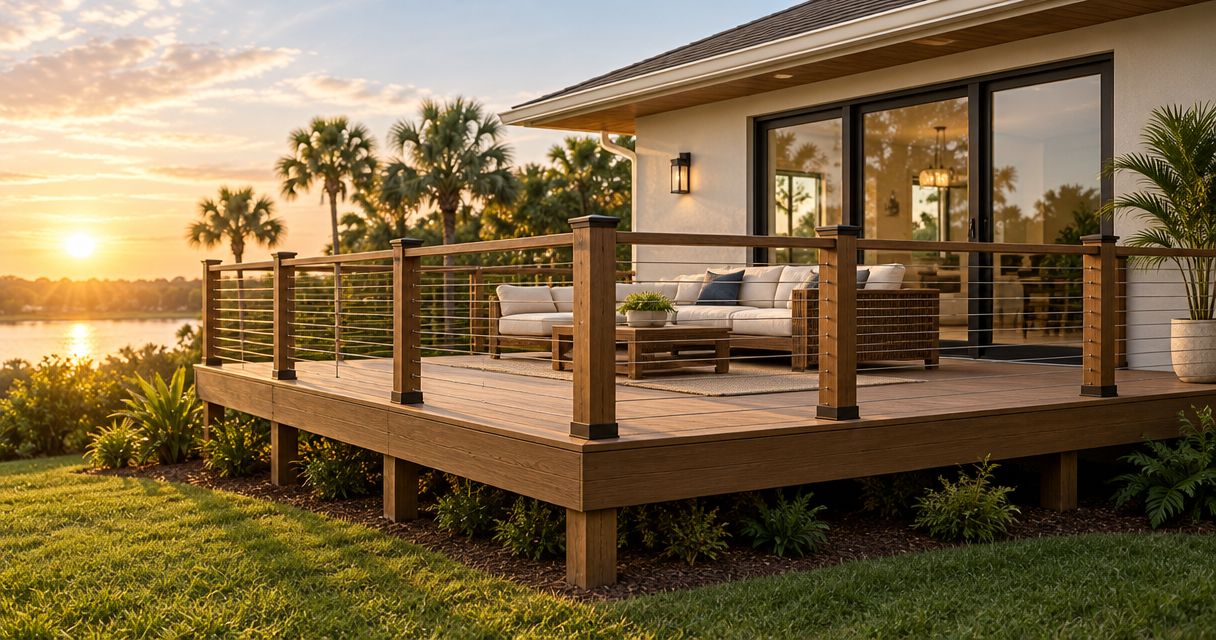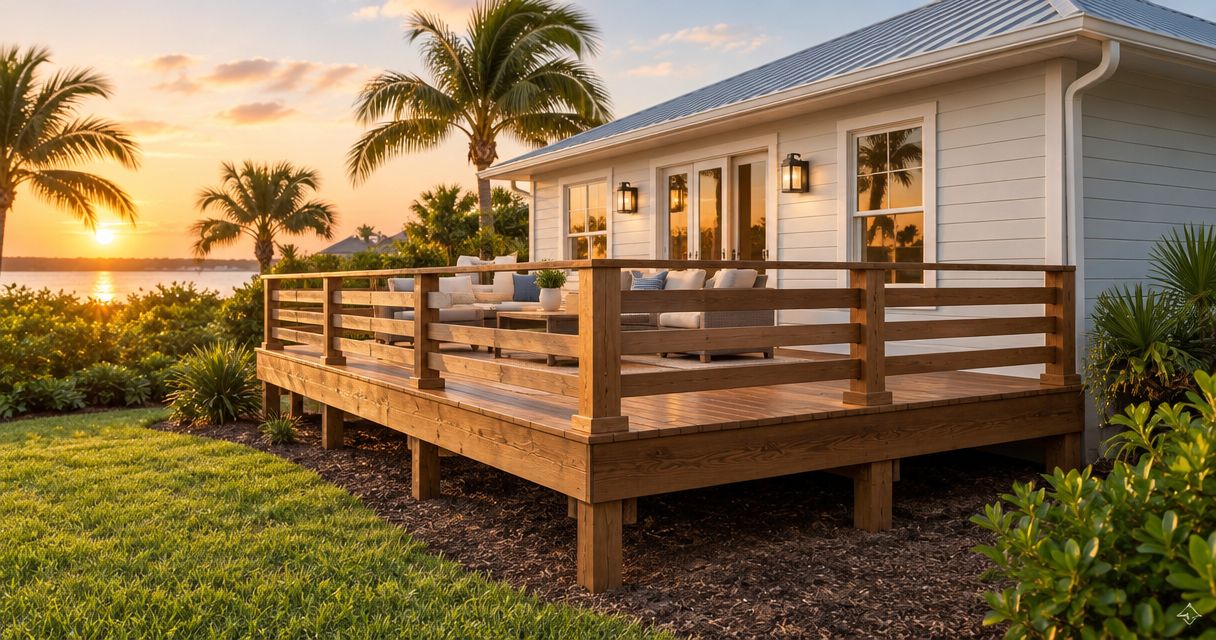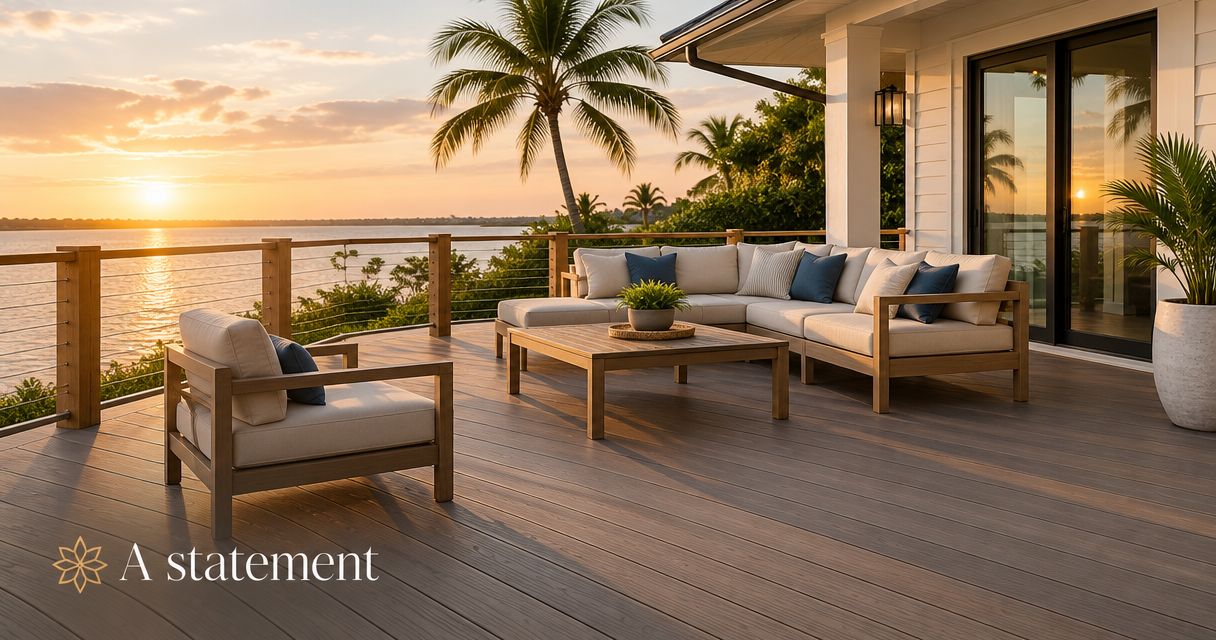
Best overall shortlist: Trex for a straightforward composite deck. Best for a design-led porch: TimberTech composite. Best for coordinating boards and trim: Fiberon composite. Best for moisture-focused comparison: MoistureShield. This 2026 guide compares the best composite decking brands Florida homeowners should consider, with the site checks that matter before choosing a board.
- Trex leads this best composite decking brands Florida shortlist for a straightforward residential deck brief.
- Compare TimberTech composite for porch design, Fiberon for coordinated detailing, and MoistureShield for moisture-focused selection.
- Florida deck planning needs sample checks, drainage details, installation instructions, and a written scope—not a brand name alone.
- JB Woodworks LLC builds custom decks for Orlando homeowners; review materials and installation logistics before commitments.
Why this matters
A composite brand name does not settle how your Florida deck will feel underfoot, drain after rain, or meet an existing doorway. The exact collection, color, board profile, and installation details matter more than the logo on a sample.
JB Woodworks LLC provides custom deck carpentry in Orlando alongside cabinetry, general carpentry, furniture, and fabrication. For a deck inquiry, bring the intended use and site conditions first; the material selection belongs inside that discussion.
JB Woodworks LLC is a fit for Orlando homeowners seeking custom deck carpentry planned around their space. A decking manufacturer supplies a material system; a carpenter's project scope addresses how that material meets your home, access route, and surrounding work.
What makes the best composite decking for Florida?
Use these criteria before comparing collections in 2026:
- Underfoot comfort: Compare actual colors in your intended sun exposure. Composite decking gets hot; a brand-level claim cannot establish comfort for every board.
- Wet-use suitability: Check the selected board's published guidance for the intended location. A porch, open deck, and waterfront platform present different conditions.
- Drainage and ventilation: Confirm clearances, gaps, airflow, and the route water takes away from the house.
- Complete detailing: Resolve stair edges, fascia, picture framing, fasteners, and transitions before approving the field boards.
- Installation requirements: Match framing, fastening, and support details to the exact manufacturer's instructions. Do not transfer dimensions from another collection.
- Care and documentation: Read cleaning instructions, warranty terms, and exclusions for the selected product, not just a brand summary.
There is no universal Florida winner across all these criteria. The rankings below assign each brand a distinct reason to enter your shortlist; they do not claim measured performance superiority.
Composite decking brands at a glance
| Rank and brand | Best for | Standout comparison point | Key limitation |
|---|---|---|---|
| 1. Trex | A straightforward residential deck brief | Wood-plastic composite collections with coordinated decking components | The collection and color still need site-specific review |
| 2. TimberTech composite | A design-led covered porch | Composite collections with different surface appearances | TimberTech also sells PVC decking; keep material categories separate |
| 3. Fiberon composite | Coordinating boards and perimeter trim | Composite decking and fascia options | Confirm component compatibility for the selected collection |
| 4. MoistureShield | A moisture-focused shortlist | Wood-plastic composite decking positioned around moisture resistance | Moisture resistance does not establish a complete wet-area design |
None of these brands eliminates the need to inspect existing framing. New surface boards do not correct an unsuitable structure, trapped water, or a poorly resolved connection to the house.
1. Trex: best composite decking for a straightforward deck brief
Trex makes wood-plastic composite decking. It is the default starting point in this guide when you want to define a conventional residential deck before exploring more specialized appearance or exposure requirements.
Begin with the board collection, then work outward to edges, stairs, and fastening. A quote that says only “Trex deck” leaves important material and installation decisions unresolved.
Trex pros:
- Composite boards provide an alternative to a traditional wood walking surface.
- Coordinated decking components help you discuss the surface and its edges together.
- Different collections give you a basis for comparing appearance within one brand.
Trex cons:
- A Trex brand name alone does not identify the selected board's installation requirements.
- Sun-exposed samples still need an underfoot-comfort check; composite is not a cool-surface guarantee.
Best for: Homeowners planning a straightforward porch or backyard deck with a clearly defined layout.
For your 2026 brief, name the collection, color, profile, and edge treatment together. Ask which details remain undecided before treating the proposal as complete.
Verdict: Buy only after the selected Trex board and installation scope are documented.
2. TimberTech composite: best for a design-led porch
TimberTech offers composite decking as well as a separate PVC decking category. This recommendation concerns TimberTech composite, so keep the material type visible when requesting samples and comparing proposals.
A porch connects the deck surface closely to doors, trim, furniture, and the home's interior. TimberTech composite belongs on a design-led shortlist when you want to compare board appearance against those existing elements rather than choose from an isolated swatch.
TimberTech composite pros:
- Different composite collections support comparison of grain appearance and color.
- Physical samples let you assess the surface beside existing architectural finishes.
- A named collection gives the project team a specific basis for detailing discussions.
TimberTech composite cons:
- TimberTech composite and TimberTech PVC are not interchangeable specifications.
- A successful color match does not establish suitability for the site's framing or drainage conditions.
Best for: Homeowners and designers coordinating a covered porch with the surrounding architecture.
Review samples at the doorway and along the porch edge, not only indoors. In a 2026 specification, record the full material description so a later substitution does not change the material category without discussion.
Verdict: Buy when the composite collection meets both the visual brief and installation requirements.
3. Fiberon composite: best for coordinated perimeter detailing
Fiberon makes composite decking and offers fascia options. It belongs on your shortlist when the visible deck edge, stair treatment, and surrounding trim deserve as much attention as the walking surface.
Start with an edge drawing rather than a color board alone. That drawing helps you discuss exposed board ends, fascia placement, fastener appearance, and the transition between the deck and adjacent surfaces.
Fiberon composite pros:
- Decking and fascia options support a coordinated perimeter discussion.
- Composite collections provide different appearances to compare against the house.
- Component selection can be recorded alongside the field-board specification.
Fiberon composite cons:
- Do not assume every fascia, fastener, or accessory suits every collection.
- A matching edge finish does not replace the required support and fastening details.
Best for: Homeowners and project teams who want the perimeter, stairs, and field boards resolved together.
Ask for a description of the finished edge before approving the material. “Matching trim” is not enough to explain how the assembly will be supported, fastened, and allowed to move.
Verdict: Buy when the Fiberon board, compatible components, and perimeter details are specified together.
4. MoistureShield: best for a moisture-focused shortlist
MoistureShield makes wood-plastic composite decking and emphasizes moisture resistance in its product positioning. That makes it a relevant comparison when repeated wetting is central to your material brief.
The useful question is narrower than “Is it waterproof?” Ask whether the exact selected product's instructions permit your intended application, then review the supporting structure, drainage, fasteners, and access for maintenance separately.
MoistureShield pros:
- Moisture resistance is a clear focus for the product comparison.
- Composite collections let you compare appearance alongside exposure requirements.
- Product-specific documentation gives the project team a basis for checking intended use.
MoistureShield cons:
- Moisture-focused material claims do not establish the suitability of an entire deck assembly.
- An acceptable board does not resolve waterfront approvals, structural design, or hardware selection.
Best for: Buyers who need moisture exposure addressed explicitly before narrowing the material choice.
For an Orlando dock, waterfront platform, or walkway, treat the decking board as one part of the project. Identify approval requirements and qualified trade responsibilities before committing to fabrication or installation.
Verdict: Hold until the exact MoistureShield product and intended exposure are checked together.
How this shortlist is ranked
The order prioritizes a clear residential starting point, followed by distinct needs: porch appearance, perimeter coordination, and moisture-focused selection. It is not a laboratory ranking, a warranty ranking, or a claim that one brand is always cooler or more durable.
For a 2026 decision, compare exact products using current manufacturer documentation. Brand-wide promises are too broad to settle collection-specific installation, care, or warranty questions.
Check samples in the space before choosing
Bring 2 finish samples to the site: your leading choice and a contrasting alternative. Place both where the finished deck will sit, and compare them in the exposure your household actually uses.
Look at the samples beside the house, doorway, and planned furniture. Assess surface texture and appearance when wet, without treating a casual sample check as a certified slip test.
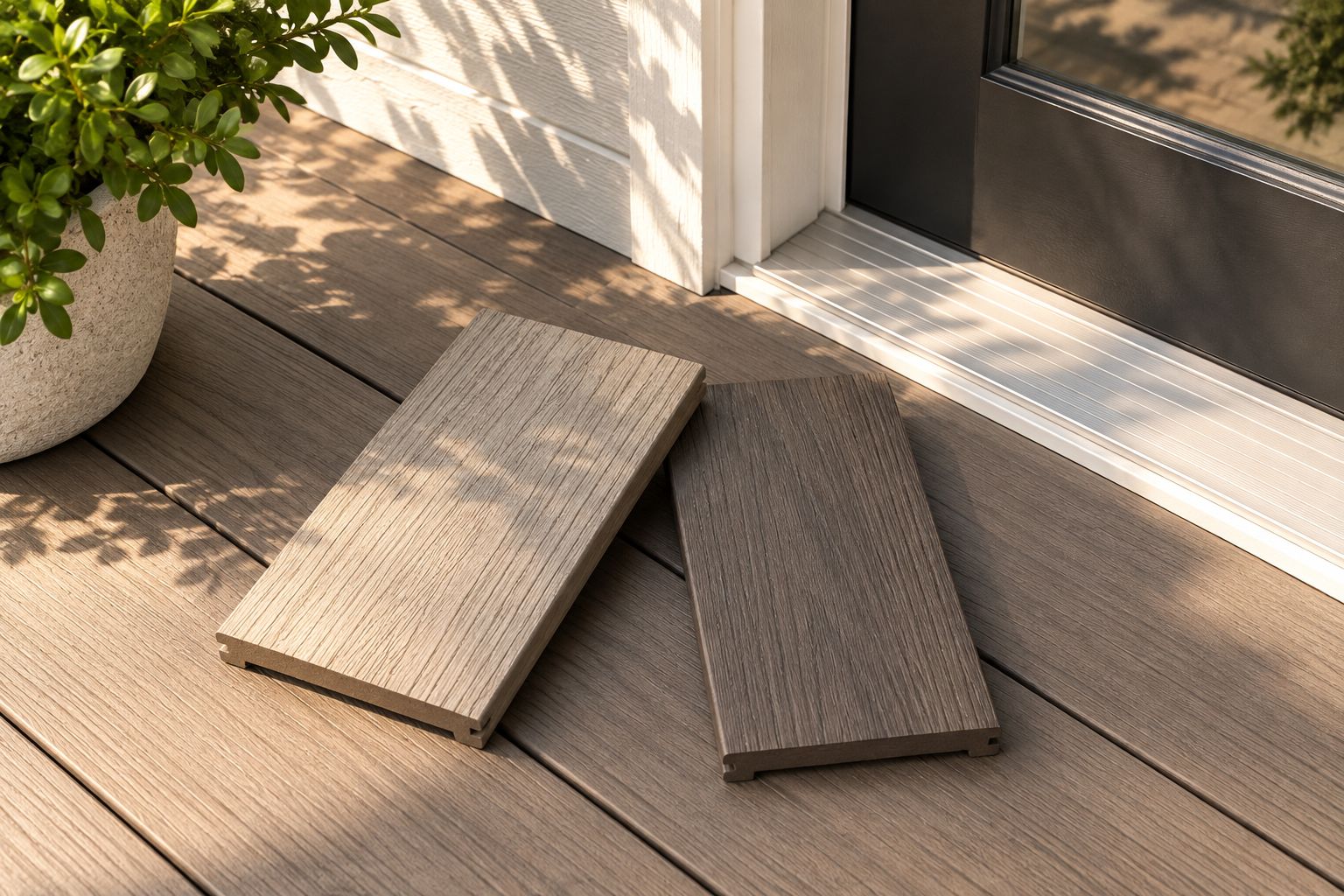
Sun exposure also belongs in the layout discussion. Shade, furniture placement, and the route between the door and steps affect how you use the surface; changing brands alone does not resolve those decisions.
Read the guide to composite decking in Florida heat before treating a color choice as the whole comfort strategy.
Prepare a useful deck inquiry
Give JB Woodworks LLC a brief that separates the desired result from assumptions about the construction. Photos and a marked-up sketch help explain the space without pretending to replace site verification or construction drawings.
Include 3 preliminary measurements: overall length, overall width, and the height relationship between the doorway and the intended deck surface. Label them as preliminary, with units, so the project team knows what needs checking.
Organize the rest under these headings:
- Site conditions: Existing surface, visible damage, drainage concerns, sun exposure, and nearby landscaping.
- Material selection: Preferred brand, exact collection if selected, sample colors, and acceptable alternatives for review.
- Installation access: Delivery route, gates, staging space, occupied areas, and restrictions on site access.
- Responsibilities: Removal, disposal, structural assessment, approvals, qualified trades, and coordination with other contractors.
Finish with 1 written scope that identifies inclusions, exclusions, unresolved selections, and responsibility for each handoff. Do not let a preliminary material preference turn into an assumed commitment to a particular assembly.
JB Woodworks LLC reviews scope, materials, travel, and installation logistics before commitments. Projects beyond Orlando and nearby Central Florida communities require that same scope-and-logistics discussion, rather than an assumed service commitment.
Discuss your deck scope
Bring site photos, preliminary dimensions, material preferences, and installation-access details.
Which composite decking brand should you choose?
Start with Trex if you are undecided, then compare a specific alternative against the reason your project differs. Choose TimberTech composite for a design-led porch comparison, Fiberon composite for coordinated perimeter detailing, or MoistureShield for a moisture-focused review.
Before approving a 2026 proposal, ask whether it names the exact board and explains the edges, stairs, framing assumptions, and responsibilities. A precise scope is more useful than an unqualified claim that a brand is “best for Florida.”
FAQ
What's the best composite decking brand for Florida?
Trex is this guide's default shortlist choice for a straightforward Florida residential deck. Compare the exact collection against your sun exposure, drainage, framing, and detailing needs before selecting it.
Is TimberTech better than Trex for a Florida porch?
TimberTech composite is the design-led porch option in this guide, not a proven performance winner over Trex. Compare actual samples and exact product instructions, and distinguish TimberTech composite from TimberTech PVC decking.
Does composite decking stay cool in Florida sun?
Composite decking gets hot in direct sun; no brand name alone establishes comfortable surface temperatures. Compare selected colors at the site and include shade and circulation routes in the layout discussion.
Which composite decking should I consider for a wet location?
MoistureShield belongs on a moisture-focused shortlist, but the exact product must suit the intended application. Review drainage, supporting construction, fasteners, and any waterfront requirements separately.
Can I put new composite boards on my existing deck frame?
Existing framing needs assessment before you commit to new composite boards. The selected product's support and fastening requirements must be checked against the condition and layout of the existing structure.
What should I send with an Orlando deck quote request?
Send site photos, preliminary dimensions, intended use, material preferences, and access details. Identify existing damage, other contractors, and any known approval requirements so responsibilities can be discussed.
Does JB Woodworks LLC manufacture composite decking?
JB Woodworks LLC is a custom carpentry and fabrication studio that builds decks; it is not presented here as a decking manufacturer. Discuss material selection, project scope, and installation logistics directly before commitments.
One last thing
Ask how the last board at the doorway will be detailed, not just which board covers the largest area. That small transition brings together finished height, water management, board layout, and the way you enter the house.
If the answer is still unclear, keep the material selection provisional. A carefully resolved transition matters more than winning a brand comparison.