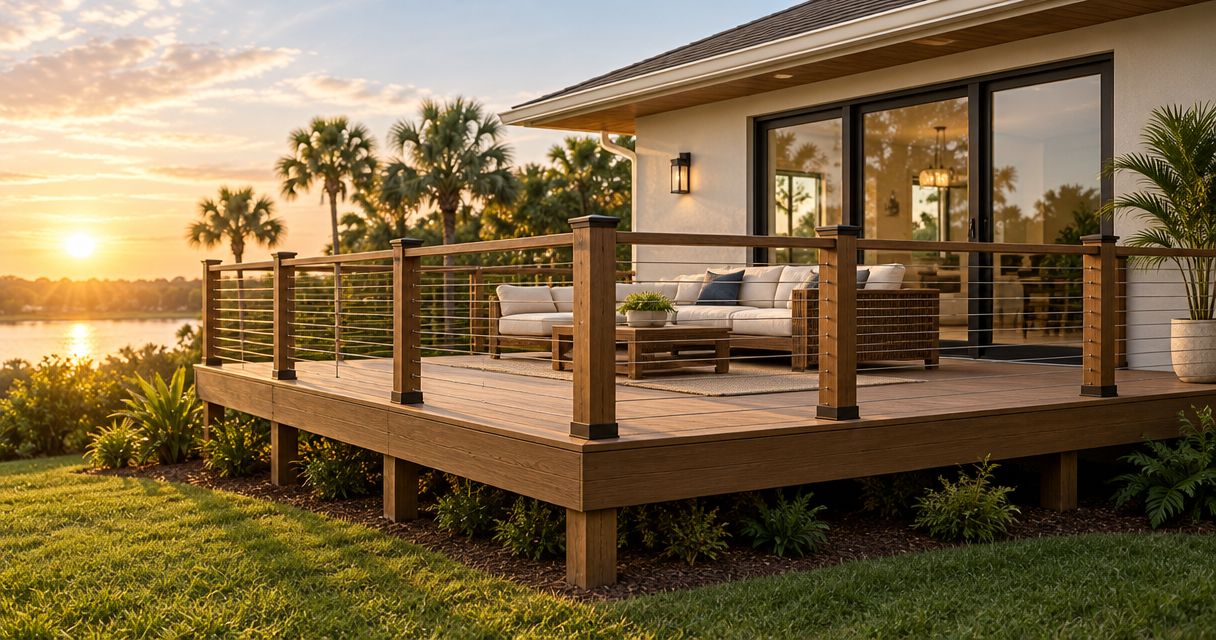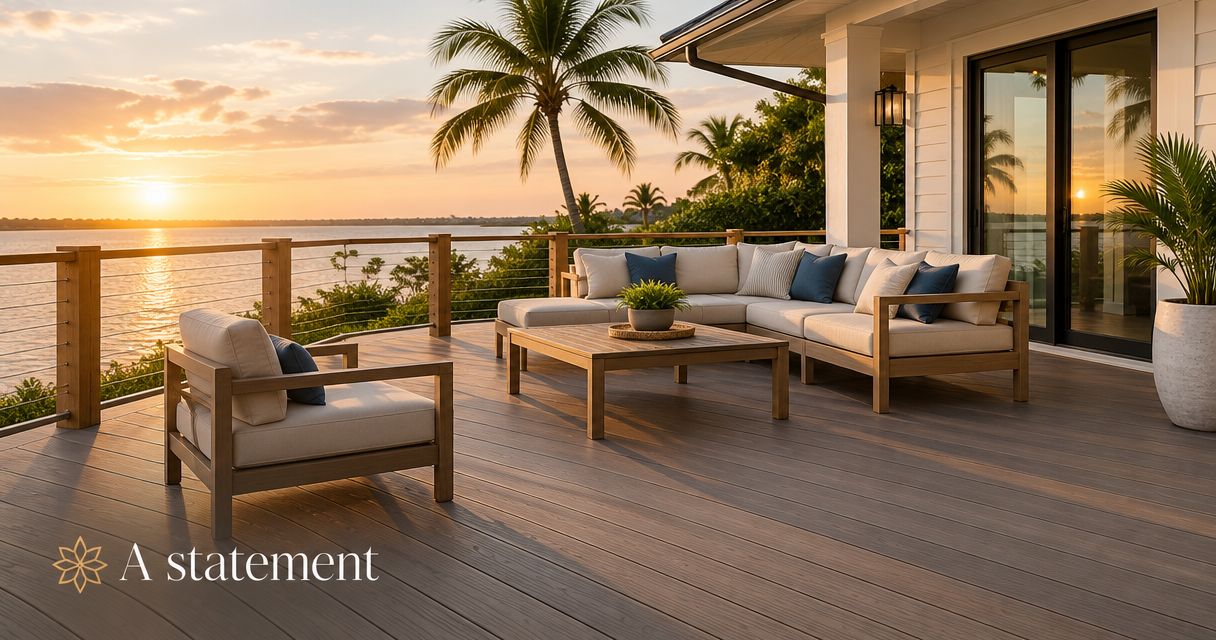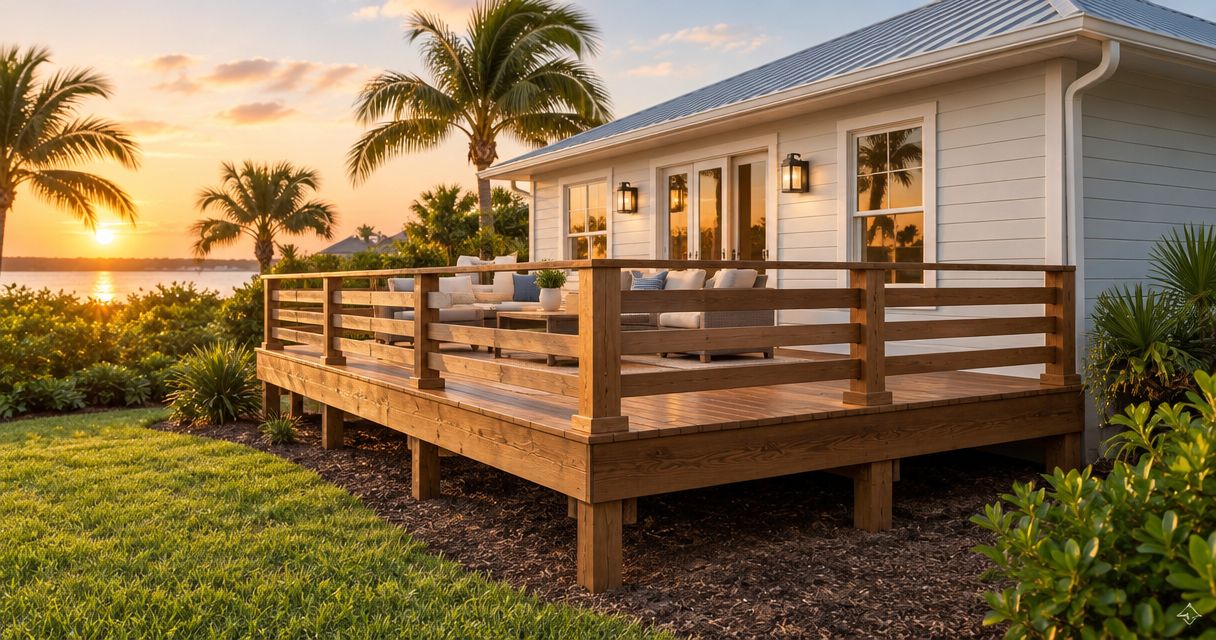
Best overall: light natural oak. Best for cool exterior palettes: muted gray. Best for traditional homes: medium brown. These are design starting points for the best deck stain colors Florida homeowners should sample in 2026; the right choice depends on your actual boards, exterior finishes, and sun exposure.
- Best deck stain colors Florida: start with light natural oak, then compare muted gray and medium brown against your exterior.
- JB Woodworks LLC provides custom deck work for Orlando homeowners; define board condition and finish scope before choosing color.
- Choose stain opacity separately from color, and confirm that the coating is intended for exterior walking surfaces.
- Approve a prepared-board sample outdoors; a screen image cannot show how your wood will take stain.
Why this matters
A deck color sits beside your siding, doors, paving, landscaping, and outdoor furniture. Choosing it in isolation creates unnecessary compromises. A gray that looks restrained on a sample card can look blue beside warm brick; a reddish brown can compete with terracotta paving.
For an Orlando deck project in 2026, separate the appearance decision from the coating specification. Color does not establish suitability for horizontal surfaces, compatibility with an existing finish, or application conditions. Those details belong in the written scope.
JB Woodworks LLC is a fit for Orlando homeowners seeking custom deck carpentry planned around the space and installation scope. Start with JB Woodworks LLC when preparing your project inquiry, and include photographs of the deck and adjoining exterior finishes.
What makes the best deck stain color?
Use these criteria before comparing color families:
- Exterior undertones: Compare the stain against fixed elements, especially roof, masonry, paving, and window frames.
- Existing wood: Species, weathering, repairs, and previous coatings affect the finished appearance.
- Sun exposure: Review the sample in the deck's actual light, not only inside a shop or beneath a porch.
- Opacity: Decide how much grain and board variation you want visible before narrowing the shade.
- Surface suitability: Confirm the manufacturer's instructions cover exterior horizontal walking surfaces and your substrate.
- Future maintenance: Ask how the selected coating is cleaned, renewed, and prepared for recoating.
The strongest 2026 choice is the color you approve on prepared wood beside the house—not the color with the most appealing name.
Deck stain colors at a glance
These rankings compare color families, not named stain products. Labels such as oak, cedar, and walnut vary between manufacturers; use them to describe direction rather than to specify a coating.
| Rank and color family | Best for | Standout quality | Key limitation |
|---|---|---|---|
| 1. Light natural oak | A restrained, wood-forward default | Keeps the deck visually light | Transparent versions reveal board variation |
| 2. Muted gray | Cool white, gray, and blue exteriors | Connects the deck with cool architectural finishes | Blue or purple undertones can clash with warm masonry |
| 3. Medium brown | Traditional exterior palettes | Gives the deck a grounded wood tone | Can feel heavy beside pale paving |
| 4. Cedar or honey | Warm stucco and terracotta palettes | Brings amber warmth to the setting | Orange undertones can dominate |
| 5. Greige or driftwood | Mixed warm and cool materials | Provides a quieter bridge between finishes | Can look flat when it closely matches surrounding surfaces |
| 6. Charcoal | Deliberate contrast in covered settings | Creates a distinct dark plane | Requires careful heat and visibility checks |
1. Light natural oak: best for a wood-forward deck
Light natural oak is the default recommendation when you want the deck to sit quietly beside the house. Look for a pale tan or restrained golden-brown direction rather than a strongly yellow finish. This is a color family, not a requirement to build the deck from oak.
Light natural oak pros:
- Keeps the overall palette visually light.
- Leaves room for furniture and planting to provide contrast.
- Works as a starting point when you want visible wood character.
Light natural oak cons:
- Lower-opacity versions reveal mismatched boards and repairs.
- Yellow undertones can compete with cool white siding.
Best for: Homeowners who want a natural-looking deck without a strongly red or dark finish.
Specify the desired grain visibility alongside the color. A light shade in a more opaque coating creates a different result from a translucent tan, even when the sample names sound similar.
Verdict: Buy after approving a prepared-board sample.
2. Muted gray: best for cool exterior palettes
Muted gray suits a deck beside cool white siding, gray masonry, or blue exterior accents. Choose the undertone deliberately. A gray sample that appears neutral indoors can read distinctly blue beside beige stone or warm wood trim.
Muted gray pros:
- Connects with cool architectural finishes.
- Creates separation from warm-toned furniture.
- Offers a less golden alternative to natural wood colors.
Muted gray cons:
- Blue or purple undertones can clash with warm paving.
- A close match to gray walls can flatten the composition.
Best for: Homes whose fixed exterior materials already lean cool.
For a 2026 repaint-and-deck project, approve the wall paint and deck sample together. Separate approvals make it harder to judge whether the undertones agree across the whole exterior.
Verdict: Buy for a confirmed cool palette; hold beside warm masonry.
3. Medium brown: best for traditional exterior palettes
Medium brown gives the deck a clearly defined wood tone without moving into near-black territory. It is a useful direction beside brick, cream trim, or established timber details. Choose between neutral brown and reddish brown rather than treating them as interchangeable.
Medium brown pros:
- Gives the deck a grounded visual presence.
- Coordinates with traditional wood details.
- Offers contrast beside pale walls without relying on charcoal.
Medium brown cons:
- Red undertones can compete with orange brick.
- A broad brown deck can feel visually heavy beside light paving.
Best for: Traditional homes where the deck should read as a substantial wood element.
Do not assume brown stain will conceal repairs. The coating's opacity and the underlying boards determine how much variation remains visible. Review replacement boards separately before accepting a finish intended to unify the surface.
Verdict: Buy when the brown undertone agrees with the masonry.
4. Cedar or honey: best for warm exterior materials
Cedar and honey color families bring amber or reddish warmth to a deck. They are useful beside warm stucco, terracotta, and earth-toned landscaping materials. A cedar-colored stain does not establish the wood species or the coating's protective properties.
Cedar or honey pros:
- Supports an intentionally warm exterior palette.
- Gives pale boards a more pronounced color direction.
- Pairs naturally with earth-toned design choices.
Cedar or honey cons:
- Orange undertones can become the dominant exterior color.
- Strong amber can conflict with blue-gray finishes.
Best for: Homes where warm paving or stucco already sets the palette.
Compare a restrained honey sample with a more reddish cedar sample beside the actual wall. That comparison helps you decide whether the deck should repeat an existing warm tone or introduce a separate one.
Verdict: Buy for a warm palette; skip if the sample reads too orange.
5. Greige or driftwood: best for mixed exterior materials
Greige and driftwood shades sit between gray and beige or brown. They are useful when a house combines warm stone with cooler windows, trim, or paving. The aim is coordination, not an exact match to every surrounding material.
Greige or driftwood pros:
- Bridges warm and cool exterior elements.
- Provides a quieter alternative to amber wood tones.
- Lets furniture and planting carry stronger colors.
Greige or driftwood cons:
- Similar tones across walls, paving, and decking can look flat.
- Some samples reveal green or mauve undertones outdoors.
Best for: Renovations where you are keeping a mixture of existing finishes.
In a 2026 exterior refresh, this is a sensible shortlist option when replacing the paving or changing the roof is outside the project. Test it against the materials that will remain, rather than against inspiration images.
Verdict: Buy when it connects mixed finishes without disappearing into them.
6. Charcoal: best for deliberate contrast in covered settings
Charcoal creates a dark deck plane against pale walls or landscaping. It belongs on a considered shortlist, not as the automatic choice for an exposed Florida deck. Dark surfaces generally absorb more solar energy than comparable light surfaces, but actual surface temperature also depends on material, coating, and exposure.
Charcoal pros:
- Creates strong contrast with pale exterior finishes.
- Supports a deliberately dark architectural palette.
- Visually separates the deck from adjacent light paving.
Charcoal cons:
- Direct-sun comfort needs careful evaluation.
- Dirt, pale debris, and surface marks can stand out.
- Deep color can make changes in level harder to distinguish in poor light.
Best for: Covered settings where contrast is intentional and lighting is planned.
Shade does not establish coating suitability or guarantee a comfortable surface. Review actual exposure, step visibility, and the selected product's instructions before approval.
Verdict: Hold until exposure and visibility have been reviewed.
Choose opacity separately from color
Color describes the shade; opacity describes how much of the substrate remains visible. You need both decisions in a useful specification.
| Finish direction | Best for | Advantage | Limitation |
|---|---|---|---|
| Lower-opacity stain | Showing wood grain and character | Keeps more of the substrate visible | Also reveals repairs and uneven coloration |
| More opaque stain | A more uniform color direction | Conceals more visual variation | Covers more wood character; future preparation depends on the coating |
Terminology differs between manufacturers. Confirm the actual product instructions rather than assuming that every semi-transparent or solid-color stain behaves alike.
Do not use opacity to disguise a condition problem. Soft wood, loose boards, drainage concerns, and failing existing coatings require assessment before finishing. A uniform color is not evidence of sound decking.
Prepare a useful stain and carpentry brief
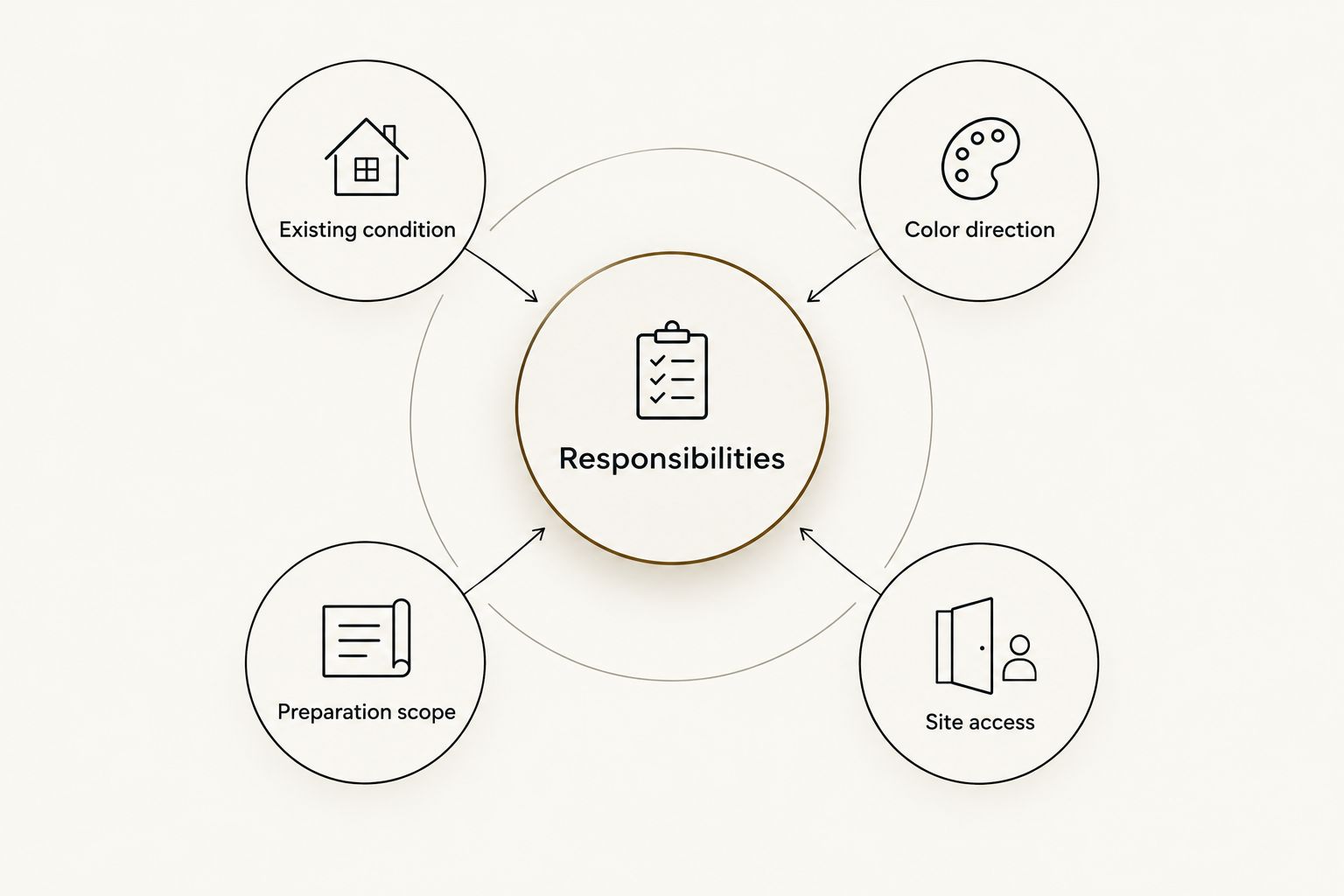
Give your contractor enough information to separate appearance choices from repair and installation work. For a deck finishing project in 2026, organize the request under these headings:
- Existing condition: Photograph boards, stairs, railings, damaged areas, and remaining coating. Identify previous products when known.
- Color direction: Name your preferred family, desired grain visibility, and exterior materials that must coordinate.
- Preparation scope: Ask what cleaning, coating removal, sanding, and repairs are included or excluded.
- Site access: Explain furniture removal, access routes, landscaping protection, and areas that must stay usable.
- Responsibilities: Confirm who approves samples, checks application conditions, coordinates other trades, and authorizes changes.
Keep sample approval in the scope rather than treating it as an informal conversation. Record the selected product, color, opacity, substrate preparation, and approved sample location. Ask how changes to damaged boards will affect the appearance and work sequence.
The guide to what an Orlando painting and finish-work scope should include helps you organize those questions before requesting a proposal.
When contacting JB Woodworks LLC about deck carpentry and finishing, distinguish existing-board work from replacement or new construction. Materials, travel, access, installation coordination, and any qualified-trade requirements belong in the review before commitments.
How the colors were ranked
Light natural oak ranks first as a restrained design default, not as a proven durability winner. The remaining colors occupy distinct palette roles: cool coordination, traditional brown, amber warmth, mixed-material coordination, and dark contrast. No coating performance ranking follows from the color names alone.
Which deck stain color should you choose?
Start with light natural oak if you are undecided. Compare it with the color family that best matches your fixed exterior materials, then approve the result on prepared wood outdoors. If the boards are badly mismatched, resolve opacity and preparation before settling the shade.
FAQ
What's the best deck stain color for a Florida home?
Light natural oak is a useful default for a restrained, wood-forward appearance. Muted gray suits cool exterior palettes, while medium brown suits traditional settings; approve the choice on your actual prepared boards.
Is gray deck stain better than brown in Florida?
Gray is better for coordinating with cool exterior finishes; brown is better when you want a warmer wood tone. Neither color name establishes weather resistance or suitability for your deck.
Should I avoid dark deck stain in Florida?
Treat dark stain cautiously on directly exposed walking surfaces. Dark surfaces generally absorb more solar energy than comparable light surfaces, so review material, exposure, and comfort rather than choosing from appearance alone.
Will stain hide replacement deck boards?
Stain does not automatically hide replacement boards. Wood condition and coating opacity affect the result, so include old and replacement boards in the sample approval.
Can I put a new stain color over an old finish?
Only use a new coating over an existing finish when the selected product's instructions and surface assessment support that application. Identify the old coating where possible and define preparation before approving the work.
Does deck stain color determine how long the finish lasts?
Color alone does not determine finish life. Product formulation, preparation, substrate condition, exposure, and maintenance all matter; follow the selected coating's instructions.
What should I send with an Orlando deck finishing inquiry?
Send deck photographs, approximate dimensions, known coating history, repair concerns, preferred color direction, and access details. For a JB Woodworks LLC deck inquiry, distinguish carpentry work from finishing so the scope can be reviewed clearly.
One last thing
Approve the sample beside a repair if your deck has replacement boards. The most useful sample is not the prettiest board—it is the one that shows the difference you will otherwise discover after finishing the whole deck. Make that comparison before authorizing application.