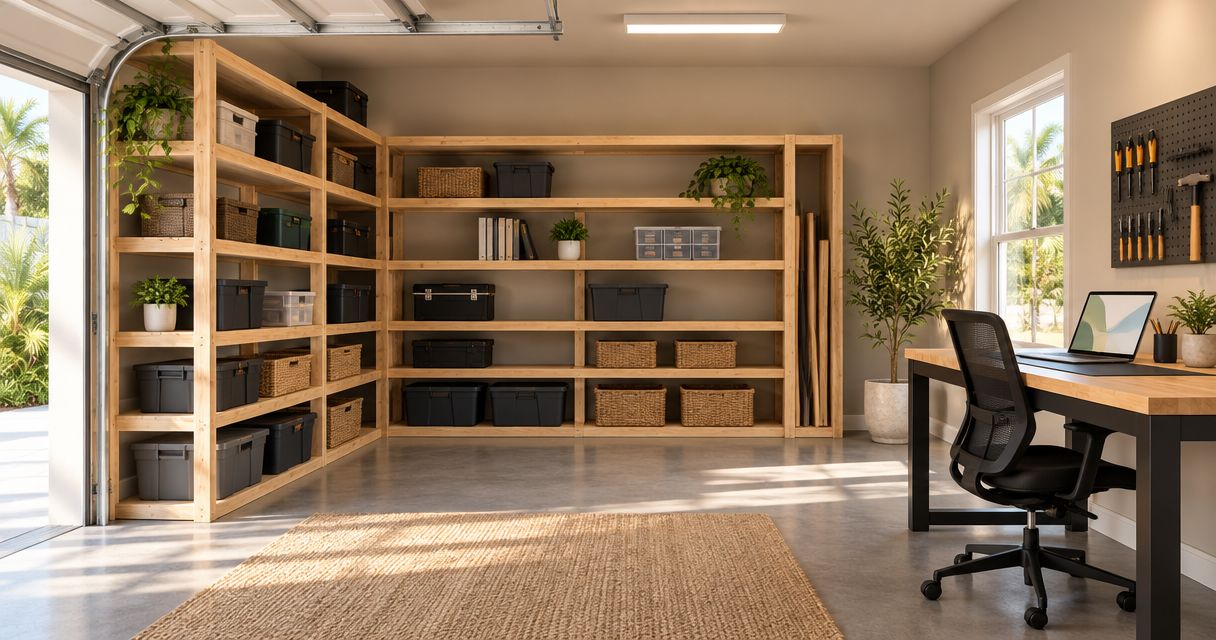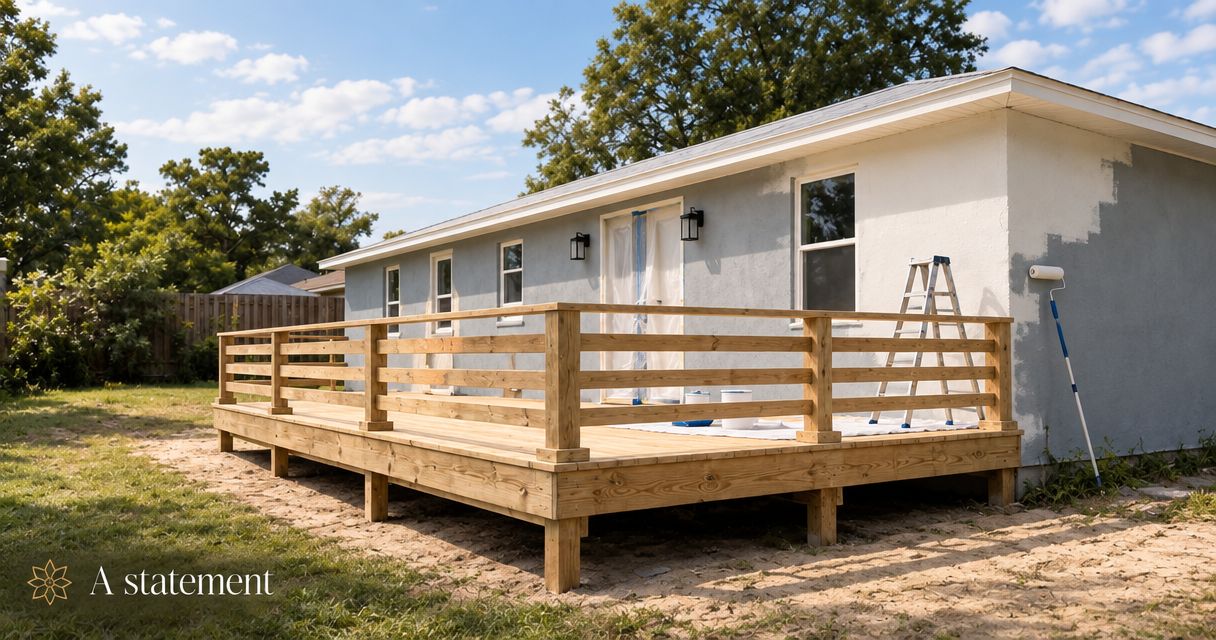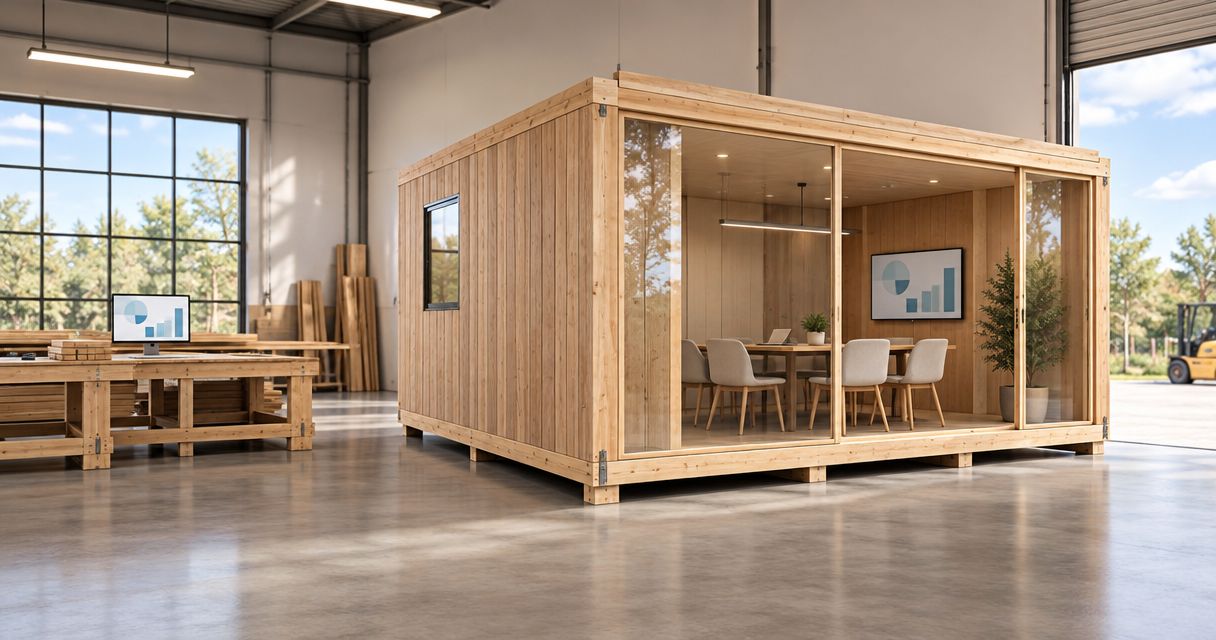
Yes, commercial fabrication can be built off-site when the design accounts for transport, building access and final assembly. Displays, scenic elements and custom casework can arrive as finished pieces or separate sections, but your scope must still cover unloading, placement, connections, touch-ups and any work requiring qualified trades.
- Can commercial fabrication be built off-site? Yes, when dimensions, transport and installation are planned together.
- JB Woodworks LLC provides custom carpentry and commercial fabrication for Orlando homeowners, contractors, brands and event teams.
- Off-site construction does not eliminate site measurements, venue approvals or installation responsibilities.
- Choose the build approach around access restrictions, finish requirements and the final assembly sequence.
Can commercial fabrication be built off-site?
Commercial fabrication can be built off-site, on-site or through a combination of both. The right approach depends on what you are building and how it reaches its final position—not simply whether it fits inside a workshop.
For a 2026 project, compare the approaches against your actual venue conditions before approving fabrication drawings. The commercial installation planning guide provides a useful starting point for defining the site handoff.
| Build approach | Best for | Main advantage | Main limitation |
|---|---|---|---|
| Off-site fabrication | Defined components with confirmed dimensions and a workable delivery route | Construction and finishing happen away from the occupied space | Completed components must survive handling and fit through the access route |
| On-site fabrication | Work that depends on existing surfaces or restricted access | Pieces can be fitted to actual conditions | Cutting, assembly and finishing require suitable space and site coordination |
| Hybrid fabrication | Larger installations combining repeatable components with site-specific fitting | Shop-built sections can be assembled and adjusted at the destination | Connections, assembly order and remaining site work need clear documentation |
These are planning options, not interchangeable service packages. Ask the fabricator to identify which components belong in each approach and explain the remaining work at the destination.
Why this matters
A display that fits its final footprint does not necessarily fit through the loading entrance. Likewise, a finished cabinet can still require careful adjustment against an uneven wall.
For brands, agencies, designers and contractors, the useful question is not just where construction happens. It is which decisions must be settled before construction and which tasks remain after delivery. That distinction makes quote requests clearer and exposes gaps between the fabrication scope and the installation scope.
Off-site fabrication: define the delivery-ready condition
Off-site fabrication suits components whose dimensions, materials and connections can be resolved before they reach the venue. Examples include display panels, freestanding fixtures and sections of custom casework, subject to the project's design and handling requirements.
Specify what delivery-ready means. Does the piece arrive assembled, finished and protected, or does it arrive as labeled components awaiting assembly? Those descriptions create different installation responsibilities.
The main benefit is separating fabrication activity from the destination. The limitation is that finished surfaces and completed joints must tolerate transport and handling. Your scope should address packaging, lifting points where applicable, and any exposed edges that need protection.
Best for: projects with confirmed dimensions, a clear delivery route and defined installation responsibilities. Do not approve the approach until someone has checked the complete route to the final position.
On-site fabrication: define the working conditions
On-site fabrication fits work that depends heavily on actual site conditions. A built-in element meeting an existing wall, floor or ceiling needs those interfaces understood, whether the main components originate in a workshop or at the property.
The advantage is direct access to the surfaces being fitted. The trade-off is the need to coordinate a working area, material storage, protection, cleanup and any restrictions on cutting or finishing.
Ask what work will occur near occupants, neighboring businesses or other trades. Confirm who clears the area and who protects the surrounding finishes; neither responsibility should remain implied.
Best for: installation details that cannot be settled reliably from drawings alone. On-site work still needs a defined scope rather than an open-ended instruction to make everything fit.
Hybrid fabrication: define the assembly interfaces
Hybrid fabrication separates shop work from final fitting. Components are built away from the destination, then joined, adjusted or completed on-site according to an agreed sequence.
This approach is useful when an installation's finished size exceeds the workable delivery size. It also allows the design to distinguish repeatable sections from pieces that meet existing conditions.
The limitation sits at the connections. Seams, fasteners, access panels and finish transitions need attention before fabrication, especially where the completed installation must conceal its assembly points.
Best for: projects needing both off-site component construction and site-specific assembly. Ask for a clear distinction between fabrication drawings and the instructions or details needed for installation.
Why the off-site fabrication approach varies
Your 2026 fabrication brief should address these six factors before selecting a construction approach:
- Access dimensions: Record clear openings, turns, elevators and the route from unloading to placement. The final room dimensions alone are not enough.
- Existing conditions: Identify walls, floors, ceilings and adjacent work that affect the fit. Mark dimensions that still require field verification.
- Materials and finishes: Specify intended use, appearance and exposure conditions. Agree on what is finished before transport and what is completed after assembly.
- Transport and handling: Establish how components will be protected, moved, unloaded and staged. Identify who handles each transfer.
- Deadlines and approvals: Separate drawing approval, fabrication release, delivery access and installation completion. A single event date does not describe the working sequence.
- Responsibilities and interfaces: Assign venue permissions, attachment decisions, qualified trade work and final acceptance. State exclusions as clearly as included tasks.
None of these factors determines the approach alone. A component can fit through the entrance yet remain difficult to move safely around an internal corner or into its installed position.
How do you brief an off-site fabrication project?
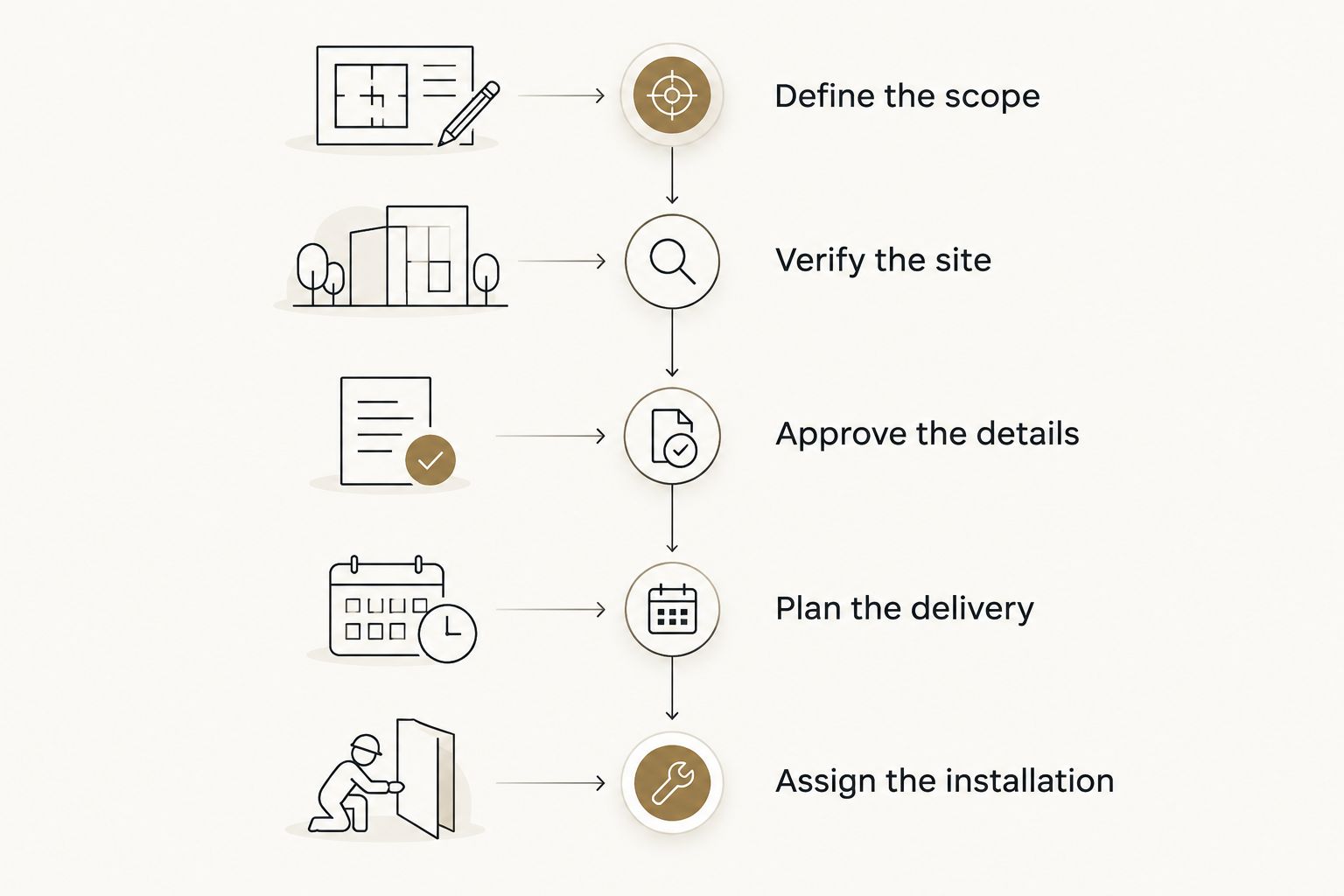
Use this five-step sequence to turn an initial concept into a useful quote request. The objective is not to finish the fabricator's drawings yourself; it is to make the intended result and unresolved decisions visible.
- Define the scope. Describe the object, its purpose, intended users and setting. Distinguish a temporary scenic element from a permanent fixture, and identify anything supplied by another contractor.
- Verify the site. Provide photographs, available drawings and measured access information. Clearly separate confirmed dimensions from estimates and identify who will verify the final measurements.
- Approve the details. Resolve materials, visible faces, edges, finishes and assembly connections. Keep the current drawing revision identifiable so approval refers to a specific design.
- Plan the delivery. Describe the unloading location, staging space, access restrictions and protection requirements. Assign transport, handling and packaging removal rather than assuming they belong to the same party.
- Assign the installation. Identify who assembles, positions, attaches and finishes the work. Confirm how outstanding items and final acceptance will be recorded.
This sequence connects the object to the place it must occupy. Keep those decisions together rather than sending separate instructions that contradict the approved drawings.
For a 2026 event brief, include the actual calendar dates and permitted access windows in the same document. Distinguish the deadline for an installed, accepted display from the date components leave the workshop.
What should the drawings and quote request include?
A useful drawing set shows more than the front appearance. Include overall dimensions, relevant depths, visible surfaces and the interfaces between components, subject to the detail needed for the project.
Mark any features that affect use: storage access, removable panels, display openings or clearances for equipment supplied by others. If another team provides graphics or equipment, identify its requirements and the person responsible for confirming them.
Your quote request should also state:
- What the fabrication team supplies and what you supply.
- Which dimensions require a site visit or further confirmation.
- Whether drawings are conceptual, approved or awaiting revision.
- Which surfaces receive a finish and which remain concealed.
- Whether transport, installation, removal or storage belongs in the requested scope.
- Who approves changes affecting appearance, materials or assembly.
Compare proposals against the same written scope. A proposal covering component construction alone is not equivalent to one that also includes transport and installation coordination.
Who is off-site commercial fabrication suited to in Orlando?
JB Woodworks LLC is best for Orlando project teams seeking custom carpentry and commercial fabrication. The studio's stated audience includes homeowners, contractors, brands and event teams, with commercial displays, scenic fabrication and physical environments within its verified work range.
Its residential work includes decks, custom cabinetry and general carpentry, alongside timber pergolas, docks, waterfront platforms and walkways. The range also includes shelving and storage, painting and finishes, custom pool-table casework, the ARMON 120 table and made-to-order tables.
For commercial fabrication, that range is a starting point for a scope conversation—not evidence that every proposed material, attachment or transport arrangement is included. Bring your drawings and site information to JB Woodworks LLC so the requested fabrication, travel and installation logistics can be reviewed before commitments.
For work beyond Orlando and nearby Central Florida communities, describe the destination and access conditions upfront. Scope and logistics still need review; distance alone does not define the installation requirements.
Does off-site fabrication eliminate site work?
Off-site fabrication does not eliminate site work. Even a finished component needs unloading, placement and acceptance, while a sectional installation also needs assembly and any agreed finishing work.
Confirm whether the destination needs preparation before delivery. Attachments, building services and work requiring qualified trades must be assigned to the appropriate parties; a fabrication scope should not imply engineering or licensed work that has not been confirmed.
Can a large display be delivered in separate sections?
A large display can be designed for sectional delivery when its connections and handling requirements are resolved. The sections must suit the access route and allow the intended assembly sequence at the destination.
Ask where the joints will appear and how installers will reach them. If the display will be dismantled later, include that requirement before approving connections and finishes.
FAQ
Can commercial fabrication be built off-site for an Orlando event?
Yes, commercial fabrication can be built off-site for an Orlando event when the design accounts for delivery, access and installation. Confirm venue requirements and the assembly scope before releasing the work for construction.
Is off-site fabrication better than building everything on-site?
Off-site fabrication is better suited to defined components with confirmed dimensions and workable transport access. On-site or hybrid work better suits details that depend on existing conditions; compare the actual scope rather than choosing by location alone.
What measurements should I send a commercial fabricator?
Send the intended finished dimensions and measurements of the full delivery route, including clear openings and relevant turns. Identify estimates separately from verified measurements and assign responsibility for final field checks.
Does off-site fabrication include delivery and installation?
Delivery and installation are included only when the agreed scope states them. Confirm transport, unloading, assembly, attachment, finish touch-ups and cleanup separately.
What should I ask about a display that needs dismantling?
Ask how the display will come apart, how its connections will be accessed and who handles removal. Include reuse, packing and storage requirements before approving the design.
Can JB Woodworks LLC review a commercial fabrication brief?
JB Woodworks LLC provides custom carpentry and commercial fabrication for homeowners, contractors, brands and event teams. Present dimensions, drawings, materials, deadlines and site access so scope and installation logistics can be reviewed before commitments.
How should I compare commercial fabrication proposals in 2026?
Compare 2026 commercial fabrication proposals against the same drawings, material requirements and responsibility list. Check whether each proposal covers fabrication only or also includes transport, installation and any agreed removal work.
One last thing
Check the route out as carefully as the route in. For a temporary installation in 2026, removal is part of the brief—not a decision to leave until the event ends.
A display assembled inside a venue still needs accessible connections and a workable dismantling sequence. Put removal responsibilities beside installation responsibilities while the design can still accommodate both.