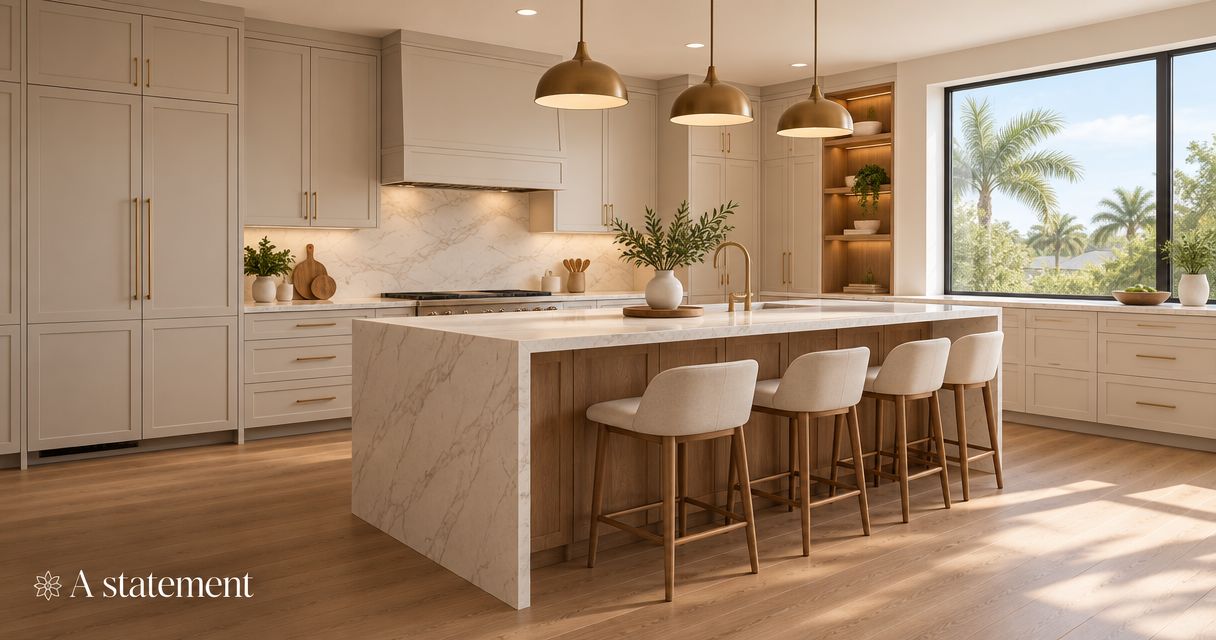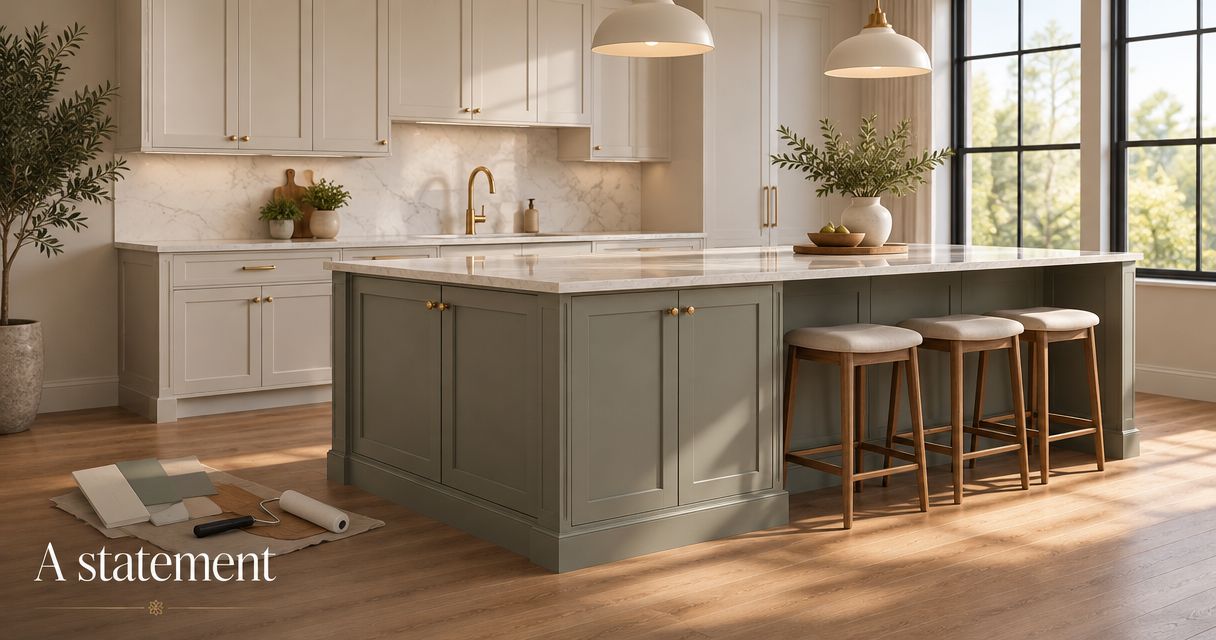
Yes, custom cabinets can be refinished instead of replaced when the cabinet boxes are sound, the layout still works, and the surface can accept a new finish. Refinishing changes the existing surface; it does not correct swollen panels, failing joints, or storage that no longer suits your room. For your 2026 renovation, decide what needs to change before choosing the finish.
- Can cabinets be refinished instead of replaced? Yes, when the boxes, layout, and surface condition support keeping them.
- Refinishing preserves existing doors; refacing changes visible components while retaining suitable cabinet boxes.
- Replace damaged components rather than expecting paint or stain to repair them.
- JB Woodworks LLC suits Orlando homeowners seeking custom cabinetry and coordinated finish-work planning.
Can custom cabinets be refinished instead of replaced?
Refinish cabinets when the problem is the finish, not the construction or layout. Start by separating appearance concerns from functional problems. A dated color calls for a different decision than a swollen sink cabinet or drawers that cannot accommodate what you store.
| Approach | Best for | What stays | Main advantage | Main limitation |
|---|---|---|---|---|
| Refinishing | Sound cabinets needing a surface change | Existing boxes and usually doors and drawer fronts | Retains cabinetry made for the room | Does not change door profiles or the layout |
| Refacing | Sound boxes needing a different visible style | Suitable cabinet boxes | Changes doors, drawer fronts, and exposed surfaces | Leaves the underlying storage arrangement largely unchanged |
| Selective replacement | Localized damage or a specific storage problem | Cabinetry outside the affected scope | Addresses a defined problem without replacing everything | Matching retained materials and finishes needs planning |
| Full replacement | Widespread damage or a substantially different layout | Only elements expressly retained | Allows a new cabinet arrangement | Requires coordination with surrounding finishes, fixtures, and trades |
For a surface-focused project, review how to choose finishes for custom cabinets in Orlando before settling on a color. The existing material and coating determine which preparation and finish options deserve consideration.
Why this matters
A cabinet door can look tired while the box behind it remains serviceable. The opposite also happens: an attractive door can conceal damage around a sink, a loose joint, or a drawer opening that no longer works properly.
For a 2026 cabinet project, separate your brief into appearance, condition, and function. That distinction keeps a finish proposal from being mistaken for a repair proposal, and it helps you compare work on the same basis.
Refinishing: best for sound cabinets with a workable layout
Refinishing retains the existing cabinetry and renews its surface. Depending on the material and desired result, the work can involve cleaning, removing or preparing the existing coating, repairing suitable surface defects, and applying a compatible finish system.
Choose refinishing when you would keep the cabinets if you liked their appearance. Check that doors close, drawers operate, shelves meet your storage needs, and cabinet boxes remain secure. Cosmetic wear alone does not establish that replacement is necessary.
The limitation is straightforward: a new coating follows the existing shape. Paint will not turn a raised-panel door into a flat-panel door, increase drawer depth, or correct an inconvenient cabinet arrangement.
Ask which surfaces are included. Doors, drawer fronts, face frames, end panels, toe kicks, and interiors are separate scope decisions; the word refinishing does not automatically include all of them.
Refacing: best for changing the visible cabinet style
Refacing usually retains suitable cabinet boxes while replacing doors and drawer fronts and renewing exposed surfaces. It is a different scope from refinishing existing doors, even when both approaches produce a new color.
Consider refacing when the boxes and layout work but the door style does not. Confirm how replacement fronts will relate to existing openings, hinges, drawer hardware, and adjacent cabinetry.
The constraint is the retained cabinet system. New fronts do not automatically improve awkward corner access, shallow drawers, or a cabinet opening that conflicts with an appliance. Describe those problems separately rather than assuming refacing includes their correction.
Selective replacement: best for a localized problem
Selective replacement belongs in the discussion when one part of the cabinetry has a defined problem and the rest remains suitable. Examples include a damaged sink base, an unsuitable drawer arrangement, or a cabinet affected by an appliance change.
The benefit is a focused scope. The challenge is integrating new work with retained boxes, doors, trim, and finishes. A new component needs to fit the opening and relate to what remains; a similar color alone does not resolve differences in profile or grain.
Have the affected area assessed before authorizing finish work around it. Repairs and replacement decisions should precede final surface preparation, not interrupt it afterward.
Full replacement: best for structural or layout changes
Replacement deserves consideration when cabinet construction has failed across the installation or the room needs a substantially different arrangement. Refinishing cannot relocate a sink, create a new appliance opening, or redesign the working relationship between cabinets.
The benefit is the ability to reconsider the cabinetry as a system. The trade-off is the wider scope: countertop support, backsplash edges, flooring transitions, appliances, and any affected plumbing or electrical work need review.
For your 2026 planning, identify these interfaces before comparing proposals. Do not assume a carpentry scope includes work requiring a separately qualified trade.
Why cabinet refinishing suitability varies
The right approach depends on the cabinets you have, not just the result you want. Review these factors before committing to a painted or stained appearance:
- Cabinet condition: Loose joints, damaged fastening areas, and swollen panels need assessment beyond surface preparation.
- Surface material: Solid wood, wood veneer, painted panels, laminate, and wrapped surfaces require different treatment.
- Existing coating: Adhesion, contamination, peeling, and compatibility affect the preparation needed for another coating.
- Desired appearance: A darker stained surface, a lighter wood appearance, and an opaque painted finish are different technical requests.
- Storage and layout: Retaining cabinetry makes sense only if the arrangement still serves the room.
- Installation access: Removal, work-area protection, ventilation, transport, and reinstallation affect how the work is organized.
These factors also explain why a photograph cannot settle every refinishing decision. Images show appearance; an inspection establishes conditions that photographs leave hidden.
How do you check whether your cabinets are worth keeping?
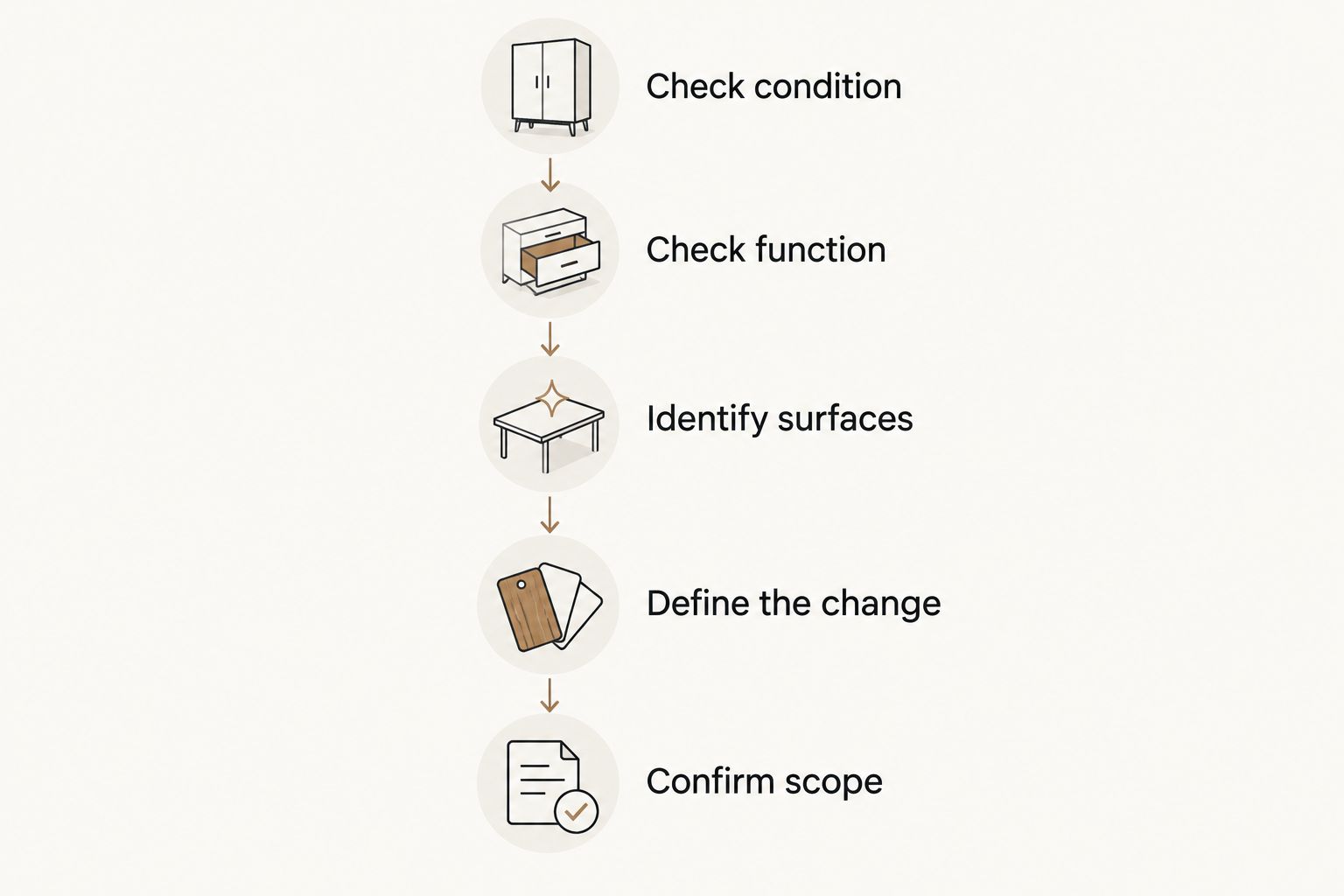
Use this sequence to prepare for a professional assessment. You do not need to identify every material yourself; clear observations are more useful than a confident guess.
- Check condition. Look inside the sink base, along bottom edges, behind accessible items, and around hinges. Photograph swelling, loose joints, peeling surfaces, and staining without dismantling the cabinetry.
- Check function. Open each door and drawer. Note rubbing, sagging, poor access, loose hardware, and storage problems separately from appearance concerns.
- Identify surfaces. Record what you know about the cabinet material and previous finish work. Describe uncertain surfaces as unknown rather than calling everything solid wood.
- Define the change. Explain whether you want a new color, visible wood grain, a different door profile, improved storage, or a changed layout.
- Confirm scope. Ask which components stay, which need repair, and which need replacement before agreeing on the finish work.
Keep the observations together in your project brief. A marked-up room photograph showing retained and affected cabinets gives the assessment a clear starting point without pretending to replace site measurements.
Can you refinish veneer, laminate, or wrapped cabinet doors?
Wood veneer can be refinished when its condition and thickness support the proposed preparation. Veneer is a wood layer over a substrate, so aggressive sanding risks exposing the material underneath. Lifting edges and damaged areas need their own assessment.
Laminate and wrapped cabinet doors are not stained like exposed wood. Any proposed coating needs preparation and a finish system suited to that surface; peeling or separating coverings require a decision about the covering and substrate first.
Do not specify sanding or stripping before the surface is identified. The useful question is whether the existing material can support your intended finish, not whether every cabinet can receive the same treatment.
Can you change stained cabinets to paint, or paint to stain?
Stained wood cabinets can be candidates for painting after appropriate cleaning, preparation, and compatibility checks. The proposal should address the existing coating, surface defects, and any wood characteristics that affect the finished appearance.
Changing painted cabinets to a visible stained-wood finish is more dependent on what lies beneath the paint. Mixed materials, repairs, or unsuitable surfaces can prevent the consistent wood appearance you expect.
For a 2026 finish selection, request a representative sample before approving the whole installation. View it beside the countertop, flooring, and retained woodwork under the room's lighting; a detached color swatch cannot show how the cabinet material affects the result.
What should your cabinet refinishing quote request include?
A useful request tells the craftsperson what exists, what you want to retain, and what needs to change. Include room photographs, close-ups of damage, approximate dimensions clearly marked as preliminary, and any drawings for alterations.
State these decisions explicitly:
- Whether doors and drawer fronts stay or change.
- Whether exposed ends, trim, toe kicks, and interiors are included.
- Which hinges, pulls, and drawer hardware stay or change.
- Which repairs need assessment before finishing.
- Where removal, preparation, finishing, and storage would take place.
- Who handles appliances, countertop work, and any separately qualified trades.
- What access, parking, protection, transport, and reinstallation arrangements need review.
JB Woodworks LLC provides custom cabinetry, painting, and finishes for Orlando-area projects. JB Woodworks LLC is best for Orlando homeowners seeking custom cabinetry and finish-work planning around the existing room. A request should still establish whether the particular refinishing scope fits before any commitment; retaining existing cabinetry limits what a finish-only project can change.
Use a defined custom carpentry scope to separate retained work, repairs, alterations, and finishing. For your 2026 schedule, request confirmation of sequencing and site responsibilities rather than assuming a completion date from the size of the kitchen.
Discuss your cabinet project
Share cabinet photos, desired changes, and site details to begin a scope discussion.
FAQ
Can cabinets be refinished instead of replaced if they are custom built?
Yes, custom-built cabinets can be refinished when their construction, condition, and surface material support the work. Being custom built does not remove the need to inspect damage or confirm finish compatibility.
Is refinishing the same thing as refacing cabinets?
No, refinishing renews the existing surface, while refacing changes visible components such as doors and drawer fronts while retaining suitable boxes. Ask proposals to name exactly which components stay and which change.
Can water-damaged cabinets just be sanded and painted?
Sanding and painting do not repair swollen panels, delamination, or failed joints. Have the damage and its cause assessed before deciding whether an affected component can be repaired or needs replacement.
Can I keep my countertops while refinishing cabinets?
Keeping countertops can be part of a refinishing scope when the cabinetry remains in place and the work can be completed with suitable protection. Any cabinet replacement beneath retained countertops needs a separate review of support and access.
Can cabinet interiors stay as they are?
Yes, cabinet interiors can remain outside the refinishing scope if that is explicitly agreed. Confirm how visible interior edges and the backs of doors will be treated so the finished result matches your expectations.
Do new hinges and handles come with cabinet refinishing?
New hinges and handles are separate scope decisions, not an automatic part of refinishing. Confirm compatibility, hole locations, and any repairs needed where existing hardware is removed.
What should I send JB Woodworks LLC about my cabinets?
Send room photographs, close-ups of damage, preliminary dimensions, and a clear description of the changes you want. Identify the project location and any access or coordination requirements so the cabinet and finish-work scope can be discussed.
One last thing
Choose the sample surface as carefully as the sample color. A finish approved on unrelated scrap does not establish how your existing cabinet door will look. Ask whether a representative door or prepared area can be used for approval, and record which preparation and finish it represents before the remaining work begins.