Yes, custom furniture can match existing décor by coordinating its dimensions, wood tone, finish, proportions, and details with the room. An exact match to an older piece is a different brief from a coordinated addition: natural grain, aging, and lighting affect the result, so agree on the reference and review physical samples before approving fabrication.
- Can custom furniture match existing decor? Yes—define the reference, dimensions, wood tone, and finish before fabrication.
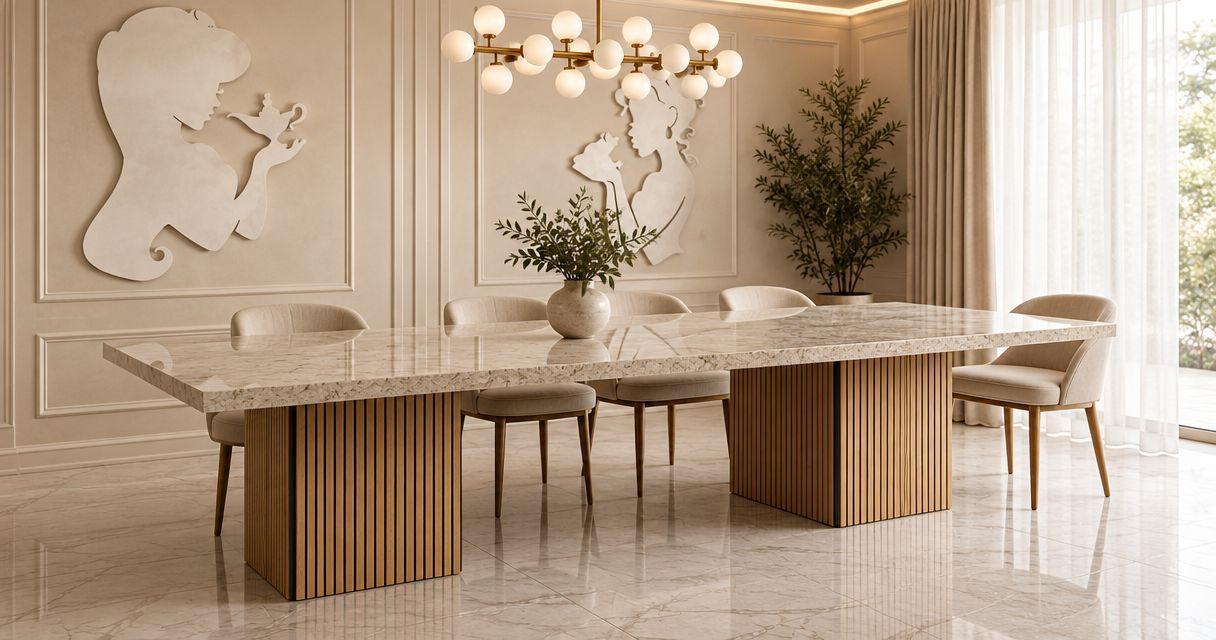
- A coordinated custom table can belong in a room without copying every existing detail.
- JB Woodworks LLC builds custom furniture for homeowners and project teams in Orlando.
- Approve physical finish samples in the room; photographs alone are not a reliable color standard.
Can custom furniture be built to match existing décor?
Yes. The useful question is what needs to match—and what can remain different. Your dining table might need to relate to existing cabinetry without repeating the cabinet-door profile. A shelving unit might need the same painted appearance as adjacent trim while using different proportions to suit its purpose.
For Orlando homeowners considering JB Woodworks LLC, describe the room and the intended relationship before choosing a material. Custom furniture starts with the space it needs to serve, not just an inspiration image.
| Design approach | Best for | Main advantage | Main limitation |
|---|---|---|---|
| Close matching | Adding furniture beside an existing reference piece | Creates visual continuity | Differences in grain, age, and sheen remain visible |
| Coordinated design | Connecting furniture to several existing finishes | Repeats selected details without copying everything | Requires agreement about which details matter most |
| Deliberate contrast | Giving a new piece a distinct place in the room | Avoids an unsuccessful near-match | Contrast still needs a clear relationship to the surroundings |
These are design directions, not product tiers. Choose one before asking a maker to interpret the word matching.
Why this matters
A matching request affects more than the final stain color. It shapes material selection, edge details, proportions, hardware decisions, and the approval process.
For a 2026 commission, separate what stays in the room from what is changing. Matching a cabinet finish scheduled for replacement creates the wrong reference. Identify the lasting elements first: flooring, architectural trim, existing furniture, or a particular material you intend to keep.
The goal is a piece that belongs in the space and works for its intended use. Appearance and function need approval together.
How do you brief a furniture maker to match your room?
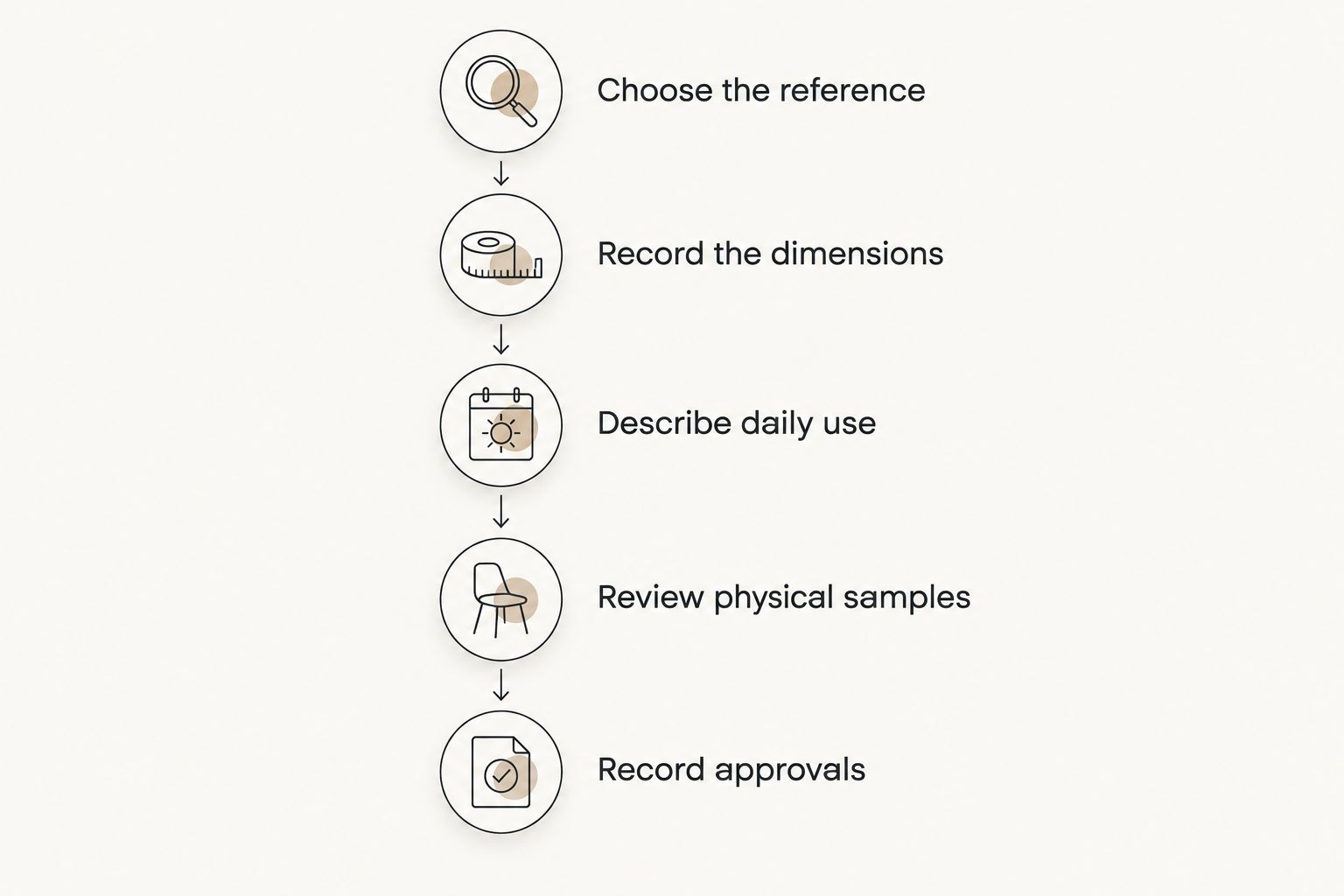
Use the following sequence to turn a visual preference into a clear custom-furniture request. You do not need finished construction drawings to describe your priorities, but you do need to distinguish requirements from ideas.
1. Choose the reference
Identify the object or room detail the new piece should relate to. Name the actual reference: the dining-room sideboard, painted wall trim, kitchen cabinetry, or an existing tabletop.
Avoid sending unrelated inspiration images without explaining each one. Mark which image shows the shape, which shows the finish, and which shows a detail you want omitted. A collection of attractive rooms is not yet a build brief.
2. Record the dimensions
Provide the proposed furniture dimensions and the available space, with units clearly stated. Include nearby door swings, seating, drawers, and circulation routes rather than measuring only the empty floor area.
Label your measurements as preliminary until the person responsible for final dimensions confirms them. For a fitted piece, discuss walls, baseboards, outlets, and adjacent cabinetry. A furniture silhouette can match beautifully and still be wrong for the room if those relationships are overlooked.
3. Describe daily use
Explain who uses the piece and what it must accommodate. A dining table, home-office work surface, display shelf, and storage cabinet have different functional requirements even when they share a finish.
List the objects that need to fit, including their relevant dimensions. For storage, describe what goes inside rather than requesting shelves without an intended use. For a table, discuss the existing chairs as well as the room.
4. Review physical samples
Ask how material and finish samples will be prepared, reviewed, and approved. Compare the proposed finish beside the actual reference in the intended room, under daylight and the lighting you normally use.
A phone photograph can communicate direction, but exposure, white balance, and screens alter color appearance. Use photographs to explain the brief; use an agreed physical reference to approve the finish.
5. Record approvals
Before fabrication, request a written record of the agreed dimensions, materials, finish reference, visible details, and installation responsibilities. Identify who approves changes if a designer, contractor, and homeowner are involved.
Keep the approved drawings and sample reference together in your 2026 project brief. If a material or detail changes later, confirm whether the appearance needs another review rather than treating the substitution as automatically equivalent.
Close matching: repeat a specific reference
Best for: a new piece that sits directly beside furniture you intend to keep. A close match can involve wood species, grain character, color, sheen, edge profiles, and visible proportions—not color alone.
The advantage is continuity. The limitation is that new wood and a new finish do not automatically reproduce an aged surface, even when the material names are the same. Ask the maker to explain what can be matched and which differences will remain.
If you are replacing part of an existing arrangement, establish the comparison area. A tabletop viewed beside another tabletop presents a different visual challenge from furniture placed across the room.
Coordinated design: repeat selected details
Best for: a room with several finishes or furniture styles. A coordinated piece can repeat the warmth of a wood tone, the simplicity of an edge, or the proportions of nearby cabinetry without becoming a replica.
This gives you room to improve function. A custom table can suit the available footprint while taking its visual cues from existing furniture rather than copying its dimensions.
The trade-off is interpretation. Specify the shared elements and the permitted differences, then use drawings and samples to check both. For a table project, the guide to commissioning a custom table for your Orlando home helps frame that request.
Deliberate contrast: make the difference intentional
Best for: a room where a near-match would look accidental. A contrasting painted surface or different wood tone can work when the piece still relates through shape, scale, or repeated details.
The benefit is a clear distinction between old and new. The limitation is that contrast does not solve every design conflict; an oversized piece or unrelated profile still needs attention.
Write down the connection you want to preserve. For example, you can request a different finish while keeping a similar edge shape or visual weight. That is more useful than asking for something that simply goes with everything.
Why matching custom furniture varies
The success of a match depends on the reference, the material, and the setting. Review these factors before approving a direction:
- Wood and grain: Different boards have different grain patterns. A shared species name does not establish an identical appearance.
- Existing surface condition: Wear, refinishing, and exposure affect the reference you are trying to match. Identify whether you want its present appearance or an earlier finish.
- Finish sheen: Color and reflectivity are separate decisions. Compare both instead of approving a color name alone.
- Room lighting: Daylight and interior lighting change how a finish appears. Review samples where the furniture will stand.
- Proportions and details: Leg shapes, edge profiles, reveals, and hardware contribute to visual continuity alongside color.
- Placement and use: A freestanding table and fitted shelving have different relationships to walls, trim, access, and daily activity.
What should your quote request include?
Send enough information for a maker to discuss scope, not just an image and a request to reproduce it. A useful 2026 inquiry includes:
- Project location: State the community, room, and whether the property is occupied during installation.
- Furniture purpose: Describe the piece and how you will use it.
- Dimensions: Include the available footprint, proposed size, and relevant existing furniture measurements, with units.
- References: Supply room photographs, close-ups, and any available material or finish identification.
- Match priorities: Separate requirements from preferences and identify acceptable differences.
- Drawings: Attach existing plans and identify which dimensions still need verification.
- Schedule: Give the intended completion date and any dependency on other work, without assuming a turnaround.
- Access and responsibilities: Describe stairs, doorways, delivery restrictions, transport, installation, and who coordinates each handoff.
JB Woodworks LLC is best suited to Orlando homeowners and project teams seeking custom furniture made for a specific space. The studio's verified work includes made-to-order tables, shelving and storage, cabinetry, and custom pool-table casework; confirm the proposed materials, matching approach, and installation scope before committing.
For nearby Central Florida projects, include the location at the start. Work farther away needs review of scope, travel, transport, and installation logistics rather than an assumption about service coverage.
Discuss your custom furniture brief
Share room photographs, dimensions, finish references, location, and installation requirements.
Can new wood match an older piece exactly?
An exact visual match is not guaranteed by choosing the same species or stain name. Natural grain, aging, surface preparation, and finish condition all affect the comparison.
Ask for an assessment against the actual piece and agree on acceptable variation. If exact replication is essential, establish that requirement before treating coordinated design as an acceptable alternative.
Do all the wood finishes in a room need to match?
No. A coordinated room can contain different wood finishes when the new piece has an intentional relationship to the existing décor.
Choose which qualities should repeat, such as tone, shape, or sheen. The more clearly you name those qualities, the less the maker has to infer from a general style label.
Can custom furniture coordinate with built-in cabinetry?
Yes. A freestanding piece can relate to built-in cabinetry through finish, profiles, proportions, or hardware without duplicating the cabinetry.
Check functional relationships as well as appearance. Doors and drawers need room to operate, and a new table or storage piece should not obstruct access to the existing installation.
FAQ
Can custom furniture match existing decor if I only have photos?
Photographs can establish the design direction, but they are not a reliable final color standard. Ask how physical samples will be compared with the existing décor before approving the finish.
Should I match my new table to the floor or the cabinets?
Choose the reference that matters most to the room rather than trying to match every surface. Explain which finishes will remain and whether the table should blend in or provide contrast.
Can I keep my existing chairs with a custom table?
Existing chairs can be part of the custom-table brief. Provide their dimensions and discuss seat position, arm clearance, and the relationship between the chairs and the proposed table base.
Is a stain name enough to match existing furniture?
A stain name alone is not enough to establish a visual match. The underlying wood, preparation, application, existing surface condition, and sheen affect the result.
Can custom shelving match painted trim?
Custom shelving can be designed to coordinate with painted trim through color, sheen, profiles, and proportions. Identify the trim reference and ask how the proposed finish will be reviewed beside it.
Who should approve custom furniture when a designer is involved?
Name the person responsible for each approval before fabrication. Record who confirms dimensions, appearance, changes, and installation arrangements so instructions do not conflict.
Does JB Woodworks LLC build custom furniture in Orlando?
JB Woodworks LLC builds custom furniture in Orlando, including made-to-order tables. Share the intended dimensions, room references, materials, location, and installation needs so the proposed scope can be reviewed.
One last thing
Before approving your 2026 furniture brief, photograph the chosen sample beside the reference piece—but retain the physical sample and its identification. The photograph records the comparison; it should not replace the approved reference.
Record what you are matching and what you are deliberately leaving different. That distinction gives the maker a clearer instruction than a request for an exact match to the whole room.