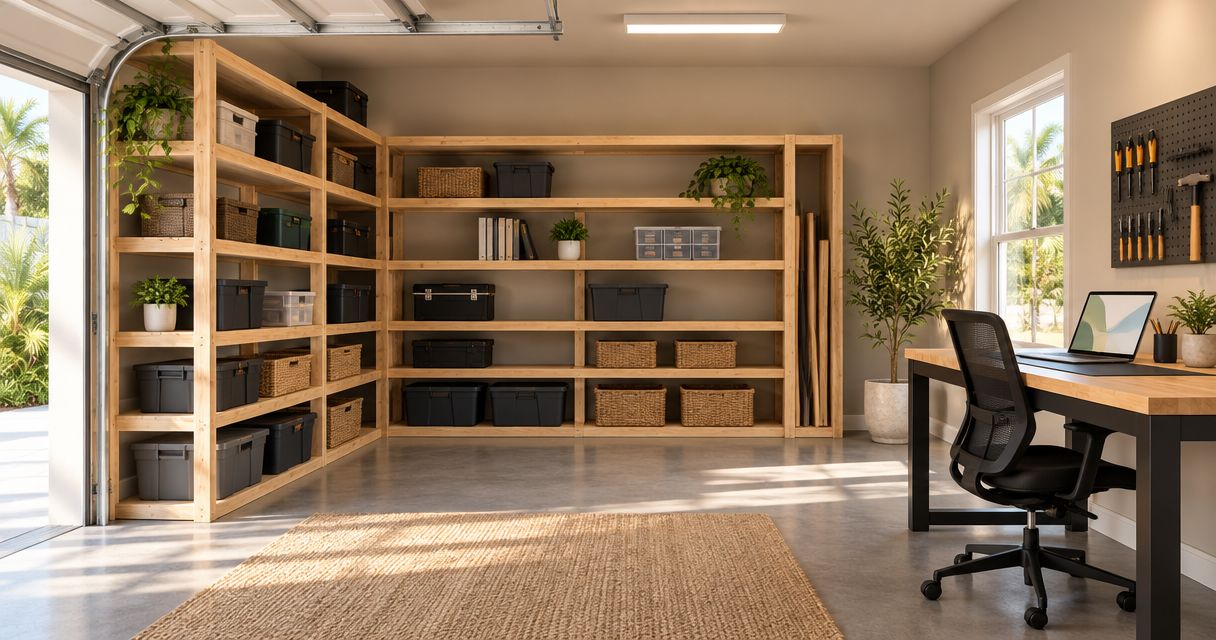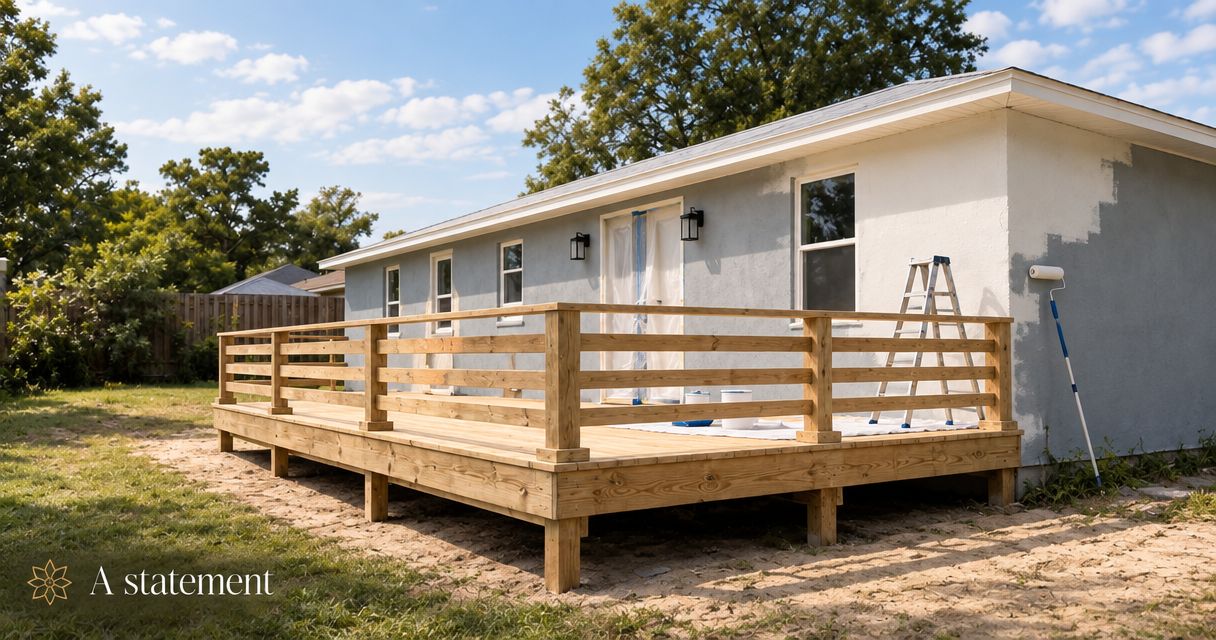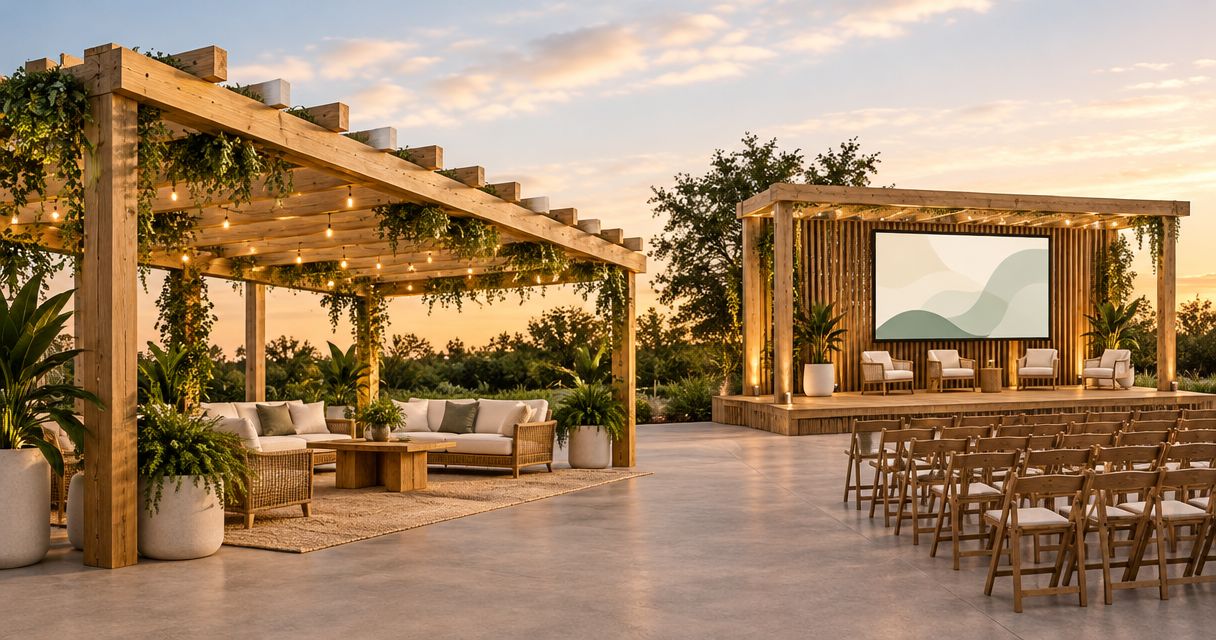
Yes, scenic fabrication pieces can be reused across multiple events when their construction, connections, finishes and packing plan support repeated handling. Reuse also requires storage, transport, inspection and a layout that fits the next venue; keeping a piece does not make it ready to install again.
- Can scenic fabrication be reused? Yes, when event displays are designed for dismantling, transport, storage and reassembly.
- Keep reusable structures separate from campaign graphics and other elements that change between events.
- Inspect connections, surfaces and supports before approving any scenic piece for another installation.
- JB Woodworks LLC builds custom scenic fabrication for Orlando brands and event teams; brief reuse requirements before fabrication.
Can scenic fabrication pieces be reused across multiple events?
Scenic fabrication is reusable when the next installation is part of the original brief, not an assumption made after strike. A display must survive removal, fit its transport route, remain protected in storage and assemble into a useful configuration at the next event.
Start with your event calendar. For a 2026 program, identify the venues and campaign changes already known, then separate those confirmed requirements from possibilities. Use the Orlando scenic fabrication briefing guide to organize dimensions, drawings, materials and installation responsibilities.
Different reuse approaches solve different problems. None eliminates the need to check the piece before its next appearance.
| Reuse approach | Best for | Main advantage | Main limitation |
|---|---|---|---|
| Reuse the complete assembly | Events with similar layouts and accessible transport routes | Preserves the assembled appearance | Storage volume and doorway clearance restrict where it can go |
| Reuse separate modules | Programs with changing footprints | Allows sections to be transported and arranged separately | Requires planned connections, identification and assembly instructions |
| Reuse the structure, replace the finish layer | Campaigns with changing graphics or colors | Keeps the underlying build while updating the visible treatment | Replacement work and surface preparation remain part of the scope |
| Reuse selected components | Existing builds that cannot be retained intact | Keeps suitable parts in use | Inspection and adaptation determine what is practical to retain |
Why this matters
Reuse changes the fabrication brief. A backdrop made only for its first appearance has a different job from a display that must come apart cleanly, travel and return with its edges and connections intact.
For agencies and event producers, the useful question is not simply whether something can be kept. Ask what must remain usable, who will look after it and what the next installation requires. Those answers shape the build before materials are committed.
Reusing complete scenic assemblies
Keeping an assembly intact avoids repeated disassembly at its internal joints. This approach suits a consistent display layout when you have a workable route between the event floor, transport vehicle and storage location.
The trade-off is bulk. A piece that fits its original venue can still be difficult to move through another venue's doors, corridors or loading area. Confirm the complete travel envelope, including protective packing and any protruding elements, rather than checking only the visible display dimensions.
For a 2026 event brief, distinguish the installed dimensions from the packed dimensions. Ask whether supports detach and whether removing them changes how the piece must be handled. Do not assume a finished assembly is suitable for lifting from whichever edge is easiest to reach.
Best for: repeated layouts with confirmed access and storage. Choose another approach when retaining the complete assembly creates an unresolved transport problem.
Reusing modular scenic pieces
Modular scenic fabrication divides a display into sections intended to connect and separate. It suits event programs where access routes, layouts or branding change between appearances.
The benefit is flexibility, but modules need more than dividing lines on a drawing. Specify connection locations, accessible fixing points, the order of assembly and a way to identify matching parts. Decide whether joints remain visible or need a removable finishing treatment.
Repeated assembly also makes inspection important. A connection that no longer aligns should be assessed rather than forced into place. Keep hardware and instructions with the relevant components so the next crew does not have to reconstruct the intended assembly method.
Best for: changing event footprints and planned dismantling. The limitation is coordination: modular construction still needs a clear packing and installation plan.
Reusing the structure with new graphics or finishes
A reusable scenic structure can support changing campaign treatments when the visible layer is designed to be removed or renewed. Describe which elements are permanent and which are expected to change before fabrication begins.
For example, distinguish the structural body from a removable graphic panel, decorative facing or painted finish. Ask how the new treatment will attach and what removing the previous treatment will leave behind. Adhesive residue, damaged edges and incompatible surface preparation complicate a refresh.
A new finish is not a structural repair. If a piece is distorted, loose or damaged, assess that condition separately before discussing appearance.
Best for: campaigns that change their message while retaining the same physical form. The limitation is refurbishment: replacing graphics does not remove the need for preparation, inspection and installation work.
Why scenic fabrication reuse varies
The practical life of a scenic piece depends on its condition and use, not a universal event count. Review these factors together:
- Construction and connections: Identify which joints are intended to separate and whether fixing points remain accessible after finishing.
- Materials and exposure: State whether each event is indoors or outdoors, including exposure during loading and storage. Previous indoor use does not establish outdoor suitability.
- Geometry and access: Compare the assembled and packed shapes with doors, corridors, loading routes and the receiving venue's layout.
- Surface treatment: Decide which surfaces must remain presentation-ready and which can be repaired or refinished between appearances.
- Handling and storage: Assign protection, packing, lifting and storage responsibilities. Exposed corners and unsupported projections need particular attention.
- Changes in use: Review new loads, attachments, public interaction or installation conditions before carrying the original design into a different setting.
For your 2026 schedule, record these requirements by event rather than assuming every venue has the same conditions. A familiar display in an unfamiliar installation still needs review.
How should you plan scenic fabrication for reuse?
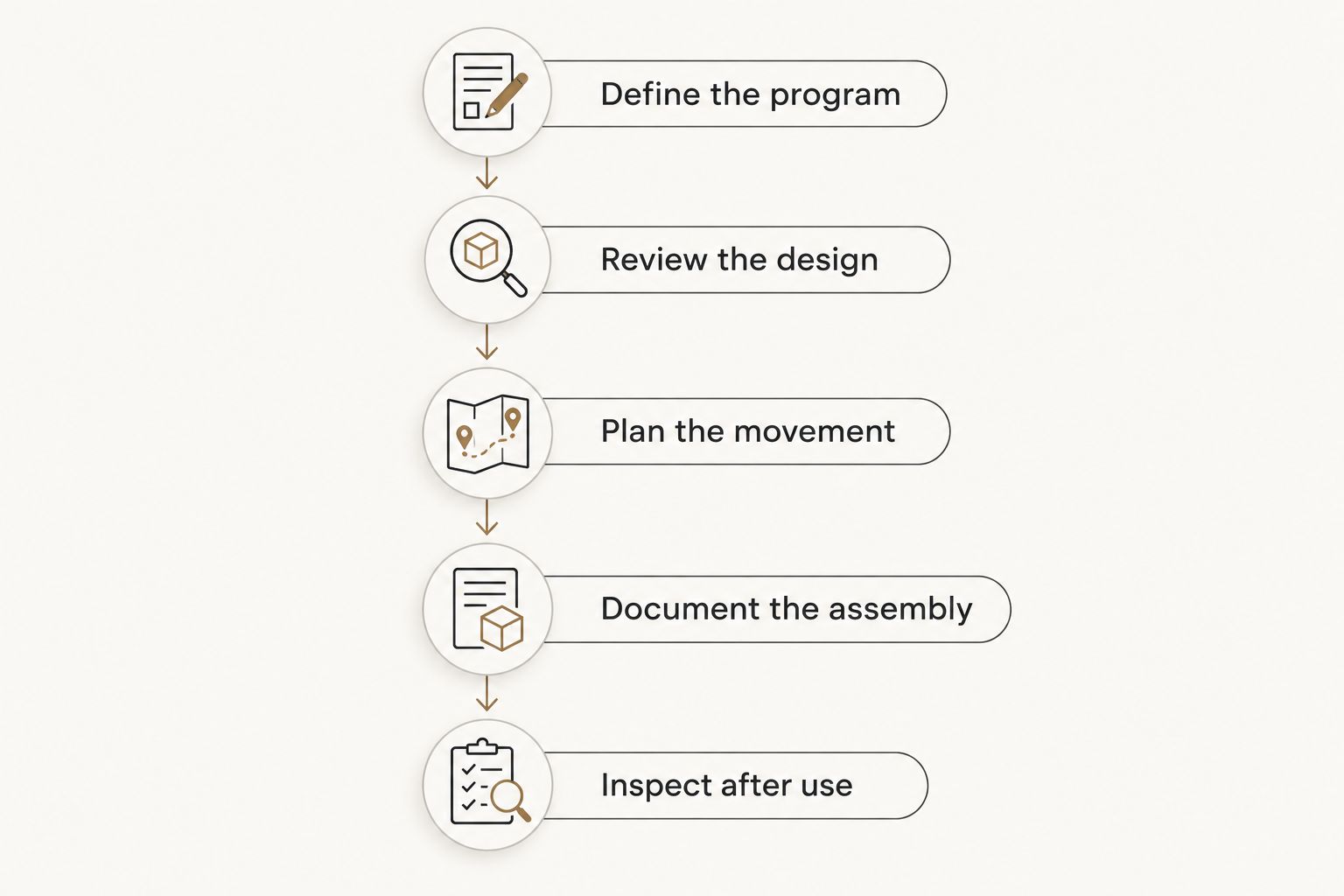
Use a written sequence that connects the event brief to what happens after strike. Reuse is an operating plan as well as a construction decision.
- Define the program. Describe the intended appearances, audience interaction, campaign changes and confirmed venues. Separate requirements from preferences.
- Review the design. Provide overall dimensions, drawings, materials under consideration and the parts expected to remain or change. Identify questions that require specialist review.
- Plan the movement. Check site access, packed dimensions, transport, handling arrangements and the route into storage. Assign responsibility for each handoff.
- Document the assembly. Agree on component identification, connection details, installation instructions and the record handed to the receiving team.
- Inspect after use. Record condition after strike, separate damaged components and identify repairs before authorizing the next installation.
Photographs help preserve the assembly record, particularly where components look alike. Pair them with written identification rather than relying on a crew member's memory. Keep the record with the stored pieces and give the next installation lead access before move-in.
What should your quote request include?
A useful scenic fabrication request describes the build and its expected reuse without asking the fabricator to guess the event program. Include drawings or reference images, distinguishing an appearance reference from an approved construction detail.
Provide the following information for your 2026 brief:
- Installed dimensions, venue layout and known access restrictions.
- Intended materials, finish expectations and surfaces the audience will see or touch.
- Components you expect to retain, replace or rearrange.
- Event deadlines, delivery windows, installation access and strike requirements.
- Storage arrangements, transport responsibilities and available handling equipment.
- Existing pieces, photographs of their condition and any assembly documentation.
- Responsibility for approvals, qualified trades, venue coordination and final acceptance.
JB Woodworks LLC is best suited to Orlando event teams seeking custom scenic fabrication made for a defined space and brief. The studio also builds commercial displays and physical environments for brands, agencies and event producers. Scope, materials, travel and installation logistics need review before commitments, including work beyond nearby Central Florida communities.
Custom fabrication gives you a project-specific scope; it does not establish that every transport, storage or refurbishment task is included. Ask for those responsibilities to be written into the proposal. You can introduce the project through JB Woodworks LLC with the available dimensions, drawings and event requirements.
Can an existing scenic piece be adapted for another event?
An existing scenic piece can be considered for adaptation after its condition, construction and next use are reviewed. Supply photographs of the front, back, supports and connections, not just the finished event image.
Explain what changes: the layout, graphic treatment, venue, public interaction or attached elements. A change that looks cosmetic in a rendering can affect access to connections or how the piece is supported.
Retaining only part of the build is also a valid outcome. Do not require complete reuse when damaged components or a substantially different brief make selective retention the more practical choice.
Does reusable scenic fabrication automatically reduce waste?
Reusable scenic fabrication reduces discarded material only when components actually return to use. Retaining an unsuitable piece indefinitely is storage, not a completed reuse plan.
Before approving a 2026 build, name the person responsible for its next-use decision. Give that person the condition record and the event requirements, so repair, adaptation or retirement is a deliberate choice rather than a last-minute discovery.
FAQ
Can scenic fabrication be reused if it was not designed to come apart?
Yes, but reuse depends on whether the intact assembly can be handled, transported, stored and installed appropriately. Review its construction before attempting disassembly; decorative seams do not establish removable joints.
What's the best scenic fabrication approach for changing event layouts?
Modular scenic fabrication is the strongest starting point for changing layouts because separate sections can be arranged to suit the brief. Confirm connections, stability, access and assembly requirements for each proposed configuration.
Can I reuse a backdrop with different branding?
Yes, when the backdrop's construction and surface treatment support replacement or refinishing. Check removal methods, surface condition and attachment details before committing to the next graphic treatment.
How many events can a scenic display last?
There is no universal event count for a scenic display. Its usable life depends on construction, handling, exposure, storage, repairs and the requirements of each new installation.
Can indoor scenic fabrication be reused outdoors?
Indoor scenic fabrication should not be assumed suitable for outdoor use. Materials, finishes, weather exposure, support conditions and applicable approval requirements need review for the proposed setting.
Who should handle storage and repairs between events?
Storage and repairs belong to the party identified in the project scope. Assign responsibility for packing, condition checks, repair authorization and delivery to the next venue before the first strike.
Does JB Woodworks LLC provide custom scenic fabrication in Orlando?
JB Woodworks LLC builds custom scenic fabrication and commercial displays for brands and event teams in Orlando. Reuse requirements, materials, deadlines, access, transport and installation responsibilities belong in the initial project brief.
One last thing
The next crew needs to understand the piece without having attended its first installation. Before packing, check that component identification remains visible, connection instructions are included and damage is recorded. That handoff turns a retained object into something a project team can assess and prepare for another event.