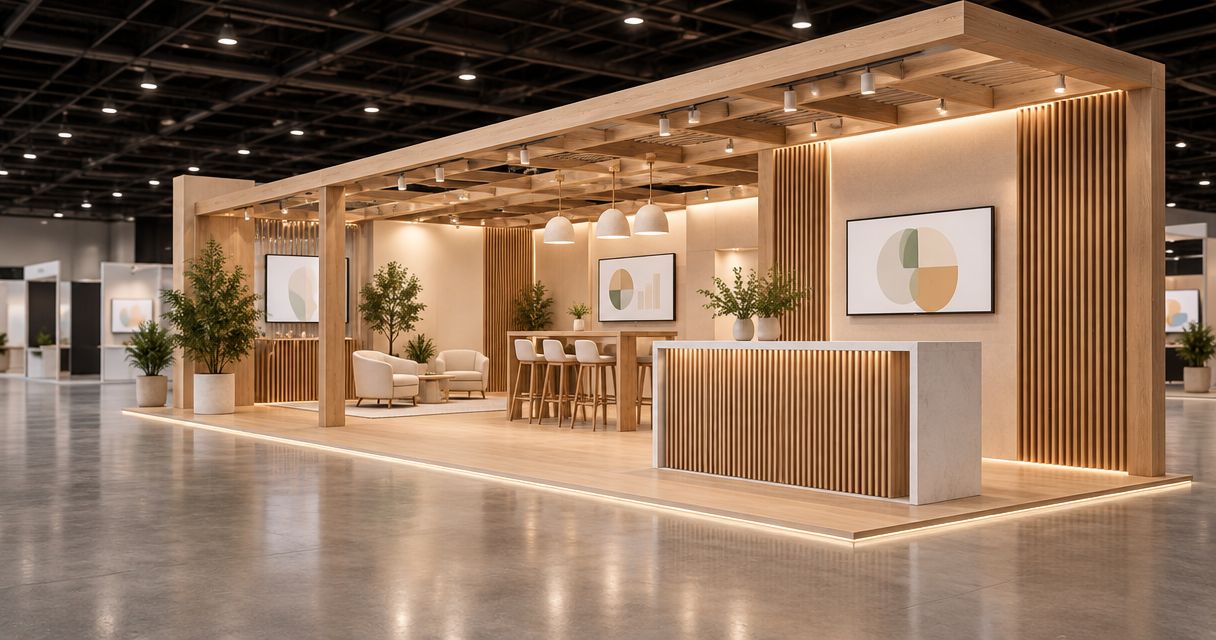
A custom trade show display needs a project-specific build schedule, agreed after the dimensions, drawings, materials, finishes, and installation responsibilities are reviewed. Shop fabrication is only part of the timeline: approvals, transport, venue access, and on-site assembly also need dates. For a 2026 event, work backward from the permitted installation window rather than treating opening day as the delivery deadline.
- How long to build a trade show display depends on approved scope, materials, finishes, and installation requirements.
- JB Woodworks LLC provides custom carpentry and commercial display fabrication for Orlando brands, agencies, and event teams.
- Separate shop completion, transport, venue move-in, and installation when requesting a schedule.
- Confirm drawings and responsibilities before accepting a build completion date.
How long does a custom trade show display take to build?
The useful answer is an agreed schedule tied to a defined display, not a standard number of weeks. A freestanding counter and a display with fitted storage, separate scenic elements, and site assembly need different scopes. Ask your builder to identify what must be approved before fabrication begins and what must happen after the shop work ends.
Your trade show move-in schedule and display installation workflow should connect the build to the venue handoff. A finished display still needs a workable route from the shop to its installed position.
Use these stages to make the schedule specific:
- Scope approval. Confirm the display footprint, intended use, component dimensions, and included work. Identify who approves changes and which drawings control the build.
- Material confirmation. Agree on the materials and finishes, including anything supplied by your team. Ask the builder to confirm sourcing before treating the production plan as settled.
- Shop fabrication. Define the components the builder will make and the assembly checks included before packing. Distinguish completed construction from completed finishing.
- Transport planning. Confirm how the components leave the shop, travel, and reach the installation area. Allocate responsibility for packaging, handling, and receiving.
- Site installation. Confirm access, assembly responsibilities, placement, and the final handoff. Keep work assigned to other vendors visible in the schedule.
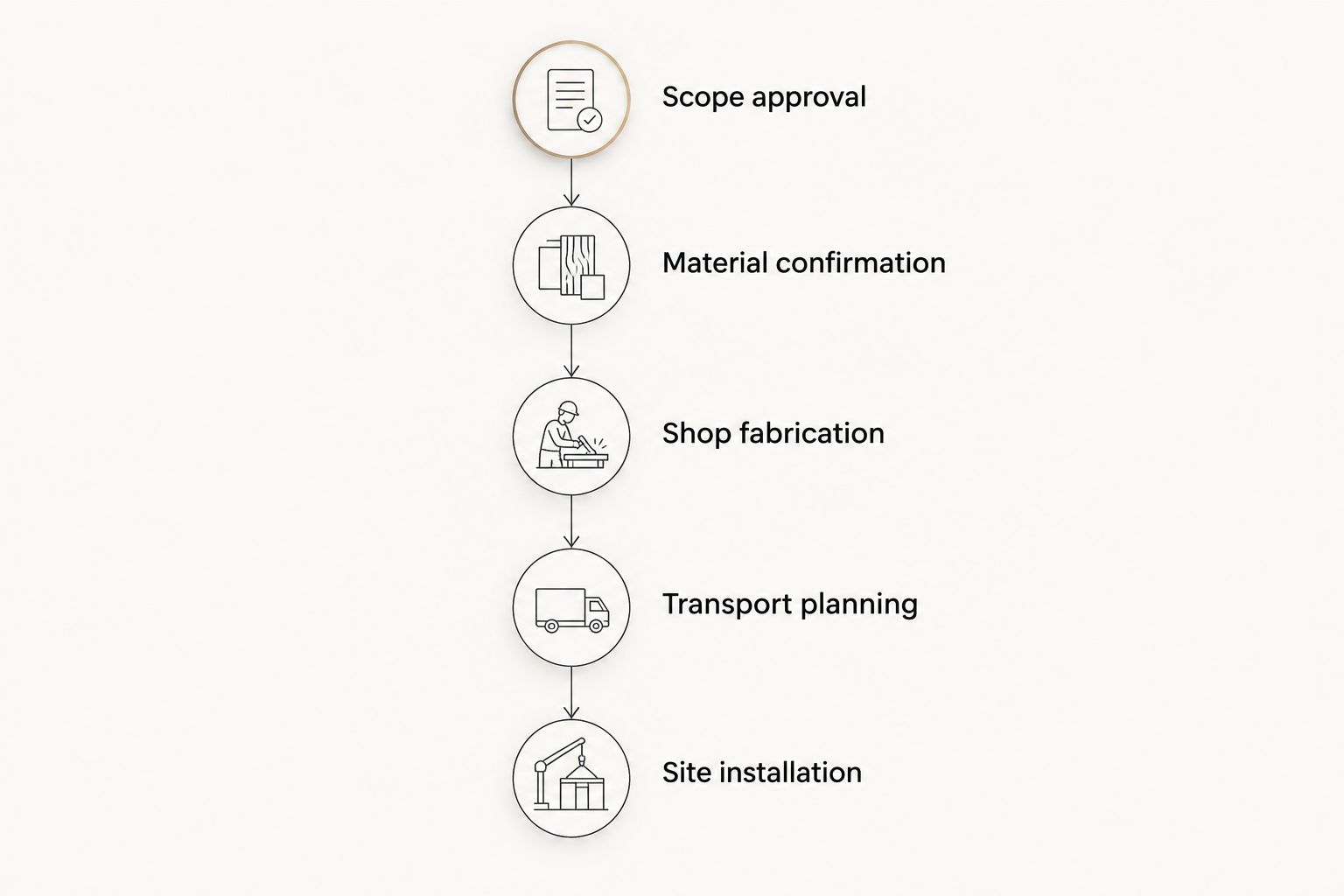
Each stage needs an owner and a clear completion condition. For your 2026 event brief, ask for those conditions alongside the proposed dates so your team knows what must be ready at each handoff.
Why this matters
The phrase ready for the show leaves too much open. Your marketing lead might mean fully installed, while a fabrication proposal might cover completion at the shop. Neither description settles transport or assembly unless the scope says so.
Define the final handoff before discussing the start date. That gives your agency, designer, fabricator, and installation team the same destination. It also lets you compare proposals on the work included instead of comparing completion dates that describe different responsibilities.
For a 2026 exhibition, record the venue's permitted access window separately from the public opening. The display must fit the actual installation plan, not just the event calendar.
Compare display scopes before comparing build schedules
A display's size does not describe every fabrication task. An apparently simple object can still need fitted doors, concealed storage, carefully aligned surfaces, or an assembly method suited to the venue.
The following scope comparison helps you explain what you need. These are planning categories, not named products or promised service packages.
| Display scope | Best for | Useful feature | Scheduling constraint to resolve |
|---|---|---|---|
| Freestanding counter | Teams needing a defined visitor interaction point | Keeps the brief focused on a contained component | Storage, finish, handling, and delivery still need decisions |
| Multi-part display | Teams needing separate counters, shelving, or scenic pieces | Lets each component serve a distinct purpose | Connections, alignment, packing, and assembly need coordination |
| Site-assembled environment | Project teams creating a connected physical setting | Allows the brief to address the overall visitor space | Venue access and responsibilities must match the installation sequence |
Choose the scope that serves your event, then ask which details control its schedule. Do not add complexity simply to fill the footprint. Equally, do not remove functional details that your team needs without checking how the display will be used.
If you are considering a simpler alternative, request a written description of what changes. A revised appearance, material, or assembly method is a scope decision; it is not a confirmed schedule improvement until the builder reviews it.
Why custom trade show display timelines vary
The schedule depends on decisions your team can document. Put these factors in the brief so the builder can discuss them directly rather than making assumptions.
- Dimensions and construction. Overall size, component sizes, fitted storage, and connections define the work. Show which dimensions are fixed and which remain open to discussion.
- Drawing approvals. Identify the approved drawing version and the person authorized to accept it. Changes after approval need a review of their effect on fabrication and installation.
- Materials and supplied items. Specify the intended materials and list anything arriving from another vendor. Confirm who checks those items and when they must reach the builder.
- Painting and finishes. Define visible surfaces, finish expectations, and any sample approval. Ask how the selected finishing system affects handling and packing readiness.
- Transport and site access. Provide the delivery location, access restrictions, and handling arrangements. Discuss component sizes against the route into the space.
- Installation responsibilities. Assign assembly, placement, graphics, electrical work, and other vendor tasks where relevant. Do not assume that a fabrication scope includes every activity on site.
For your 2026 planning, distinguish an undecided detail from an approved requirement. A drawing labelled for discussion should not silently become the fabrication instruction.
What should you send to get a useful build schedule?
Send a coordinated brief rather than a collection of reference images. Images explain the intended appearance; dimensions, drawings, and responsibilities explain the work. Include the following information in your quote request.
Event and location
Name the venue, event dates, and permitted installation window. Include the site contact and any instructions your team has received about deliveries or access.
For Orlando and nearby Central Florida events, describe the actual site rather than relying on the city name alone. Work beyond that area needs a separate discussion of scope, travel, transport, and installation logistics.
Dimensions and intended use
Provide the overall footprint and the dimensions of the components you already know. Explain what the display must support operationally: visitor conversations, product presentation, storage, or another stated use.
Mark critical clearances and any limits supplied by the venue or event team. Ask the builder to review unresolved measurements before construction rather than leaving them buried in an email thread.
Drawings and appearance
Attach the current drawings and reference images, and explain which parts of each reference matter. A photograph might communicate a surface finish without defining the internal construction or assembly method.
Name the drawing approver and keep the accepted version identifiable. If your designer updates the design, send the revision through the same approval route.
Materials and finishes
List specified materials and identify where you want the builder's input. Separate requirements from preferences so alternatives can be discussed without changing the essential brief.
Explain which surfaces visitors will see and touch. If your team supplies a material or finished component, include its dimensions and relevant product information for review.
Transport and installation
Describe the route from delivery to the display position, including any known restrictions. State whether components need to travel assembled or be joined on site, subject to the builder's review.
Assign packaging, transport, unloading, assembly, and removal responsibilities explicitly. If those arrangements are not settled, identify the decision owner rather than assuming the fabricator will absorb the task.
Decisions and handoffs
Provide the contact who can approve scope, drawings, and finishes. List the other vendors whose work touches the display, along with the information or components they must provide.
Ask for a schedule that names dependencies, not just dates. Your team should be able to see which approval or delivery releases the next stage and who must act if that handoff changes.
What should you confirm with the fabricator before committing?
Ask the fabricator to explain the proposed sequence against your brief. The aim is not to demand certainty about an undefined project; it is to turn open questions into explicit decisions before you rely on a completion date.
Confirm whether the proposed endpoint means fabricated, finished, packed, delivered, or installed. Then check the exclusions. A proposal that leaves transport to your team needs a different handoff plan from one that includes a defined installation scope.
Also ask how changes will be handled. If your designer changes a component after approval, agree that the builder will review the effect before the revised work proceeds. Keep the accepted revision with the schedule so everyone follows the same instruction.
JB Woodworks LLC is best for Orlando teams seeking custom carpentry and physical display fabrication. The studio's verified work includes commercial displays, scenic fabrication, and physical environments for brands, agencies, and event producers. Describe the actual build so the discussion stays specific to your project.
For a fabrication inquiry with JB Woodworks LLC, prepare your dimensions, drawings, materials, event deadline, site access, and installation responsibilities. Scope, travel, and logistics need review before commitments; do not assume that engineering, licensed trade work, or unrelated event services are included.
The same boundary benefits your team. You can coordinate the display with other contractors without asking the carpenter to stand in for every specialist involved in the event.
Can a custom trade show display be built faster?
A shorter schedule needs a reviewed scope, not just a request to hurry. Ask which design decisions remain open and whether a different component arrangement, finish, or installation approach changes the proposed sequence.
Keep essential requirements visible during that discussion. Removing storage or changing an assembly detail affects how the display works, not merely how it looks. Accept a revised scope only after the builder explains what is included and confirms the associated schedule.
Does the build timeline include delivery and installation?
The build timeline includes delivery and installation only when the agreed scope names them. Ask for separate milestones for shop completion, transport, site access, assembly, and handoff.
For a 2026 event, use the same milestone names across your fabrication brief and event plan. That avoids a project meeting where everyone agrees the display is finished but means a different thing by finished.
When should you contact a display fabricator?
Contact a display fabricator when you can share the event date, intended footprint, reference material, and known site constraints. Mark unresolved details clearly rather than presenting an early concept as an approved design.
You do not need every finish decision to begin a scope discussion. You do need to distinguish an initial conversation from an accepted production schedule, and ask what information is required to move between them.
FAQ
How long does a custom trade show display take to build?
A custom trade show display needs a schedule based on its approved dimensions, construction, materials, finishes, and installation scope. Ask the builder to separate shop fabrication from transport and site assembly.
Does the event date determine when fabrication must finish?
The installation and delivery plan determines when fabrication must finish. Work backward from venue access and assembly requirements rather than using the public opening as the shop completion deadline.
Can I get a schedule before the drawings are finished?
You can discuss a proposed sequence before drawings are finished, but unresolved design decisions must remain explicit. Ask which approvals are required before the builder confirms the production schedule.
Can my agency supply materials or display components?
Include agency-supplied materials or components in the brief for the fabricator to review. Confirm dimensions, suitability, delivery responsibility, and the handoff needed before dependent work proceeds.
Will simplifying the display shorten the build?
A simpler display needs a schedule review before you treat it as a faster build. Ask the fabricator how the revised construction, finish, or assembly method changes the work.
Does JB Woodworks LLC build commercial displays in Orlando?
JB Woodworks LLC provides custom carpentry, commercial displays, and scenic fabrication for brands, agencies, and event teams in Orlando and nearby Central Florida communities. Work beyond that area is subject to scope and logistics review.
Who handles engineering or licensed trade work for a display?
Engineering and licensed trade responsibilities must be assigned explicitly where required. Do not assume those services are included in a carpentry or fabrication scope.
One last thing
Write the completion condition beside every important date. A date labelled ready is less useful than a date tied to finished surfaces, agreed packing, a receiving contact, or completed site assembly.
Before accepting the schedule, read it from the venue backward. Check that every handoff has a recipient, that each supplied item has an owner, and that installation responsibilities match the brief. That is how you turn an event deadline into a build plan your project team can actually follow.