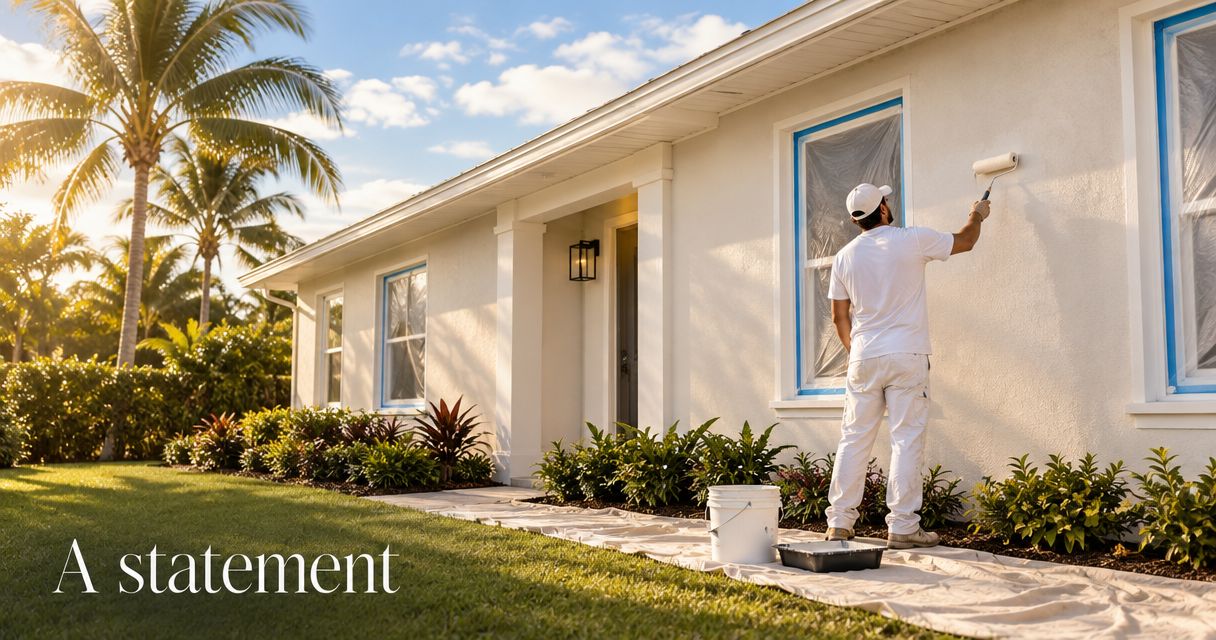
Exterior house painting in Florida takes as long as the preparation, surface drying, coating application, and weather-dependent waiting periods require; humidity alone does not establish a reliable completion date. For a 2026 project, ask for a site-specific schedule that separates working days from elapsed calendar time and follows the selected coating’s application, recoating, and rain-exposure instructions.
- Exterior house painting time Florida homeowners can plan around depends on surface condition, coating instructions, and usable weather windows.
- Dry to touch does not mean ready for another coat or exposure to rain.
- JB Woodworks LLC suits Orlando homeowners coordinating painting and finishes with custom carpentry.
- Ask for preparation, repairs, application, and weather holds to appear separately in your project scope.
How long does exterior house painting take in Florida humidity?
A dependable exterior painting schedule comes from the house and coating system, not a statewide day count. A sound surface ready for preparation presents a different job from peeling siding, damaged trim, or walls that remain damp after washing.
Use your Orlando painting and finish-work scope to establish what the completion estimate actually covers. Application is only part of the work. Protection, cleaning, drying, repairs, primer, finish coats, and inspection belong in the discussion.
| Schedule stage | What must happen | What controls the next step |
|---|---|---|
| Inspection and protection | Identify surfaces, defects, access needs, and areas to protect | Agreement on included work and site access |
| Cleaning and drying | Remove contamination and let the substrate dry | Surface condition and coating requirements |
| Repairs and preparation | Address agreed defects, loose coatings, and preparation needs | Repair extent and readiness of repair materials |
| Primer and finish coats | Apply the specified system | Product instructions and actual site conditions |
| Inspection and handover | Review coverage, details, cleanup, and care instructions | Completion of corrections and relevant drying requirements |
Ask the painter to identify which stages require attendance and which require waiting. That distinction explains why a crew’s working time and your home’s calendar disruption are not interchangeable.
Why this matters
A painting completion date affects more than appearance. You need to coordinate access, outdoor furniture, landscaping protection, and any carpentry that must happen before the coating work.
For your 2026 planning, distinguish application finished, ready for normal exposure, and fully cured. These are different milestones; the selected product’s instructions determine their meaning for your project.
A useful proposal explains the sequence and the conditions that stop work. A date without those conditions leaves you unable to judge whether the schedule protects the finish or simply assumes uninterrupted weather.
Why exterior painting time varies in Florida
Humidity matters, but it does not act alone. Discuss these factors before accepting a completion estimate:
- Surface moisture: Washing, rain, dew, and damp substrates affect when preparation or coating can proceed. Ask how readiness will be checked against the selected coating’s requirements.
- Coating requirements: Application conditions, recoat intervals, and rain-exposure restrictions differ by product. The schedule must follow the actual system selected, not a general rule about paint.
- Existing condition: Peeling coatings, deteriorated wood, failed joints, and contaminated surfaces change preparation needs. Define repair responsibilities before application starts.
- Temperature and exposure: Surface temperature, shade, direct sun, and airflow affect application and drying. Different elevations of the same house do not necessarily become ready together.
- Access and detailing: Height, landscaping, attached structures, trim profiles, and protection requirements affect the work sequence. Include these details in the initial brief.
- Weather interruptions: Rain and overnight moisture can change the next usable work window. A schedule needs a clear restart decision rather than an automatic return to painting.
Weather flexibility is a scheduling condition, not permission to skip preparation. If a proposal compresses the process after a delay, ask which tasks changed and why the coating instructions still support the revised sequence.
How should the painting sequence work?
For a 2026 exterior project, ask the contractor to describe the sequence below in the proposal. The exact preparation methods and coating system should match the substrate and its condition.
- Define the scope. List the elevations and surfaces included, along with exclusions. Identify siding, trim, doors, soffits, and other details separately rather than relying on the phrase whole exterior.
- Inspect and repair. Identify defects and establish who handles repairs. If concealed damage becomes visible during preparation, agree on how additional work receives approval.
- Clean and dry. Specify the cleaning approach and allow the substrate to reach the condition required by the coating manufacturer. Washing completion is not proof of painting readiness.
- Prepare and coat. Confirm preparation, primer requirements, finish products, application methods, and recoat conditions. Record the actual coating names before work begins.
- Inspect and hand over. Review coverage, edges, adjoining surfaces, corrections, and cleanup. Obtain the product-specific instructions for exposure, cleaning, and subsequent work.
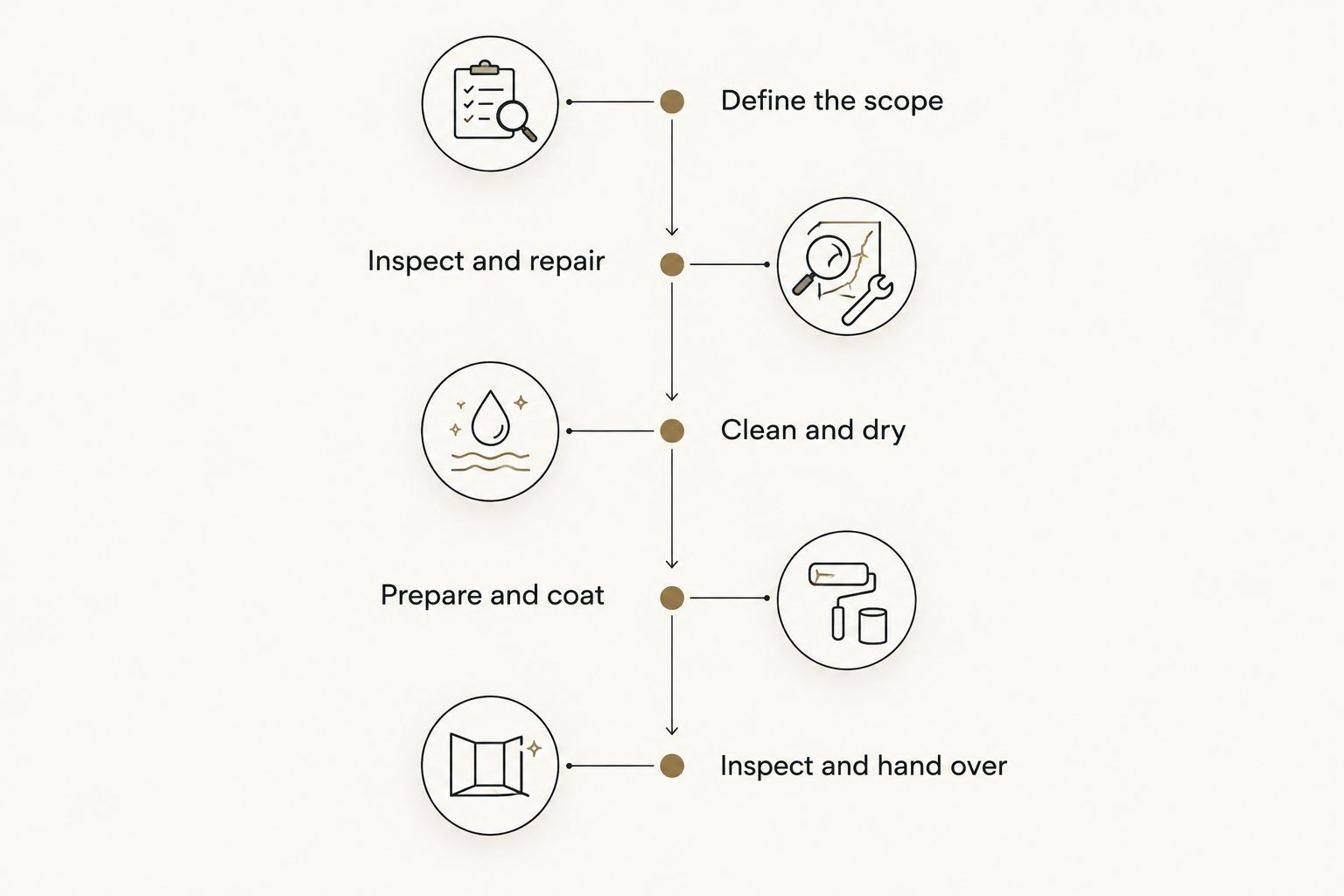
Each stage should have a clear release condition. For example, the next coat begins when the previous coat satisfies the product’s recoating requirements under the actual conditions—not merely because the crew has reached the next item on its schedule.
Drying, recoating, and curing are different milestones
Dry to touch is not a reliable instruction to recoat. A surface can feel dry while the coating still needs more time before another coat or a particular exposure.
The product label and technical data sheet distinguish these requirements. Ask the painter to explain which milestone controls each next step, including rain exposure and any work that touches the painted surface.
For water-based coatings, high humidity can slow water evaporation. That does not create a universal humidity delay you can add to every estimate; temperature, airflow, film thickness, and substrate conditions also matter.
Treat a 2026 completion estimate as a sequence with conditions attached. If someone gives you a drying interval without identifying the product or application conditions, ask for the basis before arranging follow-on work.
Can exterior painting continue when the air feels humid?
Exterior painting can proceed only when the selected coating’s application requirements and the surface conditions permit it. How the air feels is not an adequate readiness check.
Ask who checks ambient conditions and substrate readiness. A forecast supports planning, but the decision to apply belongs to conditions at the work surface.
Does rain mean the entire job must restart?
Rain does not automatically require restarting the entire job. Its effect depends on the coating, how far drying had progressed, the exposure, and the resulting surface condition.
After an interruption, ask what needs inspection, additional drying, preparation, or correction. Restarting should follow that assessment rather than an assumed waiting period.
Can painting start immediately after washing?
Painting should start after the washed surface meets the coating’s substrate requirements, not immediately because washing has finished. Shaded details and moisture-retaining areas need attention during that assessment.
Ask how surface dryness will be verified and whether the schedule includes a separate drying hold. Do not treat the end of cleaning as the beginning of guaranteed coating time.
How should you compare different project scopes?
Compare proposals by what they include before comparing completion dates. A short schedule for limited trim work does not establish a useful benchmark for an exterior with widespread preparation needs.
| Project scope | Best for | Scheduling advantage | Limitation to address |
|---|---|---|---|
| Limited exterior touch-up | Localized finish work on otherwise sound surfaces | Restricts the work area and protection needs | Color and sheen matching need review; underlying defects still require attention |
| Exterior repaint | A broader finish update on existing surfaces | Allows preparation and coating to be planned as a coordinated job | Access, substrate differences, and weather holds affect the sequence |
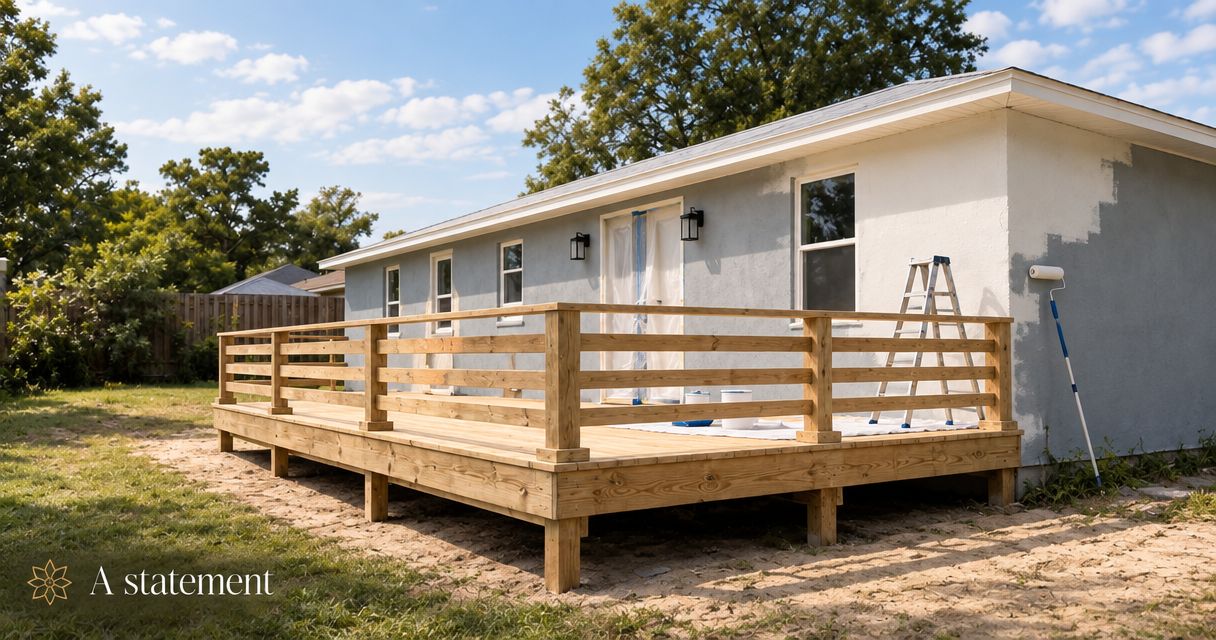
| Carpentry followed by painting | Projects involving trim or other wood repairs | Establishes a repair-to-finish handoff | Repairs and material readiness must be resolved before coating |
None of these scopes guarantees a particular duration. The practical comparison is whether each proposal includes the same preparation, repairs, surfaces, and handover requirements.
Ask contractors to distinguish included repairs from allowances or separately approved work. Otherwise, an apparently shorter proposal can simply describe less work.
What should you send with a painting quote request?
A useful brief gives the contractor enough information to plan an inspection and identify scheduling constraints. It does not require you to diagnose the coating failure yourself.
Include:
- Property location and access: Provide the Orlando or Central Florida location, entry arrangements, parking constraints, and areas that must remain usable.
- Photographs and surfaces: Show each elevation, close-ups of peeling or staining, and any affected trim. Identify the surfaces you want included.
- Known finish information: Share previous coating names or records if available. Do not assume the existing finish is compatible with a proposed replacement.
- Repair concerns: Flag soft wood, open joints, recurring dampness, or other visible defects. Ask who evaluates and addresses them before painting.
- Protection needs: Identify planting, furniture, fixtures, adjacent finishes, and neighboring areas requiring care.
- Coordination requirements: Explain other planned work, your preferred project window, and any access deadlines. Separate preferences from dates that cannot move.
For coordinated carpentry and finish work, JB Woodworks LLC serves Orlando homeowners, contractors, designers, and project teams. Scope, materials, travel, and installation logistics belong in the discussion before commitments.
JB Woodworks LLC is best for Orlando homeowners coordinating painting and finishes with custom carpentry. Its verified service range makes that a relevant starting point when wood repairs and finishing need a shared brief; confirm the specific exterior painting scope rather than assuming every surface or repair is included.
Discuss your finish-work scope
Bring surface photos, repair concerns, site access details, and your preferred project window.
What should the written schedule confirm?
Before accepting a 2026 schedule, ask for a start window, the expected work sequence, and the conditions attached to completion. Keep those conditions alongside the date rather than buried in a separate conversation.
Confirm who decides whether weather permits application, who communicates interruptions, and how revised dates reach everyone involved. If carpentry, landscaping, or other trades overlap, identify who coordinates access and protects completed work.
Ask what happens when preparation exposes additional damage. The approval process should explain how the scope and schedule change before extra work proceeds.
Finally, define handover. You should know whether the final visit includes corrections and cleanup, what exposure restrictions remain, and where to find the coating information for later maintenance.
FAQ
How many days should I allow for exterior house painting in Florida?
Allow the site-specific duration established after inspection and coating selection, rather than a statewide day count. Ask for working days, drying holds, and weather-dependent calendar time to be identified separately.
Does Florida humidity make exterior paint dry more slowly?
High humidity can slow water evaporation from water-based coatings. The selected product, temperature, airflow, film thickness, and substrate conditions determine the actual drying and recoating requirements.
Can a painter promise an exact finish date during rainy weather?
A responsible finish date includes weather conditions and a process for updating the schedule. Ask what happens after rain, which surfaces require reassessment, and who communicates the revised sequence.
Can the next coat go on as soon as the first feels dry?
The next coat should follow the product’s recoat instructions, not touch alone. A dry-feeling surface does not establish readiness for another coat or rain exposure.
Should damaged exterior trim be repaired before painting?
Damaged exterior trim should be assessed and the repair scope resolved before finish application. Confirm who performs the repair, how additional findings receive approval, and when the repaired surface is ready for coating.
What should I ask an Orlando painting contractor about humidity?
Ask how the contractor checks application conditions, surface readiness, recoat requirements, and the available rain-free window. Request answers tied to the actual coating system and your property.
Can JB Woodworks LLC discuss painting alongside carpentry?
JB Woodworks LLC offers painting and finishes alongside custom carpentry. Bring photographs, repair concerns, dimensions where relevant, and access details so the specific scope and coordination requirements can be reviewed.
One last thing
Ask which surface controls the finish date. The broad wall area is not necessarily the deciding factor; a shaded repair, detailed trim section, or unresolved moisture issue can control when the remaining work proceeds.
Have the contractor identify that constraint during inspection. You will get a more useful schedule by understanding what must become ready than by asking only how quickly the paint can go on.