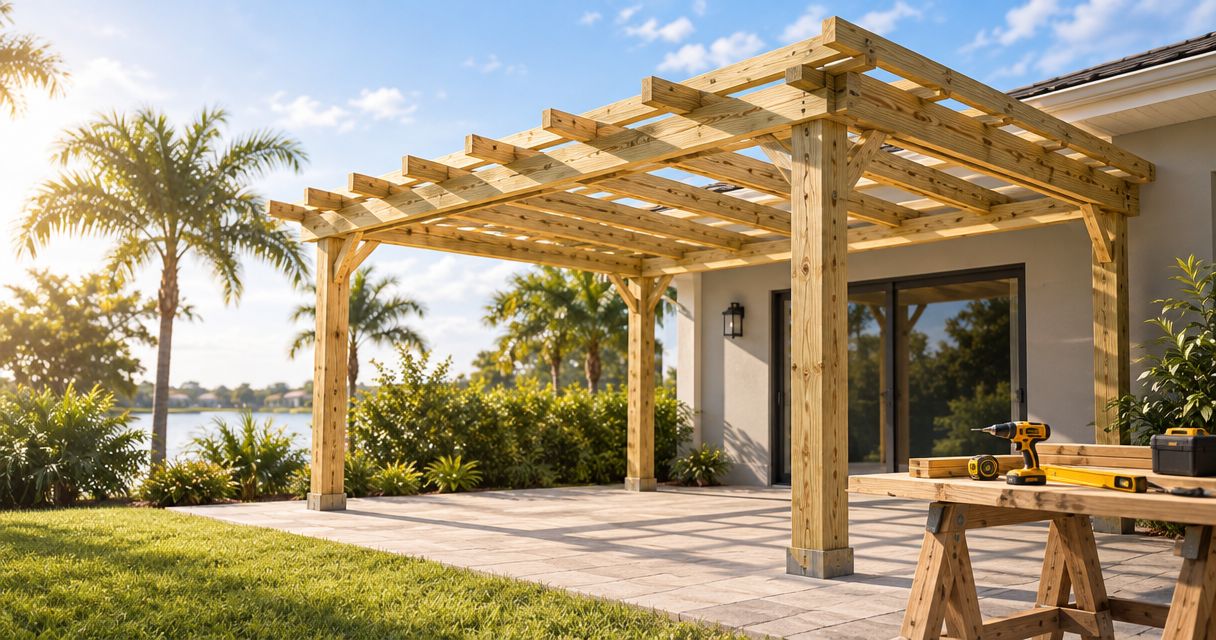
The time to build a timber pergola in Orlando depends on the agreed design, approval requirements, materials, site preparation, and installation scope—not just the time spent assembling timber. For a reliable completion date in 2026, ask for a project-specific schedule that separates those stages and states what must happen before installation begins.
- How long to build a timber pergola depends on approvals, timber selection, site readiness, and installation scope.
- For Orlando pergola planning, distinguish the overall project schedule from the on-site installation window.
- JB Woodworks LLC builds custom timber pergolas; discuss dimensions, materials, access, and responsibilities before setting dates.
- Treat your preferred completion date as a planning requirement, not an agreed commitment.
How long does it take to build a timber pergola in Orlando?
A useful pergola timeline starts with scope approval and ends with the agreed handover—not simply the last timber being fitted. Ask your builder to identify the work included in each stage, the decisions needed from you, and the conditions attached to proposed dates.
For custom timber pergola work, JB Woodworks LLC serves homeowners, contractors, designers, and project teams in Orlando and nearby Central Florida communities. Review the proposed project on its own terms: dimensions, materials, site conditions, and installation responsibilities determine what needs scheduling.
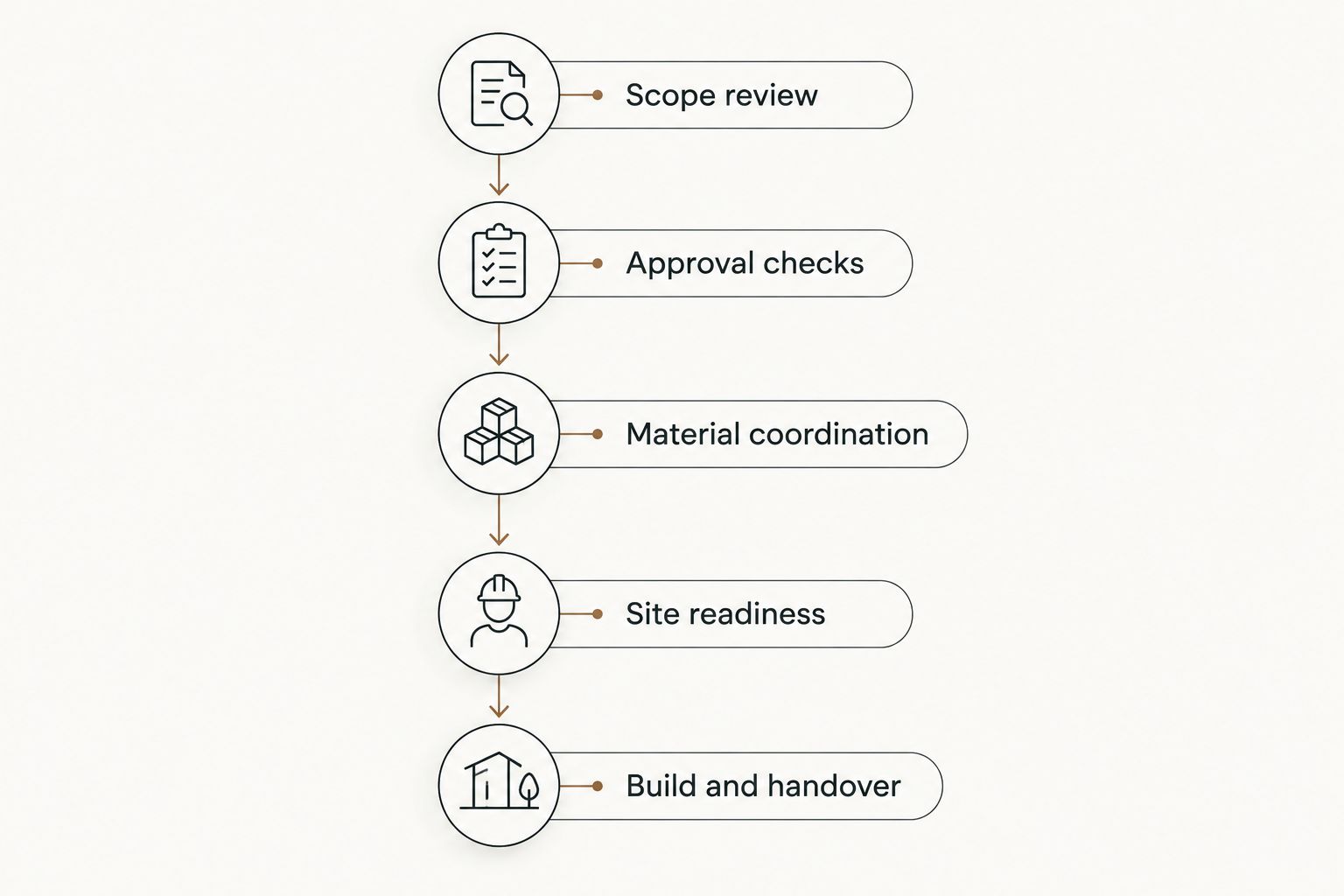
Use this breakdown when discussing a 2026 project:
| Project stage | What needs to be resolved | Scheduling question to ask |
|---|---|---|
| Scope review | Dimensions, intended use, layout, and included work | What decisions are needed before the proposal is settled? |
| Approval checks | Applicable property, association, and local requirements | Who confirms requirements and manages any submissions? |
| Material coordination | Timber specification, hardware, and finish | What must be confirmed before fabrication is scheduled? |
| Site readiness | Access, work area, and required preparatory work | What must be complete before installation starts? |
| Build and handover | Fabrication, transport, installation, finishing, and review | What does the proposed completion date actually include? |
These stages are planning checkpoints, not promised durations. Some work can overlap; other work depends on a prior decision or approval. Ask the builder to identify that sequence rather than adding isolated estimates together yourself.
Why this matters
An installation window and a complete project schedule answer different questions. The first tells you when activity is expected at your property; the second explains how the project gets ready for that activity and when the agreed scope is finished.
That distinction matters when a pergola shares a site with a deck, landscaping, exterior painting, or other contractor work. A pergola crew needs a defined work area and an agreed sequence, not simply an open date on your calendar.
For a 2026 outdoor project, describe the date you want to use the space and the reason behind it. A family gathering, contractor handoff, or commercial opening gives the team a clear planning requirement, but the date still needs review against the actual scope.
Build the schedule around these checkpoints
1. Scope review
Start with the pergola's purpose and its relationship to the property. Explain where you want shade, which walking routes must remain clear, and whether the structure will stand independently or connect to an existing building.
Supply overall dimensions if you have them, but distinguish preliminary measurements from dimensions ready for construction. Photographs should show the proposed footprint, nearby walls, ground conditions, and the route from the unloading area to the work area.
Settle the main design decisions before treating a completion date as agreed. Changes to the footprint, height, timber appearance, or connection details need to be reviewed against materials and installation planning.
A written scope also prevents different assumptions about who handles adjacent work. The guide to defining a custom carpentry scope in Orlando helps you organize those boundaries before requesting a schedule.
2. Approval checks
Confirm which requirements apply to the specific property and proposed structure. Start with the relevant local authority and, where applicable, the homeowners association; do not assume that a neighbor's project establishes the requirements for yours.
Ask who will investigate requirements, prepare any necessary information, submit documents, and respond to questions. Approval work needs a named owner even when someone else coordinates the overall project.
Where engineering or another qualified trade is required, identify that responsibility separately. Do not assume a carpentry proposal includes engineering, permit administration, electrical work, or other licensed services unless the written scope expressly includes them through the appropriate provider.
3. Material coordination
Describe the timber appearance you want, then ask for the actual specification to be recorded. Reference images communicate an intention, but they do not replace decisions about timber, member sizes, hardware, and finish.
Material coordination also includes the division between workshop preparation and work at the property. Ask which parts will arrive prepared and which operations are expected on site, without assuming a particular fabrication method.
If you want to supply materials yourself, raise that before the schedule is agreed. Confirm who checks suitability, quantities, condition, and delivery arrangements, and how unresolved material issues affect the proposed sequence.
4. Site readiness
Identify anything that must happen before the pergola installation can start. That includes clearing the work area, resolving required preparatory work, and agreeing how the team will enter, unload, and move materials.
Access is more specific than a street address. Share gate widths, steps, changes in level, parking restrictions, overhead obstructions, and any surfaces or planting that need protection; let the builder assess the implications.
When another contractor prepares the site, define what a ready site means and who confirms it. A calendar date alone does not establish that the required handoff has occurred.
5. Build and handover
Ask the proposal to distinguish fabrication, transport, installation, and any included finishing. Those activities do not necessarily happen in the same place or within a single uninterrupted site visit.
Define completion in practical terms: the agreed carpentry is finished, included finishing is addressed, and the site is handed back according to the scope. Identify whether inspections or other sign-offs apply and who coordinates them.
For JB Woodworks LLC timber pergola projects, review scope, materials, travel, and installation logistics before commitments. Work beyond Orlando and nearby Central Florida communities needs its own scope and logistics discussion.
Why timber pergola timelines vary
A pergola schedule reflects decisions and dependencies, not just the amount of timber involved. Use these factors to understand what the proposed dates assume:
- Design and dimensions: A settled footprint, layout, and connection approach give the builder a defined scope. Revisions require another review of the affected work.
- Approval requirements: Property-specific reviews or submissions belong in the overall schedule, with responsibility clearly assigned.
- Materials and finishes: The timber specification, hardware, finish, and supply responsibilities need confirmation before the related work is scheduled.
- Site preparation and access: Existing conditions, unloading arrangements, and work by others determine what must be ready for installation.
- Coordination and handover: Other contractors, transport arrangements, included finishing, and required sign-offs shape the sequence through completion.
For your 2026 brief, separate firm requirements from preferences. A required clear walkway is different from a preferred decorative detail, and the builder needs to know which decisions remain open.
Do not choose a pergola proposal on its completion date alone. Compare what that date includes, what it assumes, and which responsibilities remain with you or another contractor.
What should you send with a pergola timeline request?
Send enough information for the builder to understand both the structure and the site. A useful brief lets the team identify questions early instead of discovering them when installation is being arranged.
Include:
- Project location: The address and any association or property-management requirements you already know about.
- Intended use: Seating, dining, a garden feature, or another clearly described purpose.
- Dimensions and layout: Approximate footprint, desired height, and photographs showing the surrounding space.
- Material direction: Your timber and finish preferences, with reference images where helpful.
- Existing conditions: The ground or surface beneath the proposed pergola and any known constraints.
- Access information: Gates, steps, unloading space, parking restrictions, and occupied areas that must stay usable.
- Coordination contacts: The homeowner, designer, general contractor, or other person authorized to make decisions.
- Target completion: Your preferred date, its significance, and any flexibility.
Label unknown details as questions rather than filling them with assumptions. For example, ask how the proposed structure's support requirements will be established instead of stating that an existing surface is suitable.
JB Woodworks LLC is a fit for Orlando homeowners and project teams seeking a custom timber pergola made for a specific space. Custom work still requires design decisions and coordination; it is not a substitute for confirming approvals, site readiness, or qualified-trade responsibilities.
How should you compare proposed pergola schedules?
Ask each builder to describe the start point and finish point of the schedule. A date measured from a settled scope is not directly comparable with a date measured from the first site visit.
Next, check the assumptions. Look for named responsibilities for approvals, preparatory work, materials, access, finishing, and handover. An attractive completion date provides little guidance if the proposal leaves those items unresolved.
Finally, ask how changes will be communicated. Your 2026 project schedule should identify a point of contact and explain how a revised design, site condition, or third-party handoff gets reviewed before dates are reconfirmed.
A clear schedule does not remove uncertainty. It makes the dependencies visible so you can make informed decisions and coordinate the people involved.
Does the pergola installation date include approvals and finishing?
The installation date only includes approvals and finishing if the agreed schedule says it does. Ask for separate milestones covering required reviews, site readiness, installation, and any included finishing or sign-offs.
Avoid using an installation start date as the date your outdoor space will be ready for use. Confirm the handover conditions and any applicable product or trade instructions before planning around completion.
Can a pergola be scheduled alongside a deck or patio project?
A pergola can be planned alongside adjacent work when the responsibilities and construction sequence are defined. Ask the teams to review access, support requirements, finished levels, and which work must be completed first.
Keep the scopes distinct even when the projects share a site. Deck work, patio preparation, pergola carpentry, and electrical work should not become implied inclusions in a single informal conversation.
FAQ
How long does it take to build a timber pergola in Orlando?
A timber pergola needs a project-specific schedule covering design decisions, applicable approvals, materials, site preparation, installation, and handover. Ask for the overall timeline and the on-site installation window separately.
Can I get a completion date before choosing the timber?
Treat a completion date given before the timber specification is settled as a planning date, not a final commitment. Confirm materials, hardware, finish, and supply responsibilities before agreeing the related schedule.
Do I need HOA approval before building a pergola?
Check your property's association requirements before authorizing construction. Ask what information is required and who will prepare and submit it; do not assume every Orlando property follows the same process.
Does a pergola quote include permits and engineering?
A pergola quote includes permits or engineering only when the written scope expressly identifies those services and responsibilities. Confirm any required qualified providers rather than assuming carpentry includes their work.
What should I measure before asking for a pergola quote?
Provide the approximate footprint, desired height, nearby obstructions, and access constraints. Mark your measurements as preliminary and include photographs so the builder can identify what needs verification.
Can I plan a gathering around the proposed completion date?
Plan around an agreed handover date rather than the first installation date. Explain the gathering deadline early and confirm what remains conditional before making arrangements that depend on the pergola being finished.
What happens if another contractor is preparing the pergola site?
Define the preparatory work and have the teams agree what constitutes a ready site. Assign responsibility for confirming that handoff before installation is scheduled.
One last thing
Ask this before accepting the schedule: What must be true for this completion date to hold? The answer should name the decisions, approvals, material confirmations, and site conditions behind it.
Then put those conditions beside the date in your project notes. A short list of agreed responsibilities is more useful than a confident date with no explanation.