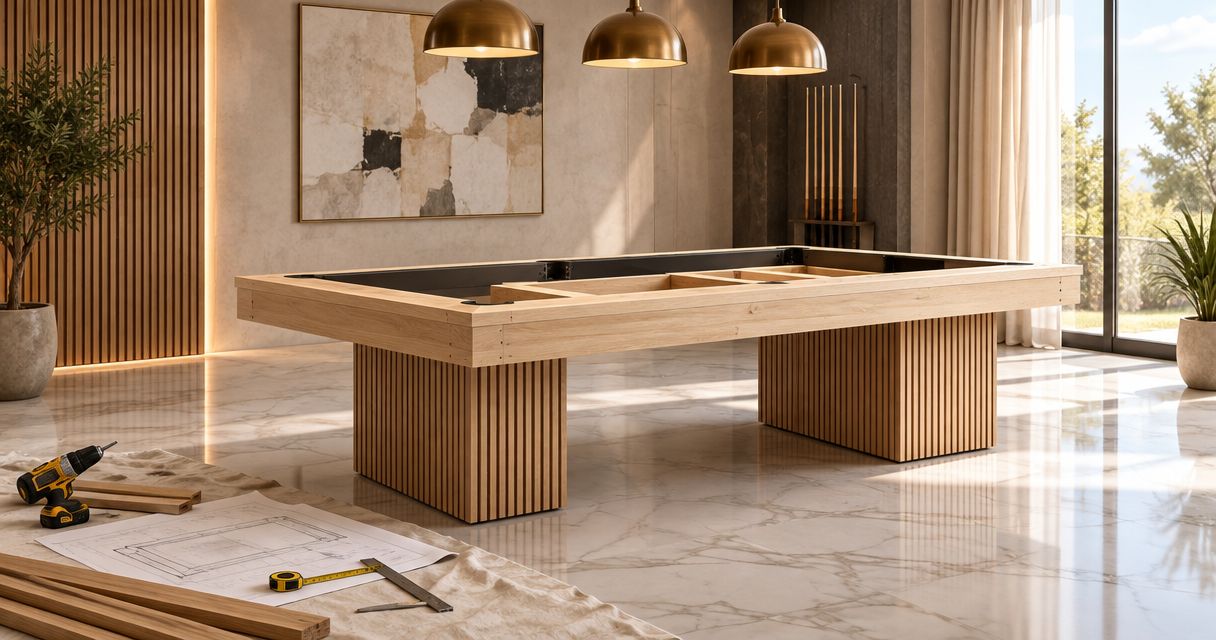
Custom pool-table casework needs a project-specific schedule covering approved drawings, materials, fabrication, finishing, delivery, and installation—not just workshop time. The completion date also depends on who handles the playing components and final table setup, so confirm those responsibilities before accepting a schedule for your 2026 project.
- For how long to build pool table casework, request a schedule from drawing approval through installation—not fabrication alone.
- JB Woodworks LLC builds custom pool-table casework; review scope, materials, transport, and installation before commitments.
- Separate decorative casework from playing components and final setup when assigning responsibilities.
- Approve dimensions and finish details before fabrication, and identify every decision that controls the completion date.
How long does it take to build custom pool-table casework?
The useful answer is an agreed completion date tied to a defined scope, not a generic number of weeks. Ask your fabricator to distinguish the total project period from the time spent making the casework. An estimate that starts only after drawings and materials are approved does not describe the entire commissioning process.
Start with what to specify for custom pool-table casework. A clear brief gives your fabricator something concrete to schedule: dimensions, construction boundaries, finish requirements, access conditions, and installation responsibilities.
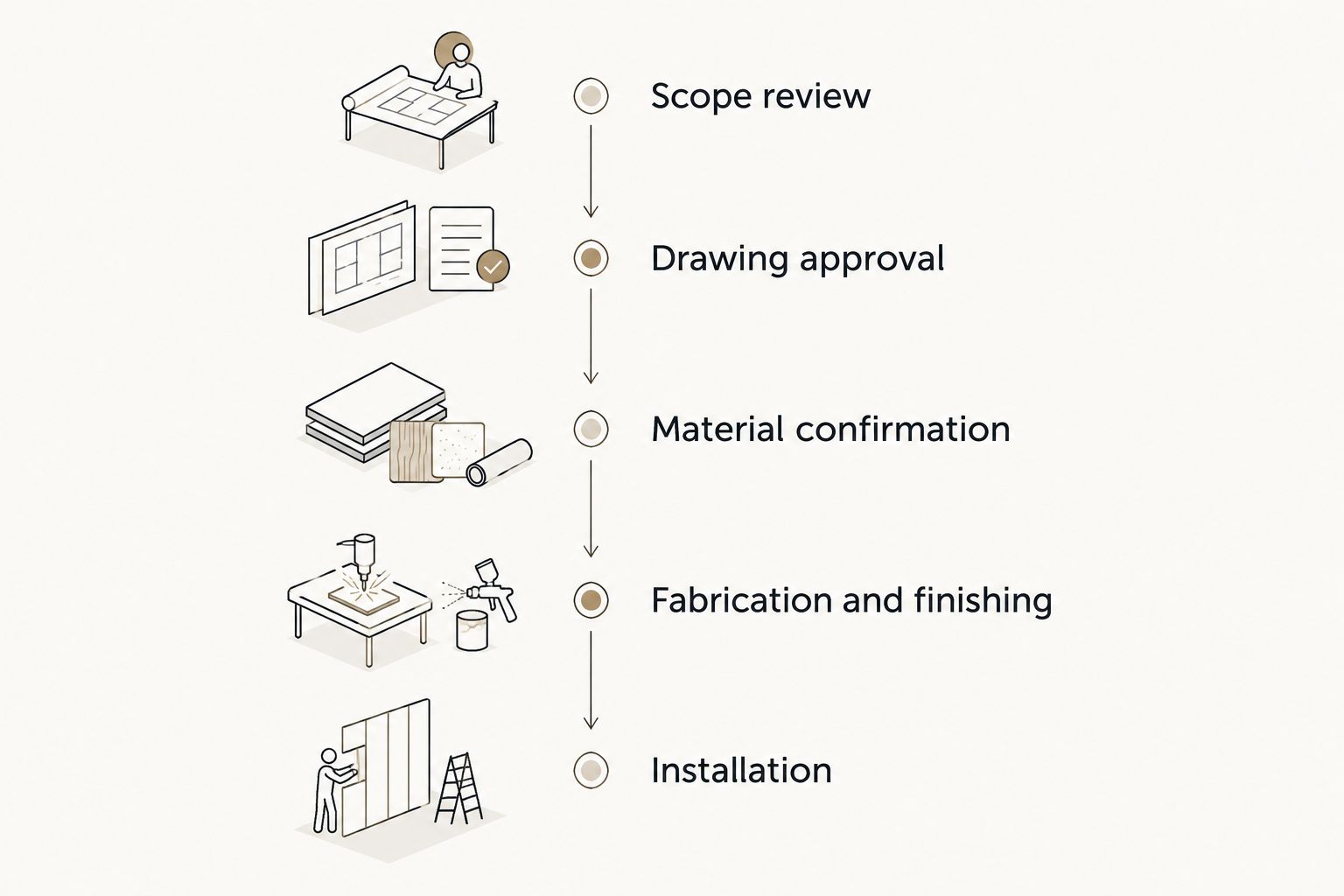
Use these steps to turn an initial timing question into a workable plan:
- Scope review: Identify exactly which wooden components the commission includes and which table components sit outside it.
- Drawing approval: Confirm dimensions, interfaces, visible details, and the person authorized to approve them.
- Material confirmation: Agree on the material specification and establish how procurement affects the proposed start.
- Fabrication: Schedule construction against the approved information, with a process for handling changes.
- Finishing: Include preparation, finish application, and the handling requirements of the specified coating.
- Installation: Coordinate transport, room readiness, placement, and any separate table-setup work.
Ask for a start condition and a completion condition at each step. That makes the schedule useful even before calendar dates are confirmed.
Why this matters
A finished wooden surround and a pool table ready for play are different handover points. If your proposal promises only casework delivery, do not treat that date as confirmation that the complete table will be installed, assembled, and ready to use.
For a 2026 renovation, connect the casework schedule to the room schedule. Flooring, decorating, delivery access, and other contractors can affect when installation belongs in the sequence. Your project team should agree on those dependencies before reserving the room for a final handover.
The same discipline applies whether you are a homeowner commissioning a game room or a designer coordinating several suppliers. Define what “complete” means before discussing when it happens.
Turn the brief into an agreed schedule
A useful schedule records decisions as well as tasks. It should show what needs approval, who provides it, and what work can begin once that approval is given.
Scope review
Describe whether the request concerns a new casework assembly, changes around existing table components, or a coordinated furniture commission. Include photographs and identify anything you intend to keep. Do not assume that a visual reference communicates the construction scope.
List the boundaries explicitly: visible woodwork, supporting elements if included, removable panels, finish work, delivery, and installation. Ask the fabricator to confirm those boundaries rather than treating every item on your wish list as accepted work.
Drawing approval
Provide the relevant table information and room measurements, then agree on how final dimensions will be verified. Mark drawings with a revision reference so everyone knows which version controls fabrication.
Choose a single approval contact for the client side. Designers, homeowners, contractors, and table specialists can all contribute, but conflicting instructions need resolution before they reach the workshop.
Material confirmation
Confirm the proposed wood or sheet material, the visible appearance, and the finish specification. If matching existing furniture matters, provide a physical reference or an agreed sample rather than relying only on a photograph.
Ask which selections need confirmation before procurement or cutting. Keep substitutions subject to approval; a replacement material should not silently change the appearance or construction described in the brief.
Fabrication and finishing
Ask how the proposed schedule separates construction from finishing. Cutting and assembly do not cover every activity needed before the casework can be handled, transported, and installed.
For your 2026 project plan, record the finish product or system once selected and follow its technical instructions. Do not substitute a general drying-time assumption for the requirements of the actual coating.
Installation
Confirm the route from the delivery vehicle to the final room, including doors, stairs, turns, and any building restrictions. Identify who checks access and who prepares the space.
Record whether the agreed endpoint is delivery, installed casework, or a later handoff to another specialist. That distinction belongs in the written scope, not in a conversation after the work arrives.
Why the pool-table casework timeline varies
The schedule changes when the work, information, or installation conditions change. Ask your fabricator to connect each timing allowance to a specific requirement rather than giving you an unexplained completion window.
- Design definition: Unresolved dimensions, proportions, and details leave decisions open that the construction drawings need to settle.
- Interfaces with table components: The casework must be planned around the components it meets. Identify who supplies and verifies that information.
- Materials and finish: Material selection, sample approval, procurement, and the specified coating all belong in the schedule discussion.
- Changes after approval: Revised dimensions or details require review before the agreed drawings and sequence can be updated.
- Transport and site access: Delivery routes, room access, building rules, and installation arrangements affect the handover plan.
- Other project responsibilities: Room preparation and separately assigned table work need named owners and coordinated dates.
These are planning questions, not reasons to accept an open-ended commitment. Ask which items are resolved, which remain conditional, and when the unresolved items need decisions.
What should a written timeline include?
A written timeline should make its assumptions visible. For a 2026 commission, ask for milestone dates or clearly stated conditions wherever a date still depends on an approval or outside task.
| Schedule milestone | What to confirm | Boundary to record |
|---|---|---|
| Drawings approved | Final revision and approval contact | Whether later changes require rescheduling |
| Materials confirmed | Agreed specification and procurement responsibility | Whether supplied materials require review |
| Fabrication starts | Approved information needed to begin | Whether this date includes finishing work |
| Casework ready | Inspection and finish requirements | Whether ready means ready for collection or delivery |
| Installation complete | Access, room readiness, and installation scope | Whether separate table setup remains |
Avoid treating a workshop completion date as a delivery appointment. They describe different events, and the plan should connect them explicitly.
Ask how updates will be communicated if an assumption changes. A useful update identifies the affected milestone, the decision needed, and the revised sequence—not simply that the project is delayed.
How can you help keep the agreed schedule intact?
Make decisions against the approved scope, not against a growing collection of reference images. Collect inspiration before approval, then resolve it into a single set of instructions. A new image sent during fabrication needs a clear explanation of whether it is a question or a requested change.
Confirm the room and table information early. If another supplier holds a critical drawing, arrange for that information to reach the fabricator before approval rather than assuming the teams will fill in each other's details.
Keep access information equally specific. Photographs of the entry route, stairs, and final room help frame the discussion, but they do not replace any measurements or site checks the fabricator requests.
If your deadline is fixed, state both the date and the reason at the initial inquiry. Let the fabricator assess the proposed scope against that requirement before you make dependent arrangements. Do not treat an inquiry as a production booking.
Can simpler casework be scheduled sooner?
Simpler casework has fewer design details to resolve, but that alone does not establish an earlier completion date. Materials, the agreed work sequence, finishing, and installation still need review.
If timing is the priority, ask which details are essential and which can be omitted without compromising the agreed function or appearance. Resolve that question before drawing approval. Removing a detail after fabrication begins is a different decision from leaving it out of the original scope.
Does finishing count toward the build time?
Finishing belongs in the total casework schedule, even when a fabricator describes construction and finishing separately. Ask when the specified finish permits the next planned handling, transport, or installation step.
A surface that looks finished is not, by itself, a scheduling instruction. Use the selected coating's requirements and the fabricator's agreed process to define readiness.
Is delivery the same as having a playable pool table?
Delivery is not the same as having a playable pool table. Your written scope must identify who installs the casework and who handles any separate playing components, assembly, or final setup.
Do not assign specialist work by implication. Ask the responsible providers to confirm the sequence and their own scope, including any qualified trade requirements relevant to the project.
Prepare a useful casework inquiry
JB Woodworks LLC is a fit for Orlando homeowners and designers commissioning custom pool-table casework. The studio's custom carpentry and fabrication work includes this service; the particular design, materials, travel, and installation arrangements need review before commitments.
Your 2026 inquiry should contain enough detail to discuss the whole project rather than only its appearance. Send:
- The project address or general location and the room's current condition.
- Photographs, available drawings, and relevant table-component information.
- Intended dimensions, noting which are preliminary and which have been verified.
- Material and finish preferences, including any existing furniture to match.
- Your required completion date and the event or construction milestone behind it.
- Delivery access details and the proposed division of installation responsibilities.
You can begin that conversation through JB Woodworks LLC. For work beyond Orlando and nearby Central Florida communities, include the location immediately so scope, travel, transport, and installation logistics can be reviewed together.
Custom work gives you control over the casework brief, but it also requires decisions and coordination. The service is appropriate when you need work made for a particular space; it is not a substitute for confirming a project-specific schedule.
FAQ
How long does custom pool-table casework take from inquiry to installation?
Custom pool-table casework needs a project-specific schedule from scope review through installation. Ask whether the proposed timeline includes drawing approval, materials, finishing, transport, and any separate table-setup work.
When does the casework build schedule actually start?
The schedule starts from the condition stated in the agreement, not automatically from your first inquiry. Confirm which approvals and material decisions must be complete before fabrication begins.
Can I get a completion date before approving drawings?
You can request a proposed completion date before drawing approval, but the agreement should state what that date depends on. Ask which decisions must be resolved before the date becomes a commitment.
Will changing the finish affect my installation date?
A finish change needs a schedule review before it is accepted. Confirm whether it changes material procurement, sample approval, preparation, application, or handling requirements.
Does custom pool-table casework include final table setup?
Custom pool-table casework does not establish responsibility for final table setup by itself. The written scope should name the provider responsible for each part of installation and handover.
What should I send JB Woodworks LLC for a pool-table casework inquiry?
Send JB Woodworks LLC your location, photographs, available drawings, intended dimensions, material preferences, access details, and required completion date. Identify existing table components and any separately appointed installation providers.
One last thing
Ask for two distinct handover milestones: casework complete and table ready for use. Even if they ultimately happen together, naming them separately exposes gaps in responsibility before delivery day.
Put the owner of each milestone beside it. That small addition makes your completion date far more useful than a workshop estimate alone.