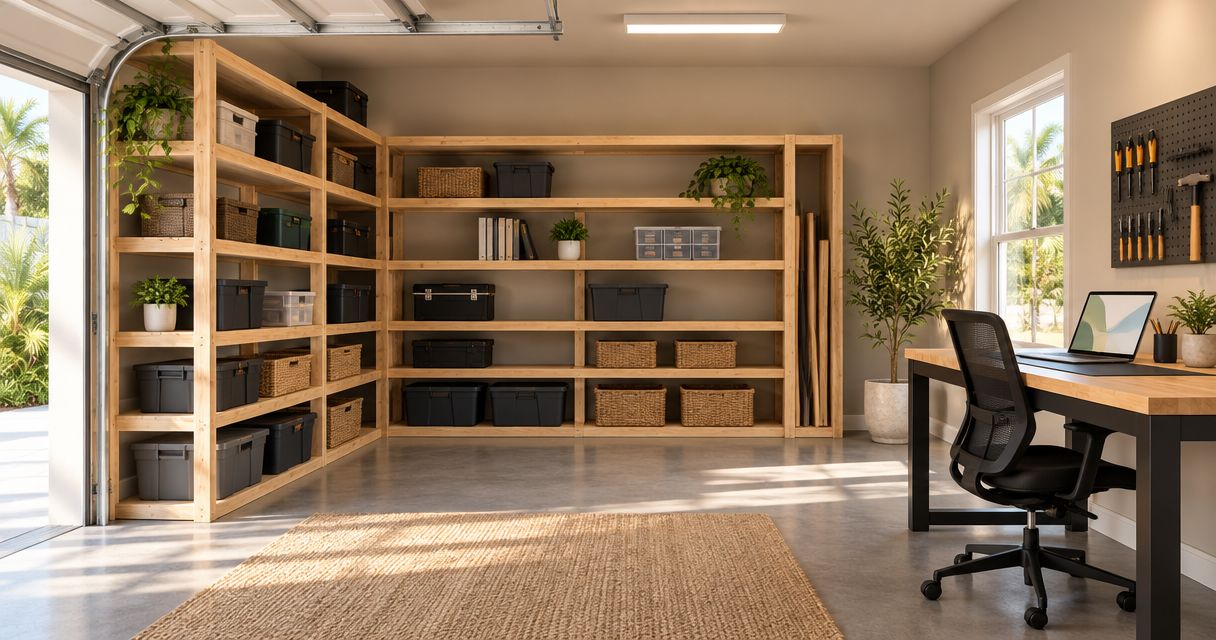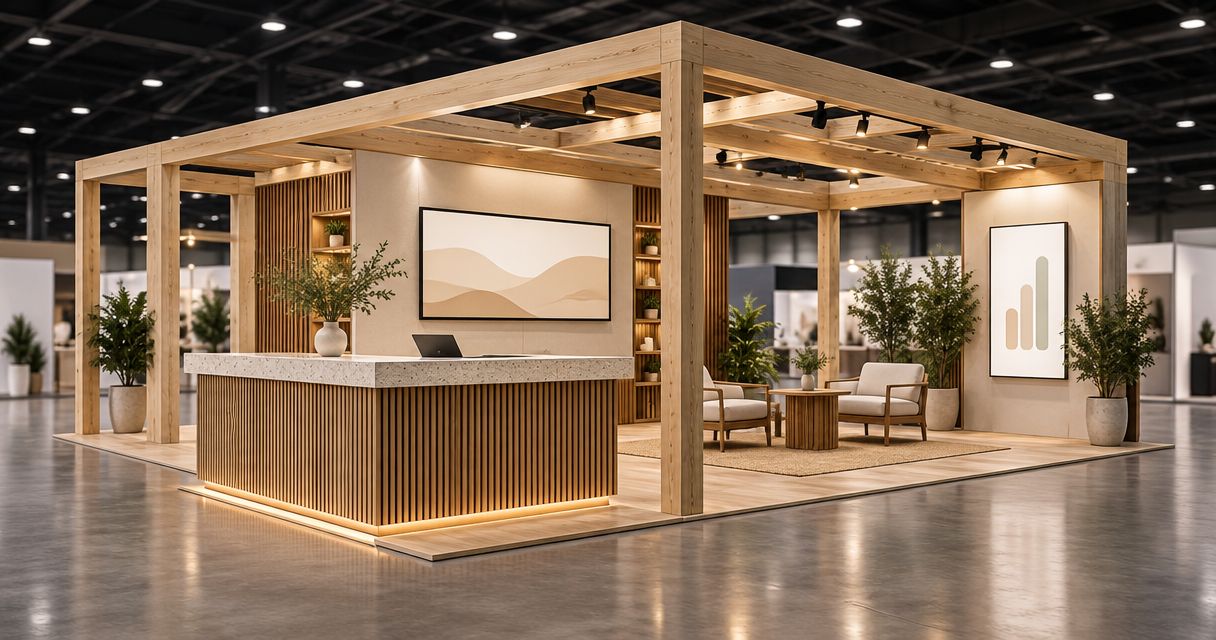
Custom trade show display cost depends on the dimensions, materials, finish, drawings, fabrication scope, and installation arrangements for your exhibit. A fabrication quote does not establish your full event budget unless transport, site access, installation, and other responsibilities are explicitly included. For a 2026 project, compare written scopes before comparing totals, so you know what each proposal actually delivers.
- Compare custom trade show display cost against the same drawings, materials, finishes, and installation scope.
- JB Woodworks LLC builds custom commercial displays; Orlando project teams should brief fabrication and site logistics together.
- Separate display fabrication from transport, installation, event services, and post-show handling in your exhibit budget.
- Resolve dimensions, access restrictions, deadlines, and responsibilities before approving a display build.
Why this matters
A display is both a finished object and something your team must get into an event space. A proposal that describes the object but leaves delivery and assembly undefined is not a complete basis for a buying decision.
Start with a scenic fabrication brief for an Orlando event. Give each builder the same information, then ask each to identify inclusions, exclusions, and decisions still awaiting approval. The useful comparison is the same finished scope, delivered to the same handoff point.
How much do custom trade show displays cost?
Your custom trade show display cost comes from a project-specific proposal, not from the phrase “custom display” alone. A reception counter, a product presentation wall, and a complete scenic environment describe different fabrication scopes, even when they belong to the same exhibit.
For your 2026 budget, request a breakdown that distinguishes shop work from event delivery. The following categories give you a clear basis for reviewing proposals without assuming that every service belongs to the fabricator.
| Budget category | What the proposal should define | What to clarify separately |
|---|---|---|
| Drawings and approvals | Drawing responsibilities, dimensions, revisions, and approval requirements | Who supplies final artwork and checks venue requirements |
| Materials and fabrication | Components, substrates, construction details, and assembly method | Supplied materials and items purchased by others |
| Painting and finishes | Visible surfaces, finish references, edges, and sample approvals | Graphics application and touch-up responsibilities |
| Packing and transport | Packing approach, collection point, destination, and handling responsibilities | Venue receiving and movement inside the building |
| Installation | Assembly tasks, access requirements, tools, and handoff condition | Venue-appointed labor and qualified trade work |
| Post-show handling | Disassembly, collection, packing, and destination | Storage, repairs, disposal, and future reuse |
Do not treat an unlisted task as an included task. Ask for a written answer, particularly when the exhibit passes between an agency, fabricator, carrier, venue, and installation team.
Fabrication-only scope
Best for: project teams that already have transport and installation arrangements. A fabrication-only brief should identify exactly what leaves the workshop and its condition at collection. State whether components leave assembled, separated into sections, or ready for further finishing by another supplier.
The benefit is a clear boundary around the build. The limitation is equally important: your team must coordinate everything outside that boundary, including checking that the finished pieces can reach their final position.
Fabrication with installation coordination
Best for: project teams that need the build and site handoff considered together. Ask the proposed builder to review installation responsibilities, site access, and the event schedule before agreeing to the scope. Do not assume that fabrication automatically includes transport, venue handling, or on-site labor.
Coordinating these details early helps expose gaps between suppliers. It also requires more information before a proposal can be treated as settled, particularly when venue instructions or access arrangements remain outstanding.
| Scope approach | Main advantage | Main limitation | Best for |
|---|---|---|---|
| Fabrication-only | Clear workshop deliverables | Your team coordinates onward handling and installation | Teams with established event suppliers |
| Fabrication with installation coordination | Build decisions account for the site handoff | Responsibilities still need explicit agreement | Teams managing connected fabrication and event tasks |
Why custom trade show display cost varies
The main drivers are the decisions that change what gets built, how it is finished, and how it reaches the exhibit space. Use these factors to explain your priorities rather than asking a builder to guess them.
- Dimensions and configuration: Provide the overall footprint, height, component dimensions, and arrangement. Identify openings, shelves, counters, concealed storage, and anything visitors will touch or use.
- Materials: State required materials and distinguish them from preferences. Ask the fabricator to explain proposed substitutions against the intended use, appearance, and handling needs.
- Finish scope: Identify visible faces, exposed edges, interior surfaces, and finish references. A front-facing photograph does not explain how the back or inside should look.
- Drawings and approvals: Establish who supplies drawings, who resolves construction details, and who approves changes. Separate confirmed information from ideas still under discussion.
- Deadlines and access: Supply the event date alongside receiving, installation, and removal instructions. Include restrictions affecting the route from delivery point to display position.
- Transport and responsibilities: Define packing, loading, transport, assembly, disassembly, and the next destination. Name the party responsible for each handoff.
In a 2026 request for proposals, label each unresolved item clearly. A pending finish selection is different from an approved finish, and an approximate layout is different from a drawing released for fabrication.
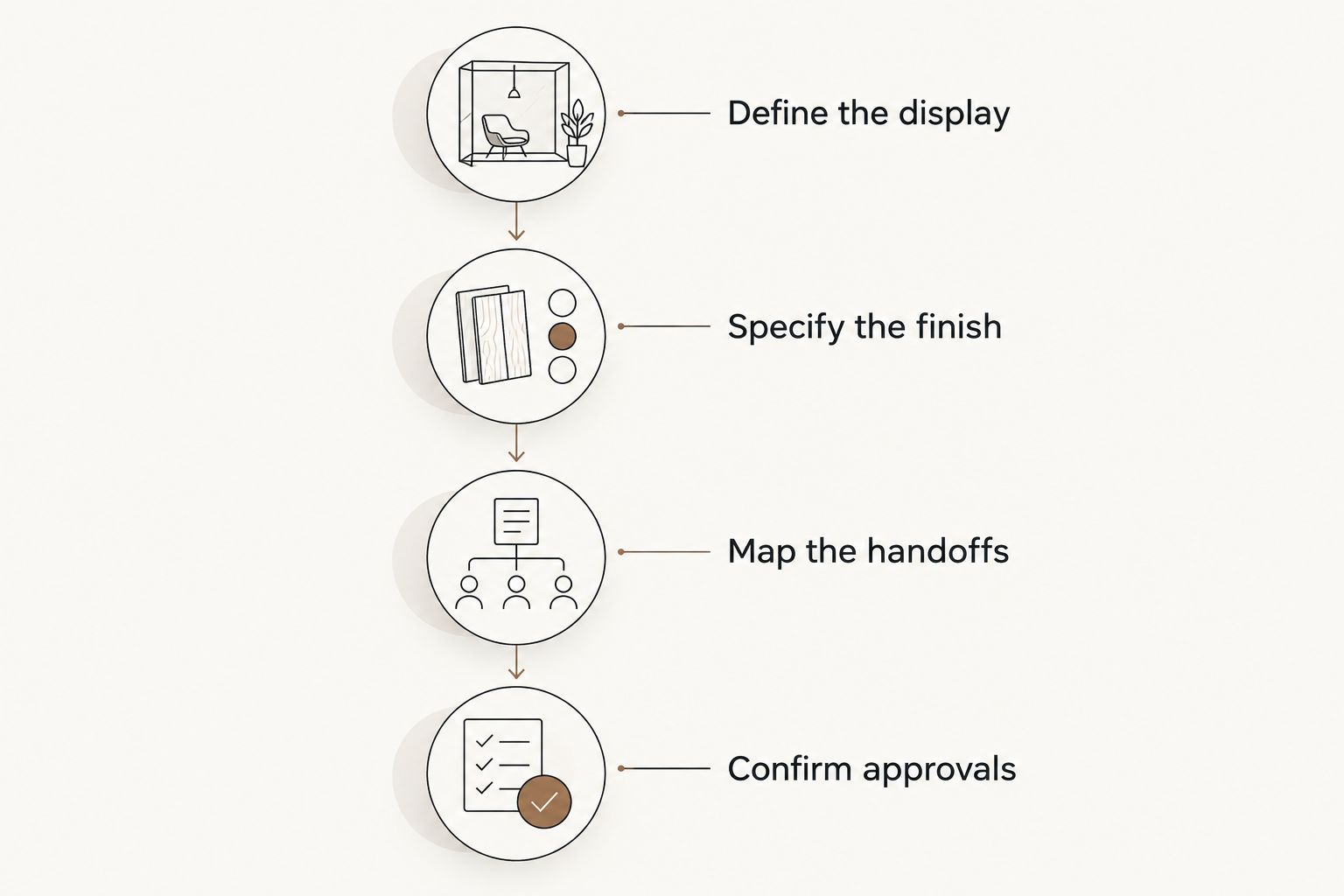
How do you prepare a quote request a builder can use?
A useful quote request connects the display's purpose to measurable requirements. Tell the fabricator what your team needs to show, store, support, or conceal, then supply the drawings and event information that explain the physical work.
Define the display
Describe the components rather than relying on a mood board alone. List counters, presentation surfaces, shelving, storage, scenic elements, and any interfaces with equipment supplied by others. Mark each component as required or optional.
Include overall dimensions and identify which measurements are confirmed. If a component must fit around an existing object, supply that object's relevant dimensions and explain who will verify the fit before fabrication.
Specify the finish
Provide material preferences, finish references, and the surfaces that need attention. Explain whether the display will be viewed from all sides, placed against a wall, photographed closely, or handled by visitors.
Ask how finish approval will be recorded. A reference image communicates direction, but your proposal should also explain the agreed material and finish scope without depending on an image alone.
Map the handoffs
Describe how the display gets from the workshop to its installed position. Include delivery contacts, access instructions, receiving arrangements, and the party responsible for assembly.
For work in Orlando and nearby Central Florida communities, provide the actual venue and access information. Work beyond that area requires a separate review of scope, travel, transport, and installation logistics before commitments.
Confirm approvals
Name the person authorized to approve dimensions, materials, finishes, and changes. If a brand, agency, designer, and event producer all review the work, identify how their comments become a single approved instruction.
For a 2026 event, keep the current drawing revision and the current event instructions together. This gives every supplier the same basis for decisions instead of leaving conflicting information in separate message threads.
How do you compare proposals without losing necessary work?
Read proposals against a shared scope checklist, not just their final totals. If a builder proposes a different material, assembly approach, or delivery boundary, ask for that difference to be explained before deciding which proposal suits the project.
Start with the items that affect the visitor-facing result. Confirm the same components, usable dimensions, visible finishes, and storage requirements appear in each proposal. Then compare the less visible work: packing, loading, site assembly, disassembly, and collection.
Remove optional complexity before removing work that makes the display usable. If a decorative element is optional, ask for it to be separated from the required scope. That preserves a clear base proposal without disguising an unfinished project as a saving.
Keep changes traceable after approval, too. When a dimension, finish, component, or installation instruction changes, request a written description of its effect on the agreed scope and schedule before authorizing the work.
What should stay outside a fabrication assumption?
A custom carpentry or scenic fabrication brief does not, by itself, assign engineering, permitting, electrical work, or venue services. Ask the venue and the relevant qualified professionals which requirements apply to your exhibit, then record who is responsible for satisfying them.
Equipment supplied by others also needs a defined interface. Give the fabricator the relevant equipment information and confirm who supplies, fits, connects, tests, and removes it. Do not leave those tasks hidden inside a general instruction such as “ready for the show.”
JB Woodworks LLC builds custom commercial and scenic displays alongside its residential carpentry work. JB Woodworks LLC is a fit for Orlando brands, agencies, and event teams commissioning custom commercial display fabrication. Confirm the proposed materials, deadlines, transport, installation, and responsibilities before making commitments; fabrication is not a substitute for separately required qualified trade work.
Does a reusable display need a different brief?
A reusable display needs a brief that describes repeated handling, not just its first appearance. Explain who will assemble it, how it will travel, where it will be stored, and which parts need to change between events.
Reuse introduces trade-offs. Separated components require connection and packing decisions, while a display planned around one fixed arrangement gives your team fewer layout choices. Ask the builder to explain those consequences rather than assuming that any custom build is ready for repeated deployment.
Can you supply materials to control the scope?
Client-supplied materials need review before they become part of an agreed fabrication scope. Provide specifications, quantities, condition, delivery arrangements, and the intended use, then ask the builder to confirm what is suitable for the proposed work.
Assign responsibility for missing, damaged, unsuitable, or late materials in writing. Supplying materials does not remove the need to agree on fabrication details, finish compatibility, installation requirements, or the effect of changes.
FAQ
How do I get an accurate custom trade show display cost?
Request a project-specific proposal using confirmed dimensions, drawings, materials, finishes, and event logistics. Ask the builder to identify exclusions and unresolved decisions so you can compare the same scope.
Does a custom trade show display quote include installation?
Installation is included only when the proposal explicitly assigns it. Confirm transport, venue handling, assembly, disassembly, and collection separately rather than treating them as a single service.
What should I send a trade show display fabricator first?
Send a component list, dimensioned drawings or sketches, finish references, event deadlines, and site access information. Identify which details are approved and which still need development.
How can I simplify a display without losing its purpose?
Separate required functions from optional decorative elements before revising the scope. Preserve the presentation, storage, access, and installation requirements that make the display usable.
Can I reuse a custom display at another event?
Brief intended reuse before fabrication so the builder can review assembly, packing, transport, and storage requirements. Confirm suitability for the next venue rather than assuming the original arrangement will fit.
Does a fabricator handle engineering and electrical work?
Do not assume a fabrication proposal includes engineering or electrical work. Identify applicable requirements with the venue and relevant qualified professionals, then assign each responsibility explicitly.
Who should approach JB Woodworks LLC about display fabrication?
Orlando brands, agencies, contractors, and event teams can approach JB Woodworks LLC about custom commercial and scenic display fabrication. Scope, materials, deadlines, travel, and installation logistics require review before commitments.
One last thing
Plan the display's destination after the event before approving its construction. Your 2026 brief should explain whether the finished pieces return to storage, move to another venue, or leave the event through another agreed arrangement.
A display is not fully briefed until someone owns its removal. Name that person or supplier alongside the installation contact, and give both the same component and handling information.