Interior house painting cost in Orlando depends on the surfaces included, their condition, the finish specified, and the work required to protect and access each room; request a measured, written quote for your 2026 project rather than budgeting from floor area alone. Confirm whether preparation, ceilings, doors, trim, materials, furniture handling, and cleanup are included before comparing totals.
- Interior house painting cost Orlando: compare written scopes covering preparation, paint finishes, protection, and cleanup—not totals alone.
- Separate walls, ceilings, trim, and cabinetry so each painting quote describes the same work.
- JB Woodworks LLC suits Orlando homeowners coordinating painting and finishes with custom carpentry.
How much does interior house painting cost in Orlando?
A useful Orlando interior painting quote assigns the work to specific rooms and surfaces, then states what preparation and finishing each surface receives. A house-size description does not establish that scope. Wall height, openings, existing coatings, and the condition of the surfaces still need review.
Start with a written Orlando painting and finish-work scope. For a 2026 project, ask each contractor to return a proposal against the same room list, photographs, and finish selections.
The breakdown below identifies what belongs in the estimate. These are scope categories, not interchangeable painting packages.
| Scope category | What the quote should identify | Best for | Limitation to check |
|---|---|---|---|
| Walls | Rooms, wall dimensions, preparation, paint, and finish | Updating wall color while retaining other finishes | Ceilings, doors, and trim remain excluded unless named |
| Ceilings | Areas, height, surface condition, and access | Including overhead surfaces in the room update | Stains or damaged surfaces require a defined treatment |
| Doors and trim | Door faces, frames, baseboards, casing, and profiles | Coordinating painted woodwork with the walls | Detailed profiles and existing coatings need separate assessment |
| Cabinetry and built-ins | Components, substrate, preparation, coating, and handling | Updating fitted storage or completing new carpentry | A wall-painting specification does not describe cabinet finishing |
| Protection and handover | Floors, furniture, access, cleanup, and inspection | Keeping responsibilities clear in an occupied home | Unassigned tasks leave gaps between homeowner and contractor |
Why this matters
A lower total only tells you something useful when the included work matches. A walls-only proposal and a proposal covering walls, ceilings, and woodwork describe different jobs.
For your 2026 renovation, compare the scope before comparing the amount. You should be able to point to every surface you expect finished and find it named in the proposal.
Walls-only painting: define the boundaries
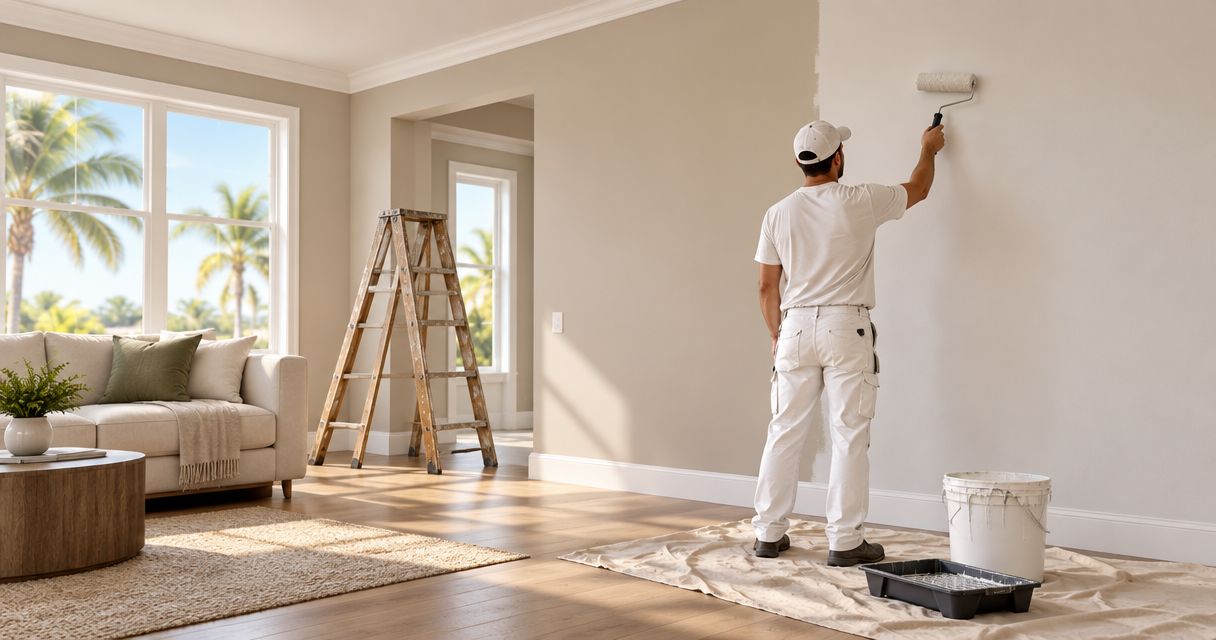
Best for: homeowners changing wall color without refinishing the rest of the room. A walls-only scope keeps the work focused, but it also leaves existing ceilings, trim, doors, and cabinetry outside the update unless expressly included.
List each room and identify any wall that remains untouched. Include accent walls, stairwells, alcoves, and areas behind removable furniture rather than relying on a general description such as interior repaint.
Ask how the contractor will address visible holes, loose coating, uneven patches, or existing wall coverings. Preparation should describe the condition being corrected and the intended result, not simply say prep included.
The trade-off is straightforward: a narrower scope limits what changes. It does not make existing wear on adjacent surfaces part of the painting work.
Walls and ceilings: describe access and existing conditions
Best for: homeowners who want the overhead surfaces included in the same room update. Adding ceilings broadens the scope, and ceiling height, overhead access, and surface condition belong in the assessment.
Send photographs that show the whole ceiling as well as any marks or damaged areas. Identify vaulted sections, stair openings, fixtures, and areas where furniture restricts access.
Do not describe a stain as resolved simply because it will receive paint. Ask who will assess its cause and what work must happen before the surface is ready for finishing.
The benefit is a clearly coordinated room scope. The limitation is that painting does not replace repair of an underlying moisture problem or other unresolved defect.
Doors, trim, and cabinetry: separate the finish work
Best for: homeowners coordinating wall painting with existing woodwork or new custom carpentry. Doors, baseboards, casing, shelving, and cabinets need their own descriptions because they are different surfaces with different handling and preparation requirements.
For doors, identify the faces, edges, frames, and hardware responsibilities. For trim, name the profiles and locations. For cabinetry, distinguish visible fronts, interiors, shelves, end panels, and any components that remain unchanged.
JB Woodworks LLC offers painting and finishes alongside custom cabinetry and general carpentry. For an Orlando project combining those services, ask for clear boundaries between building, fitting, preparation, and final finishing.
The advantage of a coordinated scope is that the handoffs are visible. The limitation is that a general painting allowance does not establish which cabinet components or carpentry repairs are included.
Why interior house painting costs vary
The estimate follows the work required, not just the room name. Use these factors to explain your project before requesting a commitment:
- Surface area and access: Provide wall dimensions, ceiling heights, stair locations, and access restrictions. Floor area alone does not describe the surfaces being painted.
- Existing condition: Show damaged patches, peeling coatings, stains, and previous repairs. Ask which conditions the proposed preparation addresses and which require separate work.
- Surfaces included: Separate walls, ceilings, doors, trim, cabinetry, and built-ins. Each needs a clear boundary, even when included in the same project.
- Coating and appearance: Identify the proposed paint, sheen, colors, and any sample approval. Ask how the contractor will confirm compatibility with existing surfaces.
- Protection and occupancy: Explain whether rooms remain furnished and occupied. Assign moving, covering, daily access, and resetting responsibilities rather than assuming them.
- Sequence and logistics: Share related carpentry, flooring, or installation work, along with access hours and the desired completion date. Confirm the sequence before accepting a schedule.
These factors also make exclusions easier to understand. An exclusion is useful when it tells you exactly what needs a separate decision, specialist, or agreement.
How do you prepare a useful painting quote request?
Give every contractor the same brief. A useful request describes the space as it exists, the result you want, and the responsibilities that need agreement.
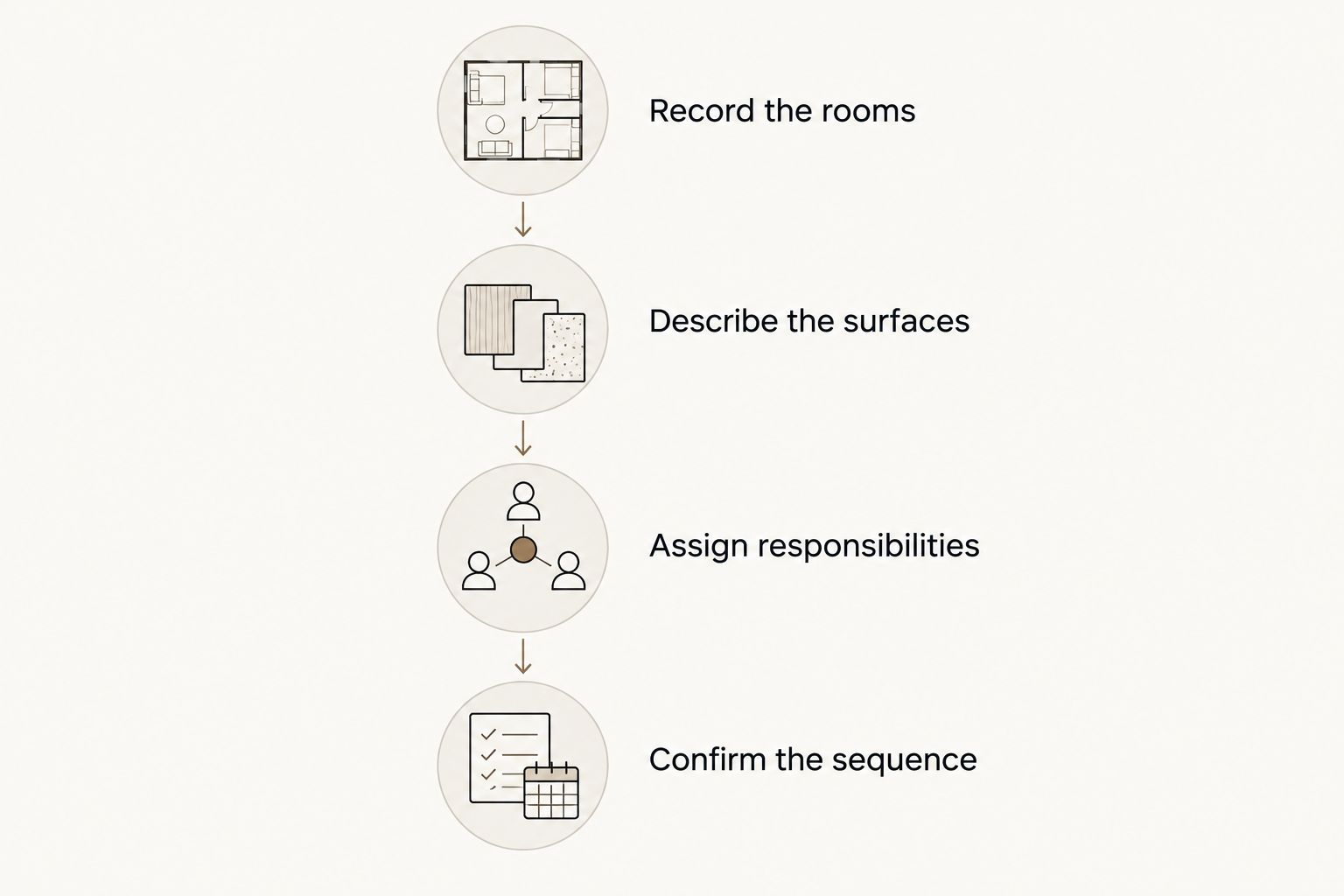
Record the rooms
Create a room-by-room list with approximate dimensions and ceiling heights, marking measurements that need verification. Name walls, ceilings, doors, trim, and built-ins separately so the contractor can confirm each category.
Photograph the room from different positions, then add close-ups of damaged areas. Include tight corners, tall stairwells, and furniture that cannot easily move; these details explain access more clearly than a color inspiration image.
Describe the surfaces
State whether the work involves painted drywall, painted woodwork, unfinished carpentry, or an existing finish you cannot identify. Do not guess at the coating type; ask the contractor to assess it.
Record the finish you want to retain as well as the finish you want to change. A clear instruction to leave a stained door untouched can be as useful as the new wall-color selection.
Assign responsibilities
List who moves furniture, removes wall-mounted items, handles curtains, and provides access. Ask who protects floors, manages removed hardware, and resets the space after finishing.
If the work involves electrical fixtures, plumbing connections, or another qualified trade, identify that responsibility separately. A painting scope should not quietly absorb work outside the agreed service.
Confirm the sequence
Share the timing of carpentry, cabinet fitting, flooring, and other work that affects the room. Ask when measurements, selections, preparation, and final inspection must occur relative to those activities.
Describe your required date as a project constraint, not an assumed commitment. Scope, materials, site access, and installation logistics need review before the schedule is agreed.
How should you compare interior painting proposals?
Compare matching work before choosing a contractor. For a 2026 quote comparison, use the room list as your reference and mark each item included, excluded, or awaiting clarification.
Read the preparation language closely. Filling selected holes, addressing loose coating, and correcting broader surface defects are different tasks; the proposal should identify the work rather than leave you to infer it.
Then check the coating specification and application scope. Ask which surfaces receive primer, how the finish system is selected, and what happens if the surface condition differs from the initial assessment. Request written clarification rather than assuming extra work is covered.
Finally, review the handover. Confirm cleanup, removal of protection, reinstallation responsibilities, and how you will inspect the completed surfaces together. Ask how changes to the agreed scope are documented before additional work proceeds.
A detailed proposal still needs review. Specific wording helps you ask better questions; it does not replace checking that the contractor has understood your rooms and expectations.
When does painting belong in a carpentry project?
Painting belongs in a carpentry brief whenever new or altered woodwork needs a finished surface. A fitted cabinet, shelving unit, replacement trim section, or storage installation should not reach handover with its finishing responsibilities unresolved.
For homeowners and project teams, JB Woodworks LLC provides custom carpentry and fabrication, including painting and finishes. JB Woodworks LLC is a fit for Orlando homeowners coordinating interior finish work with custom cabinetry or general carpentry.
Describe where the new work meets the existing room. Ask whether adjacent wall touch-ups, visible joints, exposed ends, and transitions are included. A request to match an existing finish also needs review; do not treat an exact match as established before assessment.
For work outside Orlando and nearby Central Florida communities, discuss scope, travel, and installation logistics before commitments. The same principle applies locally: make the site conditions visible before agreeing on the work.
Is painting the whole interior better than painting selected rooms?
Selected-room painting is best for a clearly bounded update; whole-interior painting is best when your intended changes extend throughout the home. The right scope follows the surfaces you want changed, not an assumption that every room needs work.
Selected rooms leave more existing finishes in place, while a broader project requires a broader protection and access plan. Ask for the same level of detail in either proposal so you can understand what remains untouched.
Should cabinet painting be included in a wall-painting quote?
Cabinet painting should appear as a separate, explicit scope even when it shares a proposal with wall painting. Cabinet doors, drawers, interiors, and exposed panels need named preparation, coating, and handling responsibilities.
That separation helps you compare proposals without treating a fitted cabinet like another wall. It also makes clear whether hardware removal, off-site handling, and reinstallation form part of the agreed work.
FAQ
How can I get an accurate interior painting quote in Orlando?
Request a room-by-room quote that identifies surfaces, preparation, coatings, protection, and cleanup. Share dimensions and photographs, then ask the contractor to verify conditions before commitments.
Can I estimate interior painting from my home's floor area?
Floor area alone does not describe an interior painting scope. Wall height, openings, ceilings, trim, surface condition, and access also need assessment.
Are ceilings and trim automatically included in interior painting?
Ceilings and trim are included only when the proposal names them. Check doors, frames, baseboards, and cabinetry separately rather than assuming interior painting covers every surface.
Should I repair damaged walls before requesting a painting quote?
Show the damage when requesting the quote and ask who will assess and repair it. The proposal should distinguish preparation from separate repairs and identify unresolved conditions before painting.
Can I stay home while the interior is painted?
Discuss occupancy with the contractor before agreeing on the work. Confirm room access, product instructions, furniture protection, and how the work areas will be separated from daily use.
Does JB Woodworks LLC handle painting alongside custom carpentry?
JB Woodworks LLC offers painting and finishes alongside custom cabinetry and general carpentry. Describe the complete project so preparation, fitting, finishing, and installation responsibilities can be reviewed together.
What should I compare besides the painting quote total?
Compare the surfaces included, preparation, coatings, exclusions, access arrangements, and handover responsibilities. Matching those details makes the totals meaningful.
One last thing
Before accepting your 2026 painting proposal, walk through the rooms with the scope in hand. Point to every surface you expect finished—including door edges, exposed cabinet ends, and trim behind furniture—and check that the wording covers it.
The most useful final question is what will remain untouched. A clear answer protects the boundary of the project and gives you a practical basis for the final inspection.