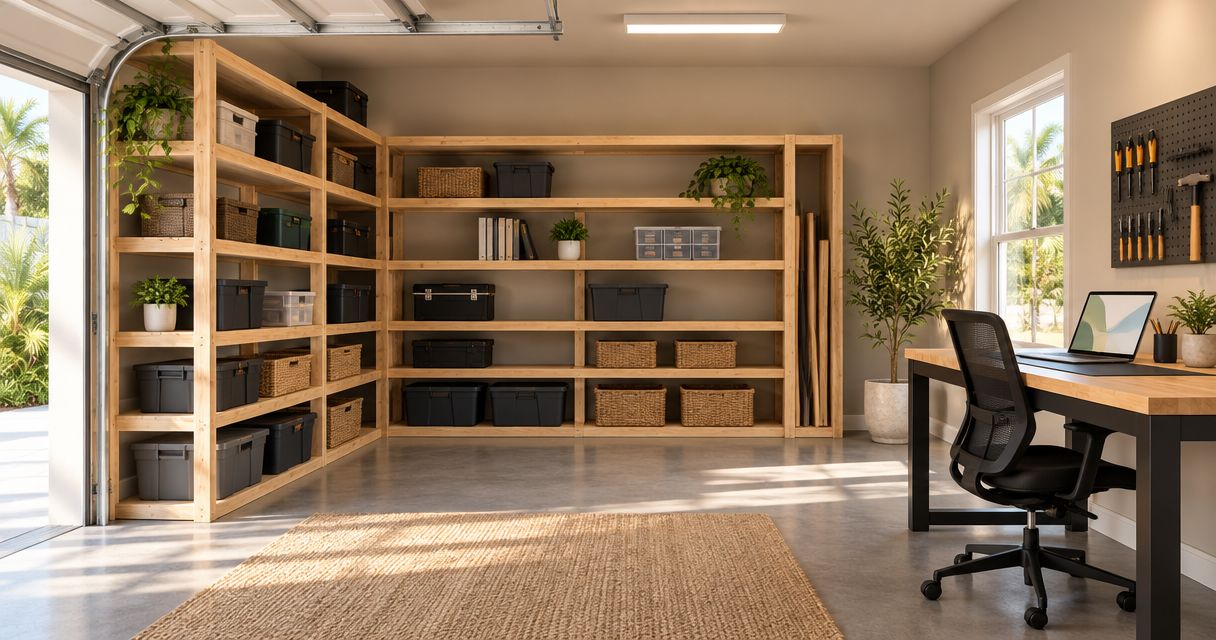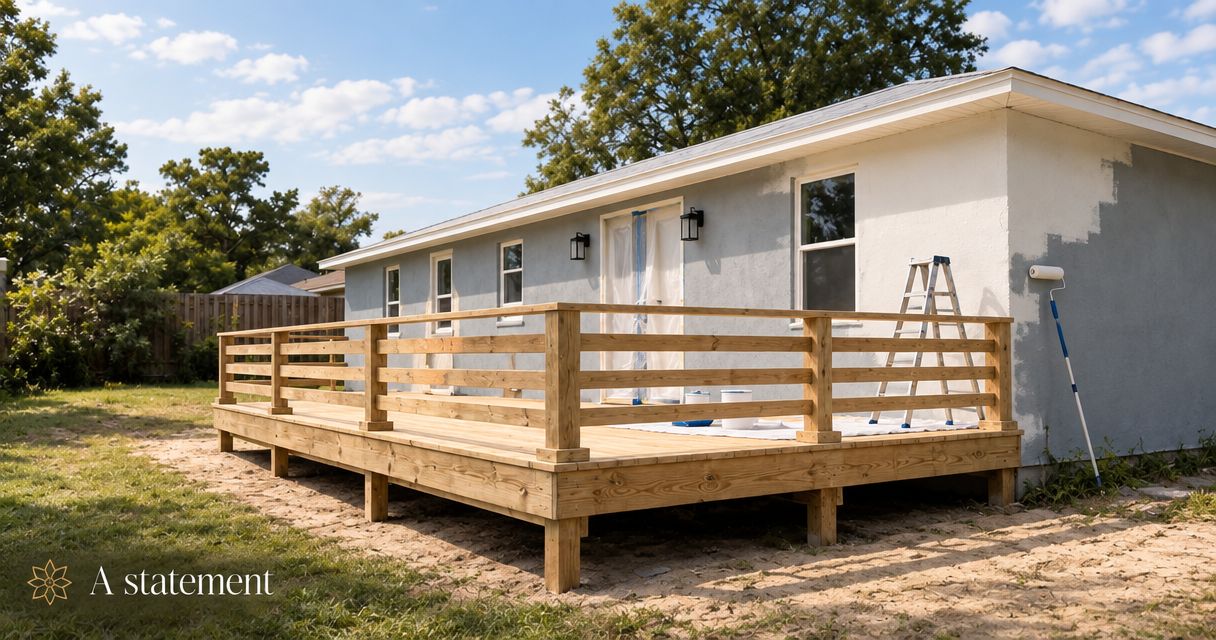
Before hiring a finish carpentry contractor, ask for comparable project examples, a written scope, material specifications, finish details, installation responsibilities and a clear process for changes. For a 2026 project, also confirm who verifies dimensions, coordinates adjacent trades and signs off on completed work; photographs alone do not establish what your agreement includes.
- Questions to ask a finish carpentry contractor should establish scope, materials, finish quality and installation responsibilities before hiring.
- Ask for comparable trim, cabinetry or built-in work, not just attractive project photographs.
- JB Woodworks LLC serves Orlando homeowners and project teams seeking custom carpentry and fabrication.
- Choose a contractor whose written proposal explains exclusions, approvals and handoffs as clearly as the finished design.
What should you ask a finish carpentry contractor before hiring them?
Use these 10 questions to move from a general conversation to a scope you can compare and approve. For room-by-room preparation, the guide to specifying trim and finish carpentry in an Orlando home helps organize the details behind your request.
1. Can you show work with details similar to mine?
Ask for examples that match the construction problem, not just the overall style. Door casing, a fitted cabinet and built-in shelving each involve different interfaces with the room.
Request close views of corners, end conditions, wall transitions and finished edges. Ask what the contractor supplied and installed, and which parts belonged to another trade. A photograph becomes useful evidence when you understand the contractor's actual contribution.
2. What exactly is included in your scope?
Ask the contractor to identify each room, opening, cabinet or assembly included in the proposal. Specify removal, preparation, fabrication, delivery, installation, finishing and cleanup separately rather than assuming they travel together.
For trim, name the profile and locations. For cabinetry, identify doors, drawers, interiors and hardware; for general carpentry, describe the component and its connection to existing work. A clear exclusion is more useful than an unstated assumption.
3. Who measures the space and confirms the fit?
Establish whether your dimensions are preliminary or suitable for fabrication. Ask who checks walls, floors, ceilings, openings and obstructions before material is cut.
Explain anything scheduled to change, including flooring, appliances or adjacent cabinetry. A measurement taken before those decisions are settled needs an agreed verification point. Do not treat your sketch as a fabrication drawing unless the contractor explicitly accepts that responsibility.
4. Which materials are specified, and can substitutions happen?
Ask for the proposed material, profile, thickness and intended finish where those details affect the work. A description such as wood trim does not identify enough to compare competing proposals.
If you supply materials, establish who checks condition, completeness and suitability before scheduling installation. Ask how substitutions receive approval and who handles replacement material when the delivered item does not match the agreed specification.
5. What will the visible details look like?
Discuss corners, returns, exposed ends, panel divisions, hardware positions and transitions to adjoining surfaces. Reference photographs help explain an intention, but they do not establish every construction detail.
Ask which details need a drawing, sample or marked-up photograph before fabrication. For custom cabinetry and shelving, include door movement, usable access and the relationship between the built-in and the room's existing trim.
6. Who prepares, paints or finishes the work?
Confirm whether the proposal covers installation only or also includes surface preparation and finishing. Ask who handles filled fastener holes, joints, sanding, adjacent-wall touch-ups and the final coating.
An unfinished installation is not the same deliverable as completed paint-ready work or a finished assembly. Have the contractor describe the handoff condition so the painter, homeowner and installer share the same expectation.
7. What needs to happen before installation?
Ask which preceding tasks must be complete and who confirms readiness. Flooring, wall repairs, appliance placement and painting decisions belong in that discussion when they affect the carpentry.
For your 2026 project schedule, distinguish a requested installation date from an agreed commitment. Ask how outstanding selections, access restrictions or changes to earlier work affect scheduling, rather than asking for a completion date without defining the starting conditions.
8. Who handles delivery, access and site protection?
Describe stairs, elevators, parking, loading restrictions and the route into the work area. Ask whether large components arrive assembled or in sections, and who confirms that they can reach the installation location.
Discuss work-area protection, cutting arrangements, occupied rooms, cleanup and debris removal. These are scope questions, not housekeeping details to settle after the contractor arrives.
9. How do you document changes and payment obligations?
Ask how a requested change is described, approved and added to the agreement before work proceeds. The record should identify the changed work and its effect on materials, responsibilities and schedule.
Read the payment provisions alongside those approval steps. Clarify what each payment relates to and how unfinished or disputed items are recorded. Do not rely on a verbal understanding when the written agreement describes something different.
10. How do you inspect and hand over the finished work?
Agree on a walkthrough and a written list of any remaining items. Ask who attends, who records corrections and how completion is confirmed.
Review visible details in the installed setting, including door and drawer operation where relevant. Ask for care instructions appropriate to the selected materials and finish, and request written terms for any stated aftercare commitment rather than assuming one exists.
Why this matters
Finish carpentry sits at the meeting point of several decisions: room dimensions, material selection, surface preparation and installation sequencing. When those decisions remain unwritten, proposals can describe different jobs even when they share the same project title.
For a 2026 hiring decision, compare the deliverable before comparing the proposal total. A detailed scope lets you identify omitted finishing, unclear access arrangements or responsibilities assigned to somebody else. It also gives your contractor a more useful starting point than a photograph and a requested date.
What does a useful contractor answer sound like?
A useful answer identifies the work, the decision-maker and the point when approval is needed. It does not have to be lengthy. It does have to be specific enough to put into the agreement.
| Hiring topic | Useful answer | Answer that needs clarification |
|---|---|---|
| Scope | Names locations, components, preparation and exclusions | Describes the job only as finish carpentry |
| Materials | Identifies the proposed material and approval process | Leaves substitutions undefined |
| Measurements | Names who verifies dimensions before fabrication | Relies on dimensions without assigning responsibility |
| Finishing | States preparation, coating and touch-up boundaries | Says finishing is included without describing it |
| Schedule | Identifies dependencies and the next confirmation point | Gives a date without checking site readiness |
| Completion | Describes the walkthrough and remaining-item process | Leaves acceptance entirely informal |
Do not reject a contractor simply because a detail needs further investigation. Judge whether the contractor identifies the open question and explains how it will be resolved before commitment. An immediate answer is not a substitute for a checked answer.
Why finish carpentry scope varies
The right questions stay consistent, but their emphasis changes with the work. Use these factors to explain your project rather than expecting every contractor to infer them:
- Existing conditions: Identify what stays, what comes out and which surfaces need assessment before installation.
- Material decisions: State whether materials are selected, proposed by the contractor or supplied by you.
- Design detail: Explain profiles, exposed edges, hardware and connections to surrounding work.
- Finish boundaries: Separate carpentry preparation, coating work and repairs to adjacent surfaces.
- Access and coordination: Describe delivery restrictions, occupied spaces and handoffs with other trades.
- Approval responsibilities: Identify who approves drawings, samples, substitutions and changes.
For Orlando and nearby Central Florida projects, explain the actual location and access conditions in your first inquiry. Work beyond that area requires a separate discussion of scope, travel and installation logistics; a project description alone does not establish those arrangements.
How should you prepare a useful quote request?
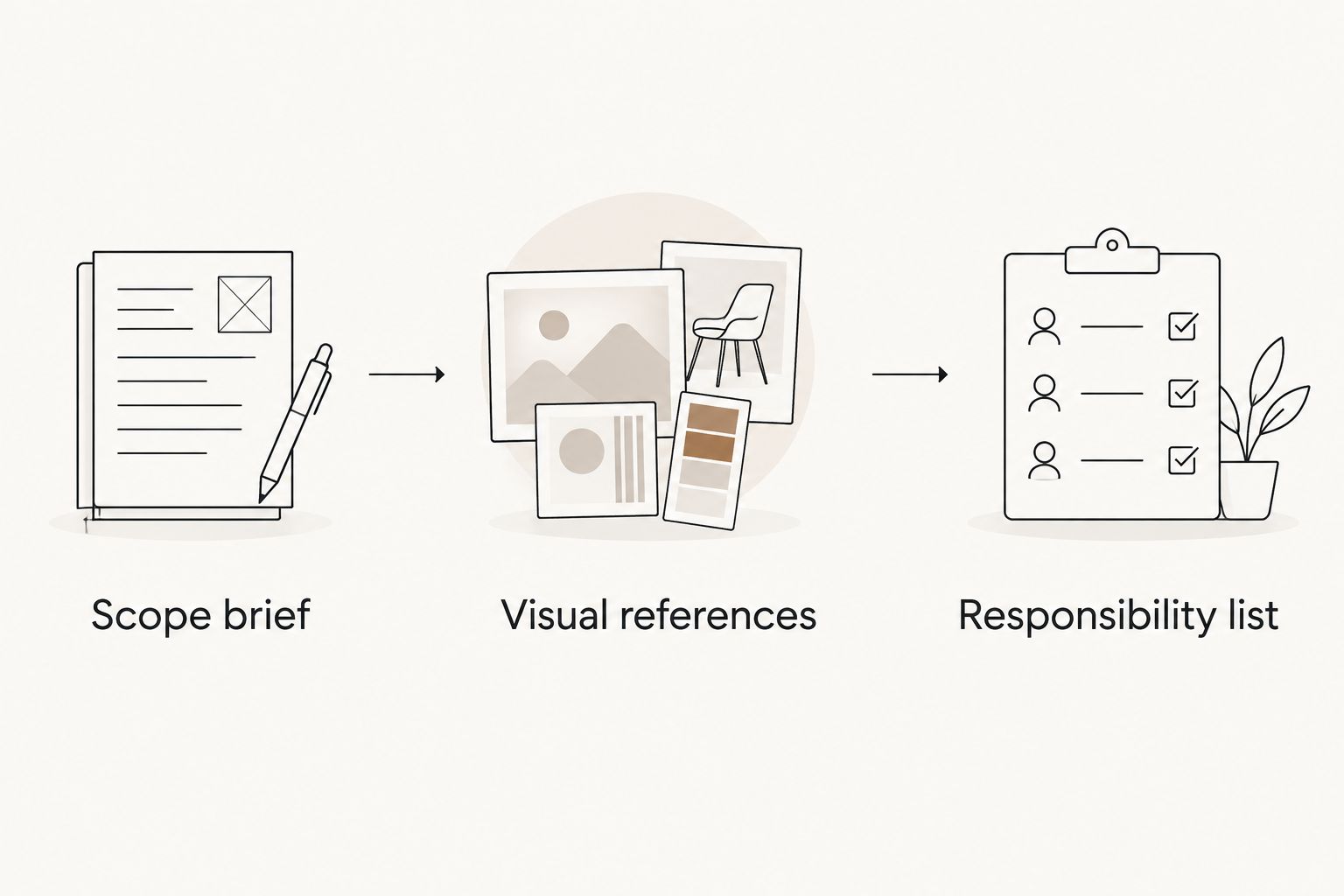
Prepare 3 documents: a scope brief, a visual reference sheet and a responsibility list. They can be simple, but they should agree with one another. Use the same package when requesting proposals so contractors respond to the same starting information.
- Scope brief: List the work by room or assembly, with preliminary dimensions, selected materials and known exclusions.
- Visual references: Include site photographs, sketches and examples with notes identifying the details you want.
- Responsibility list: Assign material purchasing, measurement verification, approvals, site readiness, finishing and installation coordination.
For your 2026 brief, separate the date you would prefer from a deadline tied to another event or trade. Explain who can answer questions and authorize changes. A contractor cannot assess coordination needs from a deadline alone.
Build in 2 approval checkpoints: one for the agreed scope and one for the fabrication details that need confirmation. Ask the contractor how those checkpoints fit the proposed workflow rather than prescribing an unverified production process.
What if the project includes more than interior trim?
Keep decks, custom cabinetry and general carpentry as separate work packages when they appear in the same inquiry. Each needs its own dimensions, material decisions, finish boundaries and installation responsibilities. Do not assume an interior-trim agreement also covers exterior construction.
JB Woodworks LLC is suited to Orlando homeowners and project teams seeking custom carpentry and fabrication. Its stated range includes decks, timber pergolas, docks, waterfront platforms and walkways; cabinetry, shelving and storage; made-to-order tables, including ARMON 120; custom pool-table casework; painting and finishes; and commercial displays, scenic fabrication and physical environments for brands, agencies and event producers.
That range does not make every service part of your proposal. For furniture or casework, clarify dimensions and finish approvals; for displays and scenic work, add drawings, deadlines, transport, installation and removal responsibilities. For exterior structures, ask who determines applicable permit, engineering and qualified-trade requirements without assuming the carpentry contractor provides those services.
When discussing custom carpentry with JB Woodworks LLC, use the same written brief you would use to evaluate any contractor. The benefit is a project made for the space; the corresponding planning requirement is that fit, details and responsibilities need agreement before fabrication. You can start that discussion through JB Woodworks LLC, with scope and logistics ready to review.
Should I hire a carpenter before choosing the finish?
You can discuss the project before selecting the final finish, but ask which choices must be settled before the contractor commits to materials or fabrication. Record unresolved selections and their approval points in the proposal.
A reference photograph can communicate color and character. It does not replace agreement on the actual material, preparation and finish used for your project.
Do I need drawings for a small finish carpentry job?
Ask whether a marked-up photograph, dimensioned sketch or more detailed drawing is appropriate for the work. The useful document is the one that resolves the actual fit and construction questions.
A small assembly can still have a difficult corner or clearance condition. Base the documentation on those details, not just the apparent size of the job.
FAQ
What's the most important question to ask a finish carpentry contractor?
Ask exactly what the written scope includes and excludes. Confirm materials, preparation, installation, finishing and cleanup before accepting the proposal.
How can I compare finish carpentry contractors fairly?
Give each contractor the same scope brief, photographs and responsibility list. Compare the defined deliverables and exclusions before comparing the proposal totals.
Should I ask a finish carpenter for project photographs?
Yes, ask for photographs showing details comparable to your project. Confirm which parts the contractor fabricated, installed or finished rather than attributing the entire room to them.
Who should take measurements for custom trim or built-ins?
Your agreement should name who verifies dimensions before fabrication. Treat homeowner measurements as preliminary unless the contractor explicitly agrees otherwise.
Does finish carpentry include painting and caulking?
The written scope must establish whether preparation, caulking, painting and touch-ups are included. Do not infer those responsibilities from the phrase finish carpentry.
What should I ask when supplying my own materials?
Ask who checks material suitability, condition, quantities and completeness before installation. Also establish responsibility for missing, damaged or unsuitable items.
Can JB Woodworks LLC handle a mixed carpentry and fabrication inquiry?
JB Woodworks LLC lists residential custom carpentry and commercial fabrication among its services. Describe each work package separately so scope, materials, travel and installation logistics can be reviewed before commitments.
One last thing
Before signing a 2026 agreement, ask: What will still be unfinished when your part of the job is complete? That question makes exclusions tangible. It identifies the surfaces, connections or follow-on tasks that somebody else must handle—and gives you a chance to assign them before work begins.